Feathers, fluff, and fashion
The sound and the fury
The giants of the southern hemisphere
The survivors among us

artiteacher The 1996 discovery of Sinosauropteryx proved that dinosaurs used feathers for warmth and display rather than flight.
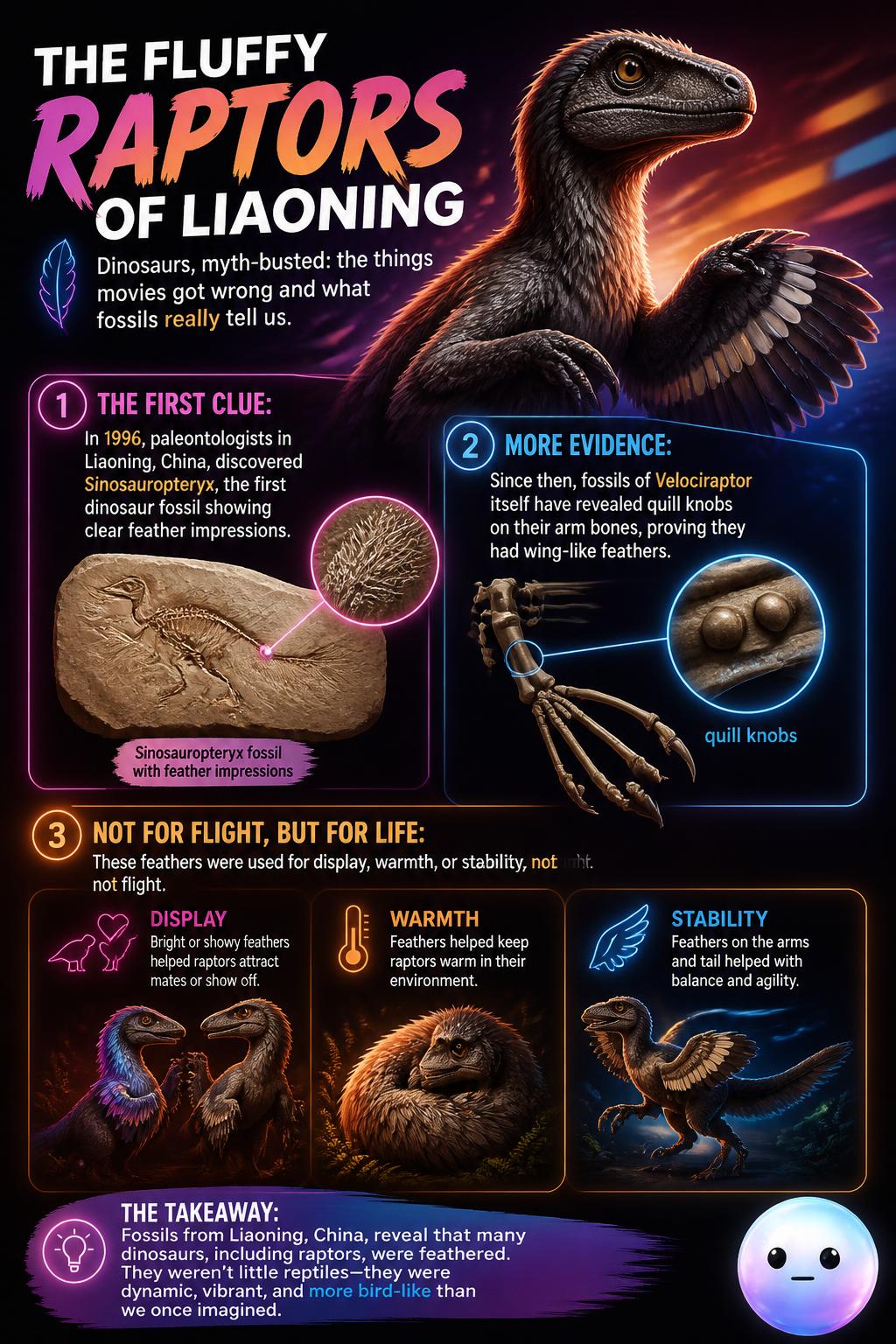
artiteacher Sinosauropteryx and Velociraptor fossils from China feature feather impressions and quill knobs used for warmth, display, and stability instead of flight.
In which country was the first fossil of a feathered dinosaur, Sinosauropteryx, discovered in 1996?
What anatomical feature found on Velociraptor arm bones proves they had large feathers?

artiteacher Dress dinosaurs in feathers and fluff to discover what fossils reveal about their real fashion.
artiteacher Analyzing fossilized cell structures of Sinosauropteryx proved that scientists can determine actual dinosaur colors without guessing
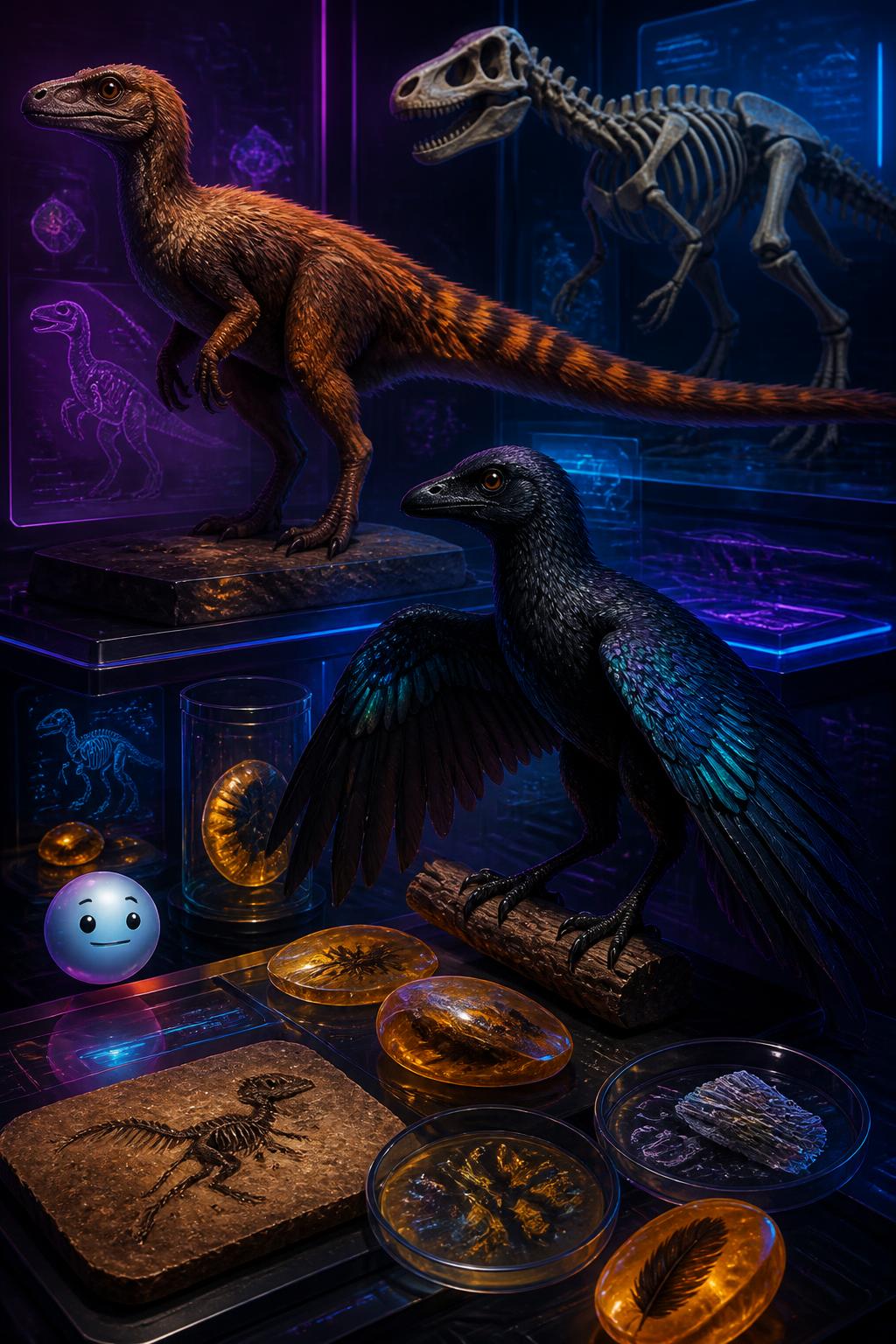
artiteacher Microscopic cell structures show Microraptor had iridescent black feathers like a modern crow.
Based on fossil evidence analyzed in 2010, what color pattern did the small dinosaur Sinosauropteryx have?
What microscopic pigment-bearing structures do scientists scan to determine the actual colors of dinosaur feathers?

artiteacher Modern artists reconstruct a bulkier Tyrannosaurus rex by adding thick muscle layers based on living relatives
What is the term for the outdated drawing style that depicts dinosaurs with skin tightly stretched over their bones?
Which two living animal groups do paleontologists study to reconstruct the muscles and soft tissues of extinct dinosaurs?
Feathery T. rex: While adult T. rex was mostly scaly, its hatchlings were likely covered in a fluffy layer of downy feathers for warmth.
artiteacher Armored Giants of Alberta
Even with armor they had to hide! (Oh-oh, hide away!) Red on top, pale on the underside! (Yeah, they blend away!)
What defensive strategy did scientists discover Borealopelta used, based on organic compounds left in its skin?
In which country was the incredibly well-preserved, three-dimensional armored dinosaur Borealopelta discovered in 2011?
A cellular organelle containing melanin, the pigment responsible for color in animal tissues. In 2010, scientists analyzed these fossilized structures to determine Sinosauropteryx had ginger-colored tail stripes.