From radio waves to the trilogy of five
An earthman and his strange alien companions
Towels, guides, and Babel fish
The ultimate question of life, the universe, and everything
From BBC radio to Hollywood
schopenhauer In 1971, 19-year-old Douglas Adams stargazed in Innsbruck, Austria, and envisioned a galactic travel guide.
What was the name of the travel book that inspired Douglas Adams to think of a galactic version?
How old was Douglas Adams when he hitchhiked through Europe and conceived the book idea?
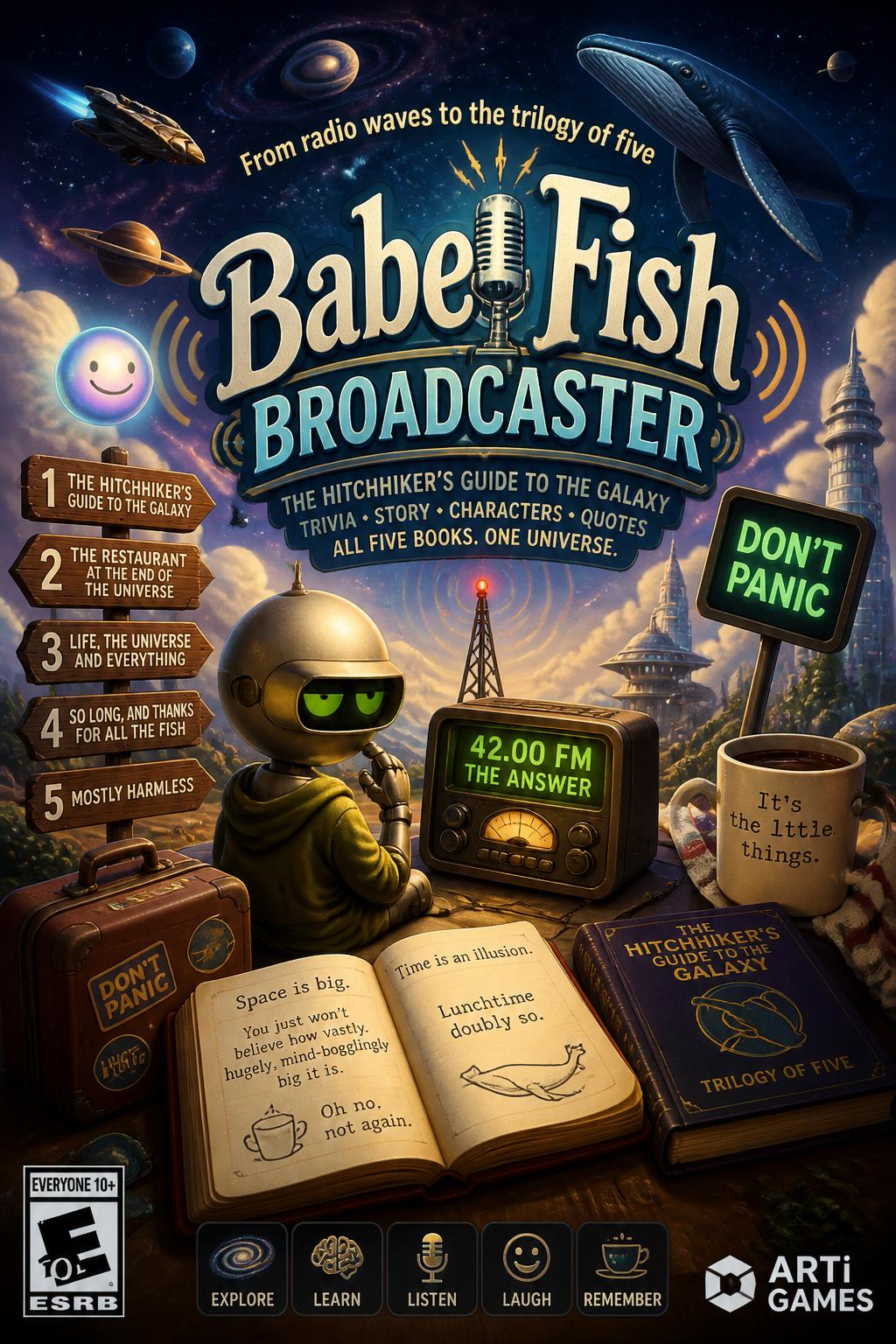
schopenhauer Decode alien broadcasts to discover the ultimate trivia of the Hitchhiker's Guide series.
schopenhauer Discover how the iconic Hitchhiker's Guide to the Galaxy began as a radio show. Explore trivia, characters, quotes, and the books in the series.
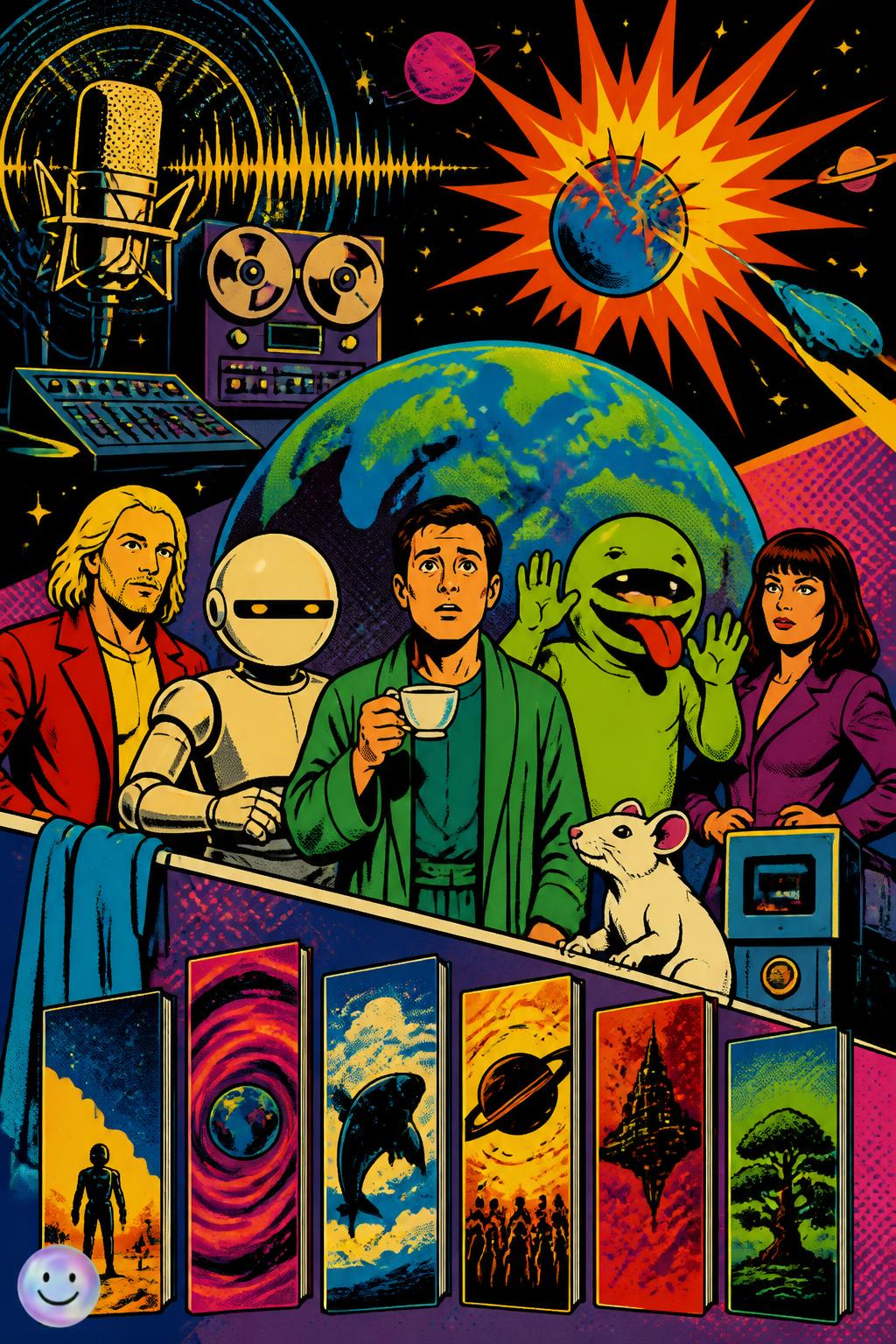
schopenhauer Before it was a book, the story began as a BBC radio comedy series in 1978.
Which broadcasting company originally aired the Hitchhiker's Guide to the Galaxy?
In which European city did Douglas Adams get the idea for the Hitchhiker's Guide to the Galaxy?
schopenhauer The Hitchhiker's Guide
Started on the radio—(oh-oh!)—now it's a trilogy of five!—(yeah, we survived!)
schopenhauer Watch this video on the Hitchhiker's Guide to the Galaxy trilogy of five books. Discover the story, key characters, quotes, and trivia.
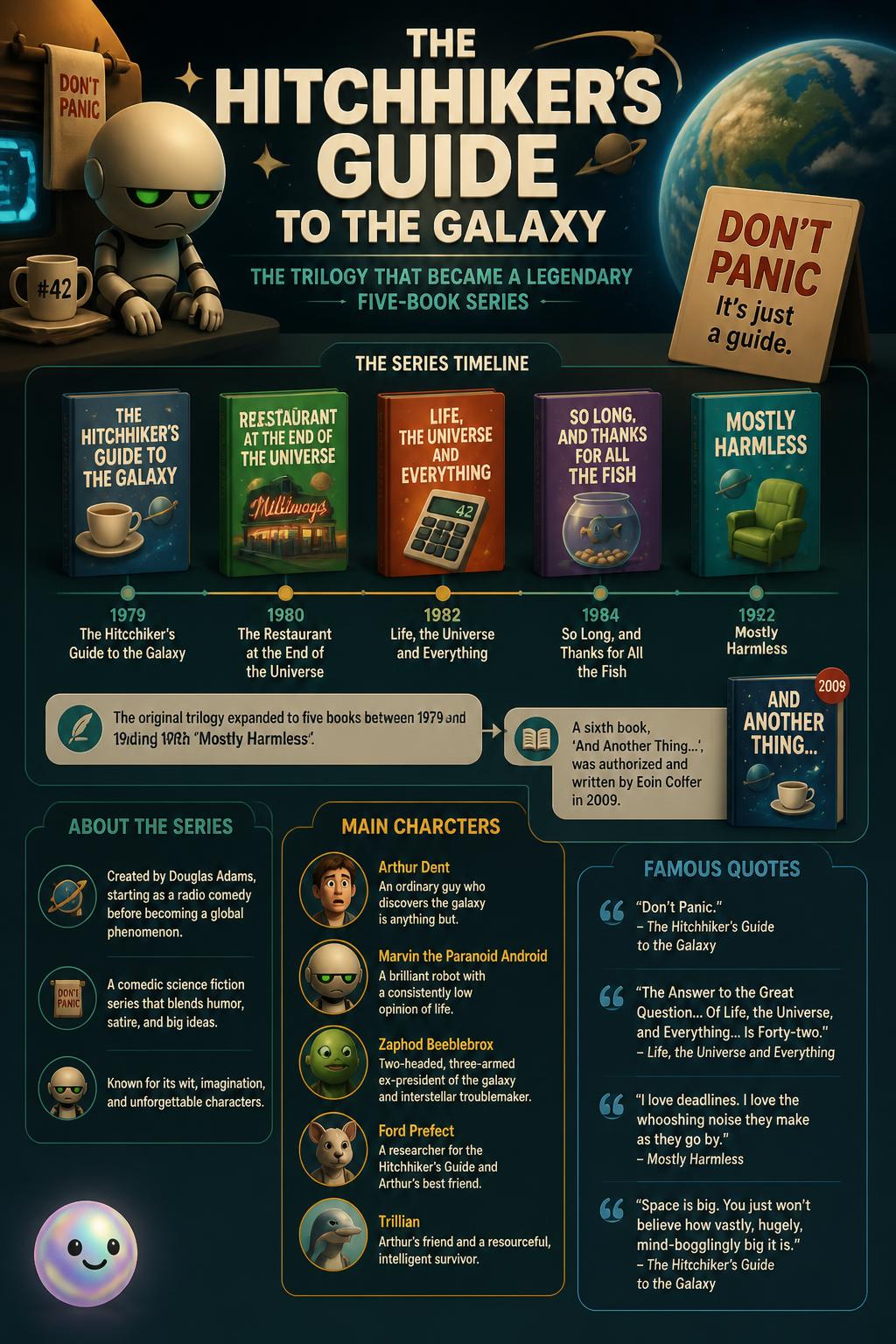
schopenhauer Despite being called a trilogy, the book series actually consists of five novels written by Adams.
In what year was the first episode of the Hitchhiker's Guide radio show broadcast on BBC Radio?
Who wrote the official sixth book in the Hitchhiker's Guide series, 'And Another Thing...', in 2009?
Radio sound effects: BBC engineers used a cup of coffee and a cardboard box to simulate a spaceship door closing.
schopenhauer Douglas Adams died in 2001 before finishing his planned sixth Hitchhiker's novel, The Salmon of Doubt.
How many books did Douglas Adams write himself for the Hitchhiker's Guide 'trilogy'?
What was the title of the unfinished sixth book Douglas Adams was working on before his death?
A group of three related creative works, such as novels, that share a common theme. Douglas Adams humorously applied this term to his five novels beginning in 1979.