Chapter 1
Visual tricksters of the meadow
Chapter 2
Perfume traps and chemical forgery
Chapter 3
The dark side of food fraud
Chapter 4
Underground alliances and fungal friendships
Ch 2 · Perfume traps and chemical forgery
Fun Fact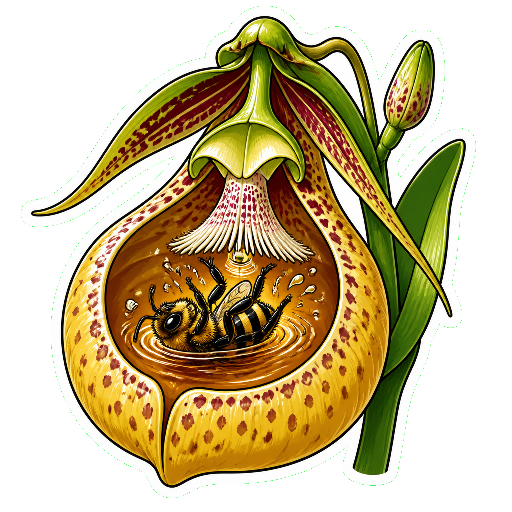
Orquídea Coryanthes: Al caer la abeja en su líquido, solo escapa por un estrecho túnel donde la flor le pega sacos de polen en la espalda.

Quiz
What family of bees is famous for collecting chemical perfumes from Central American bucket orchids?
Quiz
On which Chinese island was the hornet-mimicking orchid Dendrobium sinense first studied?

BETA
artiteacher Match each orchid with its insect lookalike to discover how these master pretenders trick pollinators.

artiteacher Bucket orchids trap bees in a pool of liquid, forcing them through a narrow escape tunnel.
Quiz
Which insect is attracted to the decaying fish smell of the Bulbophyllum orchid?
artiteacher Perfume traps and chemical forgery
Drunk on your perfume, Drunk on your perfume, Fell right into your bucket trap!

artiteacher Bulbophyllum orchids emit the stench of rotting flesh to attract carrion flies and beetles.
Quiz
What happens to a bee that falls into the liquid-filled bucket of a Coryanthes bucket orchid?
Fun Fact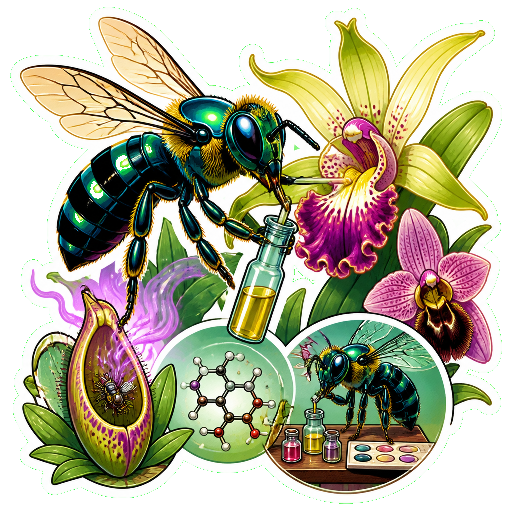
Perfume thieves: Male orchid bees collect orchid perfumes to create a unique scent mix to attract females.
Quiz
The Chinese orchid Dendrobium sinense mimics bee alarm pheromones to attract which predator?
Quiz
Which orchid genus uses chemical pheromones to specifically trick male thynnid wasps?
Glossary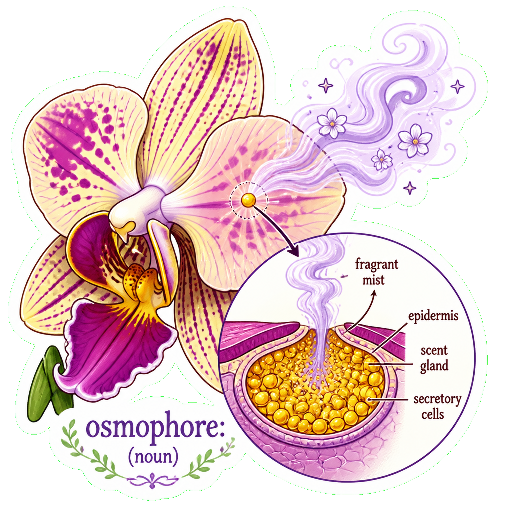
osmophore (noun)
A scent-producing gland in a plant, typically located within the flowers. In 1961, German biologist Stefan Vogel first identified these glands, which orchids use to synthesize deceptive fragrances.
A scent-producing gland in a plant, typically located within the flowers. In 1961, German biologist Stefan Vogel first identified these glands, which orchids use to synthesize deceptive fragrances.