Chapter 1
The bizarre shopping list
Chapter 2
The invisible hitchhikers
Chapter 3
Ideas, espionage, and stolen secrets
Chapter 4
Legendary beasts and extreme travelers
Ch 3 · Ideas, espionage, and stolen secrets
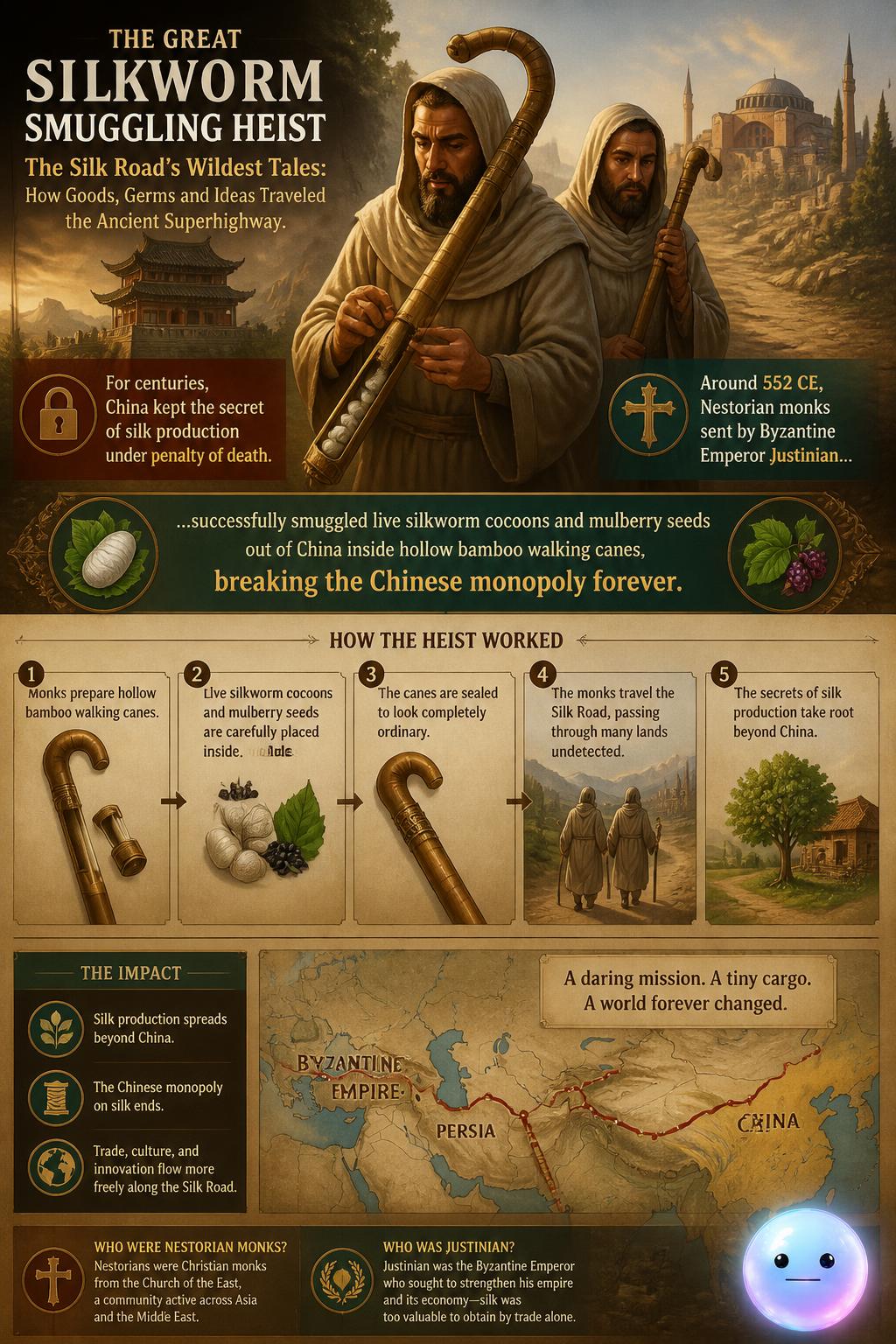
misslily Byzantine Emperor Justinian sent Nestorian monks to steal live cocoons and mulberry seeds from China, where revealing the secret meant death.
Quiz
Which empire broke the Chinese silk monopoly after acquiring smuggled silkworms in 552 CE?
BETA
misslily Intercept secret messages to learn how valuable ideas were stolen along the Silk Road.
misslily Captured Chinese papermakers built the first paper mills in Samarkand, triggering a global explosion of books and literacy.
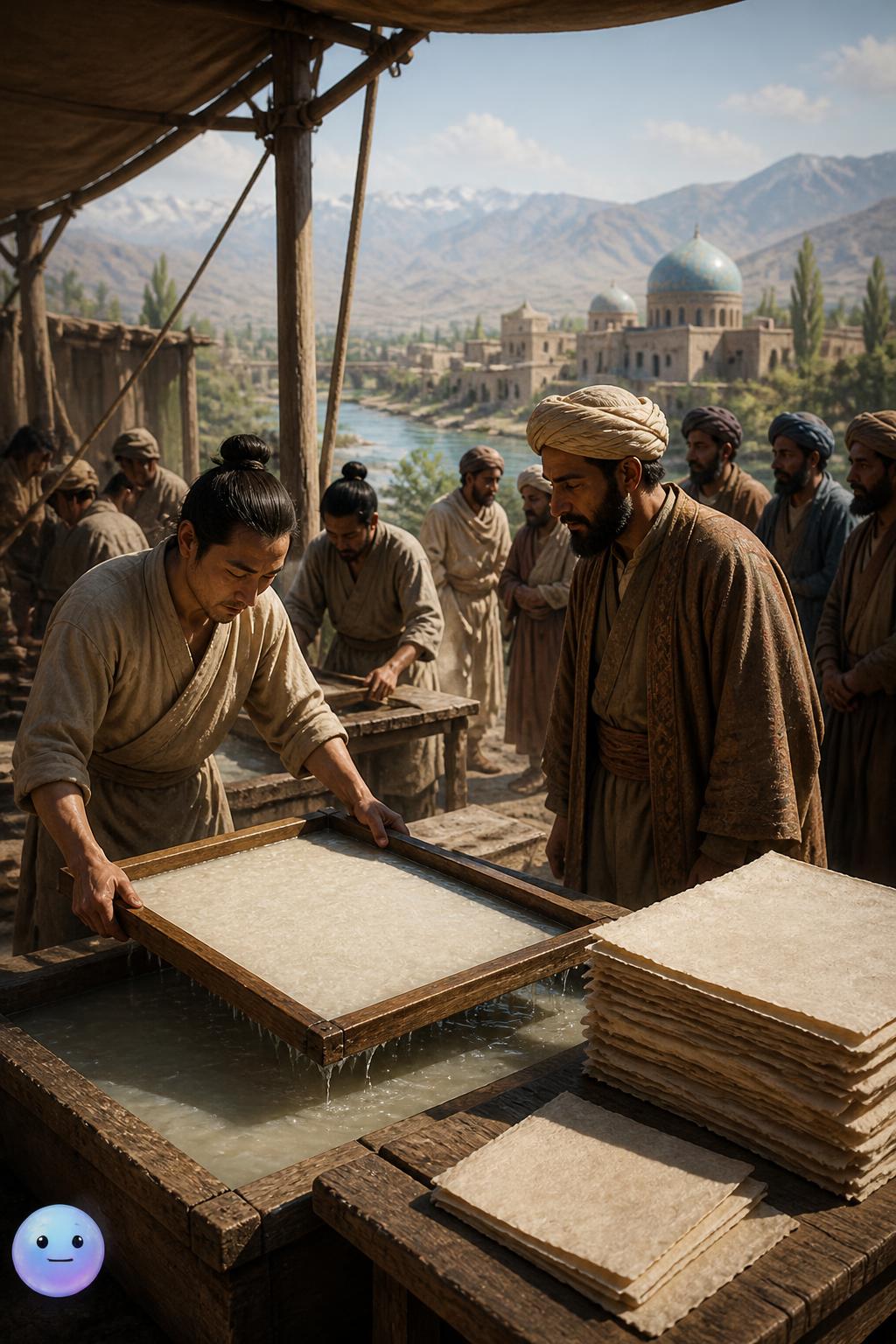
misslily Captured Tang Dynasty artisans built Samarkand's first paper mills, sparking a global book boom.
Quiz
Which Central Asian oasis city became the first major center of paper production outside of China?
Quiz
Which battle in 751 CE led to the spread of papermaking technology from China to the Islamic world?
Quiz
Why do early Buddhist statues from the Gandhara region look remarkably like ancient Greek gods?
Quiz
Which conqueror brought Greek culture deep into Central Asia, sparking this unique artistic fusion?
Fun Fact
Secret agents: The Byzantine Empire broke China's 3,000-year-old silk monopoly by sending two monks to smuggle silkworms inside hollowed-out walking sticks.
misslily Persian mathematician Al-Khwarizmi refined the concept of zero to make complex calculations and modern algebra possible.
misslily The Spread of Zero
It's just a dot, It's just a dot, Riding caravans to Baghdad.
Quiz
Which Persian mathematician's work in Baghdad helped popularize Hindu-Arabic numerals along trade routes?
Quiz
Which region is credited with inventing the mathematical concept of zero that traveled west?
Glossary
sericulture (noun)
The cultivation of silkworms for the production of silk. In 552 AD, Nestorian monks smuggled silkworm eggs to Constantinople, ending China's monopoly on the trade.
The cultivation of silkworms for the production of silk. In 552 AD, Nestorian monks smuggled silkworm eggs to Constantinople, ending China's monopoly on the trade.