The London years and silent suspense
The camera as a weapon: visual innovations
Hollywood masterpieces and obsession
The man behind the silhouette
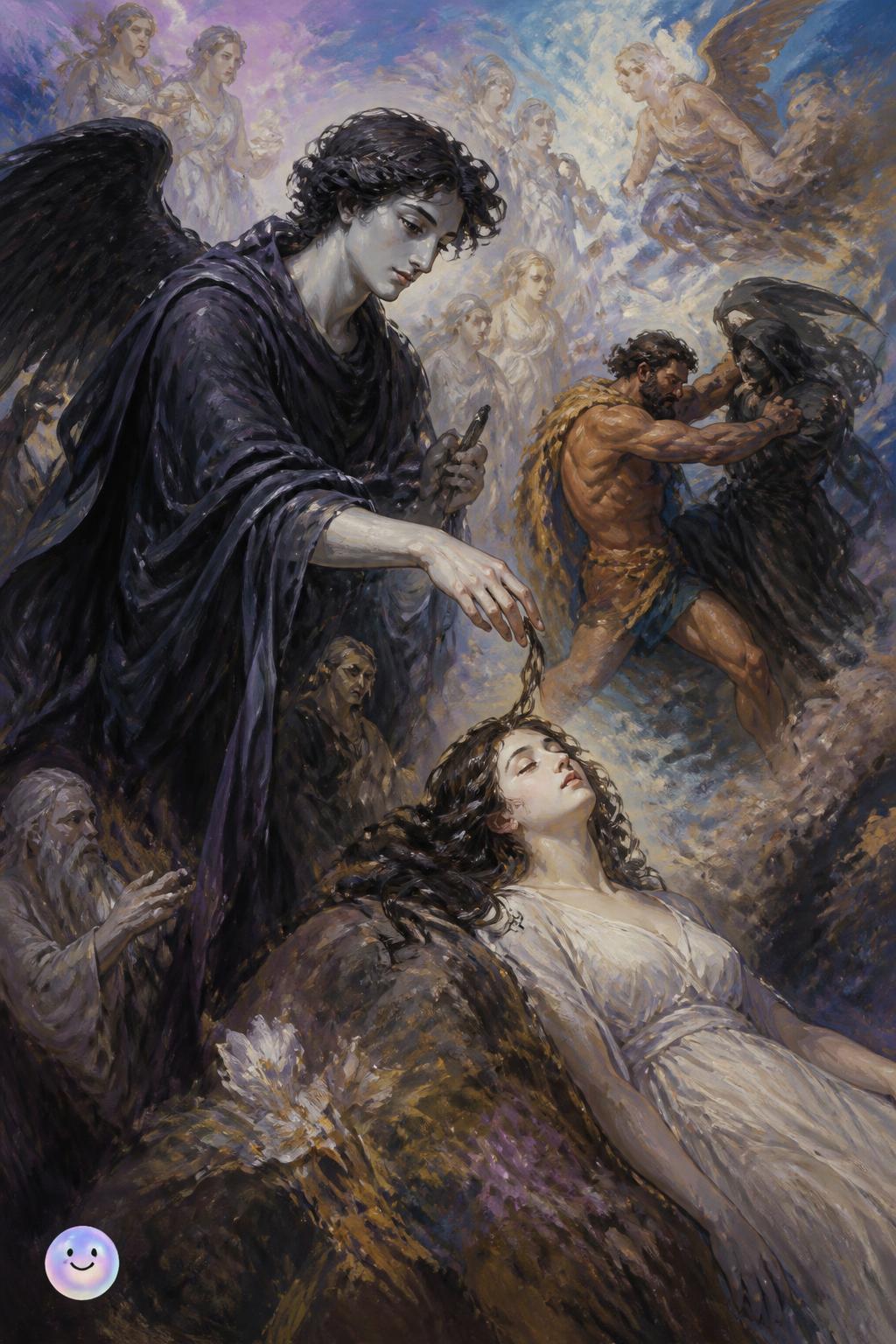
schopenhauer Hitchcock realized audiences stay hooked if characters care deeply about chasing a mysterious object called a MacGuffin.
In Rear Window, what physical injury confines the main character L.B. Jefferies to his apartment?
Which 1948 Hitchcock film was carefully edited to look like a single, continuous, uninterrupted shot?
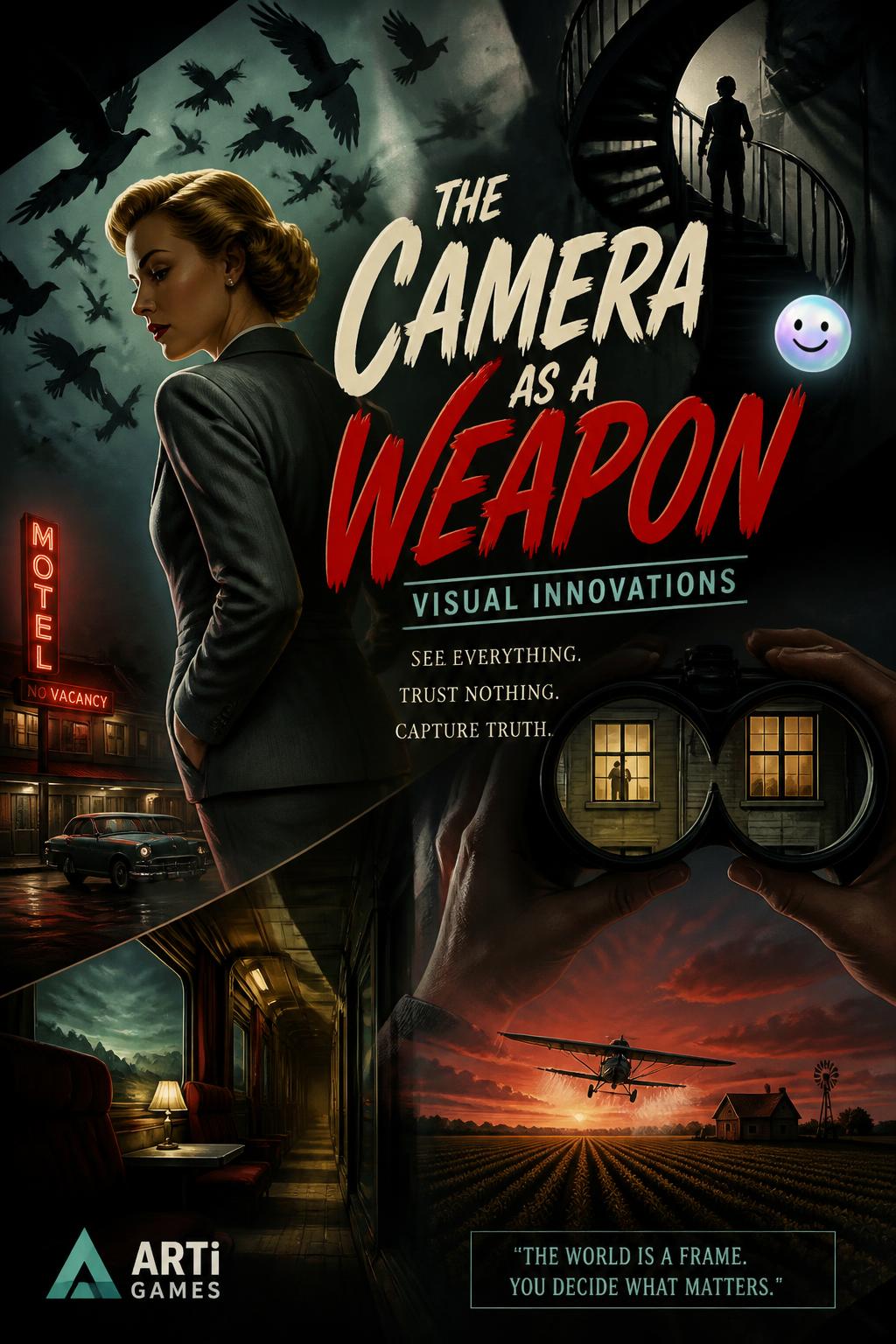
schopenhauer Match camera shots to scenes to learn how Hitchcock turned the lens into a weapon.
schopenhauer For Hitchcock's Vertigo, Irmin Roberts designed the dolly zoom, a camera trick used in hundreds of films.
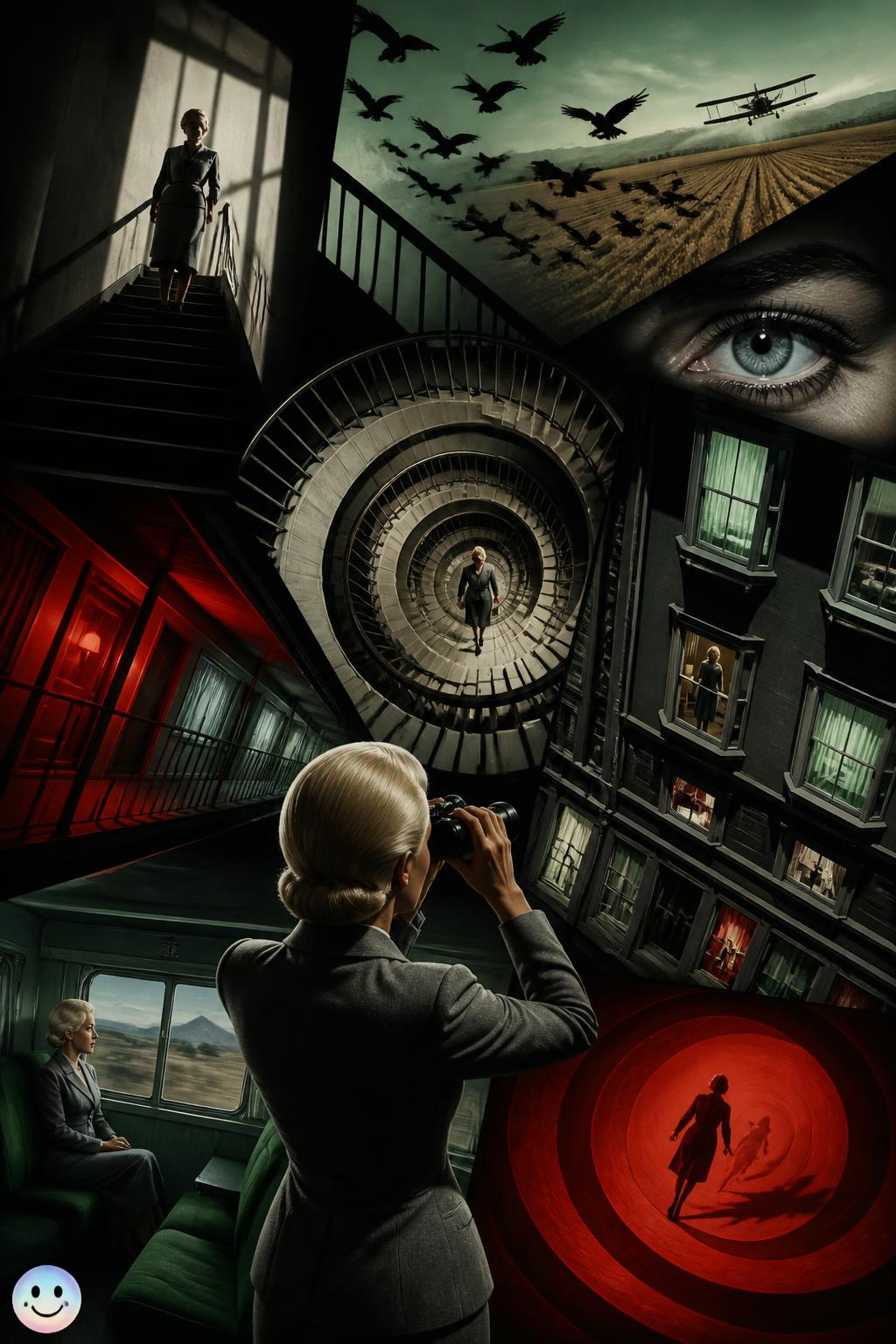
schopenhauer The dolly zoom technique was invented for 'Vertigo' in 1958 to visually represent the feeling of acrophobia.
Which famous graphic designer created the iconic, spiral title sequence and poster for Hitchcock's Vertigo?
What color did Hitchcock famously use as a psychological warning sign in the 1964 film Marnie?
schopenhauer Camera as a weapon
When a flash becomes a weapon, all you see is burning red.
schopenhauer Hitchcock used rapid editing and screeching violins to create terror in the shower scene without showing violence.
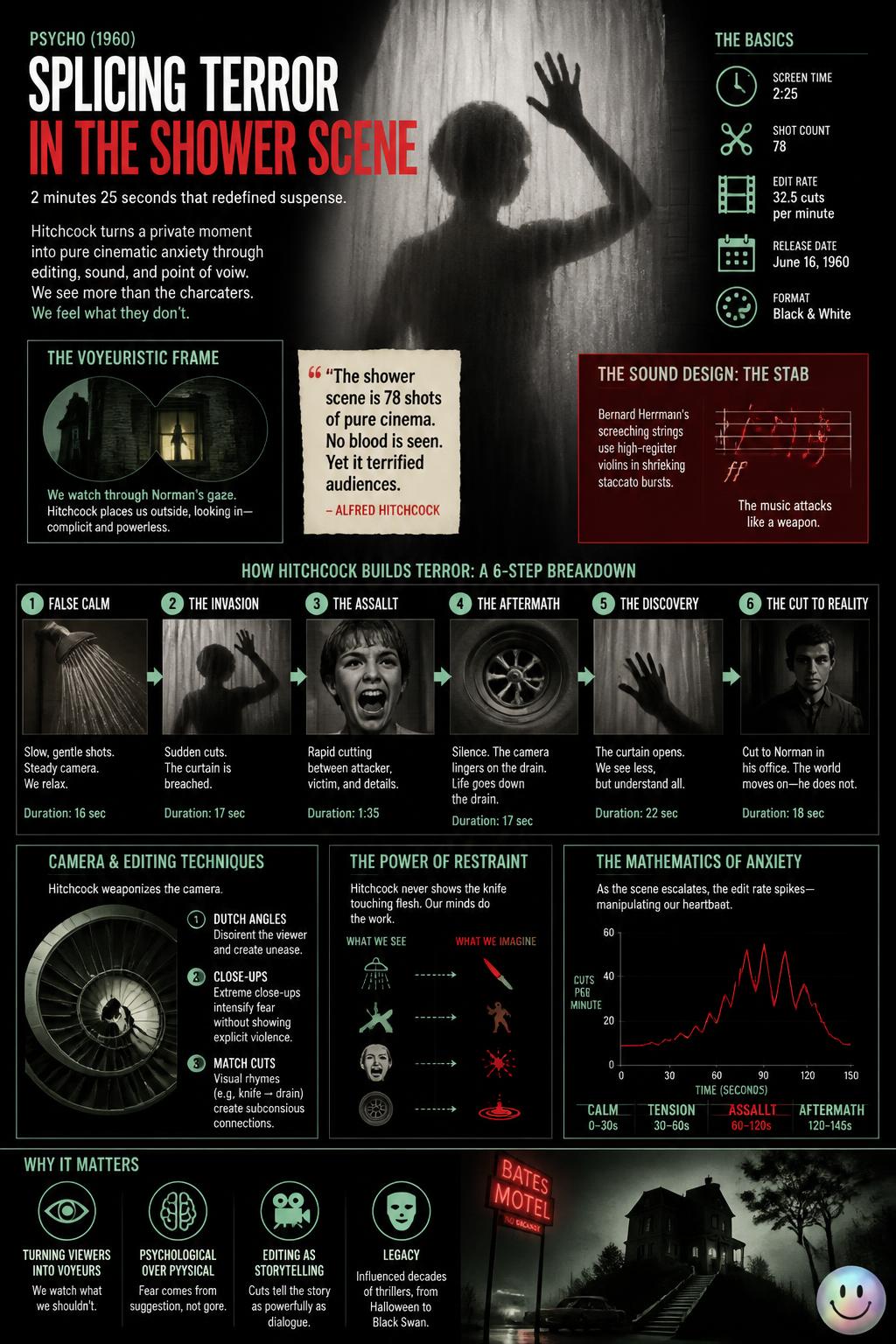
schopenhauer The famous 1960 'Psycho' shower scene revolutionized film editing by using 78 rapid cuts in just 45 seconds.
What did Alfred Hitchcock call a plot device that drives the characters but is ultimately unimportant to the audience?
How did Hitchcock create the terrifying bird sounds for his 1963 film The Birds?
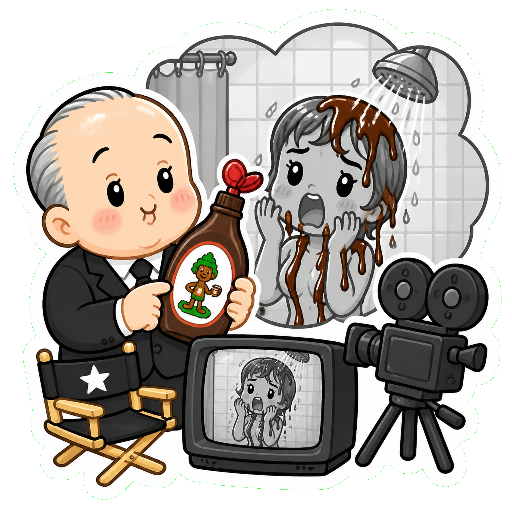
Psycho's chocolate syrup: Hitchcock used Bosco chocolate syrup for blood in the famous 'Psycho' shower scene because it showed up better on black-and-white film.
schopenhauer Hitchcock hid camera cuts behind actors' dark jackets to make Rope look like one continuous shot.
How many rapid film cuts were packed into the famous 45-second shower scene in the 1960 film Psycho?
Which camera trick, combining a forward zoom with a backward camera movement, was invented for a 1958 Hitchcock film?
A cinematic technique where the camera's perspective represents the personal visual field of a character. Alfred Hitchcock used this in his 1954 film Rear Window, where a camera flash blinds an attacker.