Chapter 1
The birth of the ancient comedy roast
Chapter 2
The ultimate beef of ancient Athens
Chapter 3
The myth of the split soulmates
Chapter 4
Power to the birds frogs and women
Ch 1 · The birth of the ancient comedy roast
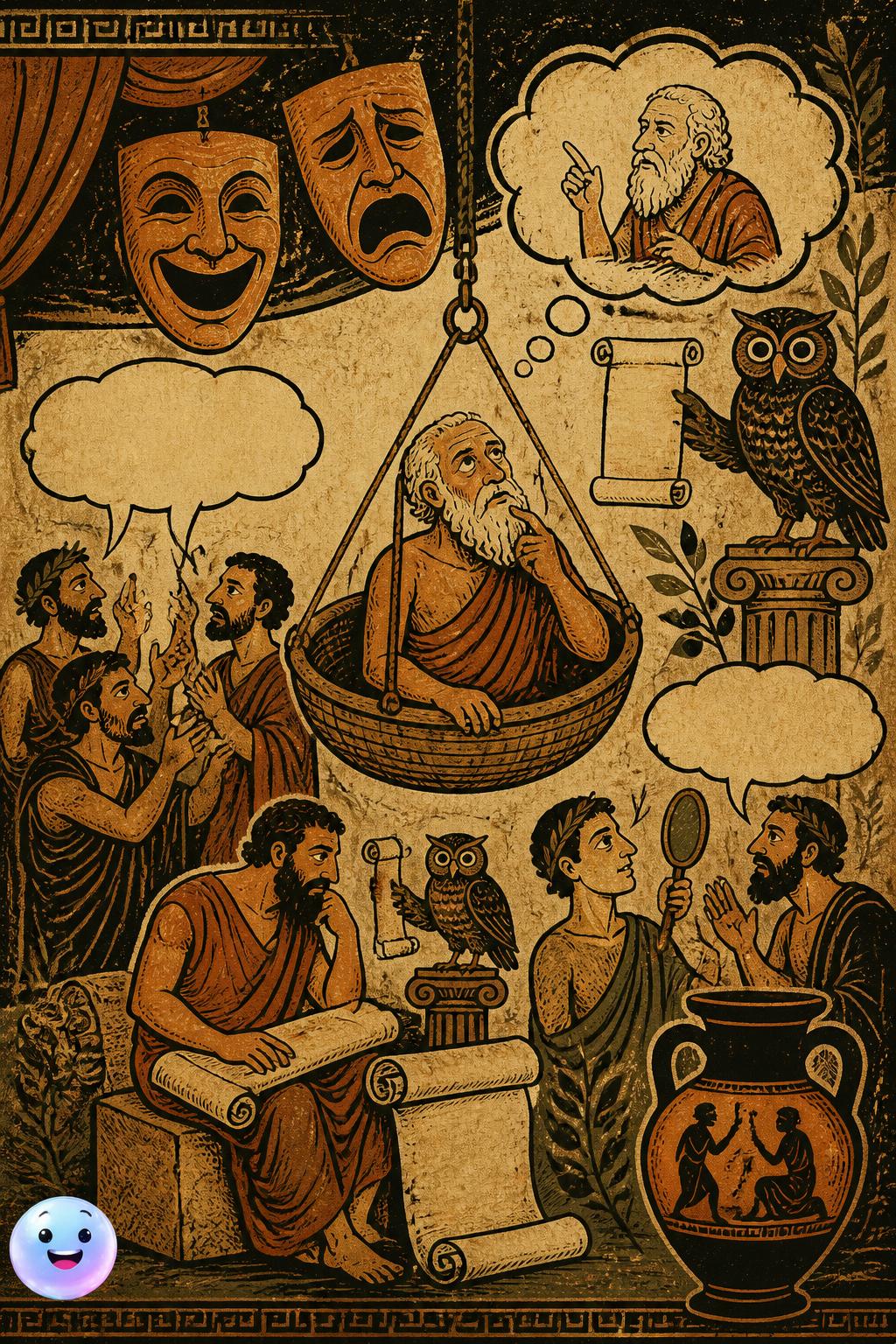
schopenhauer Socrates hangs in a basket alongside theater masks and owls holding scrolls.
Quiz
How many of Aristophanes' original forty-four plays have survived fully intact to this day?
Quiz
Which powerful Athenian military leader did Aristophanes ruthlessly mock in his play The Knights?
Quiz
Which major war between Athens and Sparta was ongoing during most of Aristophanes' career?
BETA
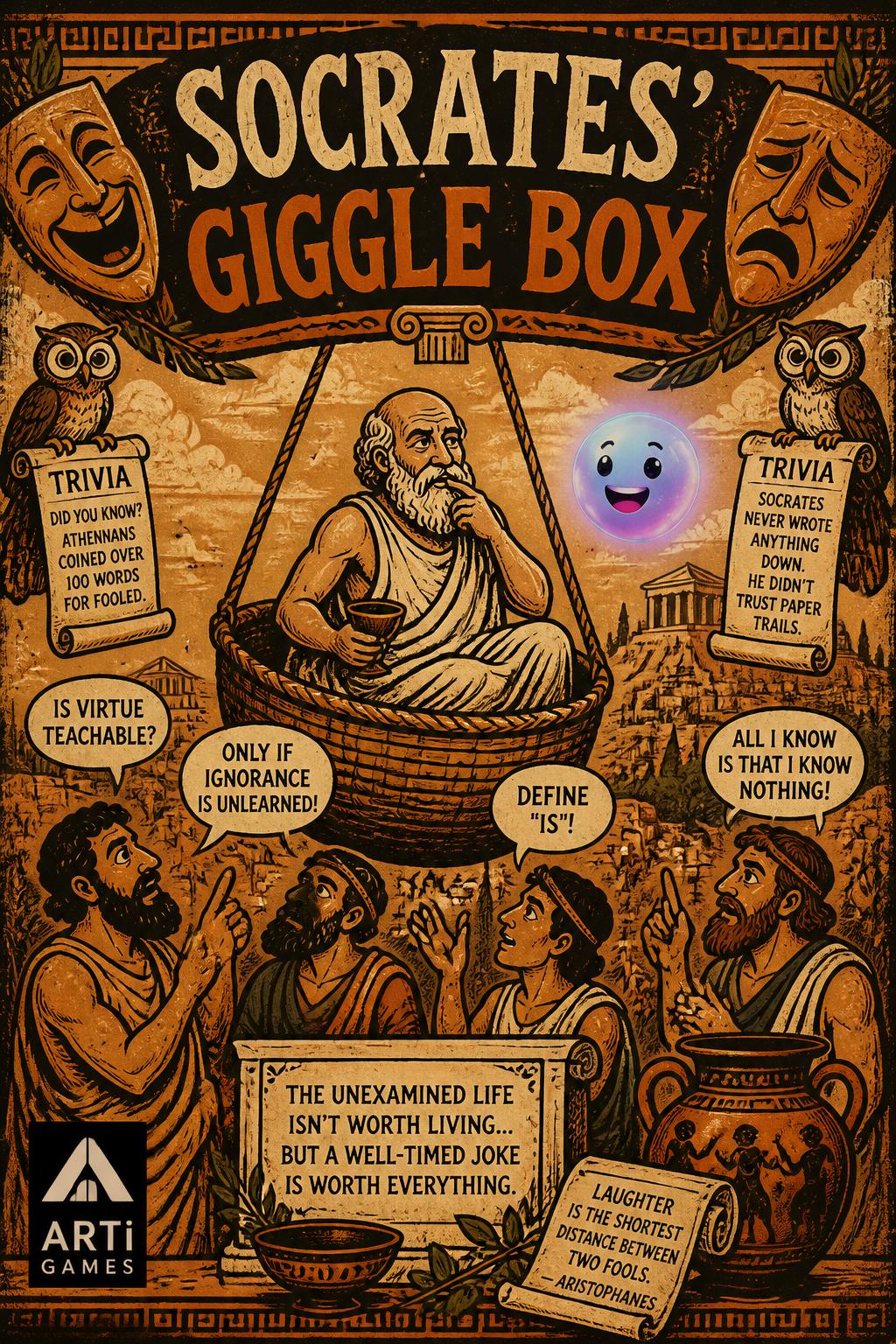
schopenhauer Match funny philosophy quotes to learn how Aristophanes mocked Socrates in ancient Greece.
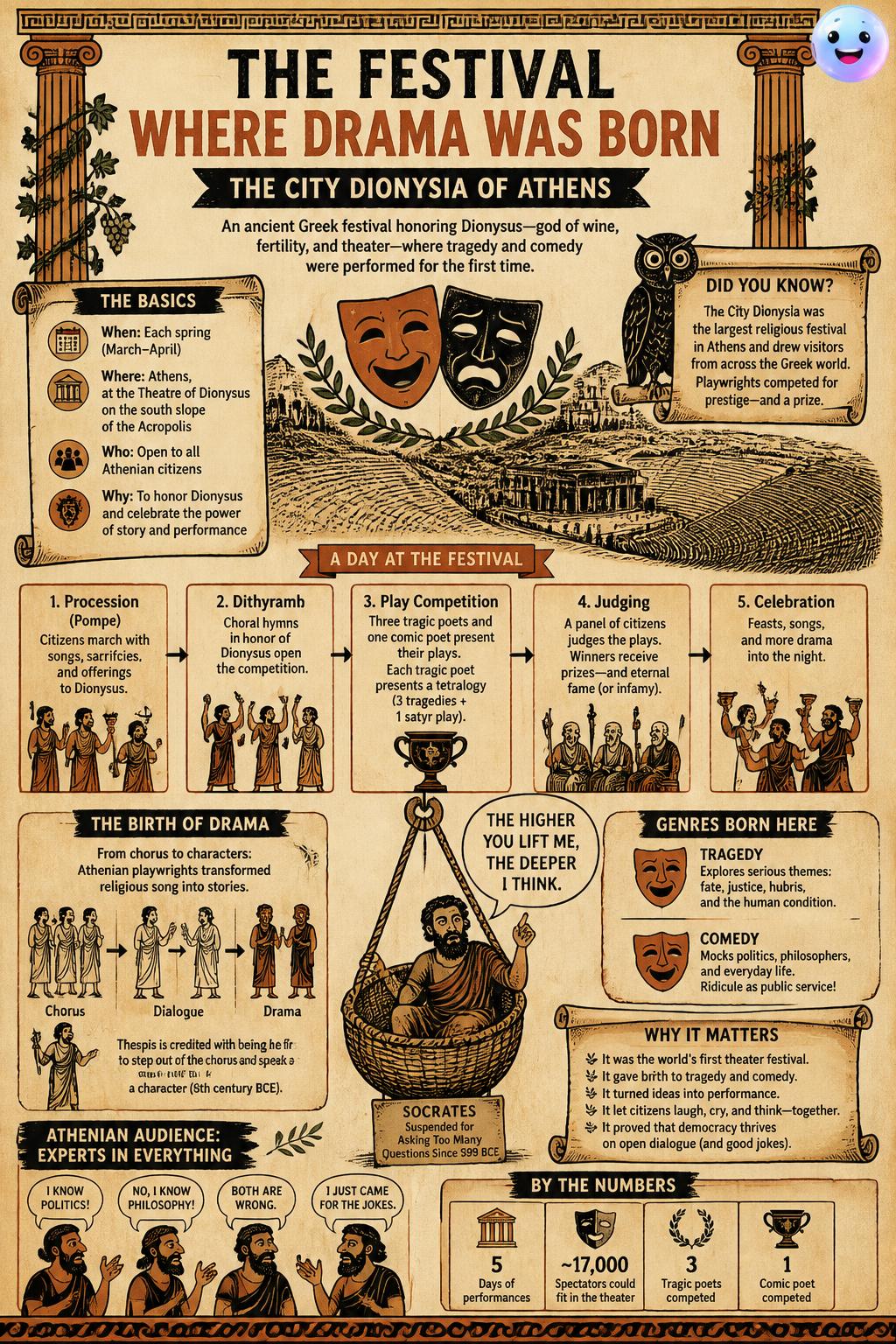
schopenhauer An Attic red-figure illustration on papyrus shows a satirical Greek comedy scene.
Quiz
What is the term for the theatrical device where the chorus speaks directly to the audience?
Quiz
Why did Aristophanes' plays survive while works of other ancient comedy writers were lost?
Quiz
Where in ancient Greece were the comic plays of Aristophanes originally performed?
schopenhauer Ancient Greek Comedy Roast
Floating in a basket, roasted on the stage, Socrates took a bow!
schopenhauer While the Library of Alexandria burned, ancient language lessons saved eleven Greek scripts. These texts remain our only complete examples of fifth-century BC comedy.
Quiz
What distinctive costume piece did actors in ancient Greek Old Comedy wear to portray exaggerated characters?
Quiz
Which ancient Greek god of theater and wine was honored during Athenian dramatic competitions?
Fun Fact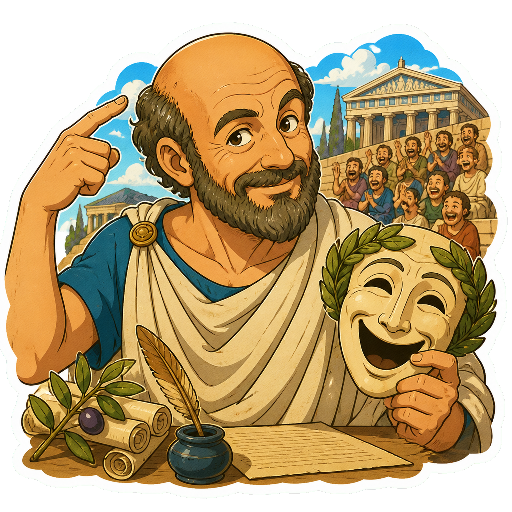
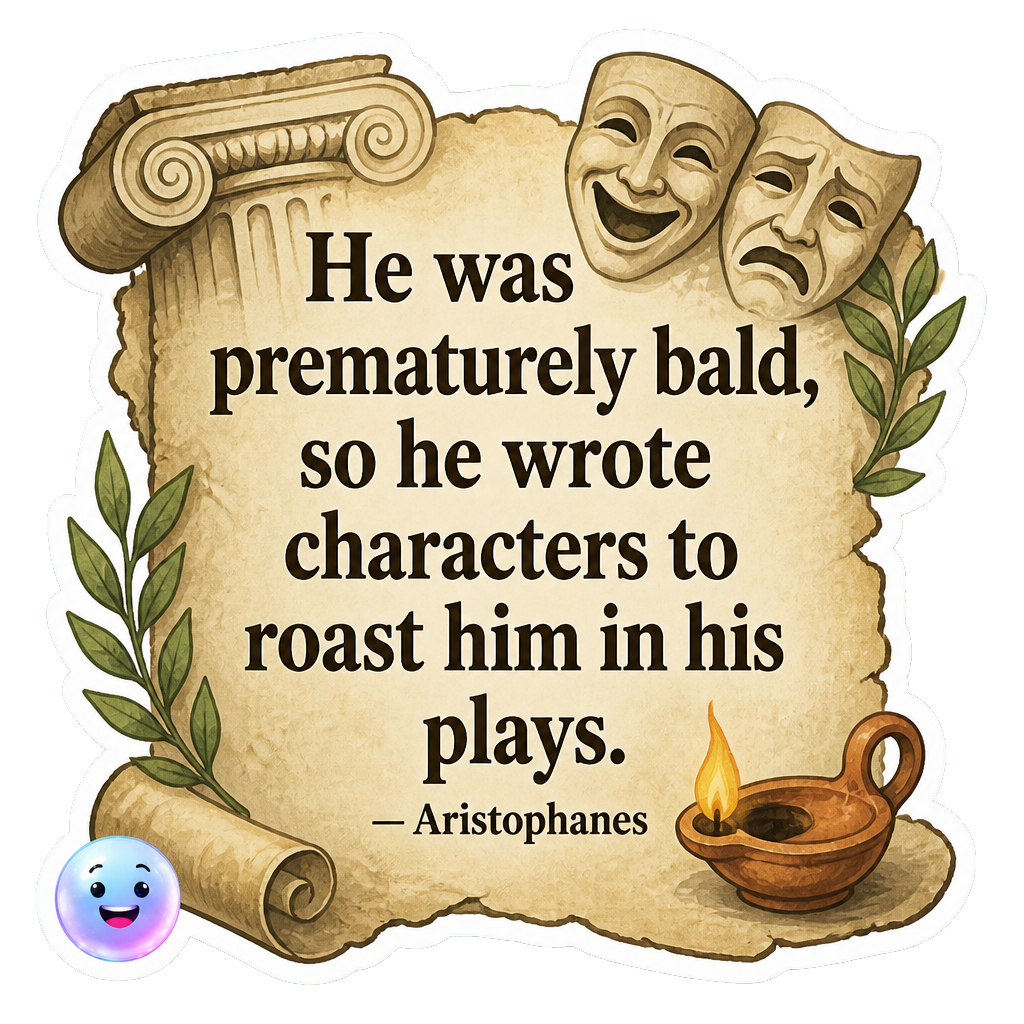
Bald playwright: Aristophanes was apparently prematurely bald, a fact he frequently joked about through characters in his own plays.
Glossary
satire (noun)
The use of humor, irony, exaggeration, or ridicule to expose and criticize human vices or foolishness. Aristophanes used this dramatic tool in classical Athens to mock influential figures like Socrates.
The use of humor, irony, exaggeration, or ridicule to expose and criticize human vices or foolishness. Aristophanes used this dramatic tool in classical Athens to mock influential figures like Socrates.