The birth of the ancient comedy roast
The ultimate beef of ancient Athens
The myth of the split soulmates
Power to the birds frogs and women
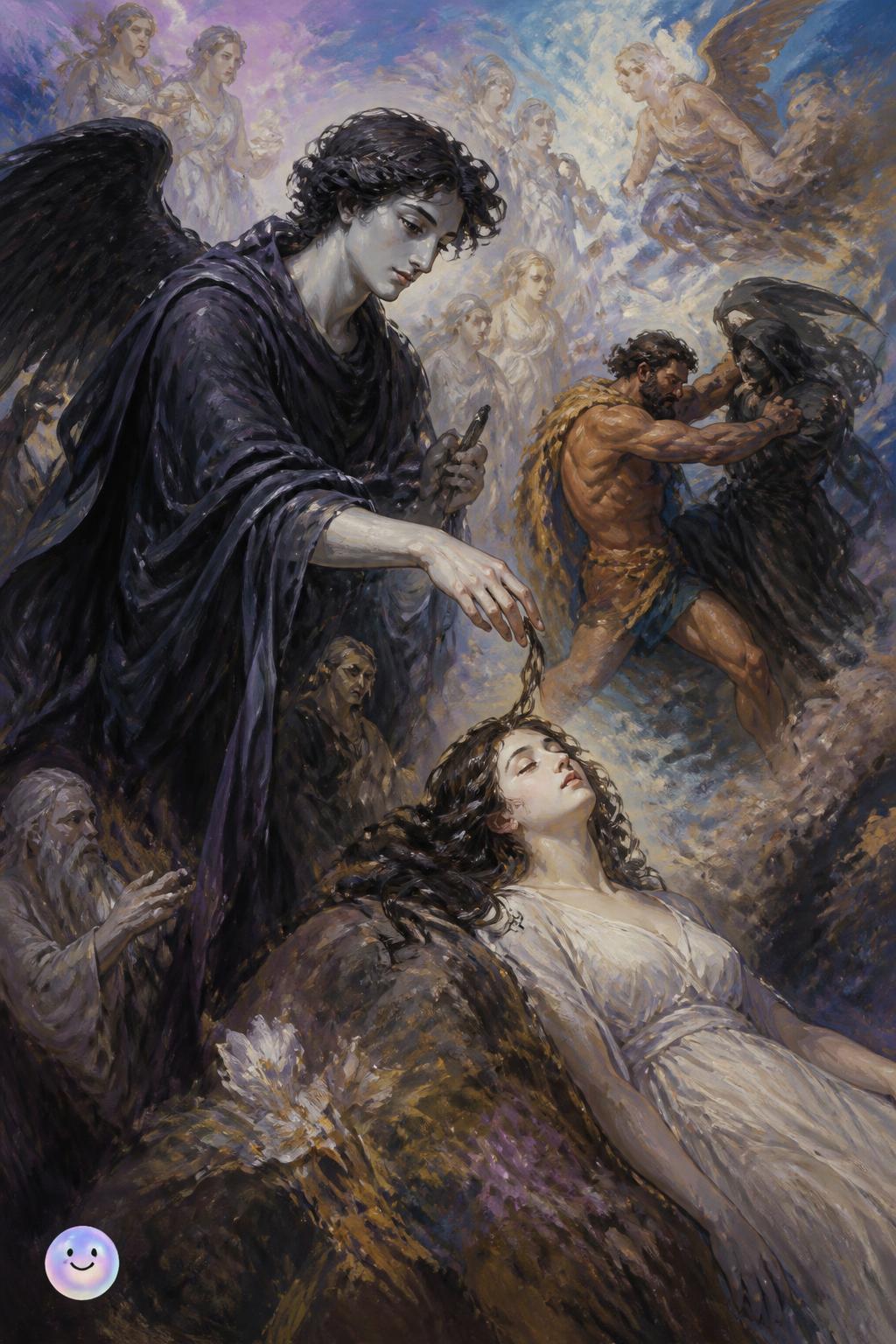
schopenhauer At a lively Athens gathering in 416 BC, guests drink and argue. The playwright Aristophanes shares a wild myth about original humans split in half to explain love.
What embarrassing physical ailment causes Aristophanes to temporarily skip his turn to speak in the Symposium?
Why did the king of the gods, Zeus, decide to cut the original humans in half?
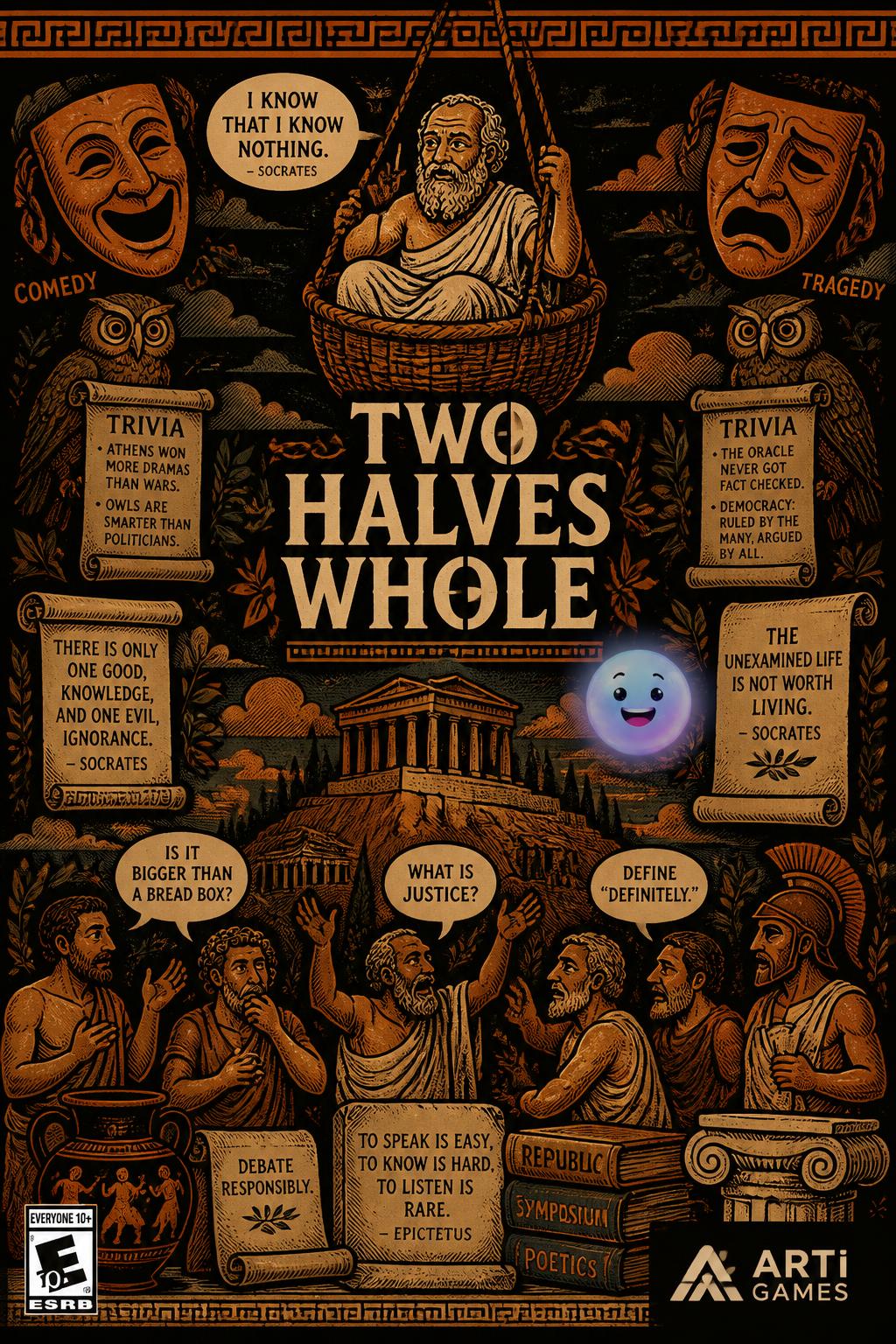
schopenhauer Match the split quotes to discover Aristophanes' ancient philosophy on soulmates.
schopenhauer Aristophanes describes powerful ancestors who cartwheeled rapidly on eight limbs. Their immense strength drove them to climb to heaven and attack the Greek gods.
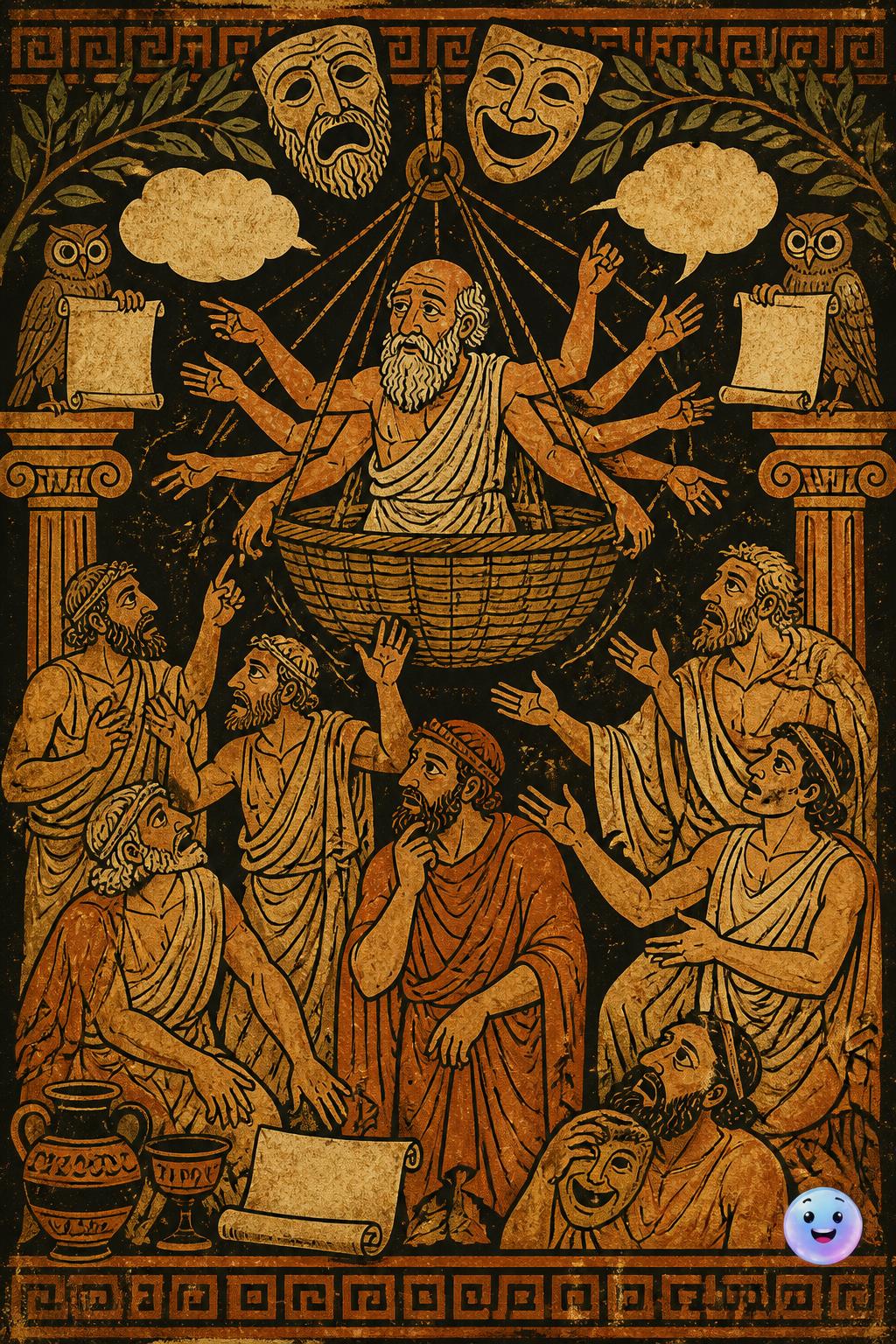
schopenhauer Socrates floats in a basket above eight-limbed humans on terracotta clay.
What modern romantic concept traces its literary origin directly to Aristophanes' speech in the Symposium?
According to Aristophanes' speech, how did the original eight-limbed humans run?
schopenhauer The Split Soulmate Myth
Looking for my other half, my other half / We were split in two, looking for my other half!
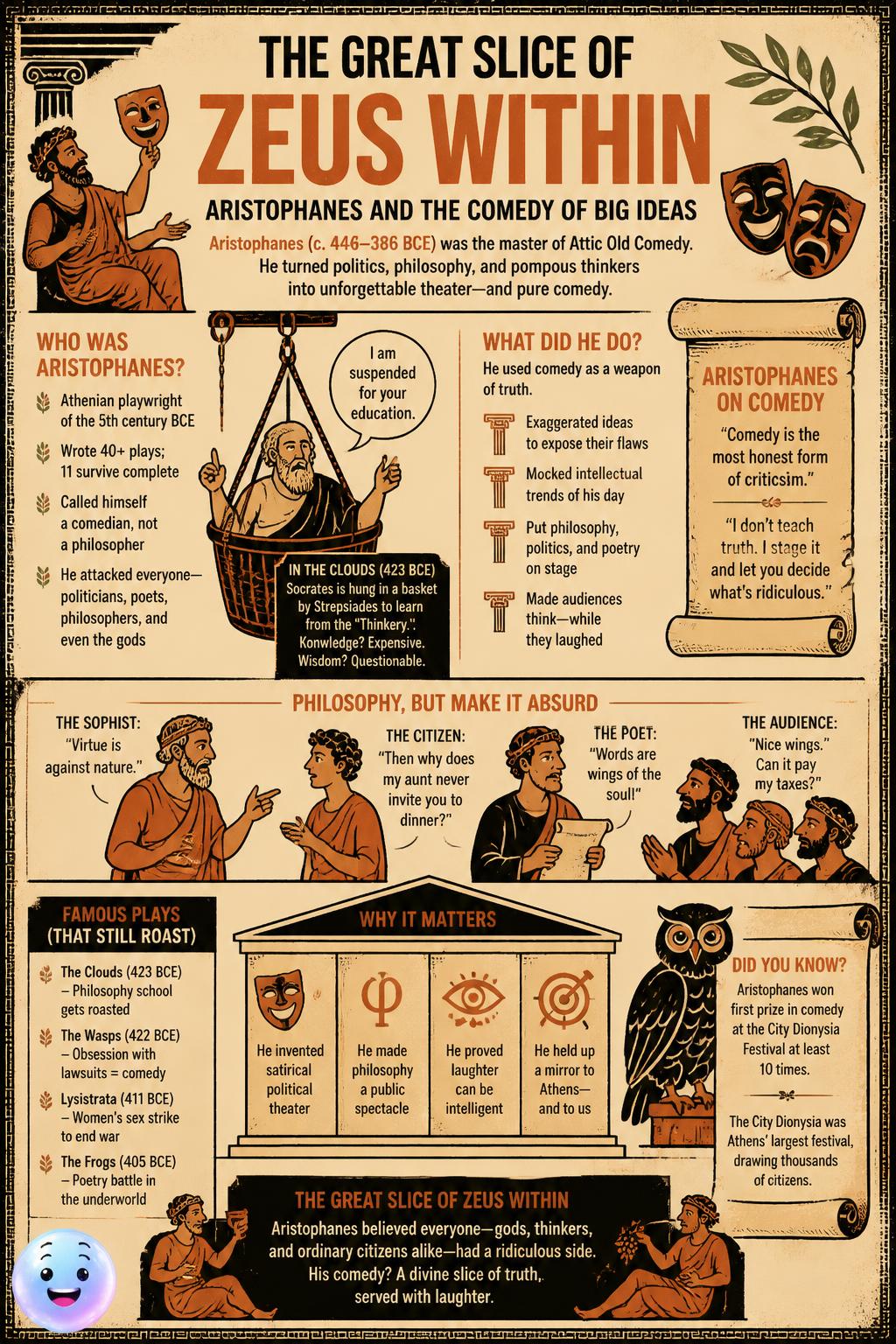
schopenhauer Attic red-figure art on textured papyrus depicts Apollo sewing a split human
Which Greek god sewed up the split humans and created the belly button as a reminder of their origin?
In which of Plato's dialogues does Aristophanes tell the myth of the split humans?
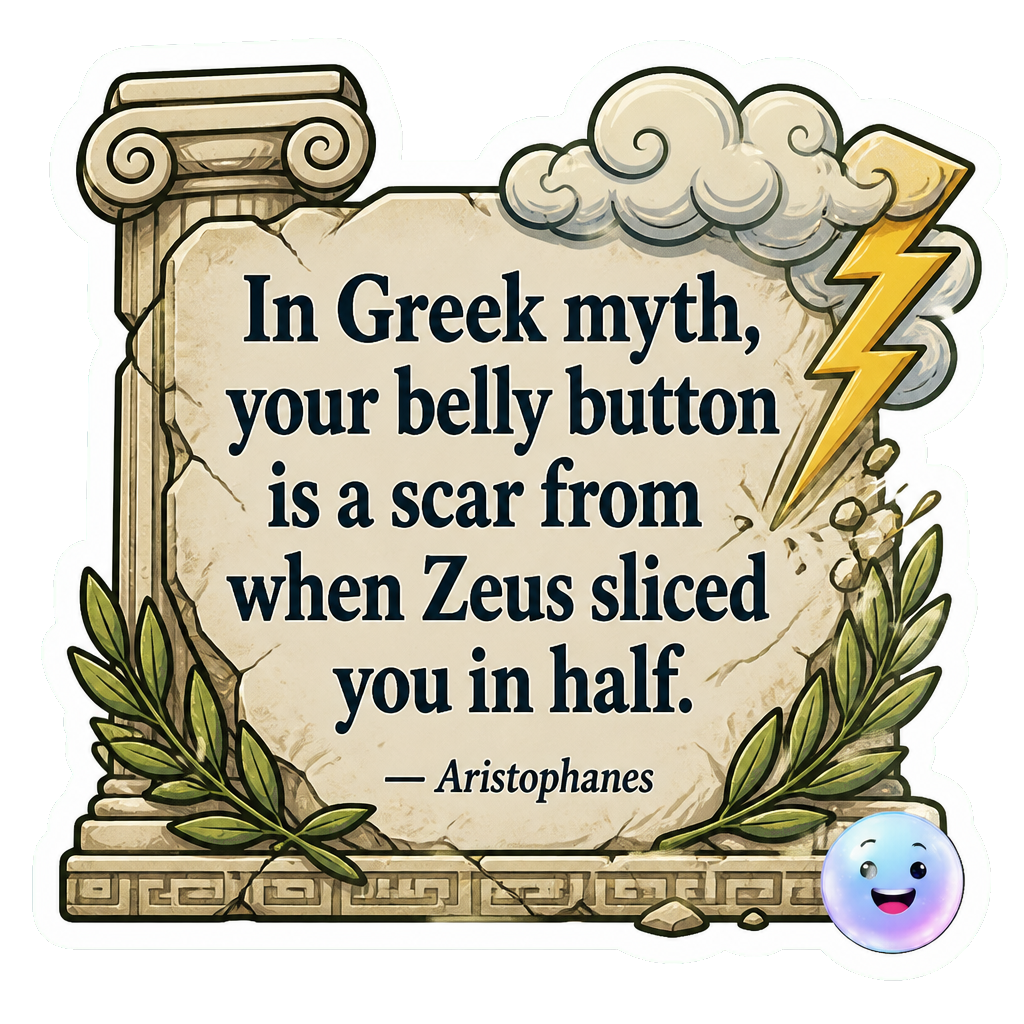
schopenhauer Plato's Symposium from 385 BC features a comedic speech about Zeus splitting humans in half. This ancient Greek tale created our modern search for a perfect match.
How does Aristophanes define the feeling of love in his famous mythological speech?
According to Aristophanes' myth in the Symposium, how many legs did the original human beings have?
Hiccup delay: In the Symposium, Aristophanes is supposed to speak earlier but has to skip his turn because of a bad case of hiccups.
A person ideally suited to another as a close friend or romantic partner. In Plato's Symposium, Aristophanes describes these partners as two halves of a single body split by Zeus.