The spark of thought: How neurons generate electricity
The emotional switchboard: Inside the limbic system
Keeping time: The master clock and circadian rhythms

mankai The amygdala alerts the hypothalamus to danger before the conscious brain even registers the threat.
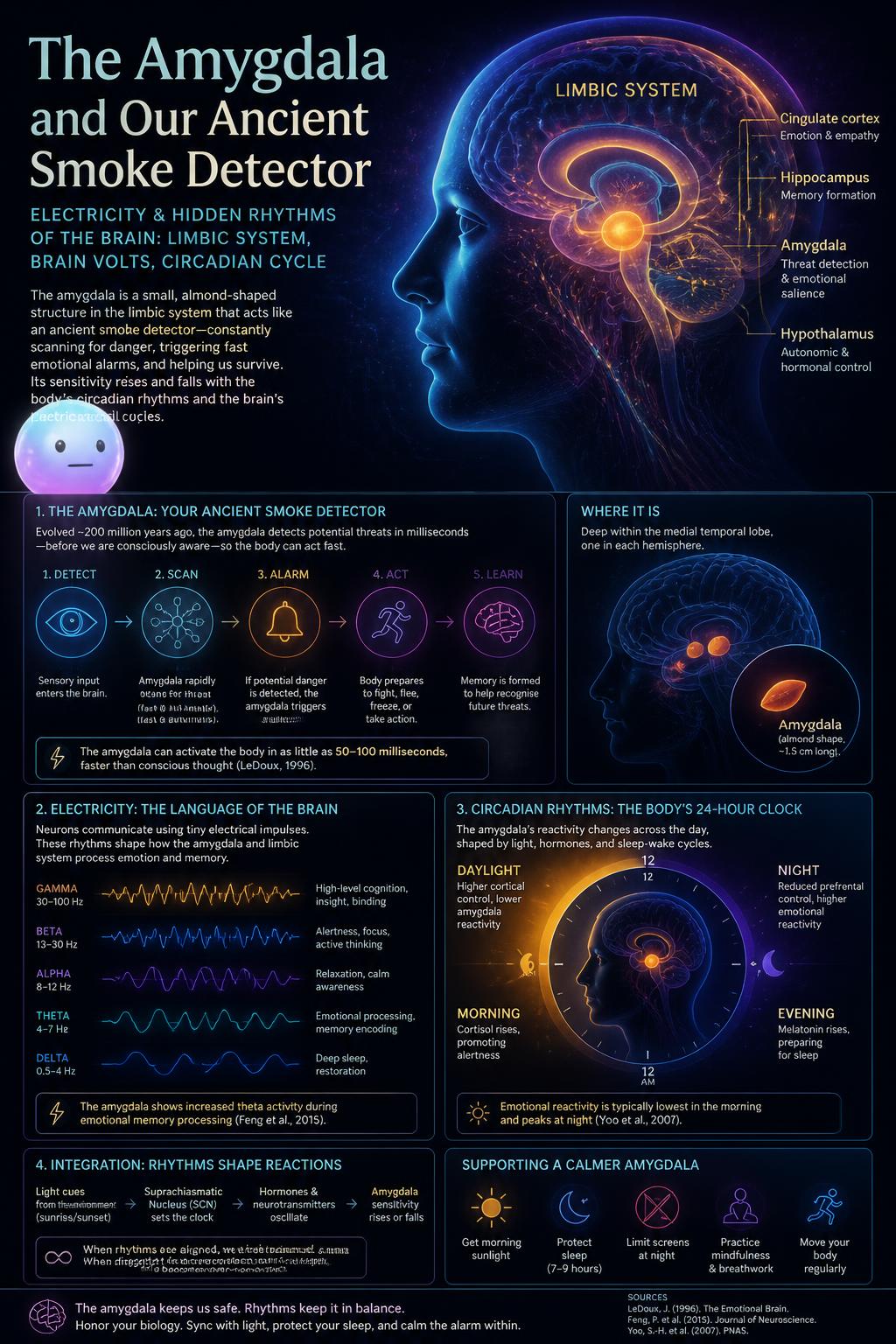
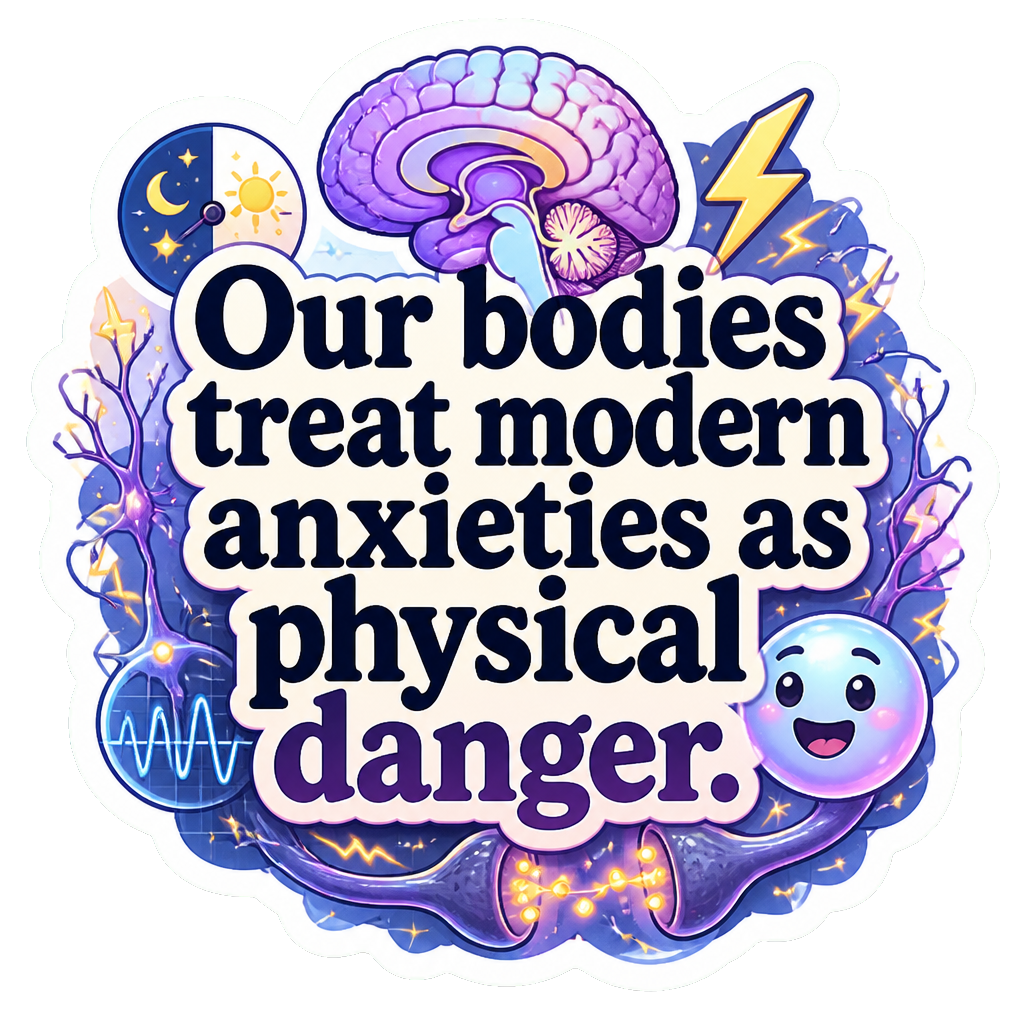
mankai This ancient survival pathway evolved to escape predators, but modern triggers like stressful emails activate the exact same rapid alarm system.
Which bodily response is primarily triggered by the amygdala during a perceived threat?
What is the literal meaning of the Greek word from which the 'amygdala' gets its name?

mankai Route electrical signals through the switchboard to master how circadian cycles control your sleep.
mankai The hippocampus transfers temporary memories to the cerebral cortex for permanent storage during deep sleep

mankai Electrical rhythms in the limbic system guide the brain's nightly memory filing process.
During which physiological state does the hippocampus mainly transfer memories to the cortex for long-term storage?
mankai The hypothalamus constantly monitors your blood to keep your body in a balanced state called homeostasis
Which master gland does the hypothalamus directly control to release hormones throughout the body?
What is the biological term for the stable internal environment that the hypothalamus works to maintain?
Amygdala size: The amygdala, your brain's emotional threat detector, is shaped like and named after an almond.
mankai The brain releases dopamine into the nucleus accumbens to reinforce rewarding behaviors so we repeat them.
mankai Dopamine Reward Pathway
It's a surprise, it's a surprise, The spark fires way before the prize.
Which brain region serves as the primary pleasure and reward center within the dopamine pathway?
Which neurotransmitter is most famously associated with the brain's reward and motivation pathways?
A complex network of brain structures, including the amygdala and hippocampus, that regulates emotions, memory, and basic drives. French physician Paul Broca first classified this anatomical region in 1878 as the grand lobe limbique.