The inner plumbing of thirst
Busting the H2O myths
The danger zone of overhydration
Global adaptation and ancient wisdom
doctorx A misunderstood guideline from 1945 created the popular myth about daily water drinking targets.
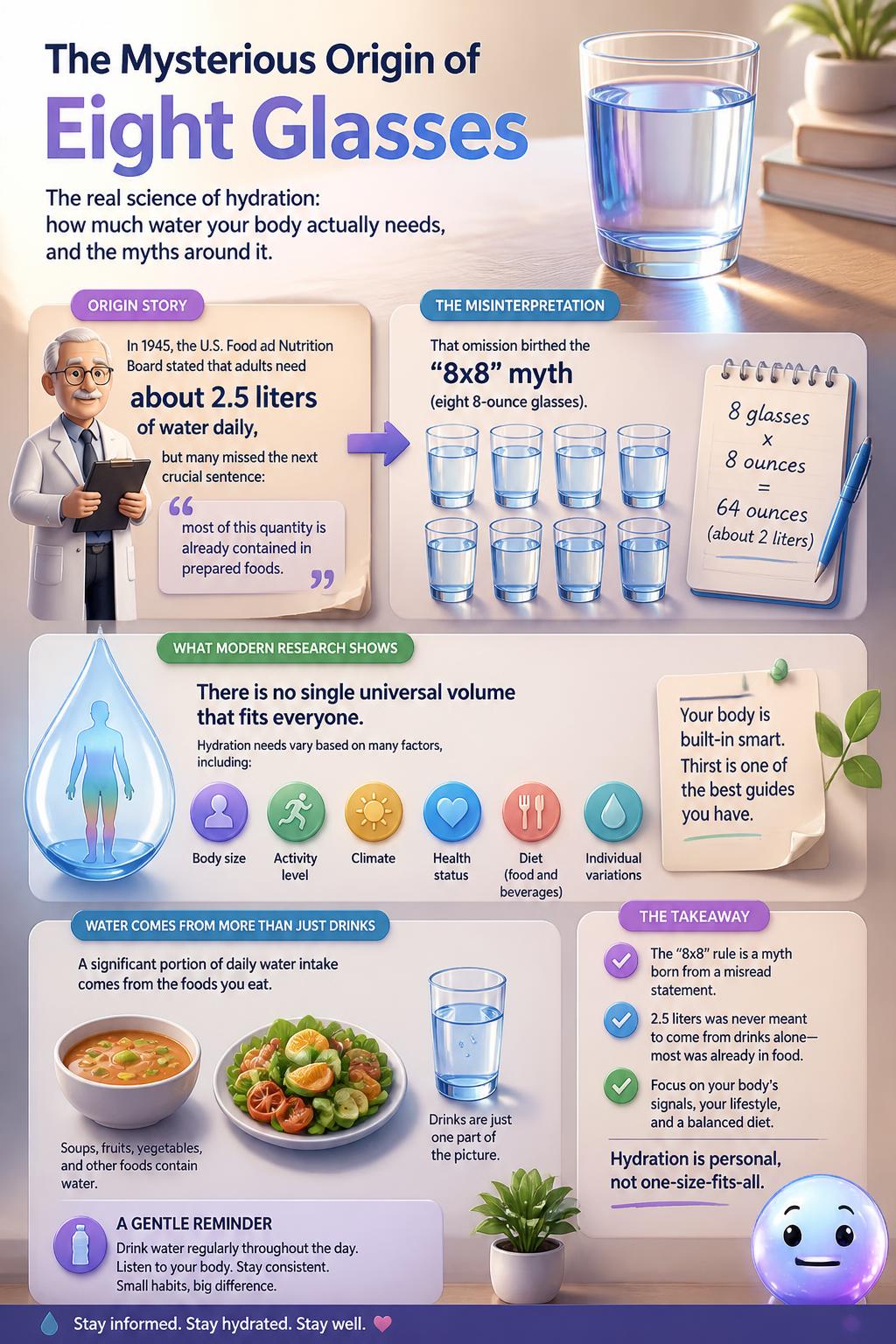
doctorx Readers in 1945 missed that prepared foods contain most of the U.S. Food and Nutrition Board's recommended 2.5 liters of daily water.
Why is the universal "eight glasses of water a day" rule considered a myth by modern scientists?
In what year did the U.S. Food and Nutrition Board release the recommendation that was later misinterpreted as the eight-glasses-a-day rule?

doctorx Sort hydration facts from fiction to discover how much water your body actually needs.
doctorx Solid foods provide roughly twenty percent of the average person's daily water intake
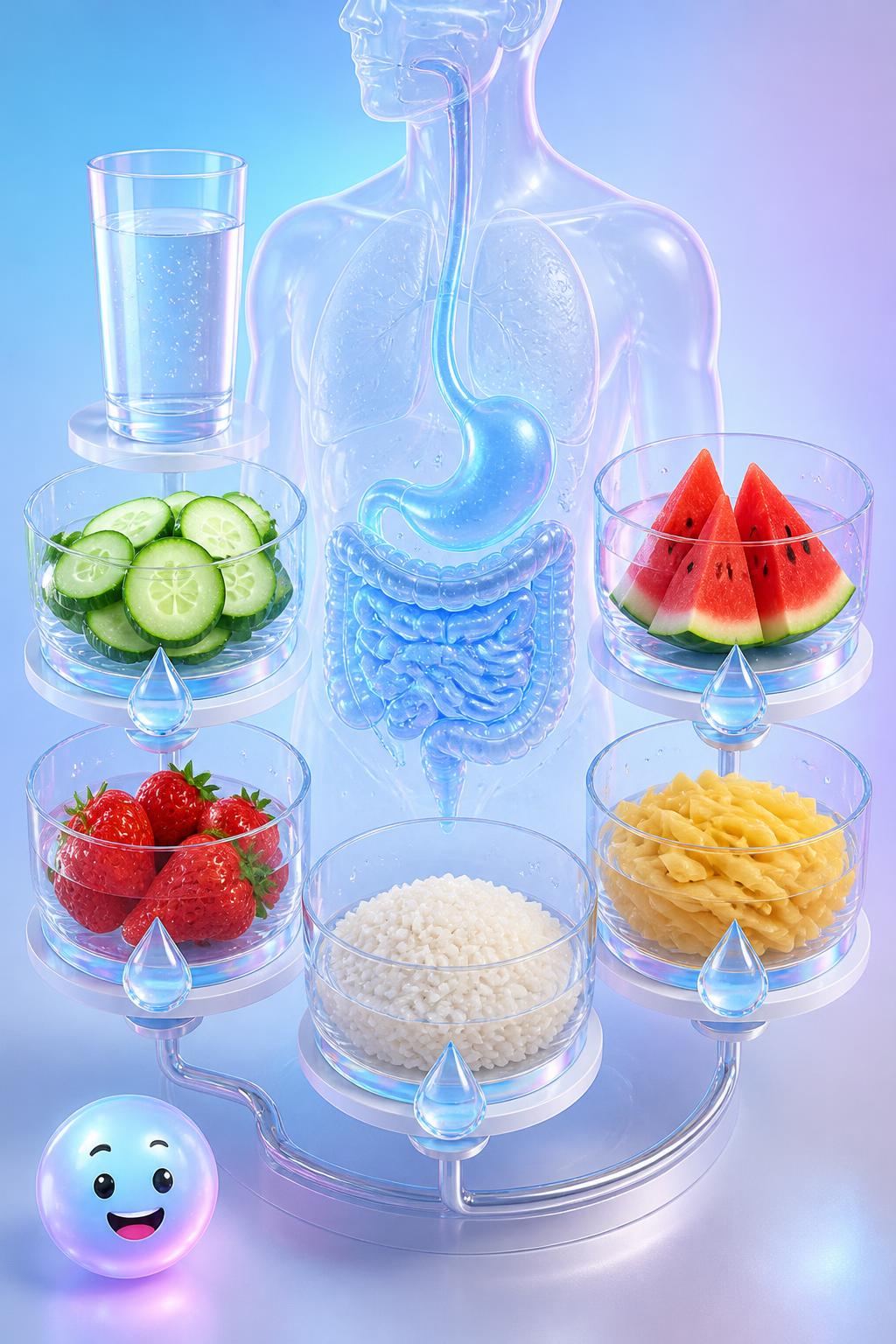
doctorx Water-rich foods like cucumbers and strawberries deliver hydration alongside essential nutrients.
Which of these common vegetables has the highest water content by weight, coming in at about 96% water?
Approximately what percentage of a person's daily water intake typically comes from solid foods in a standard diet?
doctorx Hydration Science
It all counts, it all counts, Even your morning coffee counts!
What is the term for a substance, like caffeine or alcohol, that promotes the production of urine?
Why do moderate amounts of coffee and tea still count toward your daily hydration goals?
Why doesn't drinking extra water past the point of healthy hydration improve dry skin?
What is the medical term for the skin's ability to snap back into place, which decreases during severe dehydration?
Hydrating foods: Cucumbers and watermelons are made of over ninety percent water, helping you eat your daily fluids.
A condition caused by the excessive loss of water from the body. In 2002, researcher Heinz Valtin found no scientific evidence supporting the popular eight glasses a day recommendation.