Chapter 1
The inner plumbing of thirst
Chapter 2
Busting the H2O myths
Chapter 3
The danger zone of overhydration
Chapter 4
Global adaptation and ancient wisdom
Ch 4 · Global adaptation and ancient wisdom
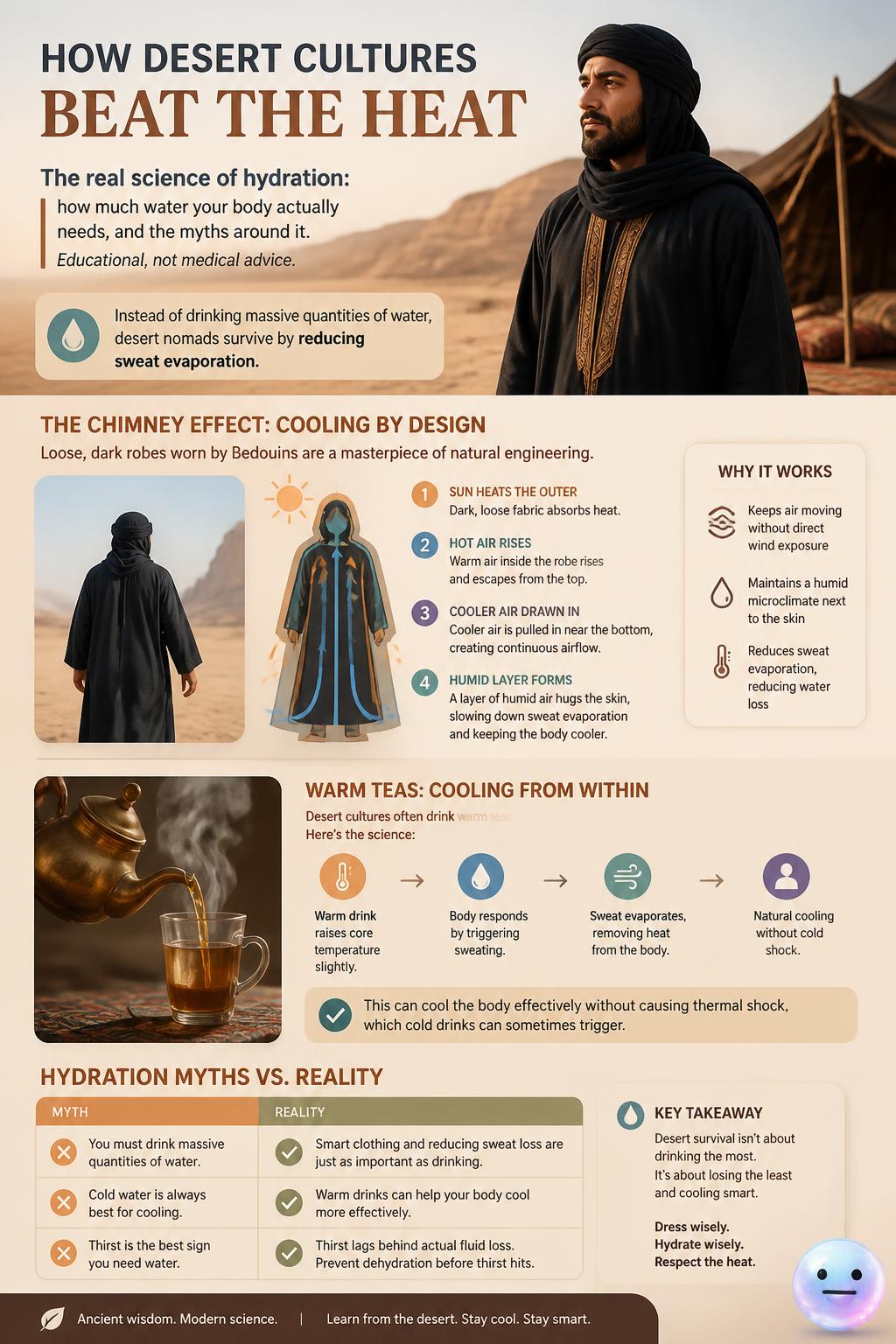
doctorx Loose dark Bedouin robes create a cooling chimney effect trapping humid air to slow sweat loss, while warm teas trigger sweating.
Quiz
How do the loose, flowing robes of Bedouin nomads help them stay cool and conserve water in the desert?
Quiz
Why do many desert cultures drink hot tea instead of ice-cold water in extreme heat?
BETA
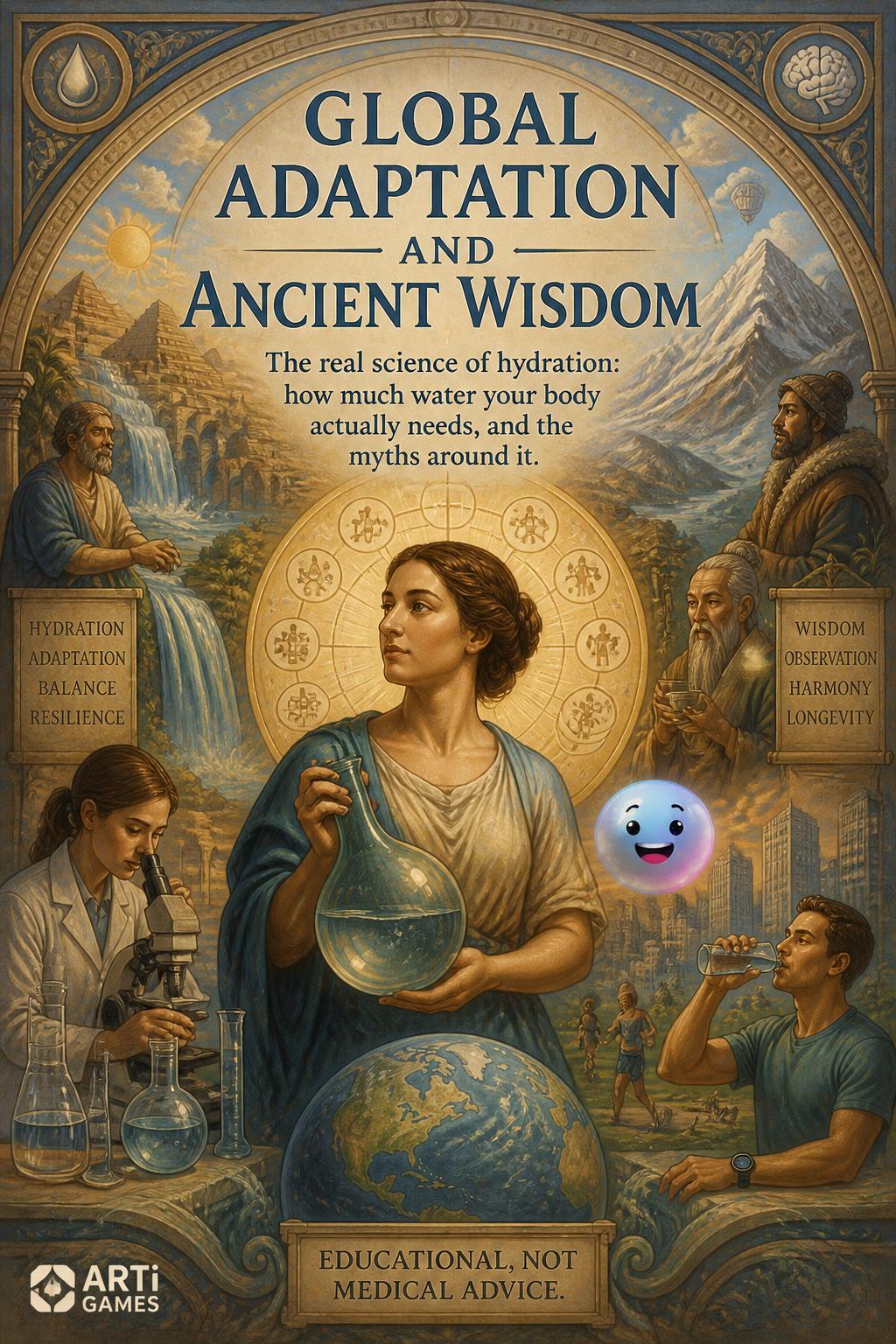
doctorx Match ancient survival tactics to extreme climates to discover how global cultures stayed hydrated.
doctorx The North American kangaroo rat never drinks liquid water, extracting all its moisture from dry seeds.
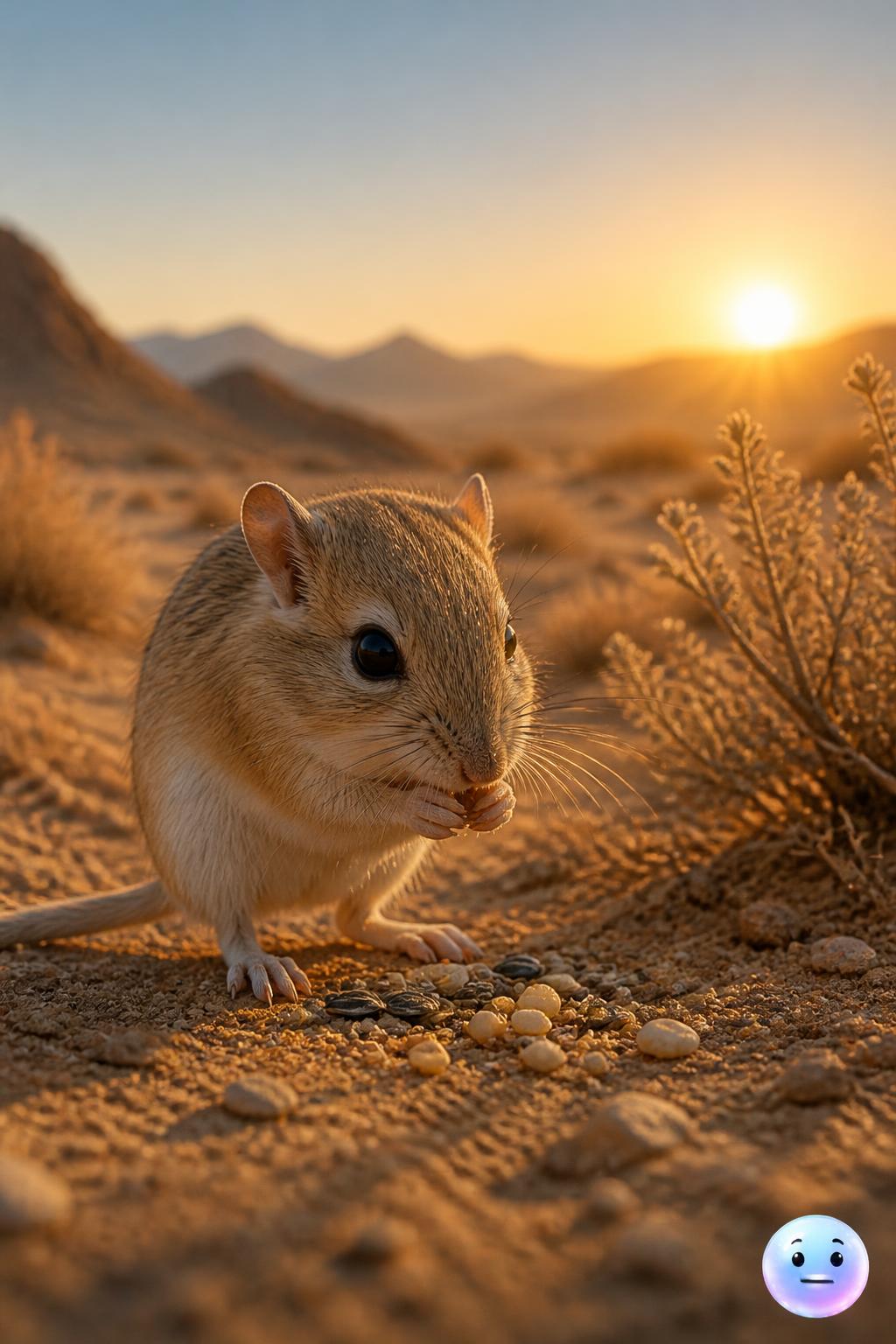
doctorx Specialized kidneys prevent water loss by turning urine into an almost solid paste.
Quiz
How does the desert-dwelling kangaroo rat obtain all of its water without ever taking a drink?
Quiz
What physiological adaptation allows camels to survive up to two weeks in the desert without drinking water?
Quiz
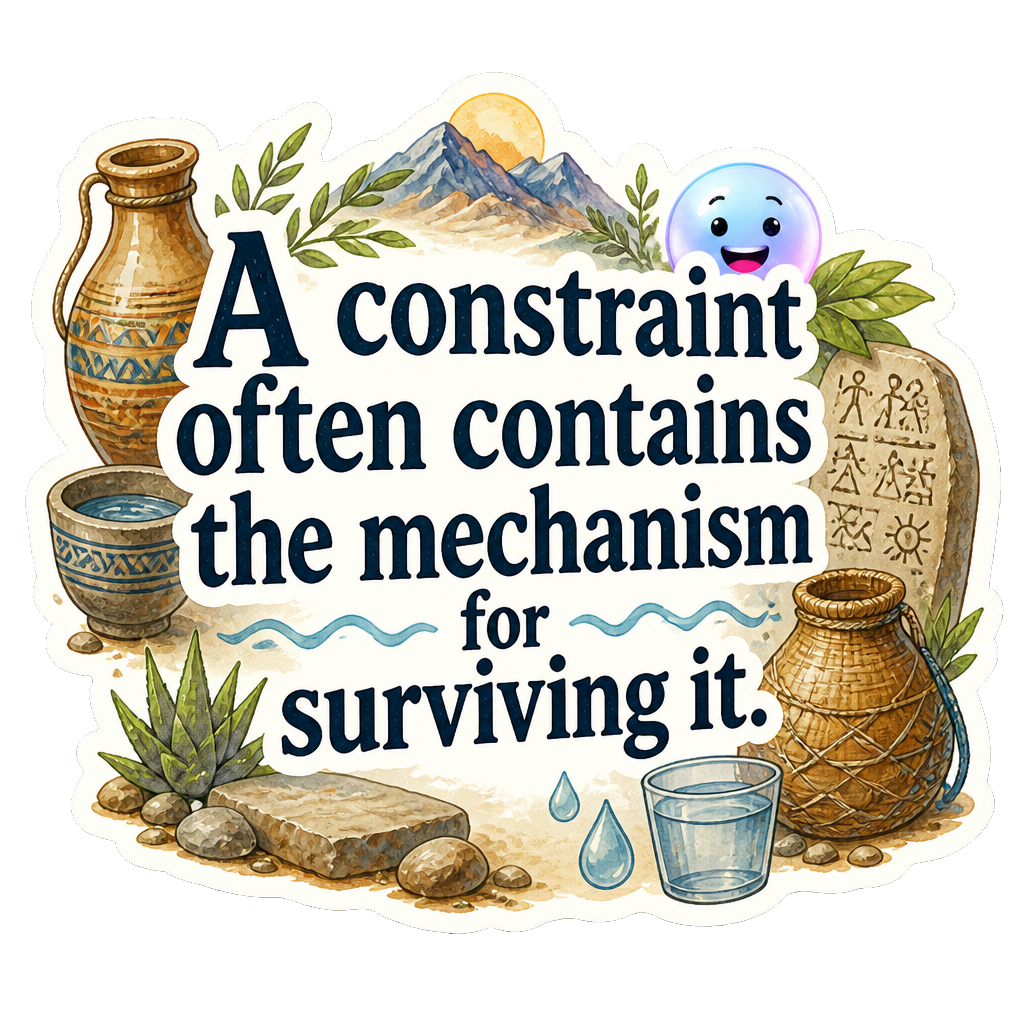
What physical principle do ancient clay water coolers, like the Indian matka, use to chill water?
Quiz
By up to how many degrees Celsius can a traditional double-walled clay "zeer" pot lower the temperature of water inside it?
Fun Fact
No-drink rodents: The desert kangaroo rat never drinks water, surviving entirely on moisture made from digesting dry seeds.
doctorx Human kidneys accelerate dehydration by using vital bodily fluids to flush out seawater's 3.5 percent salt concentration
doctorx Saltwater Survival
Your kidneys lose more water than you drank, just to wash the heavy salt away.
Quiz
What is the approximate salt concentration of typical ocean water compared to human blood?
Quiz
Why does drinking seawater actually accelerate human dehydration instead of relieving it?
Glossary
adaptation (noun)
A biological alteration by which an organism or species becomes better suited to its environment. The nomadic Turkana of Kenya evolved genetic changes over millennia to conserve water in arid desert environments.
A biological alteration by which an organism or species becomes better suited to its environment. The nomadic Turkana of Kenya evolved genetic changes over millennia to conserve water in arid desert environments.