
Chapter 1
The basic combo of nothingness and the absurd
Chapter 2
Happy meals and the illusion of joy
Chapter 3
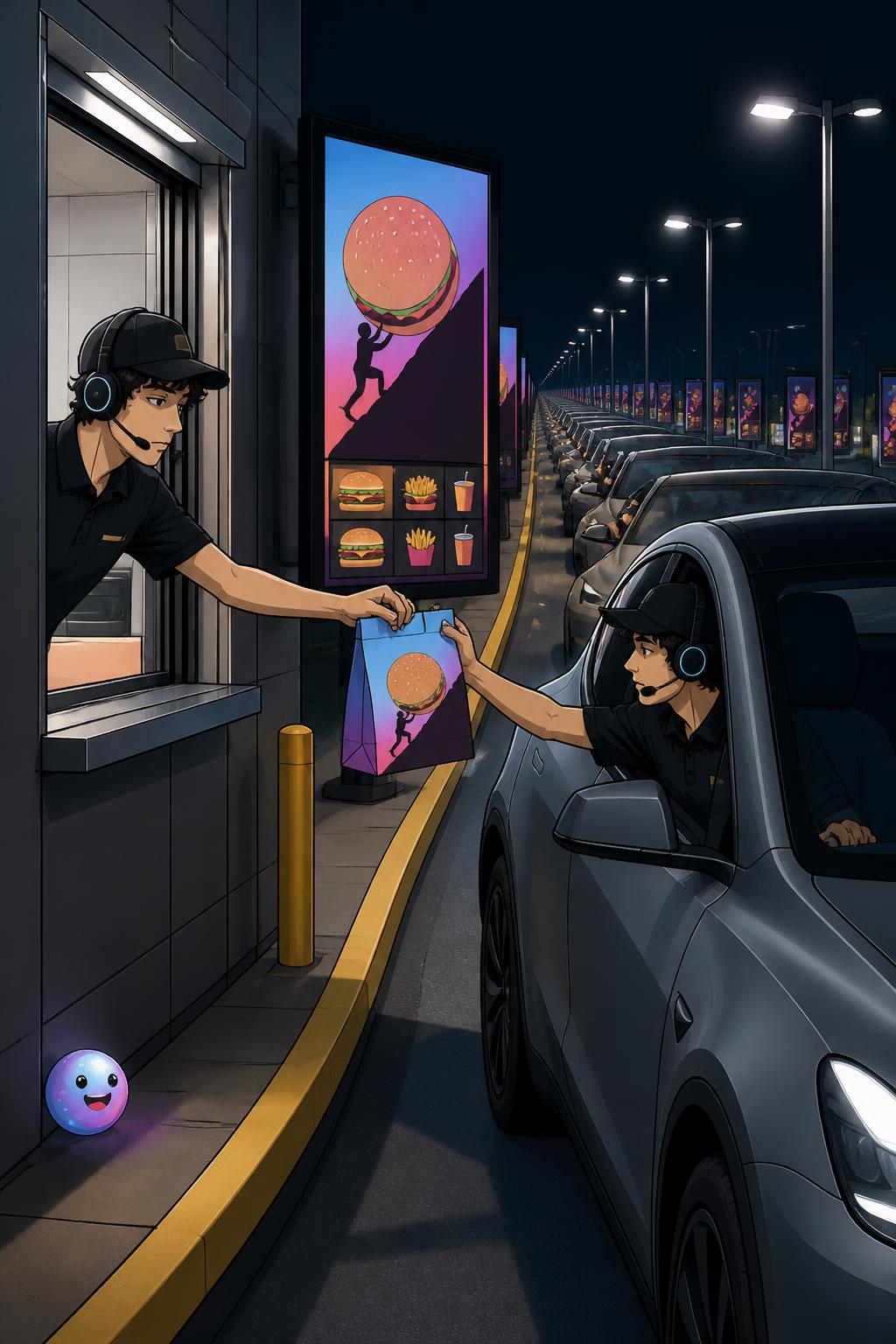
Sisyphus at the drive-thru window
Chapter 4
Overcoming the void with a side of fries
Ch 3 · Sisyphus at the drive-thru window
Quiz
What is the sociological term for the psychological state of exhaustion and lack of meaning in repetitive daily labor?
Quiz
Which fast-food chain is credited with opening the first drive-thru window in California in 1948?
BETA
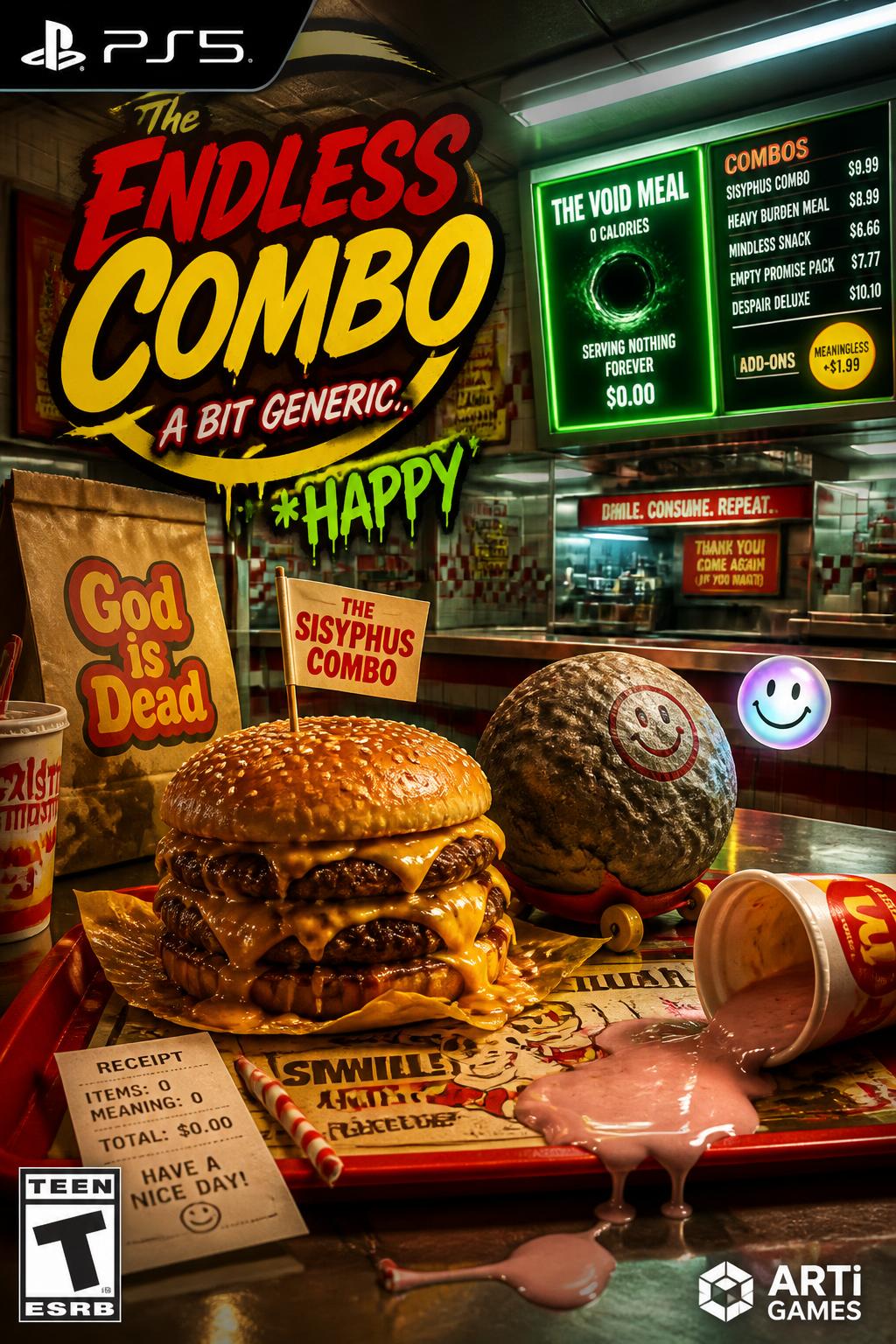
choko Build endless burger combos to learn how philosophers find happiness in a meaningless world.
choko In-N-Out's 1948 drive-thru created an instant-consumption culture that responds to Gen Z's existential crises.
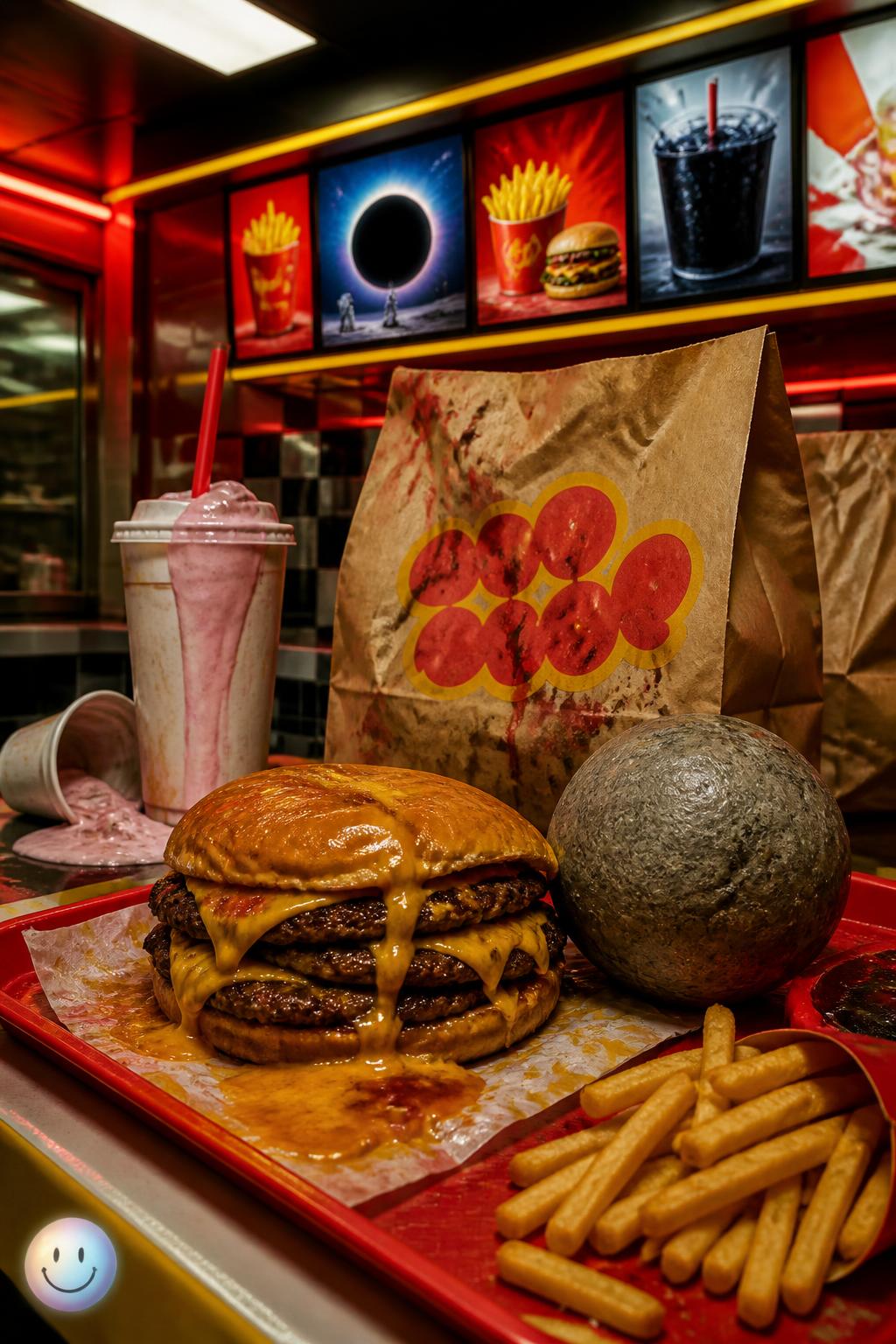
choko The continuous cycle of late-night drive-thrus represents our endless search for instant gratification in a silent universe.
Quiz
What classic 1942 French novel by Albert Camus features a protagonist named Meursault who reacts indifferently to his mother's death?
Quiz
In what year did French-Algerian author Albert Camus win the Nobel Prize in Literature?
choko Repetitive fast-food shifts can spark Camus's existential clarity, forcing Gen Z to question their daily routine.
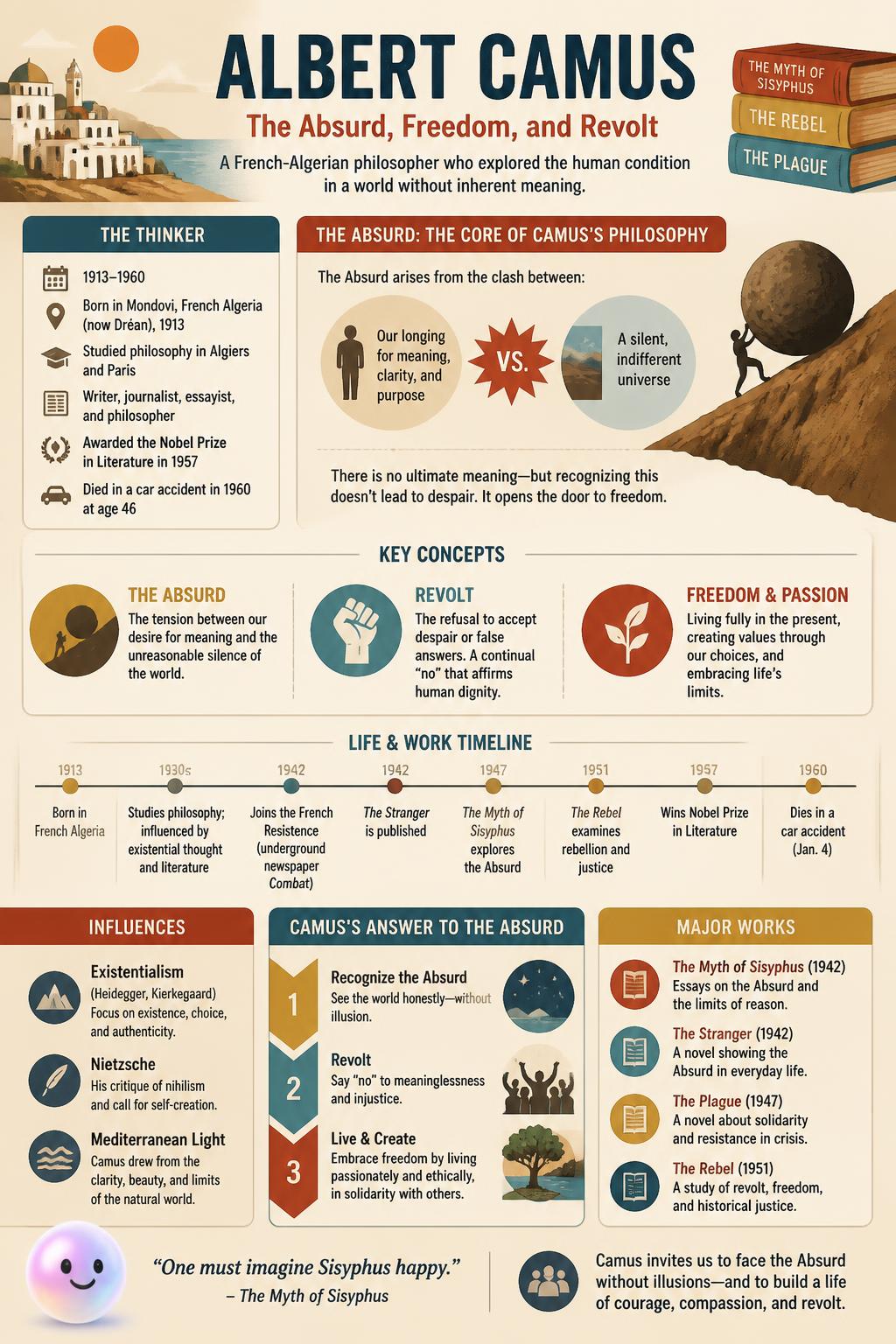
choko The repetitive rhythm of fast-food shifts mirrors the mechanical routine Camus identified as a trigger for existential awakening.
Quiz
What French philosopher was Albert Camus's famous contemporary and rival, who championed Existentialism?
Quiz
What is Friedrich Nietzsche's thought experiment of living your exact life repeatedly for eternity called?
Fun Fact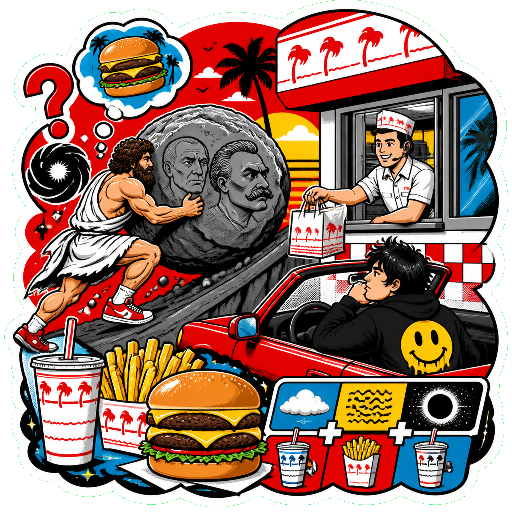
Drive-thru origins: In-N-Out Burger created the first drive-thru window in 1948 in California, introducing a speaker system that revolutionized modern, frictionless food consumption.
choko Nietzsche’s eternal recurrence asks if you can love eating the same lukewarm cheeseburger forever.
Quiz
Which of the following is NOT one of the three consequences Albert Camus proposed for accepting the Absurd?
Glossary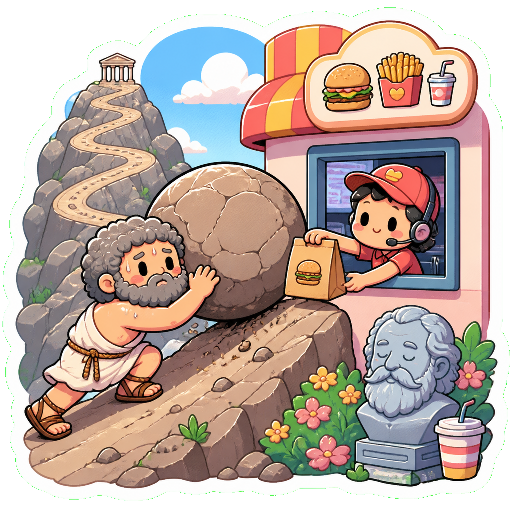
sisyphean (adjective)
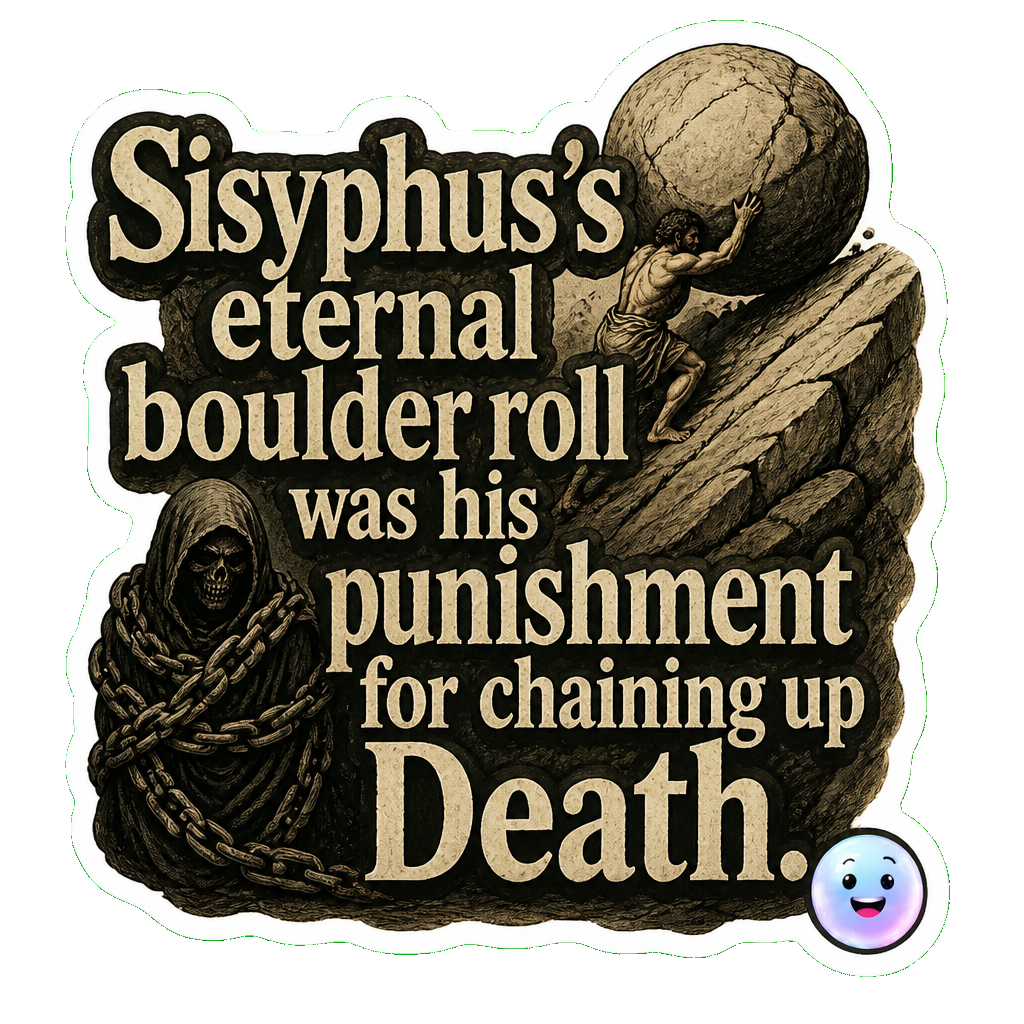
Relating to a task that can never be completed, requiring continual and often ineffective effort. Camus's 1942 essay describes this endless labor, which mirrors the repetitive cycle of modern drive-thru employees.
Relating to a task that can never be completed, requiring continual and often ineffective effort. Camus's 1942 essay describes this endless labor, which mirrors the repetitive cycle of modern drive-thru employees.