The physics of the slide
From sackbut to symphony
The trombone's voice in the orchestra
Beyond the classical stage
maestro This fifteenth-century brass instrument featured thin metal walls and a small bell. Its mellow sound blended beautifully with human voices in church choirs and royal courts.
What major 19th-century historical development allowed brass instruments like the trombone to be mass-produced?
Which famous American bandmaster featured trombone showmanship in his late 19th-century touring military bands?
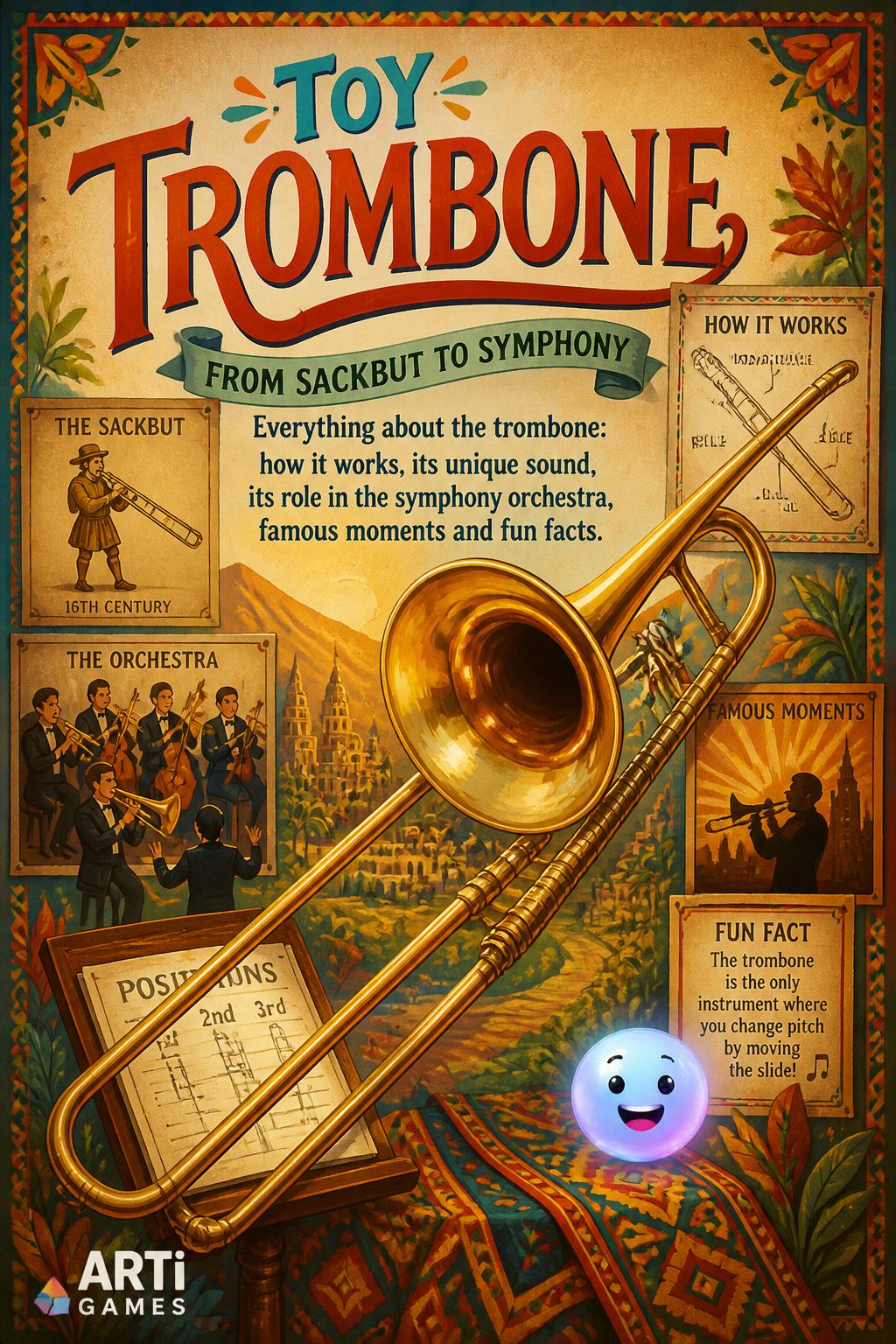
maestro Drag the slide to match pitches to discover how the trombone creates its unique sound.
maestro The composer added alto, tenor, and bass trombones to his Fifth Symphony in 1808. This bold move permanently shifted the instrument from church choirs to the modern orchestra.
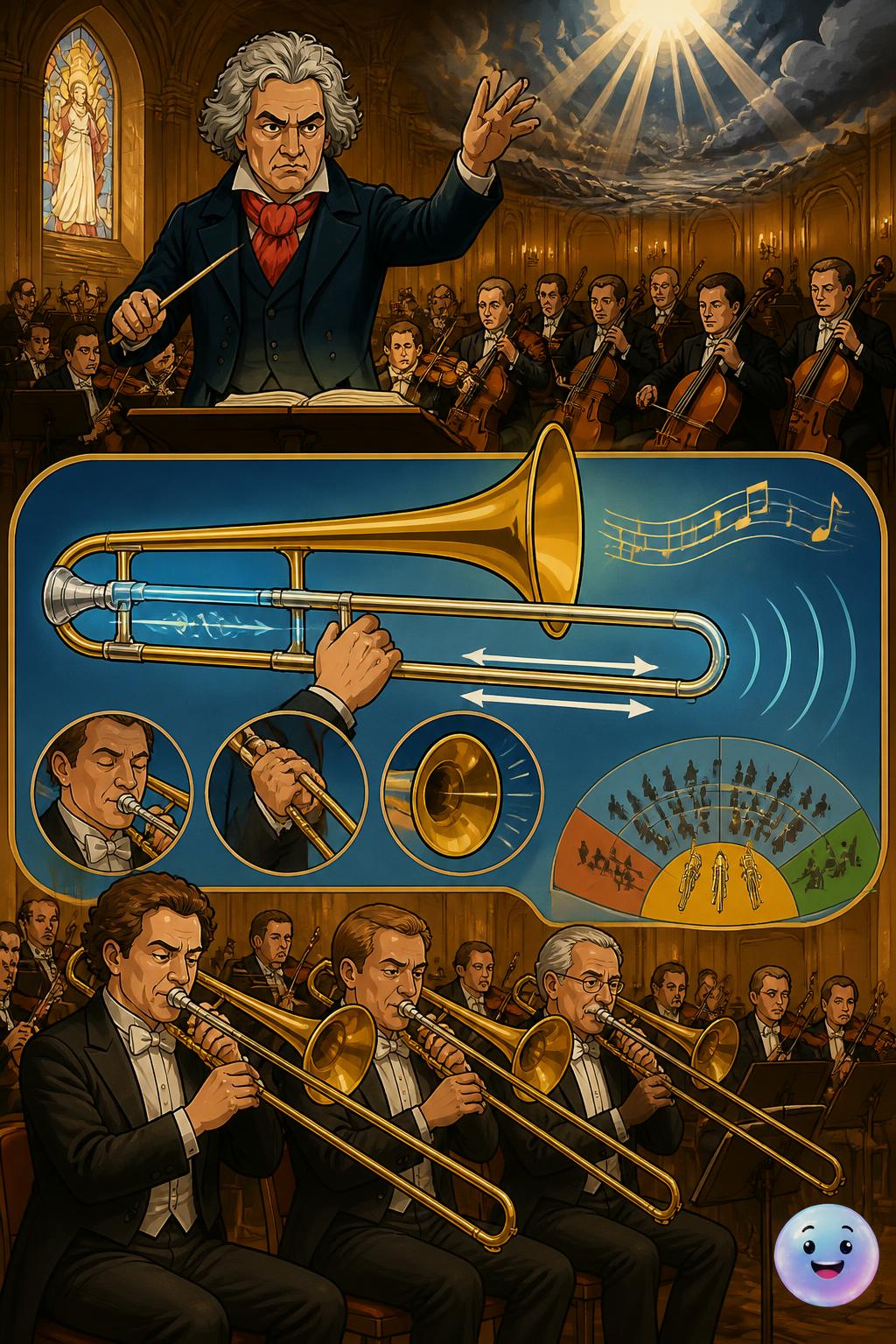
maestro A cartoon Beethoven bursts through a brick wall while holding a golden trombone.
In which of his famous symphonies did Ludwig van Beethoven first introduce trombones to the mainstream classical orchestra?
maestro From Sackbut to Symphony
Push and slide, push and slide, Five hundred years of that brassy pride!
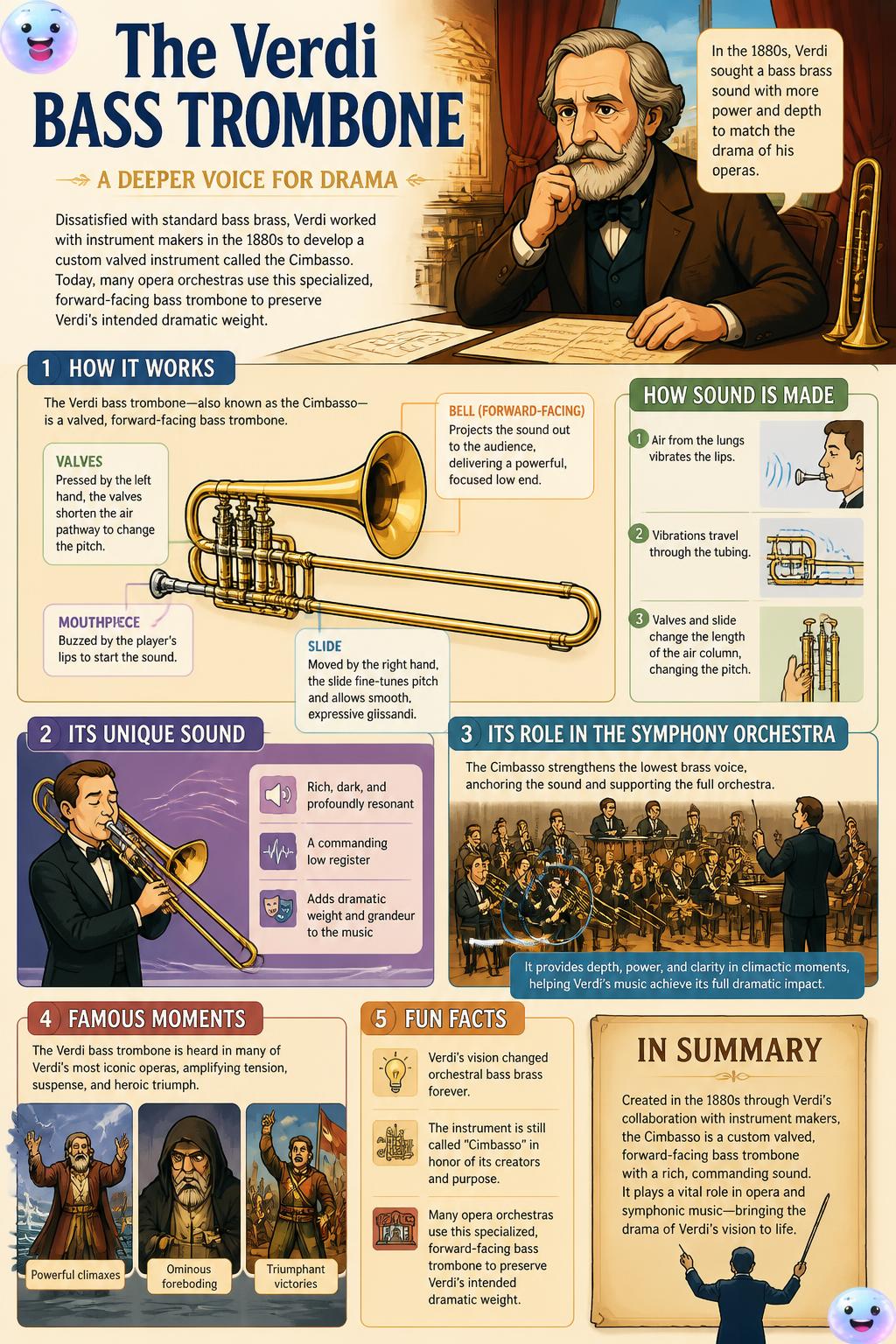
maestro This specialized forward-facing bass trombone features valves instead of a long slide
Which Italian opera composer commissioned a custom low brass instrument called the Cimbasso?
In what year did Beethoven's Fifth Symphony, featuring the orchestral debut of the trombone, premiere?
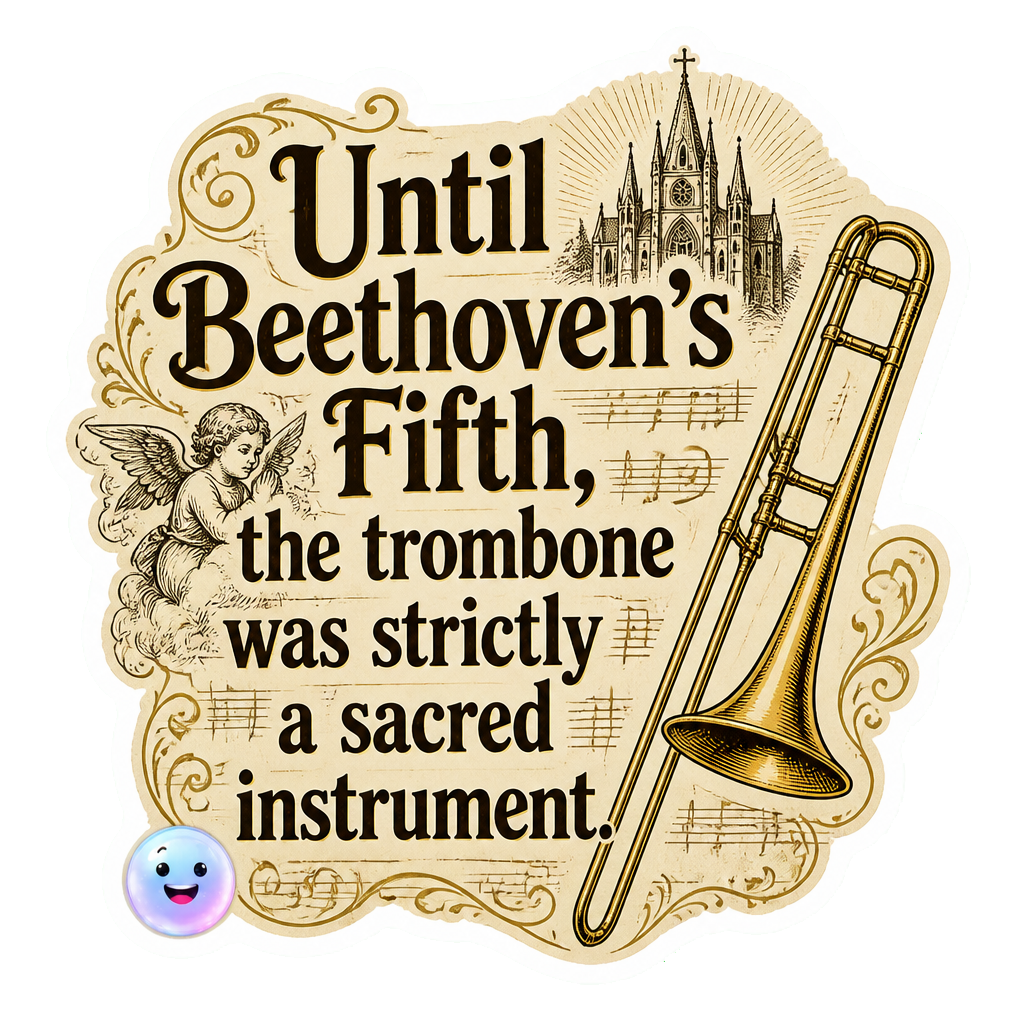
maestro Factories in the late 1800s mass-produced brass instruments, sparking a worldwide musical movement. Bandmaster John Philip Sousa used the trombone's flashy slide to captivate crowds at outdoor concerts.
How did the physical design of the Renaissance sackbut differ from the modern trombone?
Sackbut name: The old English word 'sackbut' likely comes from French words meaning to pull and push.
A Renaissance and Baroque brass instrument with a slide, widely regarded as the early form of the trombone. Ludwig van Beethoven famously introduced its modern successor to the classical orchestra in 1808.