Chapter 1
Sacred gourds and ancestral grains of the Americas
Chapter 2
Mooncakes and mountain chestnuts of East Asia
Chapter 3
Grape must and orchard gold in Europe
Chapter 4
Pomegranates and golden quinces of the Middle East
Ch 2 · Mooncakes and mountain chestnuts of East Asia
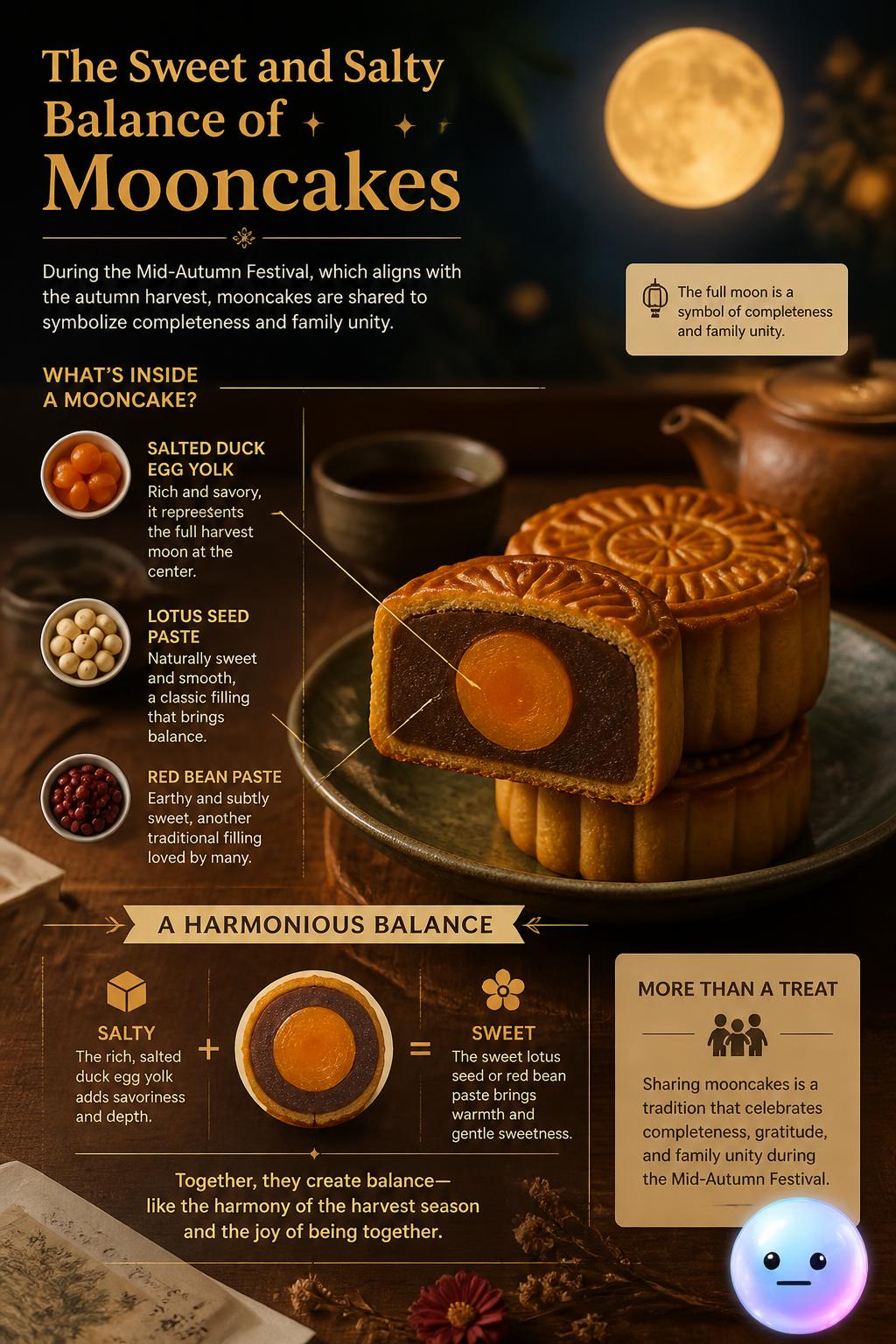
alicecooks Families share Mid-Autumn mooncakes, which balance sweet lotus seed or red bean paste with a rich, salted duck egg yolk.
Quiz
Which ingredient is traditionally used to make the smooth, sweet paste filling in high-quality Cantonese mooncakes?
Quiz
What does the salted egg yolk in the center of a traditional Chinese mooncake symbolize?
BETA
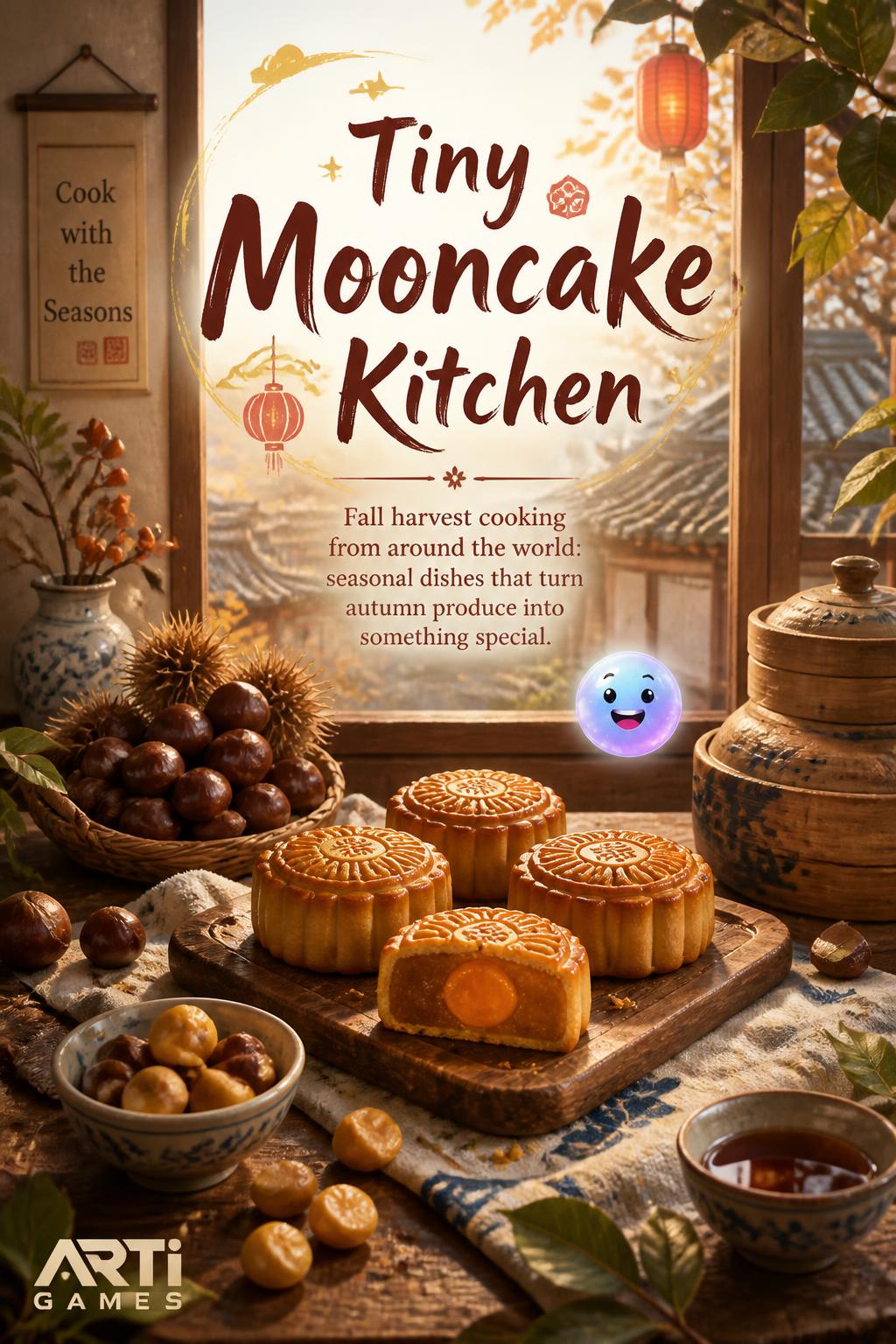
alicecooks Press the traditional molds to discover how autumn harvests are transformed into sweet mooncakes.
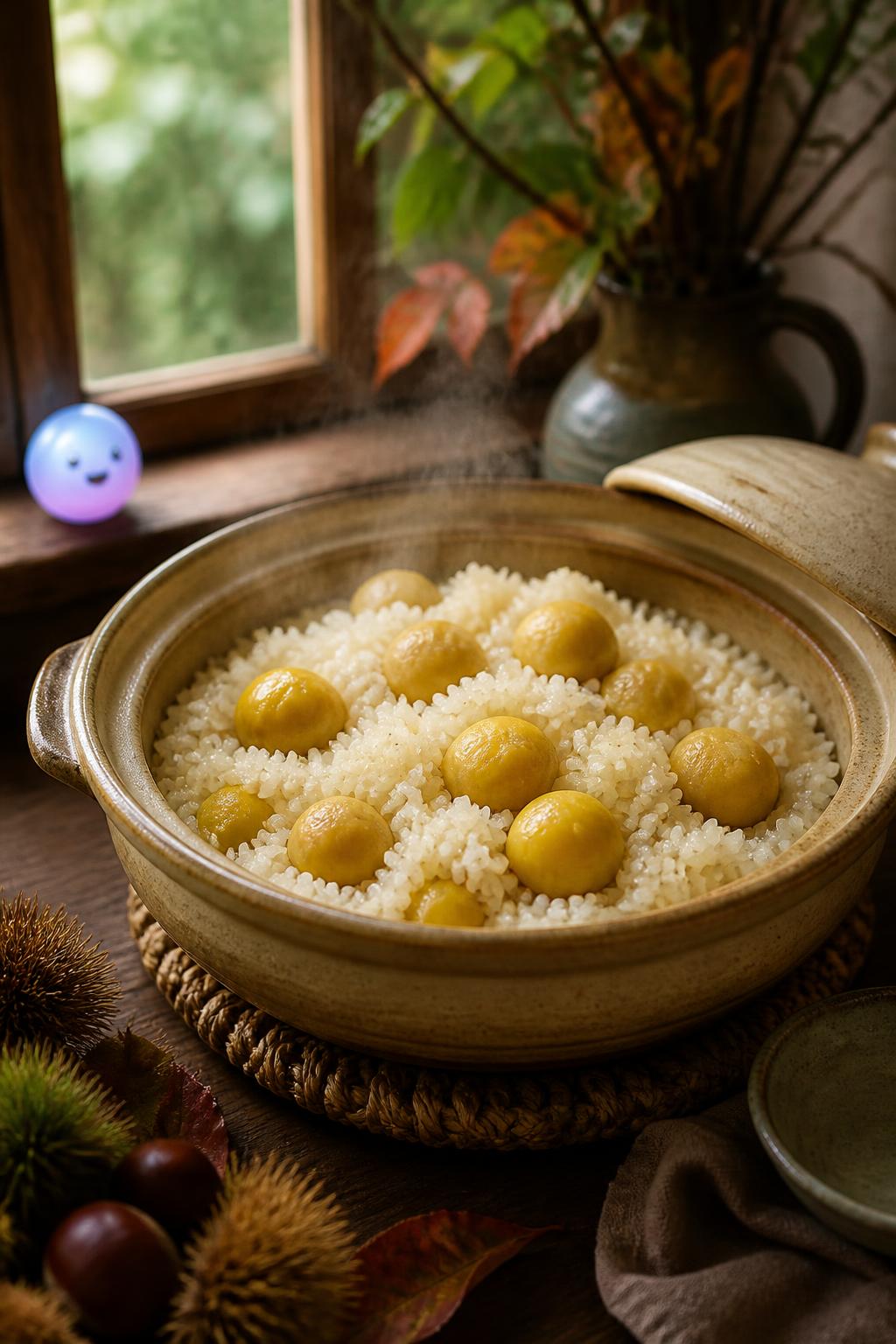
alicecooks Kurigohan represents the Japanese culinary concept of shun, honoring peak seasonal ingredients.
alicecooks Chestnut Mooncakes
Sweet chestnut paste, sweet chestnut paste, baked in a golden mooncake!
Quiz
During which Korean autumn harvest festival are songpyeon rice cakes traditionally prepared and eaten?

alicecooks Filipino cooks prepare the traditional Christmas snack puto bumbong using naturally purple pirurutong sticky rice.
Quiz
In what type of container is the Filipino rice cake puto bumbong traditionally steamed?
Quiz
What gives the traditional Filipino harvest treat puto bumbong its distinct deep purple color?
Fun Fact
Chuseok pine needles: Steaming Korean songpyeon on pine needles doesn't just add flavor; the pine oils actually act as a natural preservative.
Glossary
mooncake (noun)
A round Chinese pastry with a sweet or savory filling that is traditionally eaten during the Mid-Autumn Festival. Families across East Asia share these baked treats on the fifteenth day of the eighth lunar month.
A round Chinese pastry with a sweet or savory filling that is traditionally eaten during the Mid-Autumn Festival. Families across East Asia share these baked treats on the fifteenth day of the eighth lunar month.