

Chapter 1
Dinner in the deep past
Chapter 2
Making a home on the move
Chapter 3
Art, music, and the inner world
Chapter 4
Tools, technology, and teamwork
Ch 1 · Dinner in the deep past
renaissanceman Before farming, Paleolithic humans ate over 140 species of wild plants, including barley and oats.
Quiz
What did early humans harvest at Pinnacle Point in South Africa 164,000 years ago?
Quiz
Which tool was invented around 40,000 years ago to throw spears farther and faster?

BETA
renaissanceman Sort wild plants and hunted meats to discover what Paleolithic people actually ate.
renaissanceman Watch this video to explore how Paleolithic humans hunted big game and developed global strategies to survive in their daily lives.
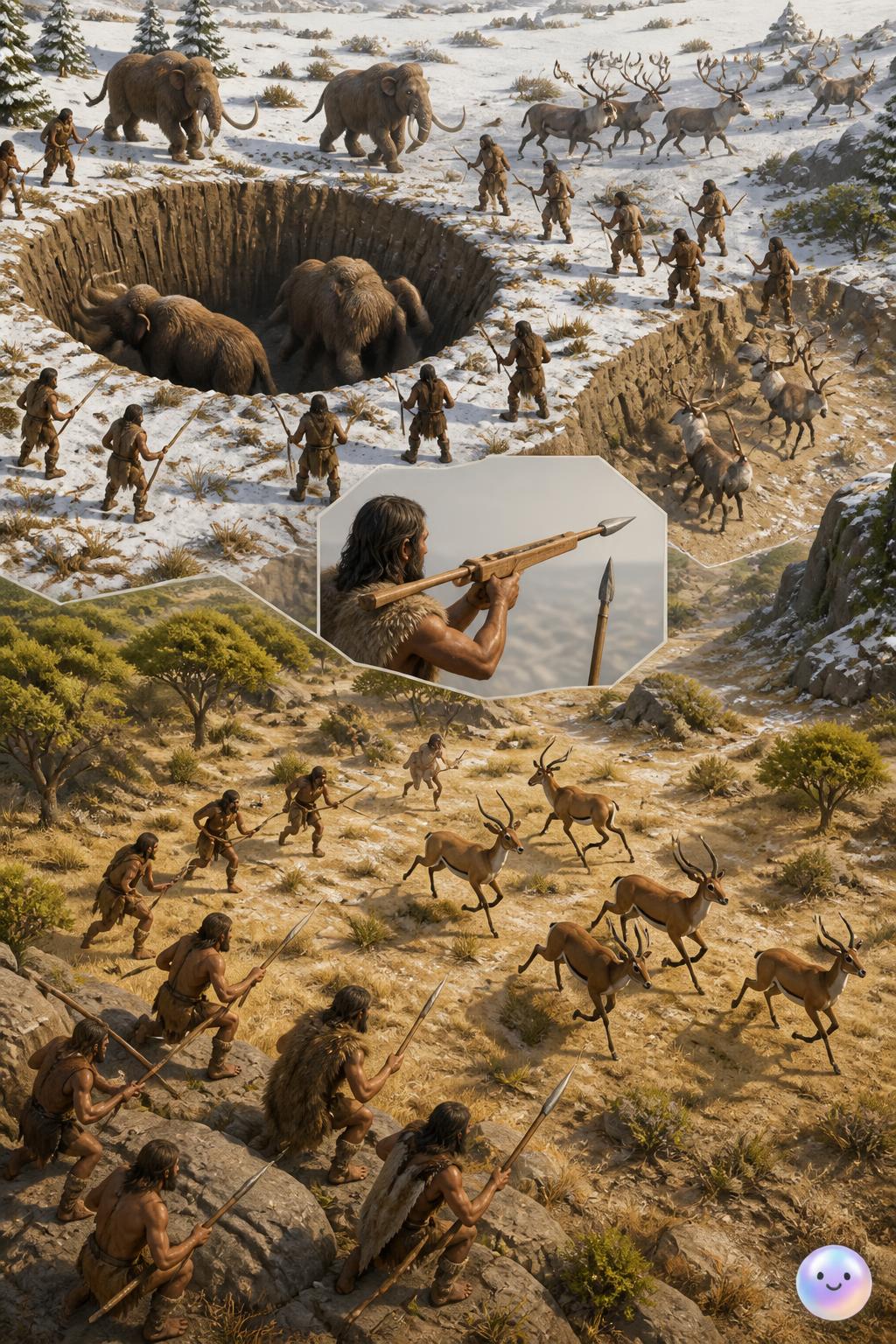
renaissanceman Hunting required intense cooperation, deep animal tracking knowledge, and specialized tools tailored to local wildlife.
Quiz
What did archeologists discover at the 23,000-year-old Ohalo II site in Israel?
Quiz
What is the primary reason Paleolithic hunter-gatherers moved from place to place?
renaissanceman Paleolithic Cuisine
Pound the lentils, soak the seeds, we're baking flatbread in the cave tonight
renaissanceman Discover the ancient art of cooking with fire. Watch this video to explore how Paleolithic people used fire in their daily lives.
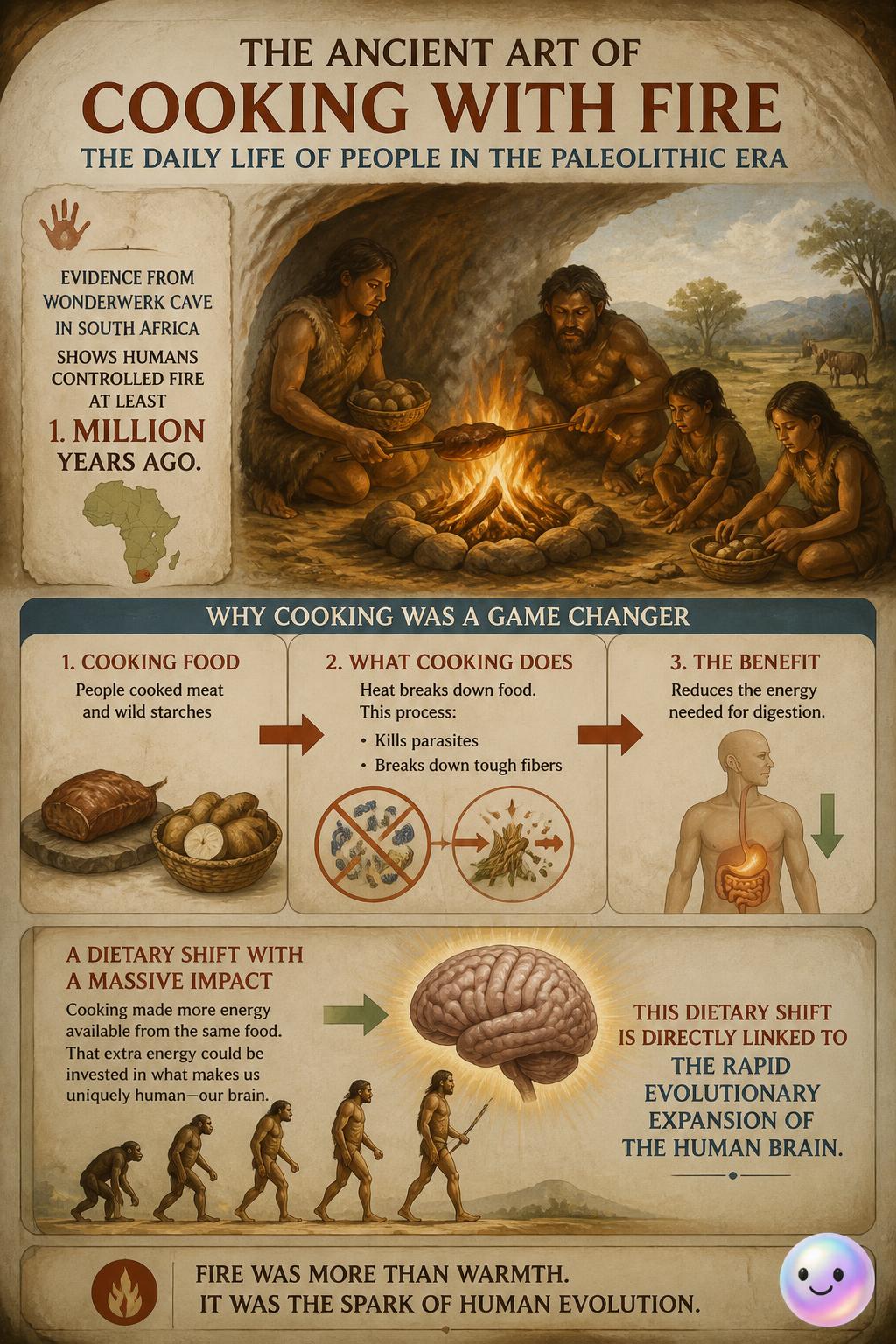
renaissanceman Discover how early humans used fire for cooking in the Paleolithic era. This infographic visualizes daily life and ancient cooking techniques.
Quiz
How did the lack of processed sugars affect the teeth of Paleolithic humans?
Fun Fact
Paleolithic tooth decay: Ancient humans had surprisingly healthy teeth because their diet lacked processed sugars, though grit from stone-ground plants did wear down their enamel.
renaissanceman Watch how Paleolithic people enjoyed seafood feasts along ancient coasts. Discover this fascinating aspect of daily life in the Paleolithic era.
Quiz
Where is the Wonderwerk Cave, which holds some of the earliest evidence of controlled fire?
Glossary
hearth (noun)
The floor of a fireplace, historically used for cooking and heating. In Israel's Qesem Cave, a 300,000-year-old hearth shows early hominins repeatedly roasted meat.
The floor of a fireplace, historically used for cooking and heating. In Israel's Qesem Cave, a 300,000-year-old hearth shows early hominins repeatedly roasted meat.