
Chapter 1
The royal vow and the giant bronze
Chapter 2
The chilling legend of the Emille Bell
Chapter 3
The engineering of the perfect ring
Chapter 4
The art and soul of Silla
Ch 1 · The royal vow and the giant bronze
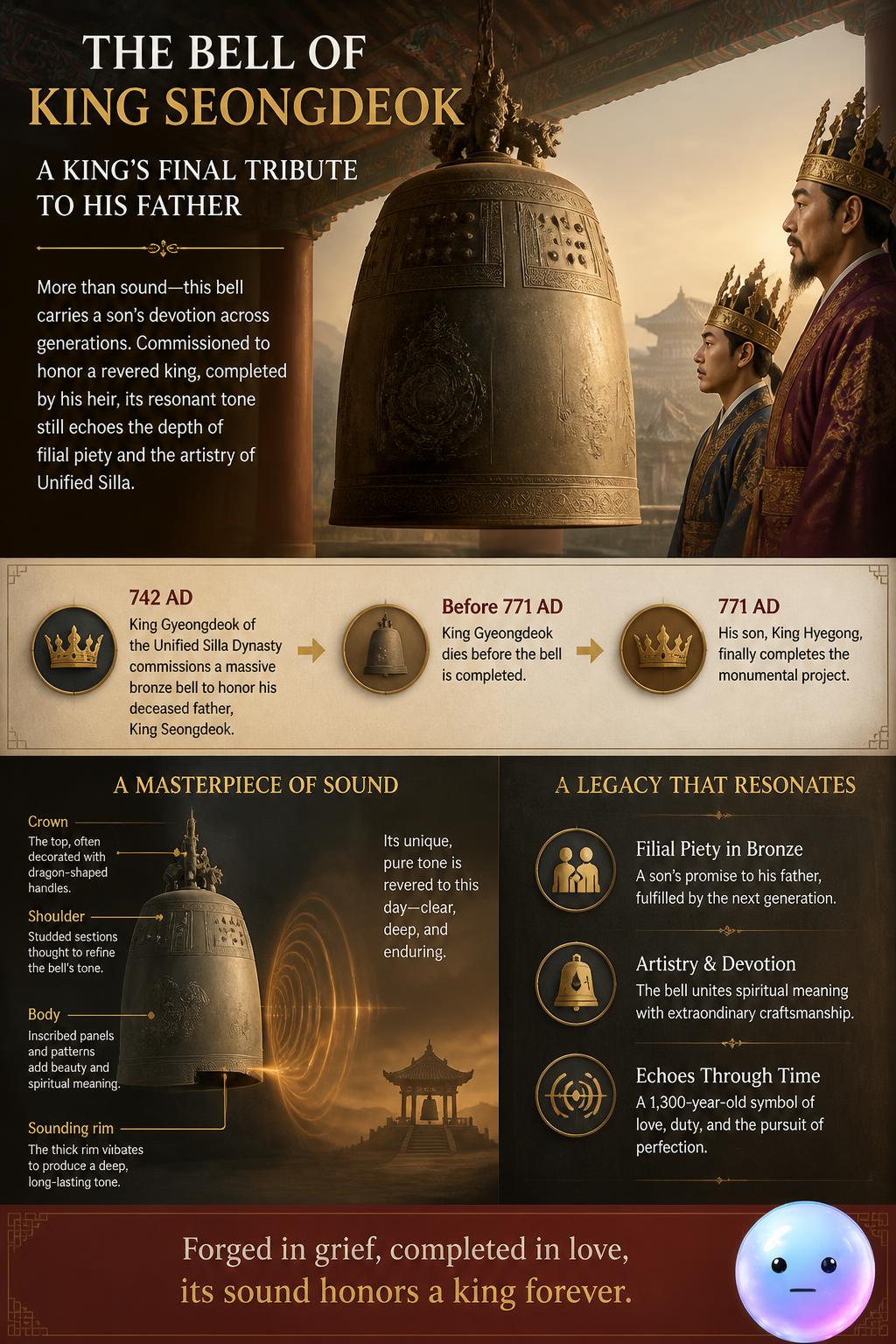
spicykimchi King Hyegong finished the Unified Silla Dynasty project in 771 AD after King Gyeongdeok died before completing the monumental bell
Quiz
Which Silla monarch finally completed the construction of the Bell of King Seongdeok in 771 AD?
BETA
spicykimchi Tune the bronze bell to discover the chilling legend behind its unique whispering sound.
spicykimchi Silla craftsmen melted 27 tons of bronze to cast giant bells with flawless acoustics.
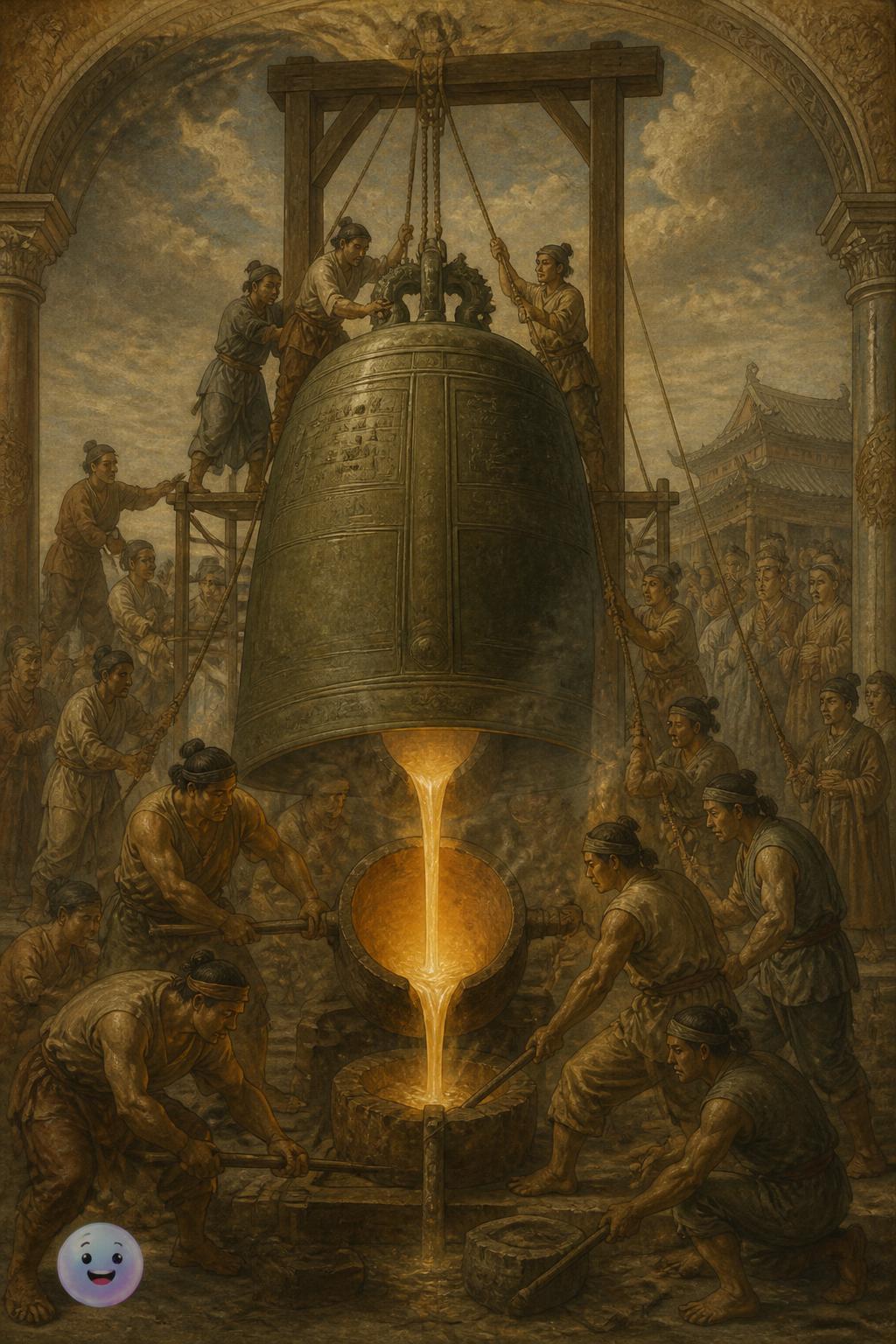
spicykimchi The 1,300-year-old bell relies on flawless bronze casting for its unique sound.
Quiz
Why was the wooden log used to strike the Bell of King Seongdeok traditionally carved like a whale?
Quiz
What mythical creature is sculpted on the hook used to hang the Bell of King Seongdeok?
Fun Fact
Giant whale striker: Ancient Silla temples struck their massive bells using wooden logs carved as whales, believing it made the dragon hook roar louder.
spicykimchi The Gyeongju National Museum now houses the sacred bell to protect it from natural disasters.
spicykimchi Bongdeoksa Temple
The heavy rains washed the old temple away, But its legendary bell has survived to this day.
Quiz
What was the name of the temple where the Bell of King Seongdeok was originally housed?
Quiz
In which South Korean city can you visit the physical Bell of King Seongdeok today?
Glossary
vow (noun)
A solemn promise, especially one made to a deity, to perform a specific act. King Gyeongdeok pledged in 742 to cast a massive Buddhist bell honoring his deceased father.
A solemn promise, especially one made to a deity, to perform a specific act. King Gyeongdeok pledged in 742 to cast a massive Buddhist bell honoring his deceased father.