Shaping the American prairie
Living with nature at Fallingwater
Seismic design and Eastern elegance
The spiral of the Guggenheim and late works
torito In 1935, Wright designed Fallingwater in Mill Run, Pennsylvania, for the Kaufmann family.

torito Place natural elements to discover Frank Lloyd Wright's genius for integrating architecture with nature.
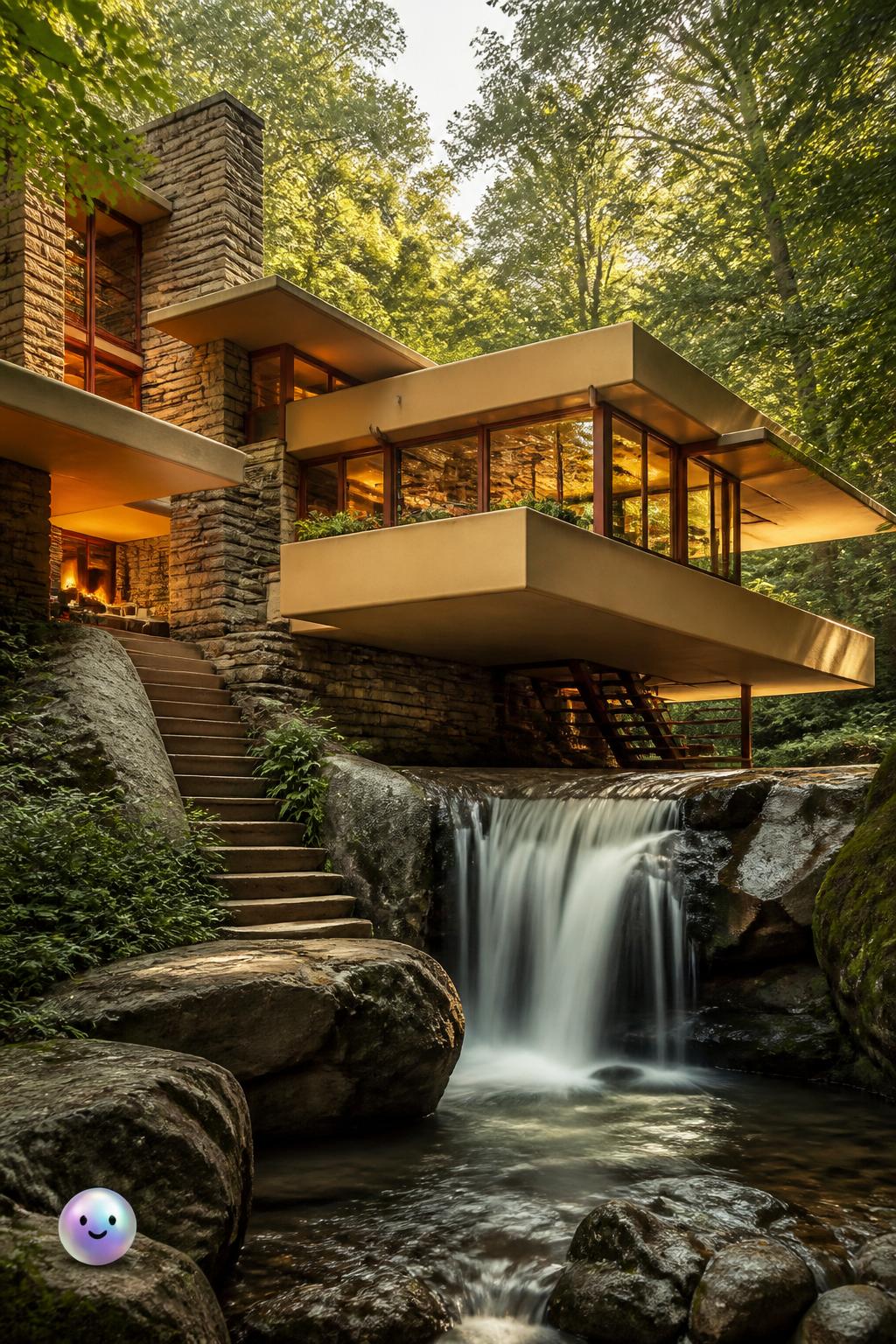
torito Wright used long, unsupported concrete beams to make the balconies of Fallingwater hover dramatically over the river.
For which wealthy department store owner and his family did Frank Lloyd Wright design Fallingwater in 1935?
What is the name of Frank Lloyd Wright's personal home and studio in Spring Green, Wisconsin, which he rebuilt twice after fires?
torito Fallingwater Frank Lloyd Wright
Fallingwater, hear the flow, Live with the falls, let the water show!
torito Fallingwater features natural stone floors that were waxed to look like wet rocks from the riverbed below.
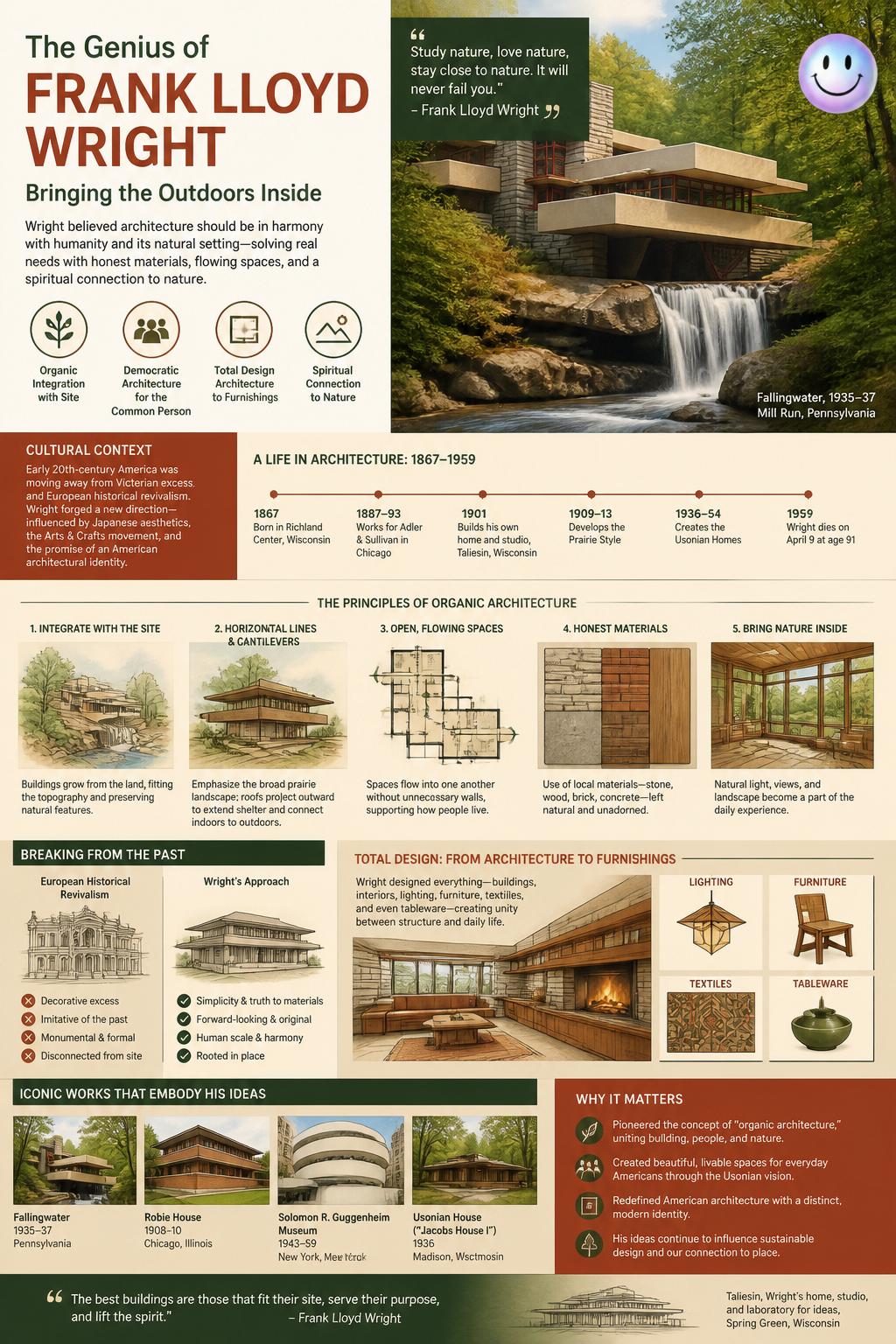
torito Wright used local sandstone and glass walls to dissolve the boundary between the interior rooms and the forest.
What architectural term describes a long, horizontal beam supported at only one end, used by Wright to float balconies over Fallingwater?
Instead of placing Fallingwater across from the waterfall to view it, where did Frank Lloyd Wright build the house?
Fallingwater's natural desk: Wright built a desk in Fallingwater with a cutout curved specifically to allow a nearby tree to grow undisturbed.
torito In 1911, Wright built Taliesin in Spring Green, Wisconsin, as his home and studio.
How did Frank Lloyd Wright design the corner windows of Fallingwater to ensure uninterrupted views of nature?
What did Frank Lloyd Wright do to the stone floors inside Fallingwater to make them resemble the nearby riverbed?
A philosophy of architectural design that promotes harmony between human habitations and the natural world. Frank Lloyd Wright exemplified this philosophy in 1935 when designing the Kaufmann family's Pennsylvania waterfall retreat.