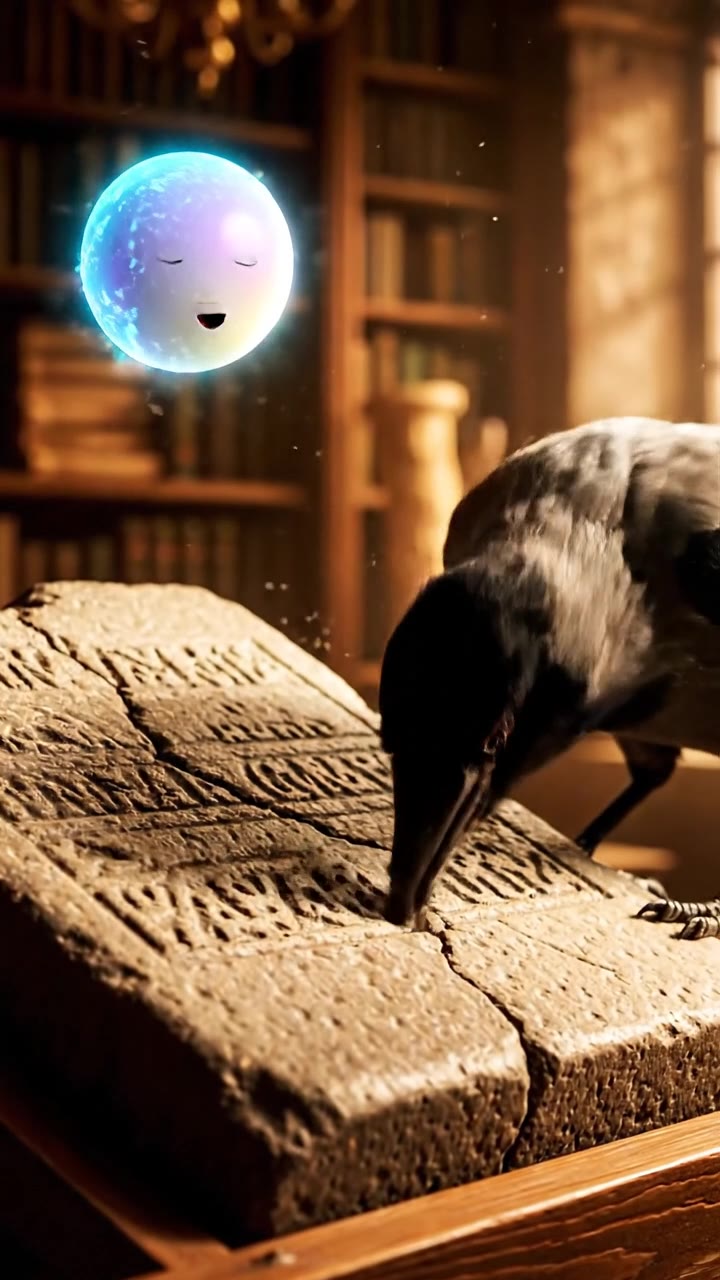
Ancient Roots of Crows in the Bible
Proverbs chapter 30, verse 17 warns that the eye of anyone who mocks their father or mother will be pecked out by the ravens of the valley. This biblical imagery cemented the cultural connection between family betrayal, crows, and lost eyesight.
The rise of the feather brains
Inside the crow's toolkit
The dark legend of the crow
Myth vs. reality around the world

mankai Angry birds strip a disguised crow bare to expose its stolen plumage in Aesop's classic fable
mankai Proverbs chapter 30 cemented the cultural link between family betrayal and ravens pecking out eyes
mankai Crows target soft tissues like eyes because their weak beaks cannot pierce tough animal hides
mankai Aesop's Borrowed Feathers Fable
No borrowed feathers, no borrowed feathers / You can't be a peacock when you're a crow
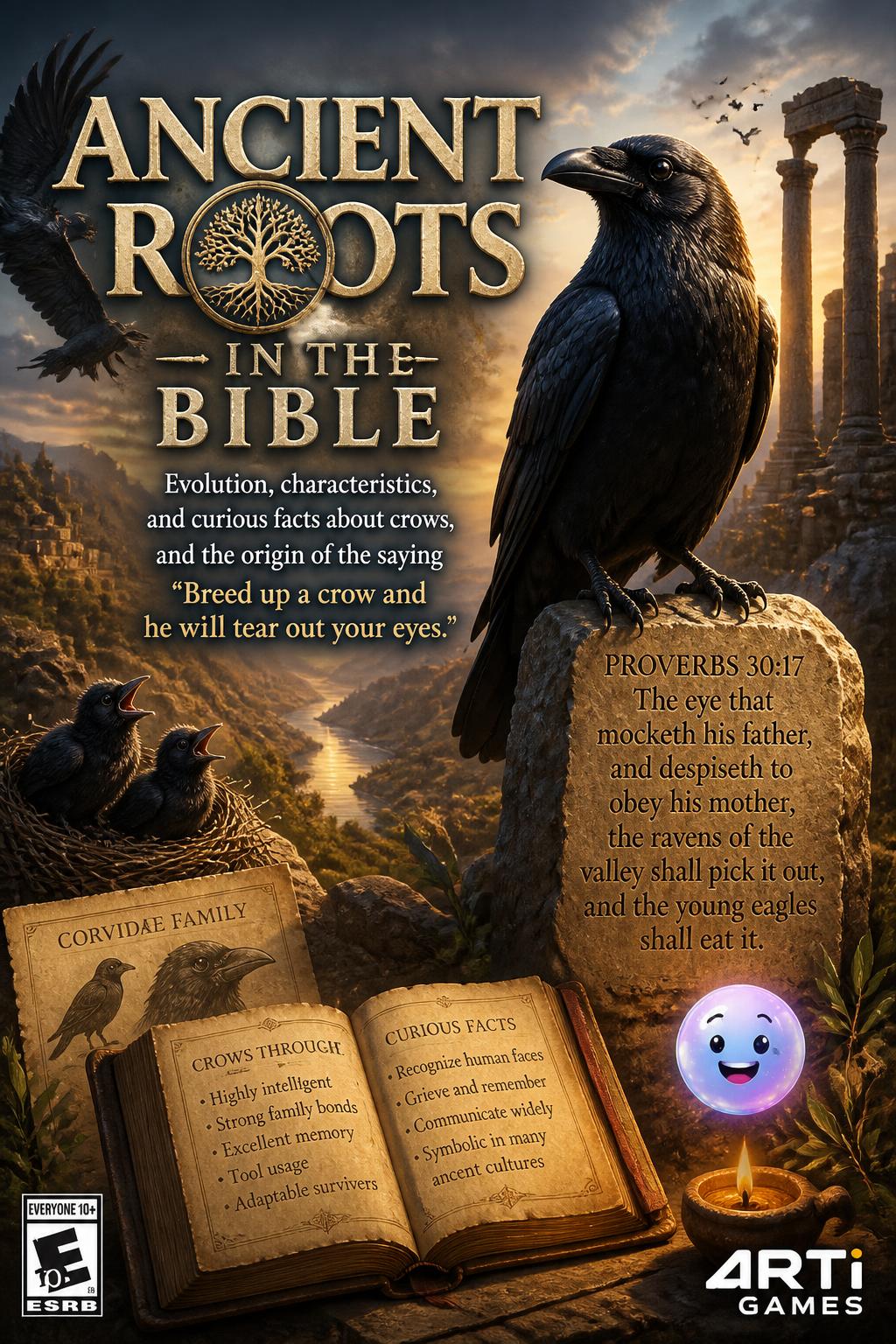
mankai Decode ancient biblical verses to discover crow evolution and the origin of their famous saying.
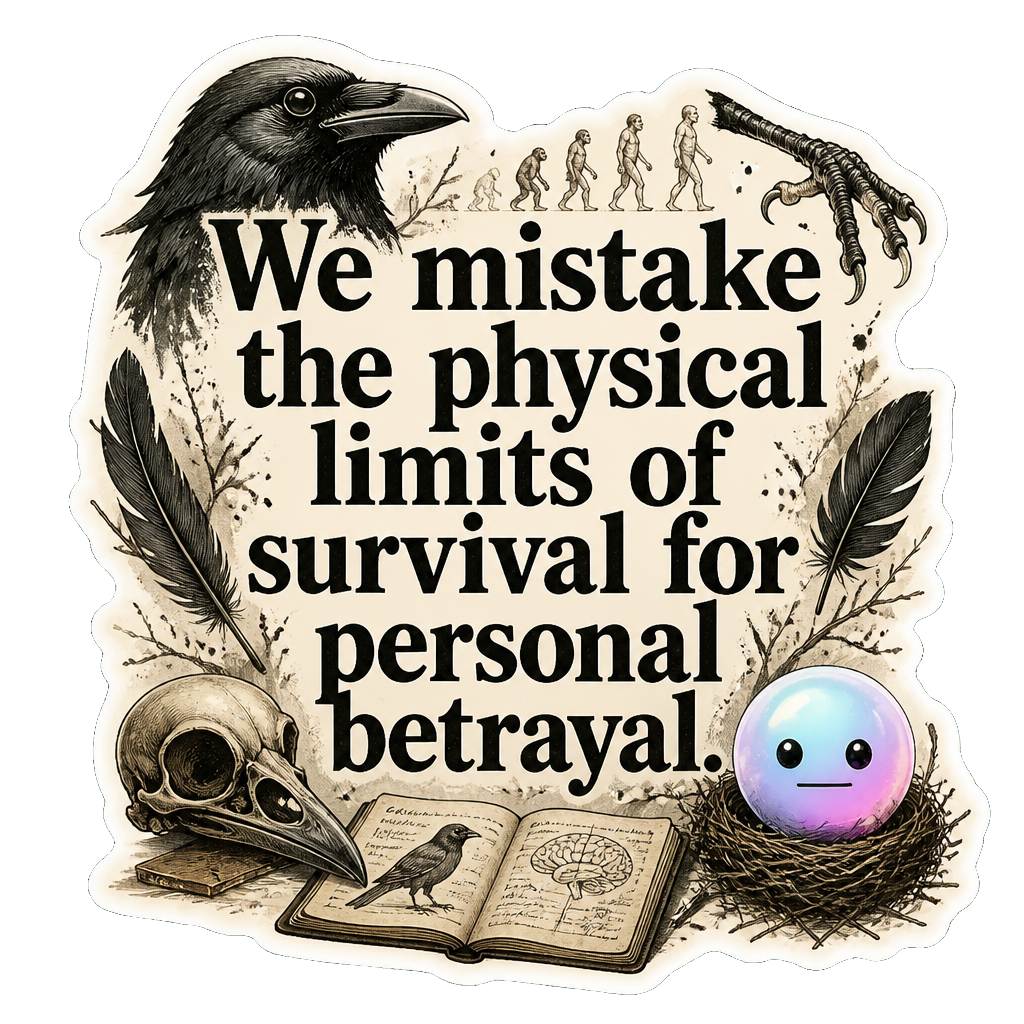
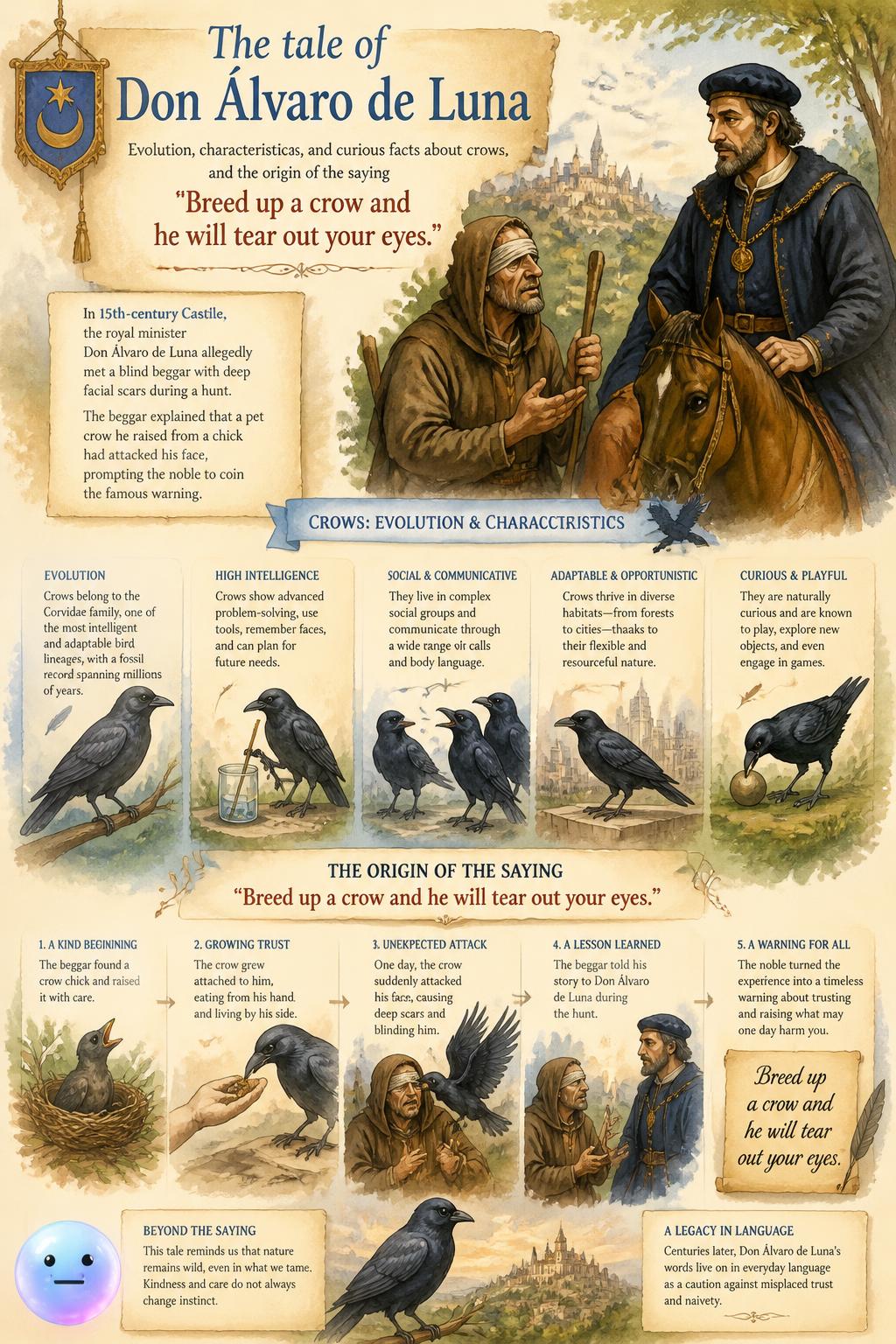
mankai During a hunt, royal minister Don Alvaro de Luna met a scarred, blind beggar whose pet crow attacked his face.
Which 15th-century historical figure from Castile is legendary for coining the phrase about raising crows?
Crow behavior: Crows are highly affectionate to their human caretakers, often bringing them gifts like shiny buttons, keys, or earrings as a thank-you.
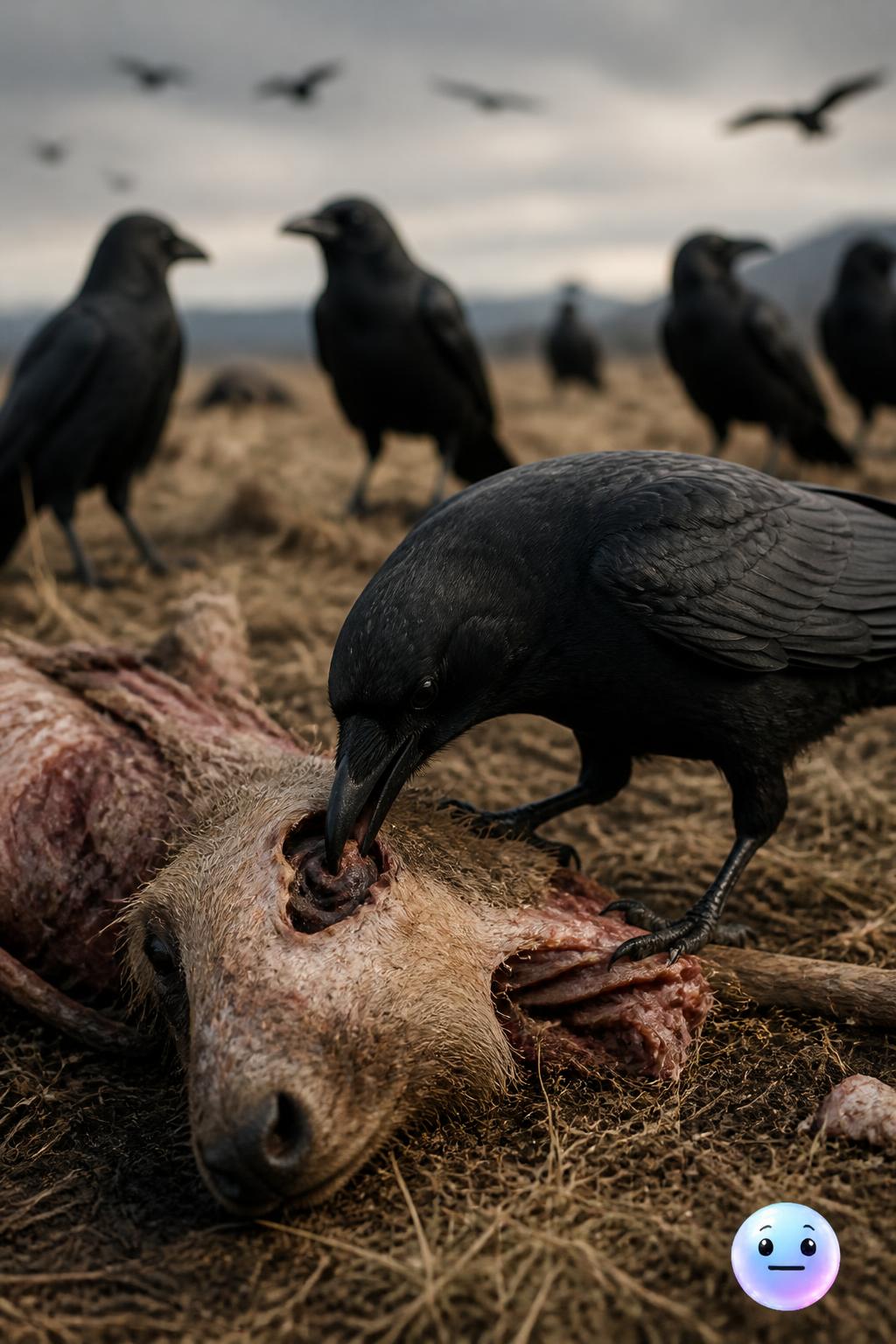
mankai Crow scavenging habits inspired the historic proverb about birds tearing out human eyes.
What physical limitation prevents crows from tearing open the tough skin of larger dead animals?
A large, intelligent, black-plumaged bird belonging to the genus Corvus. In 1445, Castile’s Álvaro de Luna met a blind man whose raised crow had blinded him.
Which biblical book contains an ancient warning about ravens pecking out the eyes of disobedient children?
What moral failing does the biblical verse in Proverbs 30 associate with having one's eyes pecked out by ravens?
Who wrote the ancient Greek fable about a crow that gets humiliated after wearing other birds' feathers?