
TOI-561 Oldest Rocky Planets Discovered
Learn about TOI-561, a star nearly 10 billion years old, and its ancient rocky planets, some of the oldest worlds ever discovered.
The impossible atmosphere of TOI-561 b
Sunscreen made of sand
The ocean of fire
The detective work of Webb

play_review Astronomers analyze tiny changes in starlight to study planets located 280 light-years away.
play_review Studying the molten planet TOI-561 b reveals how young rocky worlds evolved billions of years ago
play_review The James Webb Space Telescope monitored a planet continuously to capture how its atmosphere reflects starlight.
play_review Rocky World Exploration
This lava planet has a sunscreen in the sky, With mineral clouds that bounce the starlight by.

play_review Navigate the dense atmosphere to discover how mineral clouds protect the scorching lava planet.
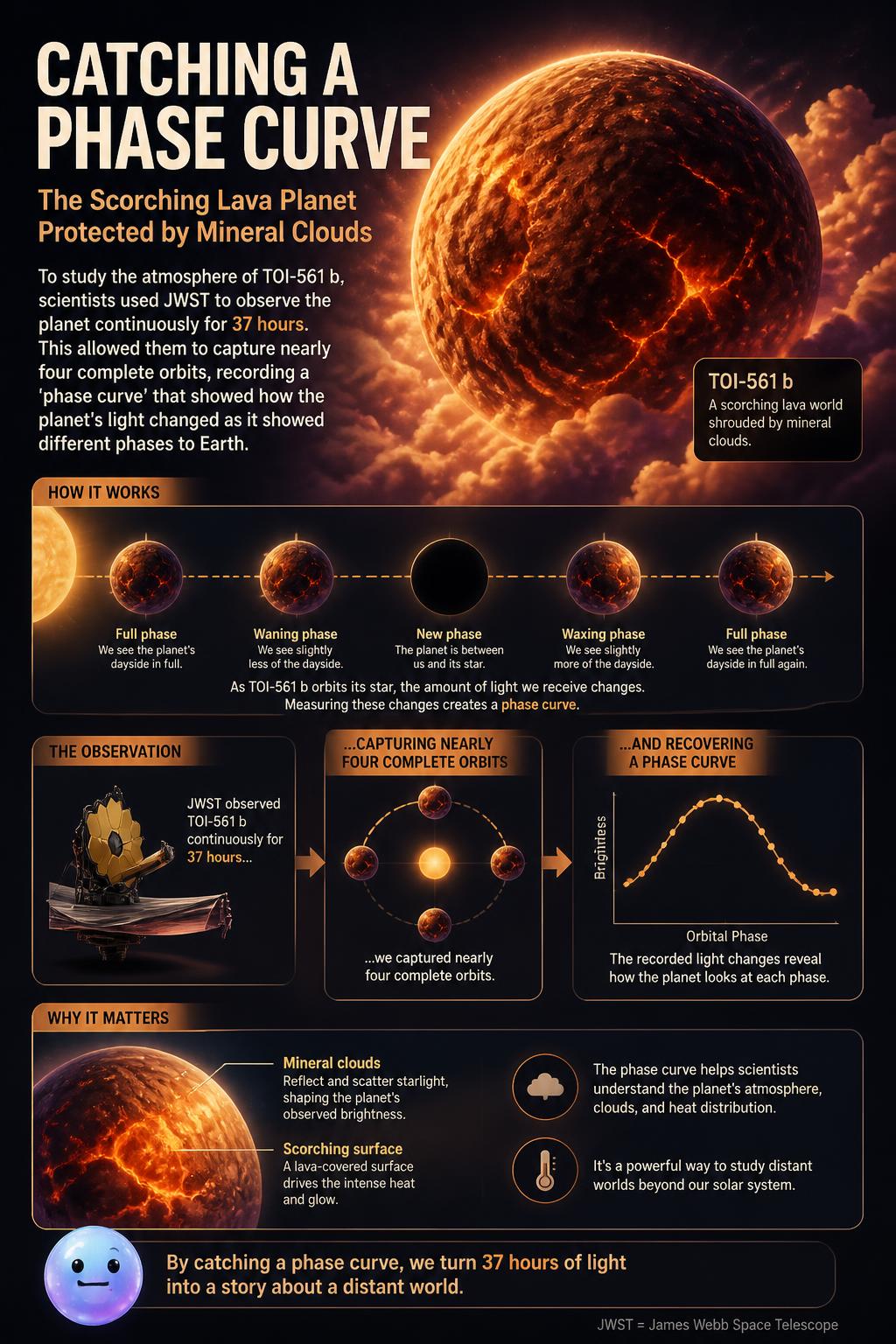
play_review Scientists study the atmosphere of TOI-561 b by analyzing a phase curve captured over nearly four complete orbits.
How long did astronomers continuously observe TOI-561 b using the James Webb Space Telescope?

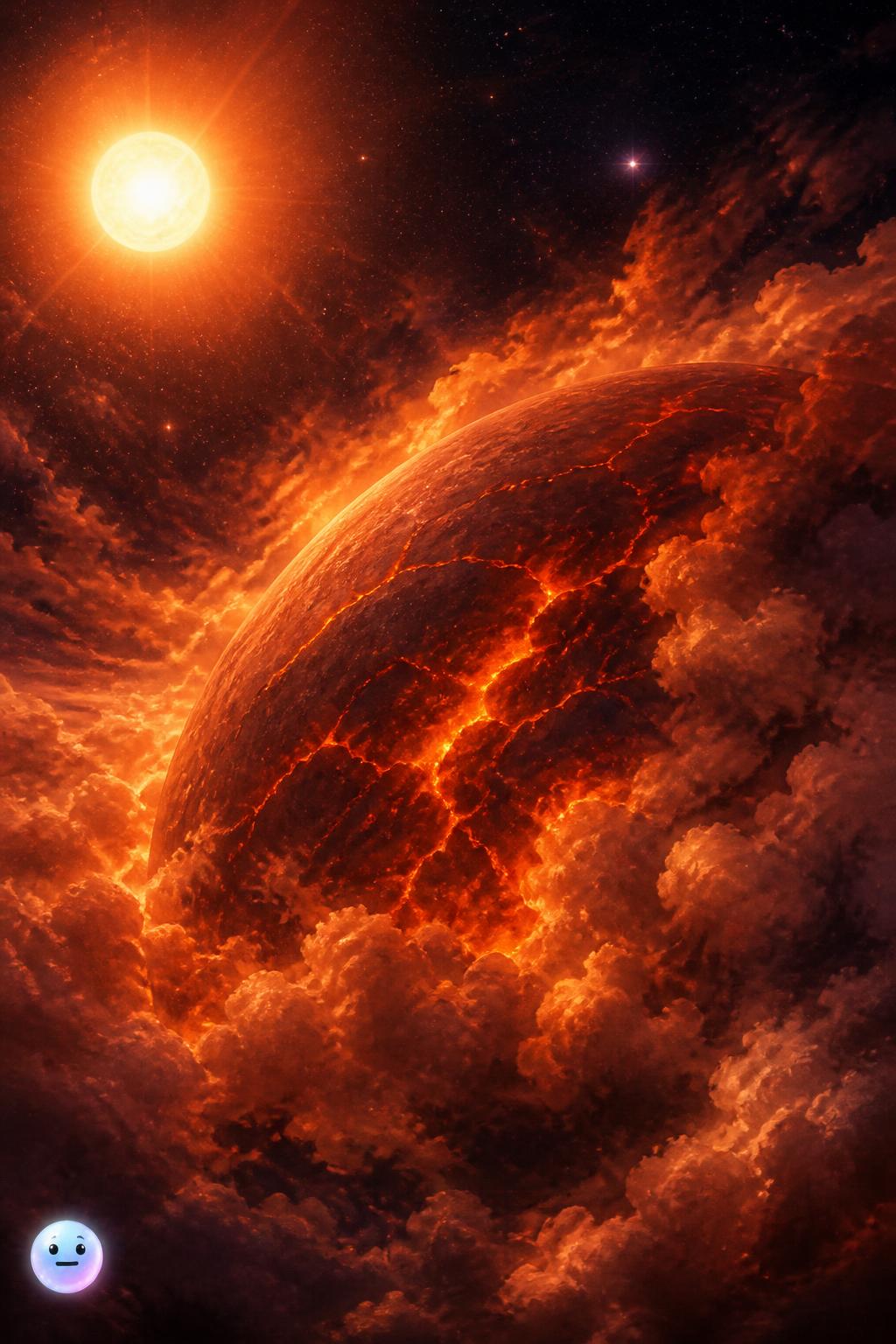
play_review Extreme distance prevents direct imaging of the scorching lava planet TOI-561 b
Why can't astronomers take direct, high-resolution photographs of TOI-561 b's surface?
How do astronomers detect the presence of an atmosphere on a distant planet like TOI-561 b?
Ancient rocks: The star TOI-561 is about 10 billion years old, making its planets some of the oldest rocky worlds ever discovered.
What are the two main cosmic bodies that scientists compare TOI-561 b's potential atmosphere to?
Which gas, commonly released by volcanoes on Jupiter's moon Io, might be abundant in TOI-561 b's atmosphere?
The fraction of incident light or radiation that is reflected by a surface or celestial body. Webb measured the planet's reflectivity, revealing that TOI-561b reflects 75 percent of its starlight.
What stage of planetary evolution do active lava planets like TOI-561 b represent?
Why is studying hot lava worlds like TOI-561 b valuable for understanding Earth's history?