
Python's Built-In SQL Database: sqlite3
Learn about Python's pre-installed sqlite3 engine. Discover how this built-in SQL database helps you start building database-driven apps instantly.
The blueprints of the web: Flask and the architecture of code
The digital filing cabinet: SQLite and structured thinking
Connecting the wires: Flask meets SQLite
Showcasing your superpower: Building a portfolio that shines
cixerona Python developers block database hackers by using question mark placeholders in the execute method.
cixerona The addition of sqlite3 in 2006 allowed Python developers to run SQL commands without installing external drivers
cixerona Python developers use the fetchone method to retrieve single database rows without overloading computer memory
cixerona Flask and SQLite Integration
One single dot db file, no external server, Flask is connected and storing data live
cixerona Jinja2 templates loop through database records to build styled web tables in milliseconds.

cixerona Connect database tables to web pages to learn how Flask apps manage user data.

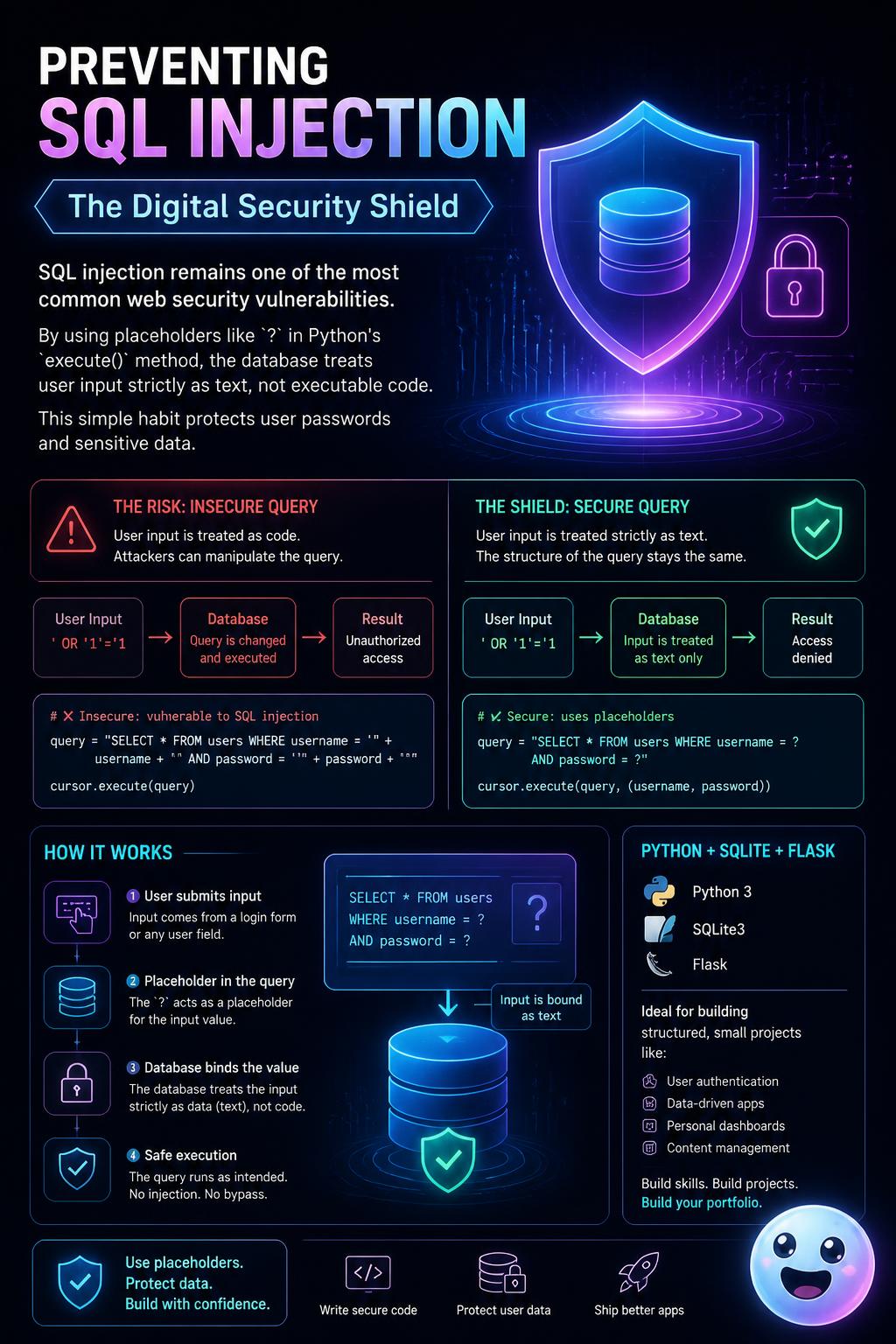
cixerona Python's execute method blocks SQL injection in Flask and SQLite apps by forcing databases to read user input
Built-in database: Python is one of the few languages that comes with a full SQL database engine, sqlite3, pre-installed right out of the box.

cixerona Neon searchlights sweep across a dark database query on a holographic screen.
A container with a narrow neck used in laboratories to hold, mix, or measure liquids. In 2010, Armin Ronacher created this web framework, which developers link with SQLite to store persistent data.
What must you call on a database connection to save changes like INSERT or UPDATE permanently?
Which symbol is commonly used as a placeholder in SQLite parameterized queries in Python?
What security vulnerability is prevented by using parameterized queries with placeholders?