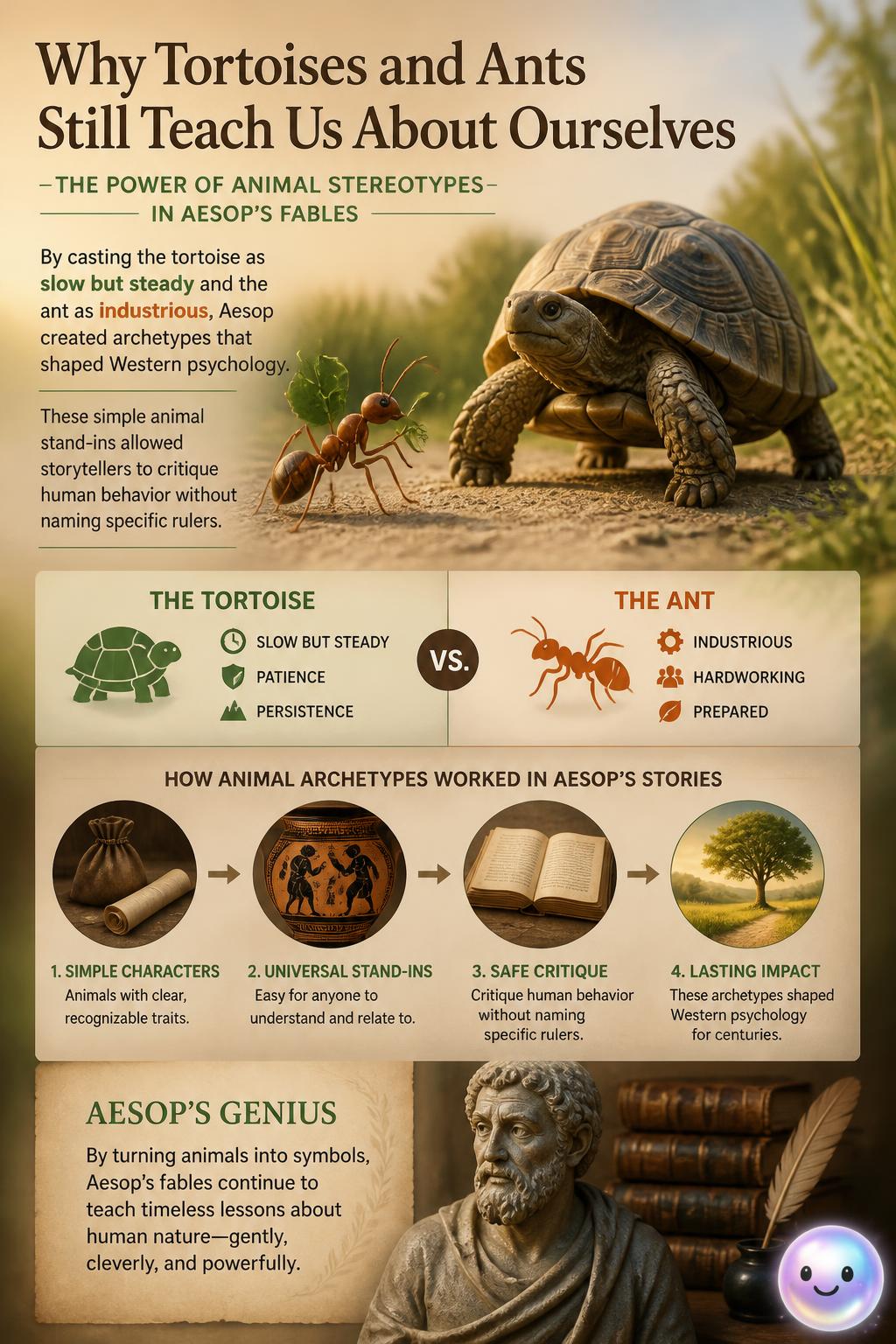
Origins of Animal Stereotypes Infographic
Aesop's stories established the psychological traits we still attribute to animals today.
The mystery of the storyteller
The weirdest fables you never learned
Global cousins and shape-shifting tales
The dark and practical morals
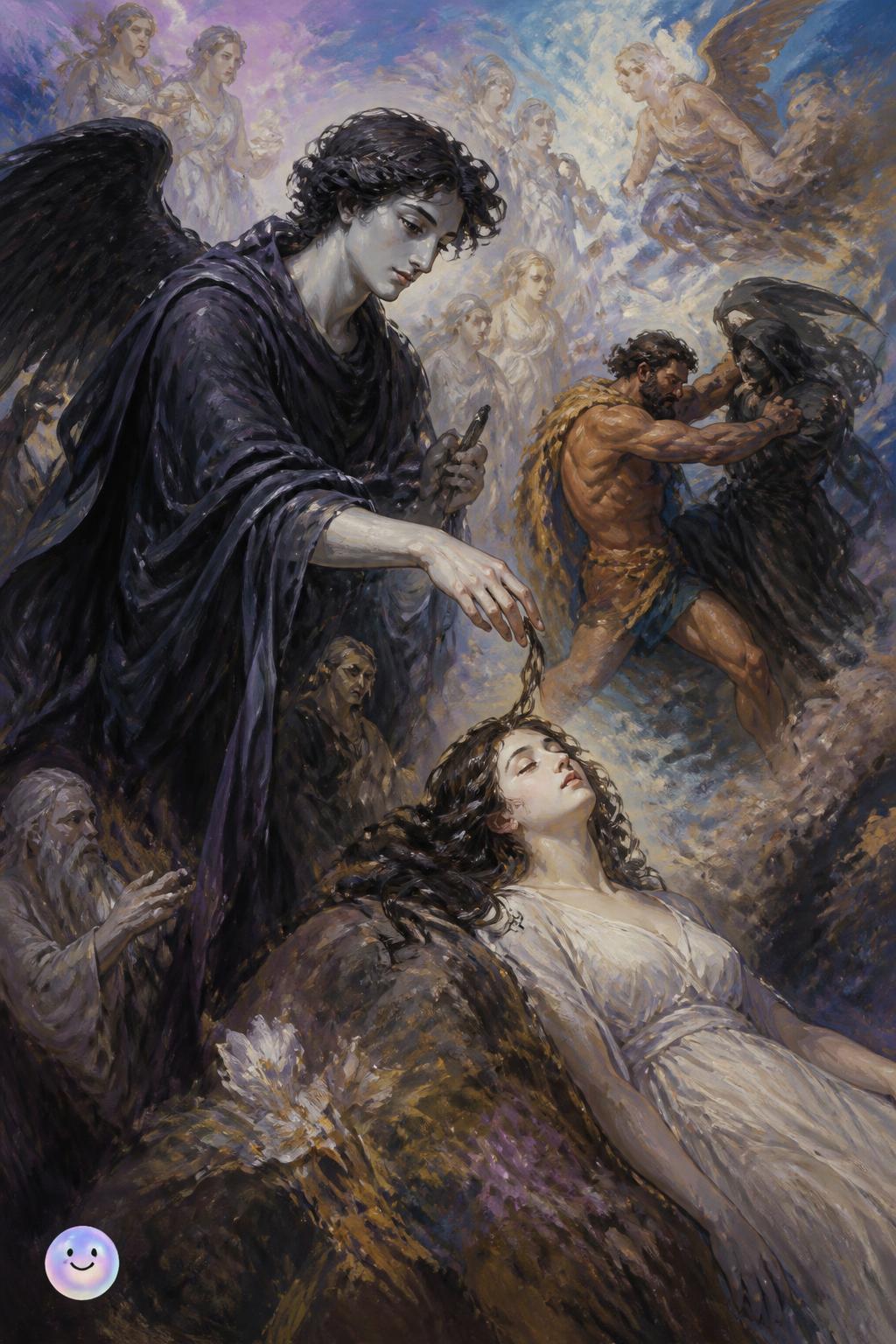
schopenhauer William Caxton's 1484 translation of Aesop's fables popularized English phrases like "sour grapes" and "crying wolf.
schopenhauer Aesop's Pragmatic Fables
The wolf takes the lamb (he always does) / Guides to survive (not children's games)
schopenhauer Aesop's stories established the psychological traits we still attribute to animals today.
Space fables: Two asteroids discovered in the 1980s are named Aesopus and Lafontaine in honor of the world's most famous fabulists.

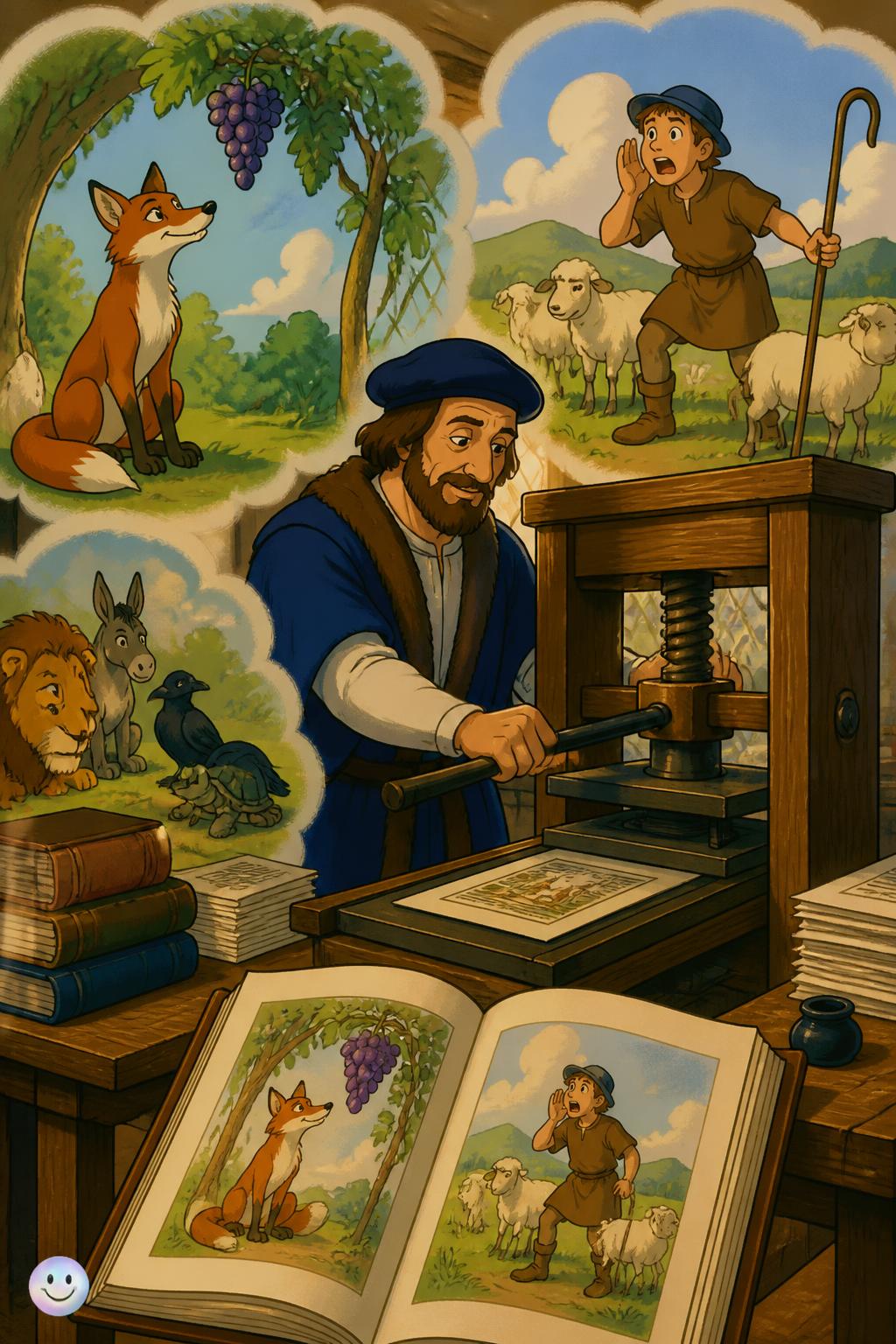
schopenhauer Several of the most common idioms in the English language trace their exact origins back to Aesop's stories.
A lesson, especially one concerning what is right or prudent, that can be derived from a story. In ancient Greece, Aesop designed animal tales that emphasized self-preservation and pragmatic survival over idealistic virtue.
In 'The Ant and the Grasshopper,' what does the ant do when the grasshopper begs for food in winter?
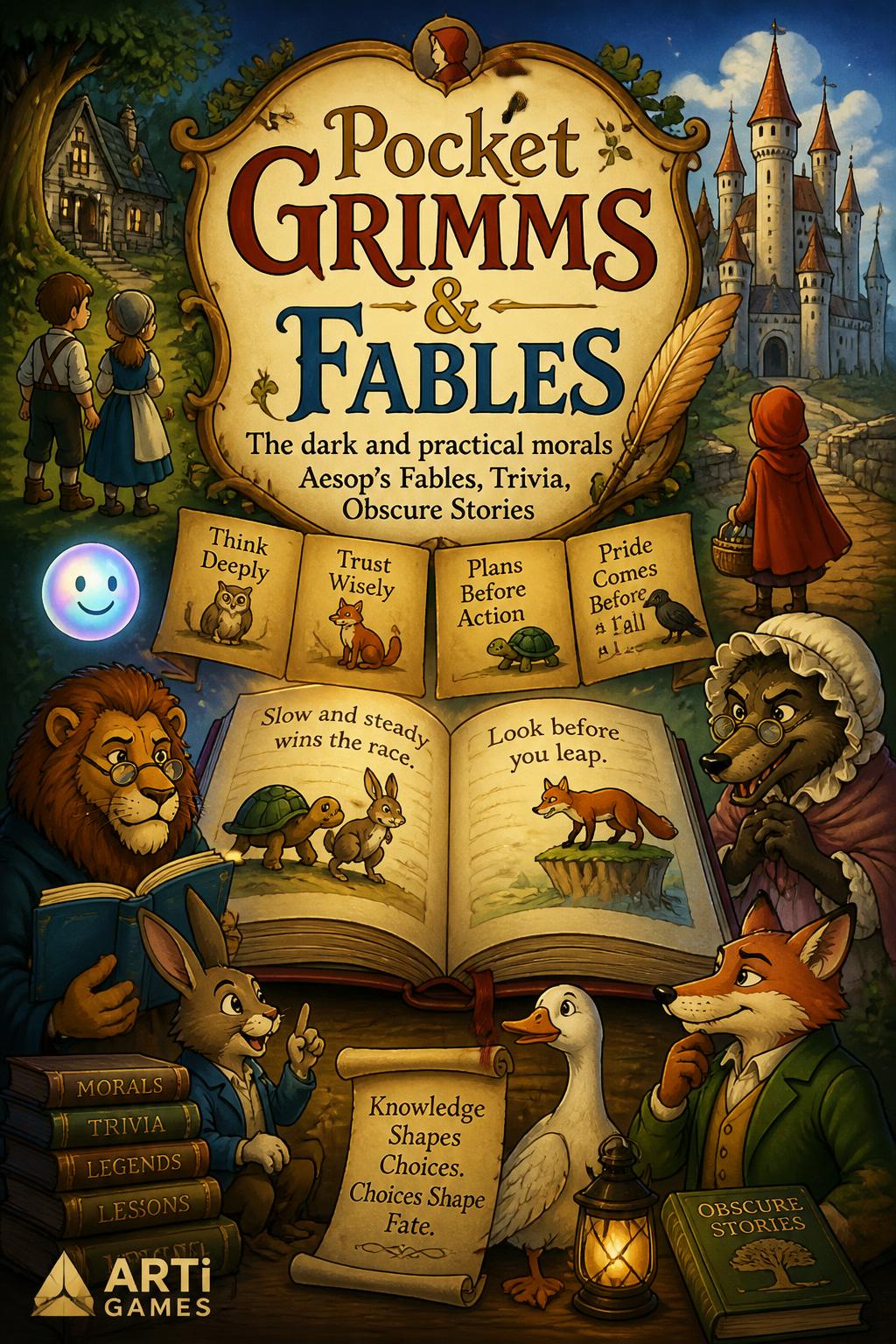
schopenhauer Match forgotten fables to their original endings to learn the true morals of classic stories.
In 'The Wolf and the Lamb,' what does the wolf do after the lamb disproves all his accusations?
What does the crow drop into the pitcher to raise the water level in Aesop's famous fable?
Why did ancient storytellers use animals instead of humans to critique society?
In a 2009 scientific study, which bird species proved that the fable 'The Crow and the Pitcher' is physically accurate?