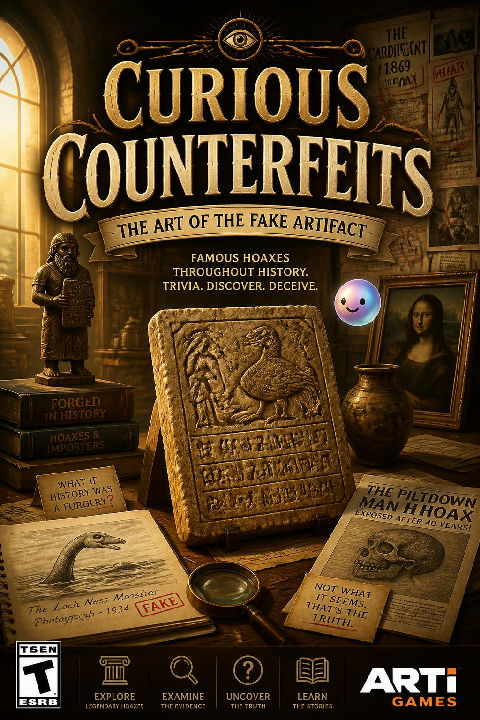
Can you spot these famous fake artifacts in history?
Test your knowledge of history's most famous hoaxes and curious counterfeits with this interactive trivia game about the art of the fake artifact.
The art of the fake artifact
When the media fooled the world
Nature and creatures that never were
Modern digital deceptions
schopenhauer George Hull buried a fake gypsum giant in New York, charging visitors fifty cents to see it.
schopenhauer In 1903, a Russian goldsmith proved he crafted the fake ancient tiara the Louvre bought.
schopenhauer Explore the fascinating story of the "missing link" that never actually existed in this video about one of history's most famous scientific hoaxes.
schopenhauer The Art of Fake Artifacts
That ancient golden crown (golden crown!) Was a brand-new fake (brand-new fake!) That fooled the town! (Oh yeah!)
schopenhauer Explore the mystery of the Glozel clay tablets. Watch to learn about the controversy surrounding this famous historical hoax.
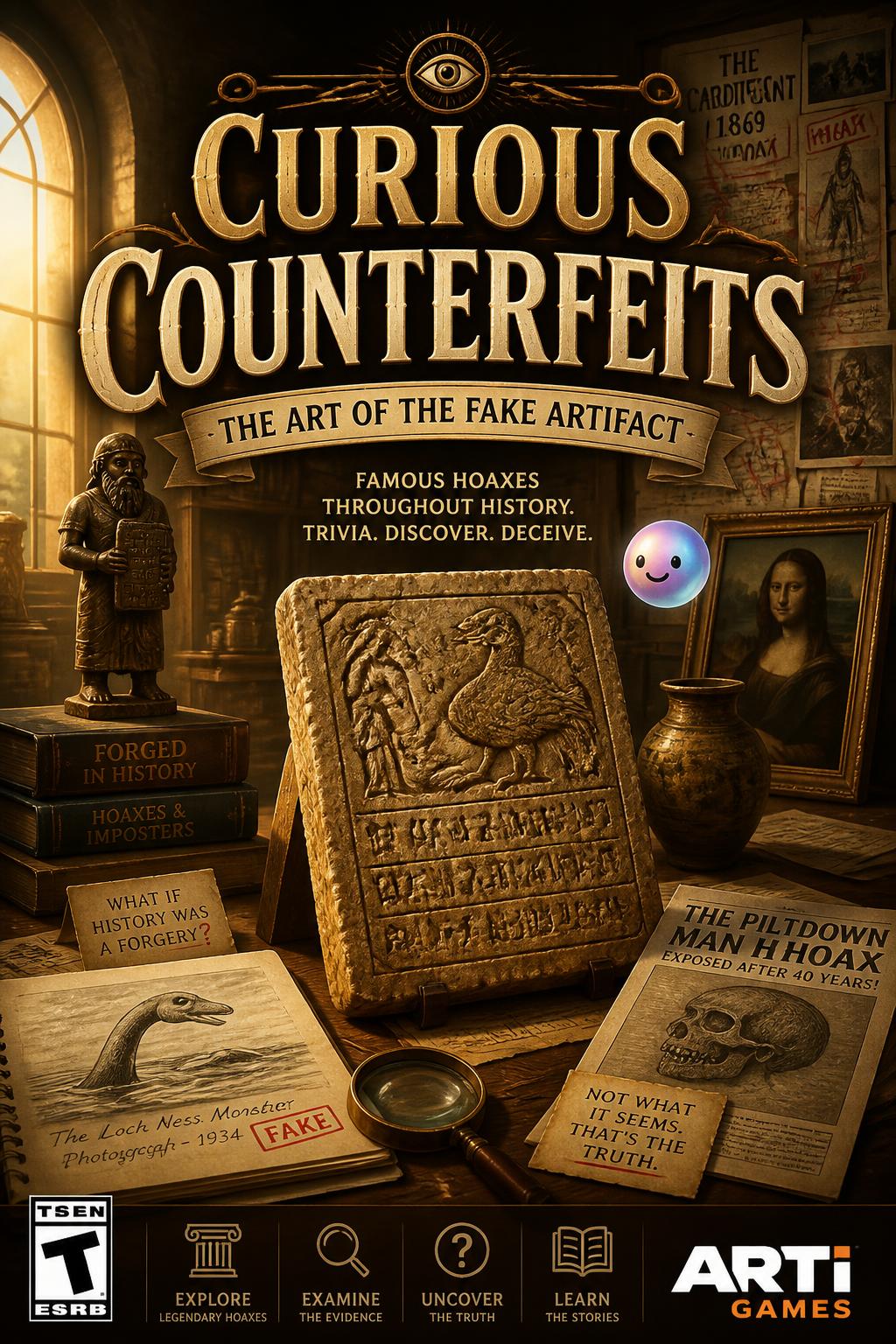
schopenhauer Test your knowledge of history's most famous hoaxes and curious counterfeits with this interactive trivia game about the art of the fake artifact.
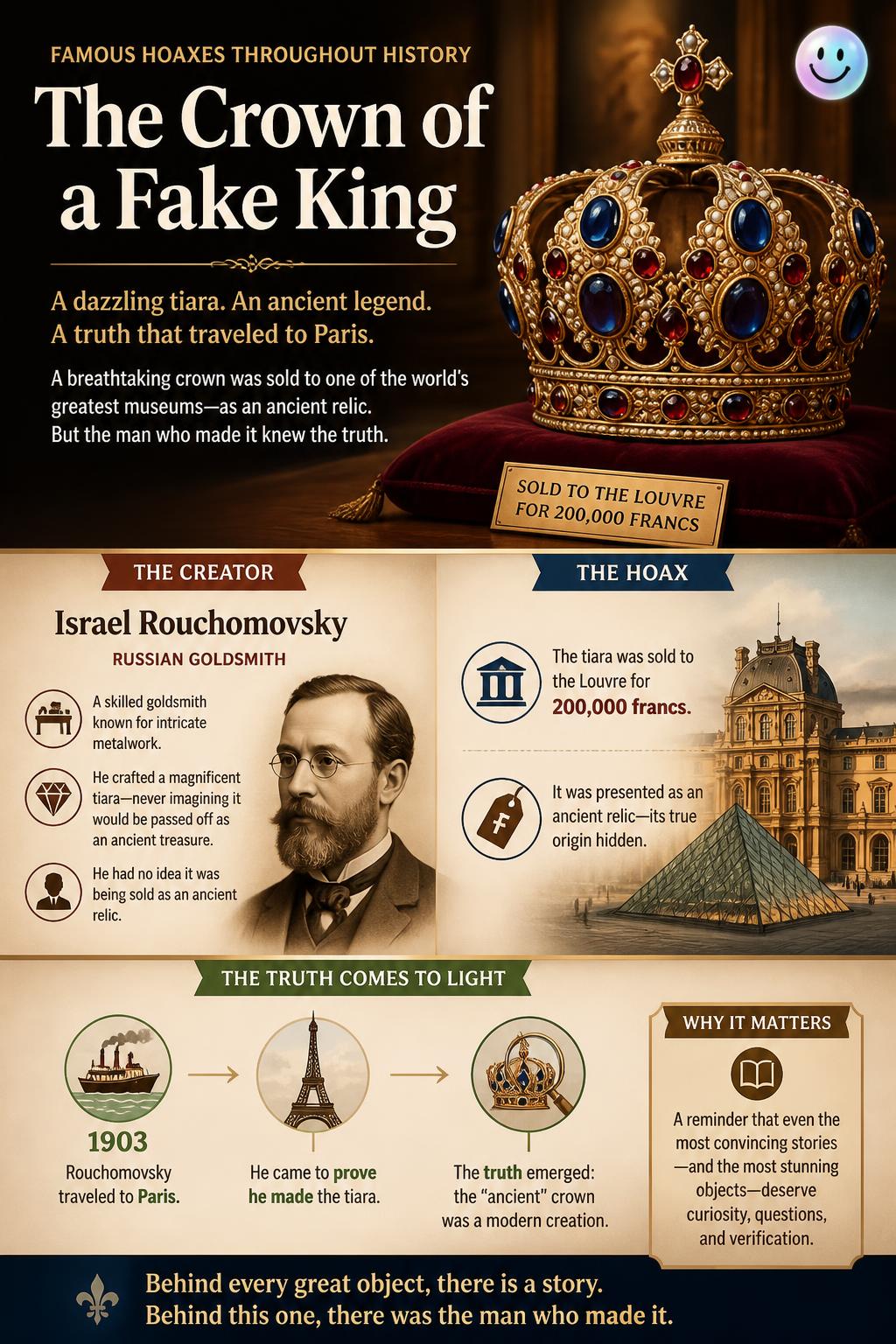
schopenhauer The Louvre Museum purchased a magnificent gold tiara in 1896, believing it belonged to an ancient Scythian king, only to discover it was modern.
Cardiff Giant replica: Showman P.T. Barnum offered $50,000 to buy the Cardiff Giant, but when rejected, he simply built his own fake giant and drew even larger crowds.
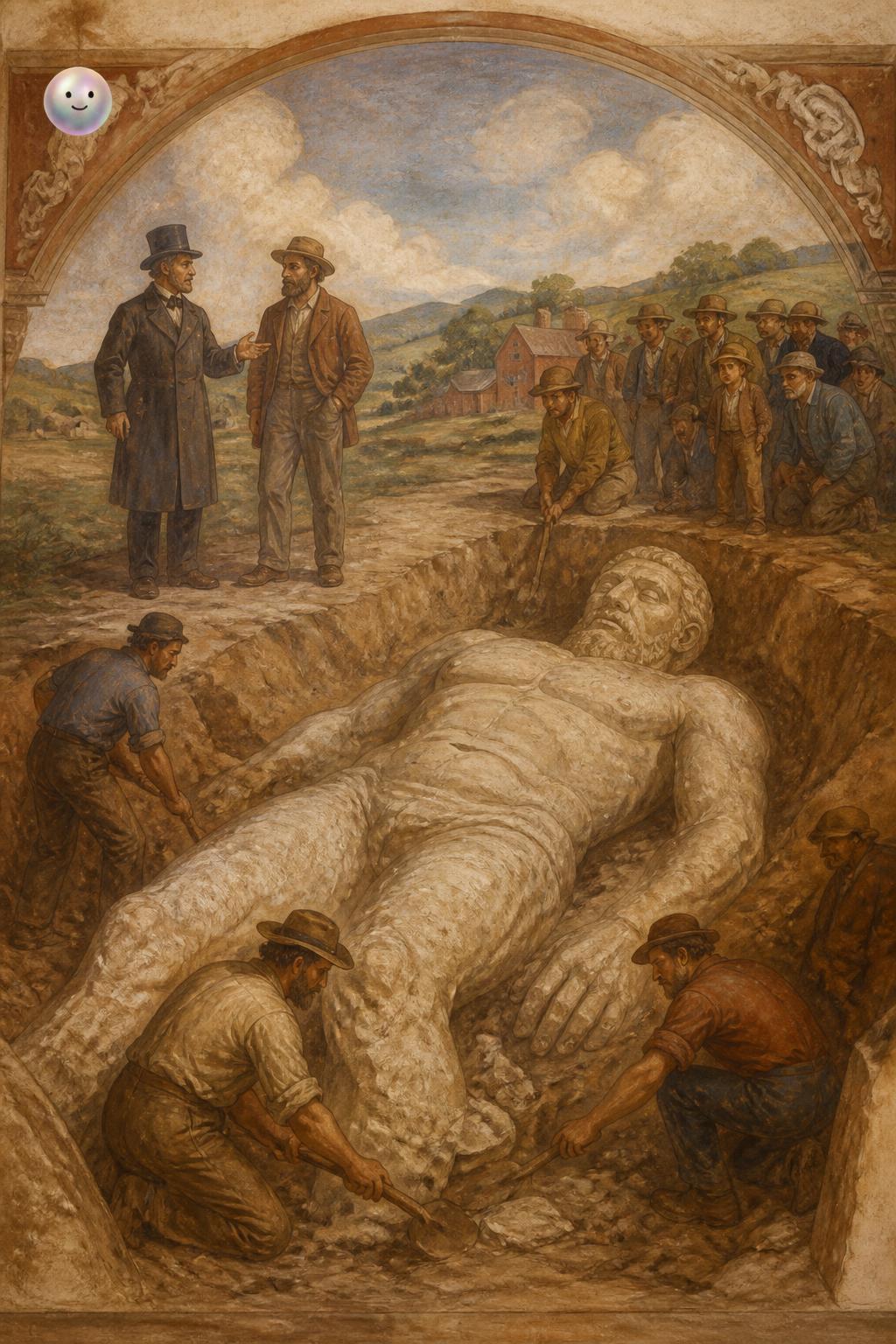
schopenhauer A ten-foot-tall stone giant dug up in Cardiff, New York, in 1869 became a massive tourist sensation before being exposed as a fake.
An item, such as a document or work of art, that has been forged or counterfeited. In 1869, George Hull fabricated the Cardiff Giant, a stone forgery falsely marketed as a petrified ancient human.
What did P.T. Barnum do when he was refused the purchase of the Cardiff Giant?
How did goldsmith Israel Rouchomovsky prove he made the Tiara of Saitaphernes?