
BETA

In 1688, Joseph de la Vega explained that the true 'Princes of Business' build lasting wealth not by active trading, but by patiently holding shares and letting their dividends compound over time.
nic Decode ancient clay tablets to discover how compound interest quietly builds wealth.
nic Ancient Sumerians capped compound interest rates to prevent borrowers from falling into permanent slavery
nic Reinvesting dividends on the Amsterdam Stock Exchange allowed family wealth to compound quietly over generations
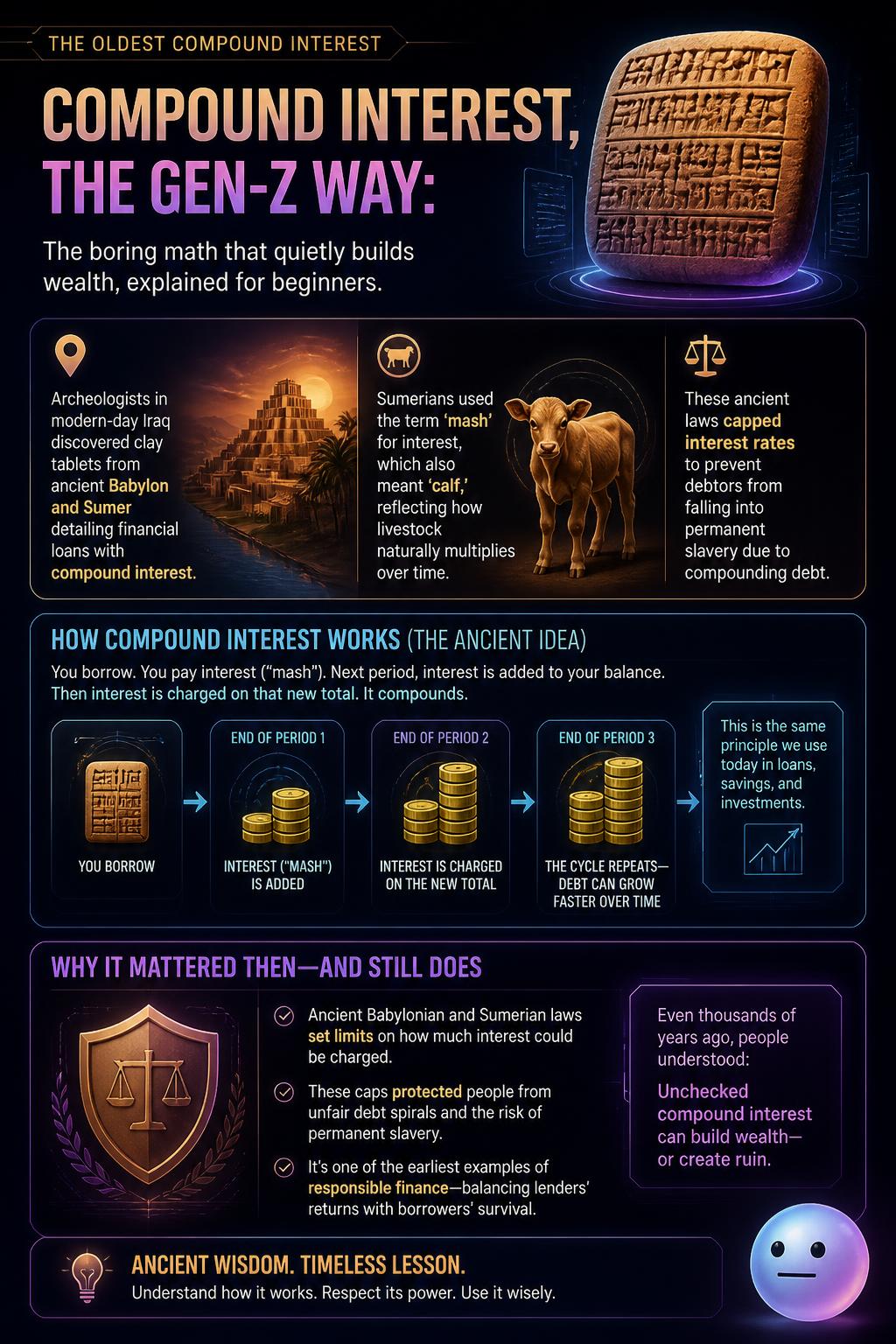
nic Archeologists in Iraq discovered Babylonian clay tablets detailing compound interest, the Sumerian term mash, and laws capping interest rates.
What was the ancient Sumerian word for interest, which also translated directly to 'calf' or 'offspring'?
Which famous ancient Babylonian legal code, dating back to around 1750 BCE, established strict limits on interest rates for grain and silver loans?
How much money did Benjamin Franklin leave to each city in his will to start his 200-year compounding experiment?
Which two American cities received Benjamin Franklin's legacy funds to be compounded over two centuries?
Oldest bank: The world's oldest continuously operating bank, Banca Monte dei Paschi di Siena, was founded in Italy in 1472, compounding wealth for over five centuries.
During the Middle Ages in Europe, what was the general term for charging any interest on loans, which was heavily restricted by religious laws?
nic De la Vega Compounding 1688
Forget the daily trade and all the market noise, Just hold your shares and watch them compound with quiet poise.
What is the name of the oldest stock-issuing company in history, whose dividends were reinvested by early compounders in the 17th century?
In which city was the world's first official stock exchange established, where Joseph de la Vega studied compounding and trading?