

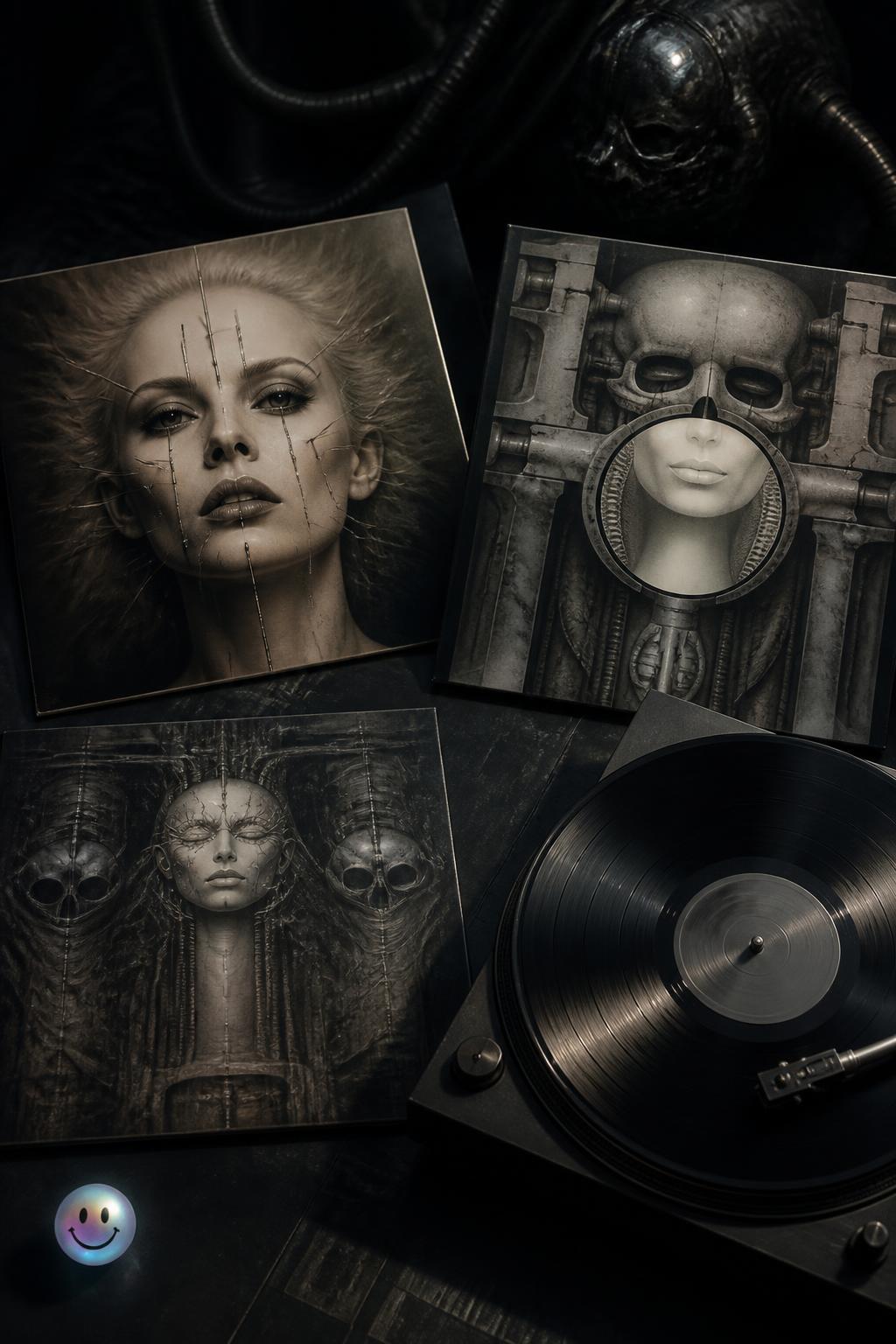
A spinning vinyl record packaged inside an eerie, shadow-filled album cover that features surreal or biomechanical artwork. In the 'Beyond the Movie Screen' chapter of H.R. Giger's career, these spooky sleeves allowed his mechanical nightmare designs to haunt turntables worldwide, proving art doesn't need a cinema screen to make an impact.

Jodorowsky's Dune: The Lost Sands and HR Giger
In 1975, filmmaker Alejandro Jodorowsky hired Giger to design the homeworld of the villainous House Harkonnen for his ambitious Dune film. Though the project collapsed due to financial issues, Giger's designs for the organic, skull-like Harkonnen Castle remain legendary.
The birth of biomechanical art
The creation of a cinematic nightmare
Beyond the movie screen
Walking inside the nightmare
A spinning vinyl record packaged inside an eerie, shadow-filled album cover that features surreal or biomechanical artwork. In the 'Beyond the Movie Screen' chapter of H.R. Giger's career, these spooky sleeves allowed his mechanical nightmare designs to haunt turntables worldwide, proving art doesn't need a cinema screen to make an impact.
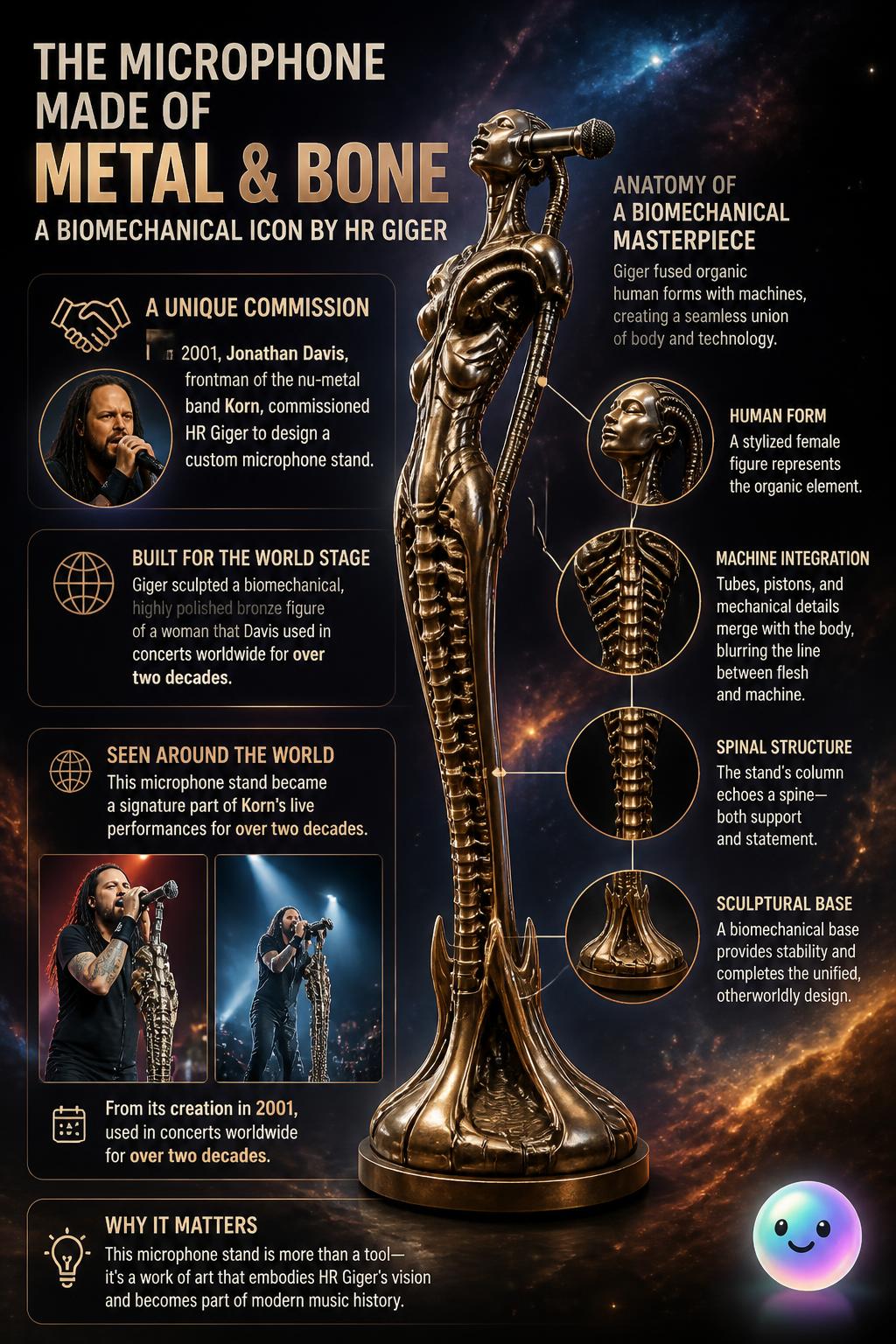
schopenhauer In 2001, Korn frontman Jonathan Davis commissioned this polished bronze female sculpture. He sang into the biomechanical stand during global concert tours for over two decades.
schopenhauer In 1975, artist H.R. Giger designed a skull-like organic castle for the villainous House Harkonnen. Although the movie lost funding, these haunting concept drawings influenced science fiction forever.
schopenhauer H.R. Giger designed Debbie Harry's 1981 KooKoo cover, which British subways banned. He also created the 1973 Brain Salad Surgery gatefold for Emerson, Lake and Palmer.
schopenhauer HR Giger Beyond Cinema
We are drinking under giant spines! (Oh-oh!) At Giger's bar the biomechanic shines! (Yeah-yeah!)
schopenhauer Movie producers changed Giger's creature designs for Alien 3 without his permission or screen credit. This exhausting disrespect drove the legendary Swiss sculptor back to his fine art.

schopenhauer Decode Giger's biomechanical trivia to discover the inspiration behind his famous alien designs.

schopenhauer Giger designed a custom, biomechanical microphone stand that became a legendary centerpiece for the metal band Korn.
Debbie Harry's cover: When designing Debbie Harry's KooKoo album cover, H.R. Giger had actually never heard her music, as he personally preferred listening to classic jazz.

schopenhauer Giger lent his biomechanical genius to the music world, designing iconic, controversial album covers for major artists.
Which progressive rock band used H.R. Giger's biomechanical art for their 1973 album Brain Salad Surgery?
What genre of music did H.R. Giger personally prefer to listen to while working in his studio?
Why did H.R. Giger eventually grow frustrated with the Hollywood film industry?
For which unmade 1970s sci-fi film did H.R. Giger design the terrifying, skull-like Harkonnen Castle?
For which 1995 science fiction movie did H.R. Giger design the seductive but deadly alien creature named Sil?
For which metal band's lead singer did H.R. Giger sculpt a custom, biomechanical bronze microphone stand in 2001?
Whose face did H.R. Giger paint pierced with four large needles for a controversial 1981 album cover?
