
Micro-habit: Definition and science of tiny routines
Discover the definition of a micro-habit and how tiny daily routines bypass the brain's resistance to change to help you build new habits.
The neural construction zone
Tuning your ears to the world
The science of micro-habits
The bilingual superpower

duolingo Recalling a word right before forgetting it strengthens brain connections to flatten the Ebbinghaus forgetting curve.
duolingo Hermann Ebbinghaus discovered that the human brain loses most new knowledge within just a few days.
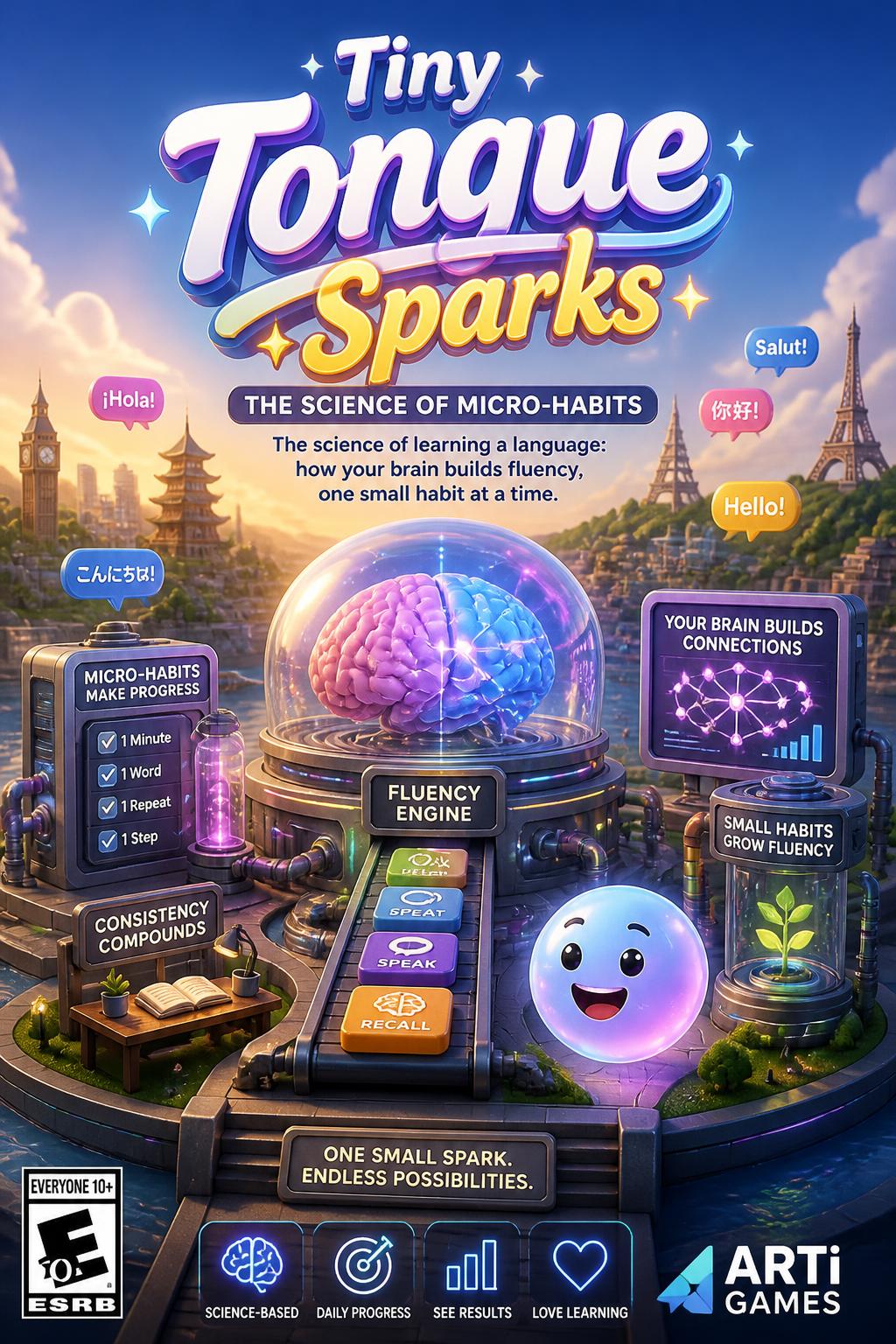
duolingo Match daily habits to discover how your brain builds fluency one spark at a time.
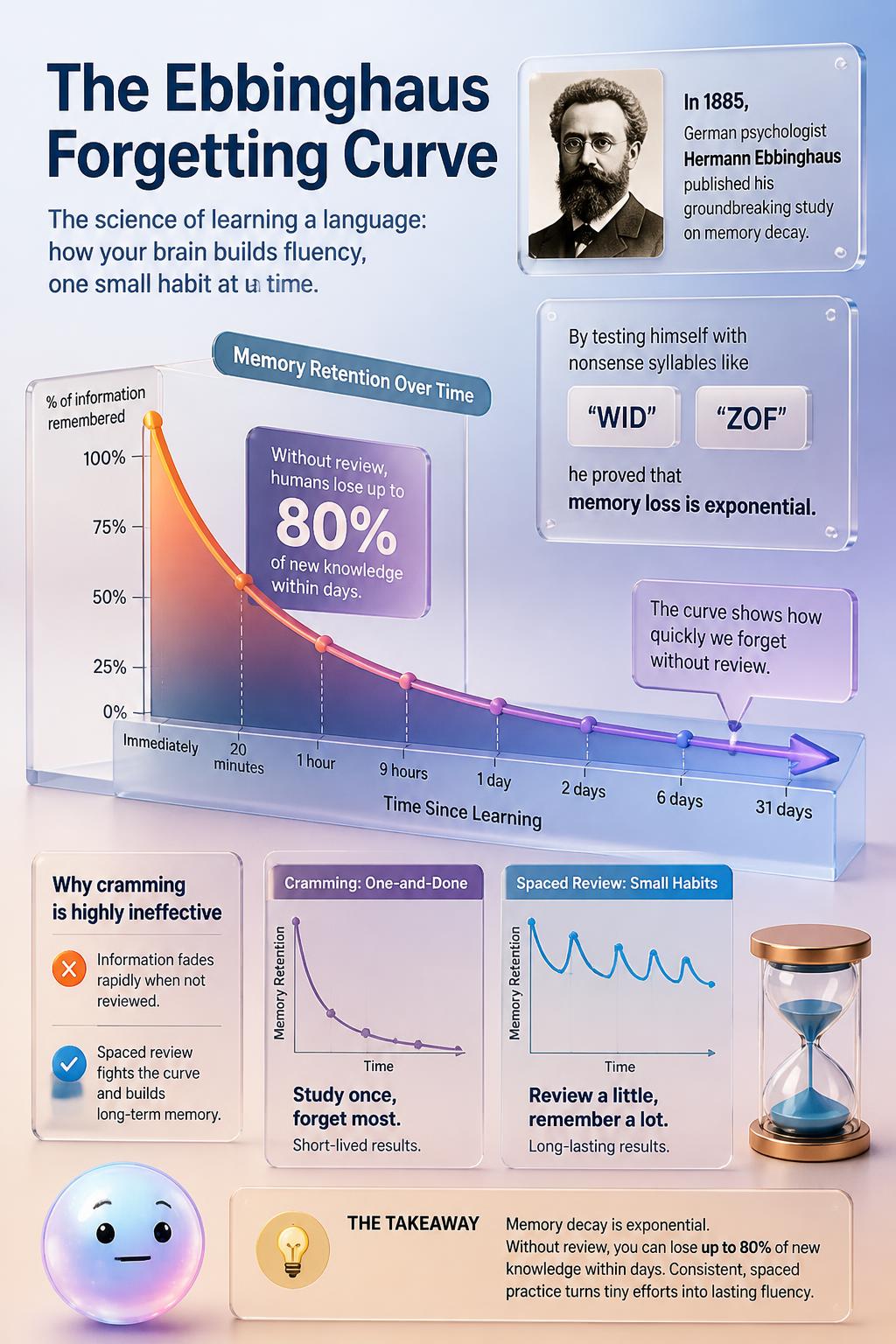
duolingo Testing himself with nonsense syllables like WID and ZOF revealed exponential memory decay, explaining why cramming is highly ineffective.
What type of words did Hermann Ebbinghaus invent to study pure memory decay without prior emotional associations?
Which German psychologist first mapped the exponential decay of human memory in 1885?


duolingo Spaced repetition helps you memorize thousands of foreign words in minutes daily.
How does spaced repetition affect the shape of the Ebbinghaus forgetting curve over time?
What is the primary benefit of using a spaced repetition system to study foreign vocabulary?
Memory decay: Without review, you will forget roughly fifty percent of any new vocabulary lesson within the first hour of learning it.
Which brain structure acts as temporary storage during the day and transfers language memories to the neocortex during sleep?
Research from the University of York demonstrated that which daily activity is essential for cementing new vocabulary into long-term memory?
A small, easily performed action or behavior that is repeated consistently to establish a larger routine. Stanford researcher B.J. Fogg demonstrated how tiny daily routines bypass the brain's natural resistance to change.
duolingo Active Recall
Don't just read the words and hope they stay, Pull them from your mind to build a stronger pathway.
Why is using flashcards or practice quizzes considered an excellent form of active recall?
What cognitive trap occurs when a student rereads a vocabulary list and mistakes recognition for actual recall?