
Paleolithic Music and Art
Over 35,000 years ago, Paleolithic humans carved playable musical flutes out of griffon vulture bones and mammoth ivory, like the five-hole flute discovered in Hohle Fels cave, Germany.
Dinner in the deep past
Making a home on the move
Art, music, and the inner world
Tools, technology, and teamwork
renaissanceman Paleolithic people carved small female figurines, but whether they represented fertility or alliances remains a mystery.
renaissanceman Forty thousand years ago, Paleolithic humans played vulture bone flutes, adding music to their daily rituals.
renaissanceman Paleolithic artists burned animal fat in stone lamps to paint inside dark caves.

renaissanceman Match cave doodles and beats to discover how Paleolithic people expressed their daily lives.
renaissanceman Paleolithic Music and Art
Make it ring, make it ring / Hear the hollow vulture bone sing.
renaissanceman Watch this video to explore how Paleolithic humans used red ochre to honor their dead and discover the origins of ancient burial rituals.
Stone Age spray paint: Cave artists created hand stencils by placing their hand on a wall and blowing liquid pigment through a hollow bone tube.
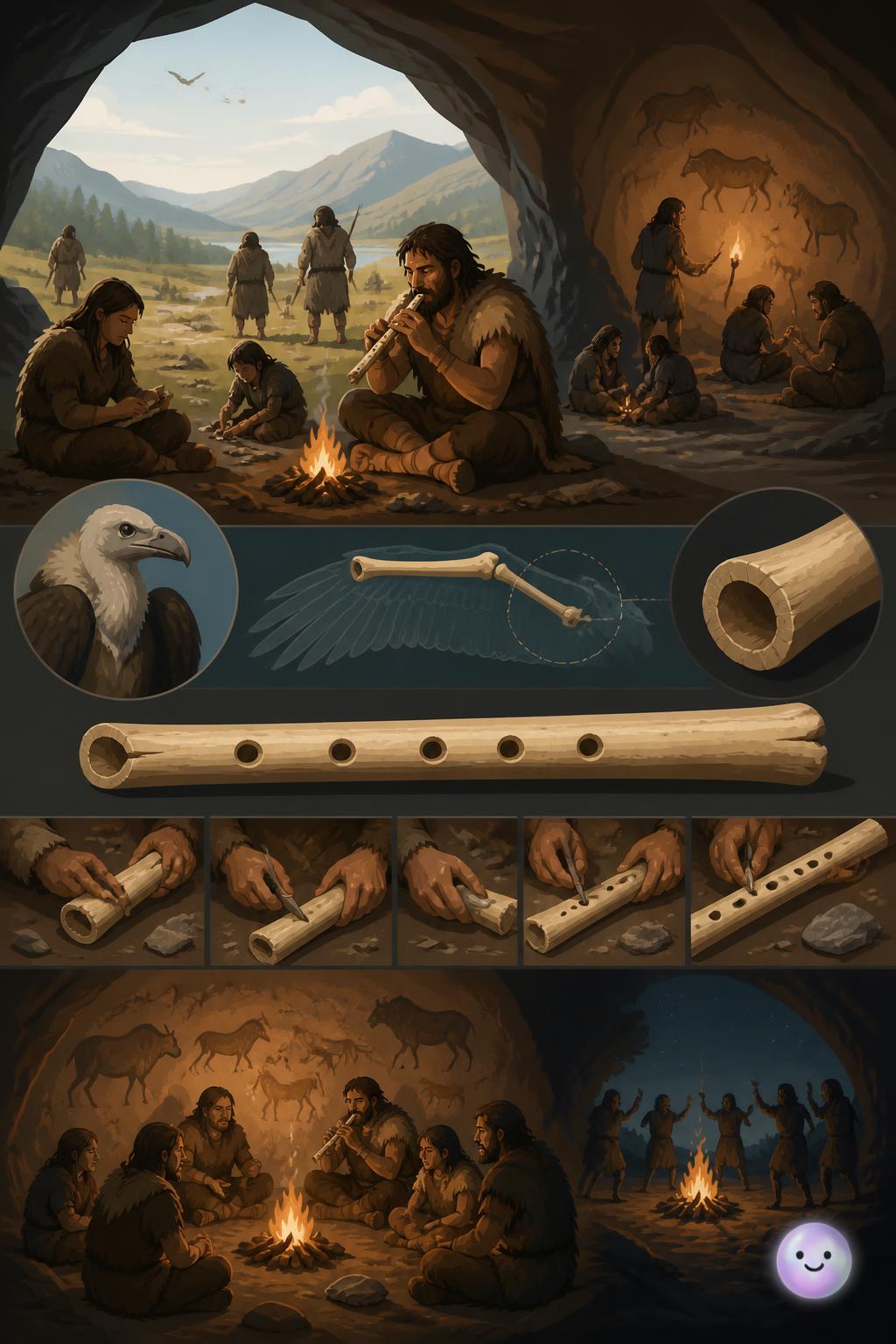
renaissanceman Paleolithic musicians carved delicate flutes from bird bones and mammoth tusks, filling caves with complex melodies.
A prehistoric painting or drawing on the wall or ceiling of a cave. In 1940, explorers discovered spectacular Upper Paleolithic examples in France's Lascaux cave dating back 17,000 years.
What did Paleolithic artists burn in stone lamps to light up pitch-black cave chambers?
What material, besides bird bones, was frequently used to carve Paleolithic flutes?
What natural clay pigment, representing blood and life, was sprinkled over Paleolithic graves?
What is the name of the famous 25,000-year-old female figurine discovered in Austria?
What did archeologists find in the 30,000-year-old graves at the Sungir site in Russia?