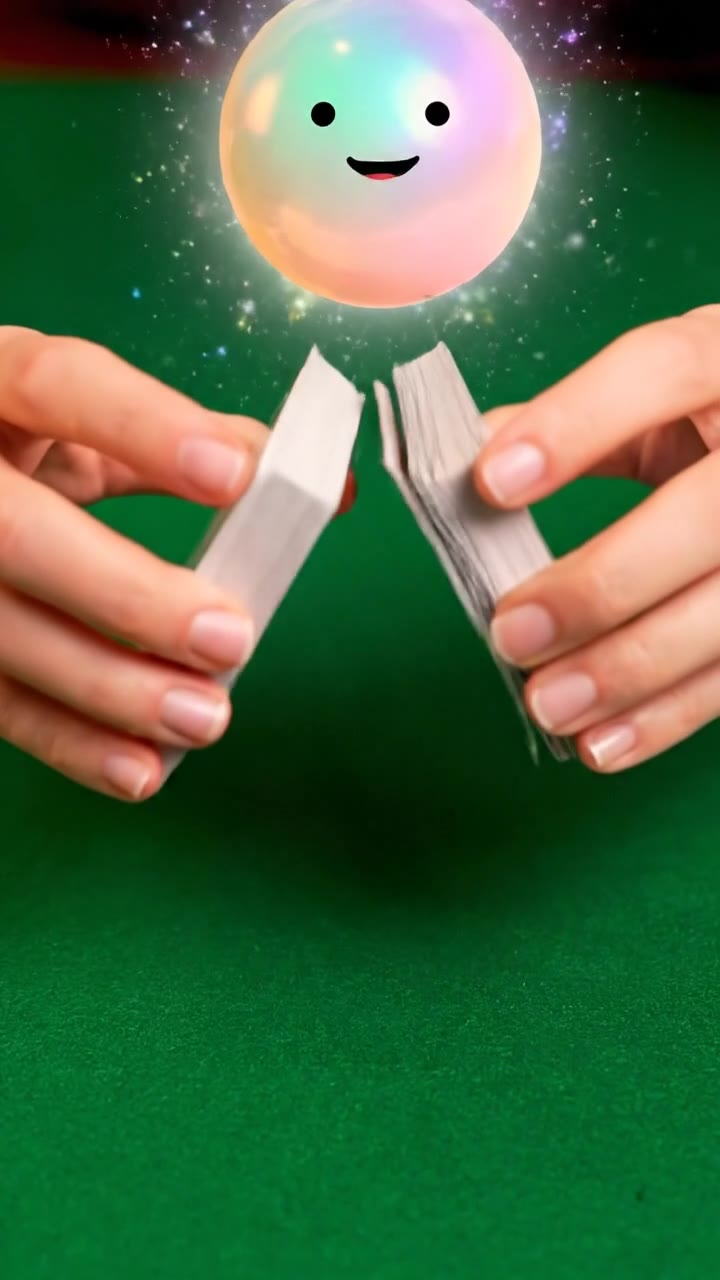
How Card Shuffling Creates Entropy and Chaos
A brand new deck of cards starts in a highly ordered, low-entropy state, sorted by suit and number. Every shuffle increases the entropy of the deck, moving it toward a random arrangement. To return the cards to their original perfect order requires deliberate energy and work, showing how randomness dominates without active intervention.
The steam engine's secret
The probability game
The arrow of time
Information and order
mankai Flipping ten coins demonstrates that nature favors messy macrostates because they have 252 different possible arrangements
mankai Shuffling a fifty-two card deck increases entropy, requiring active physical work to restore its original order.
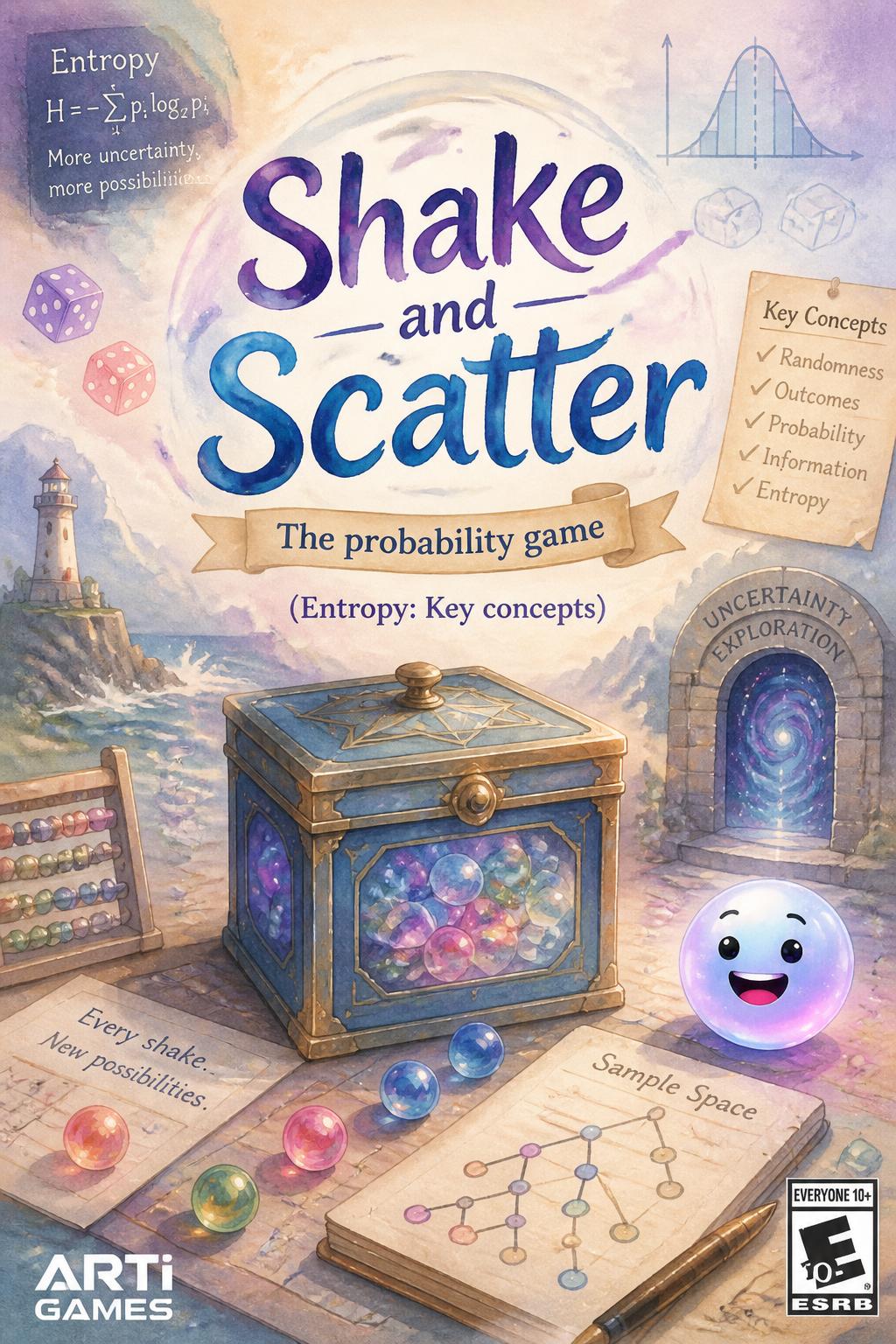
mankai Shake and scatter the blocks to learn how entropy naturally increases disorder.
mankai Card Shuffling and Entropy
Seven riffles randomize the deck (randomize!) / Creating chaos that is brand new (brand new!)
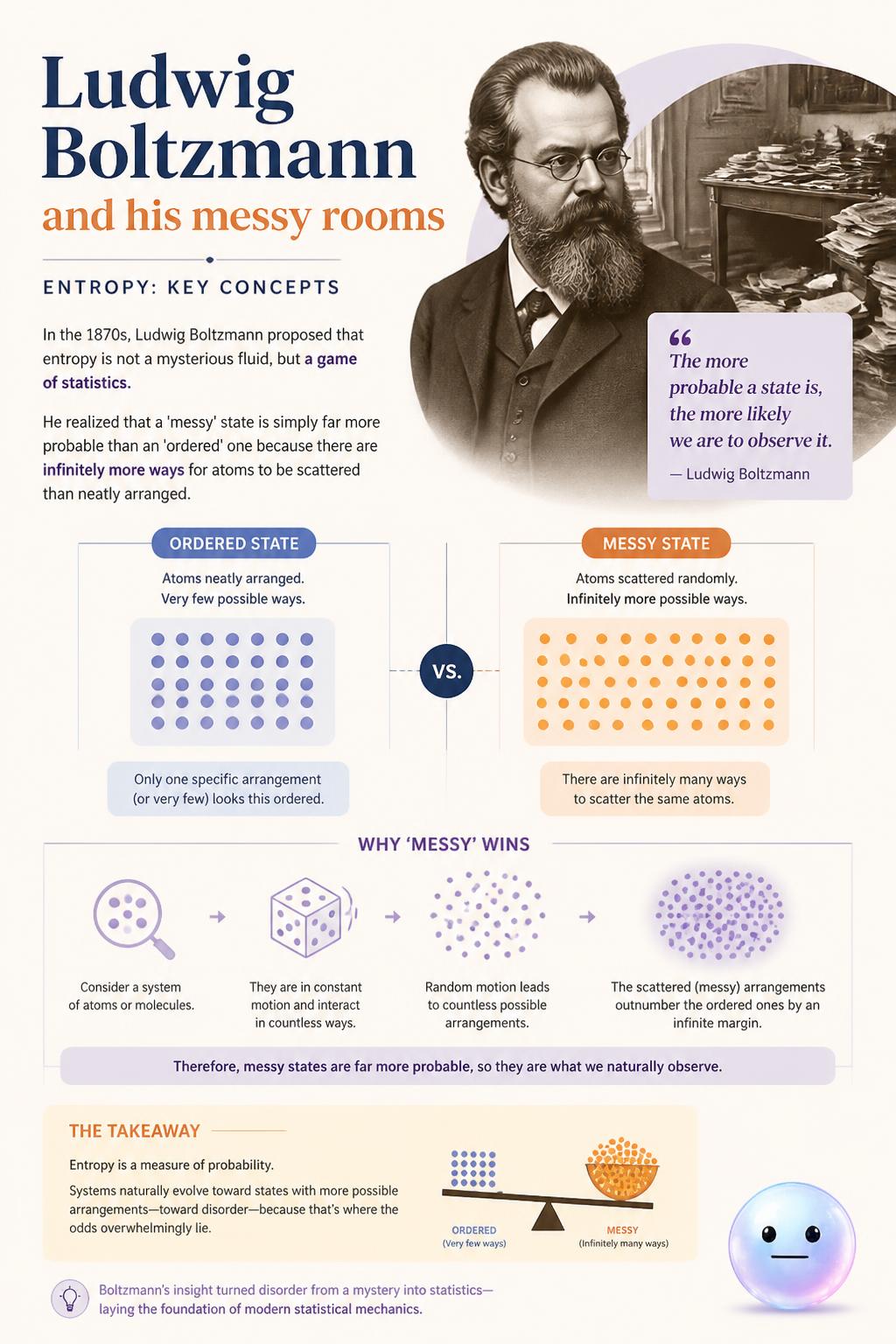
mankai Boltzmann explained that messy states are highly probable because atoms have infinitely more ways to scatter than to stay neatly arranged.
Which Austrian physicist revolutionized thermodynamics by explaining entropy using statistical probability?
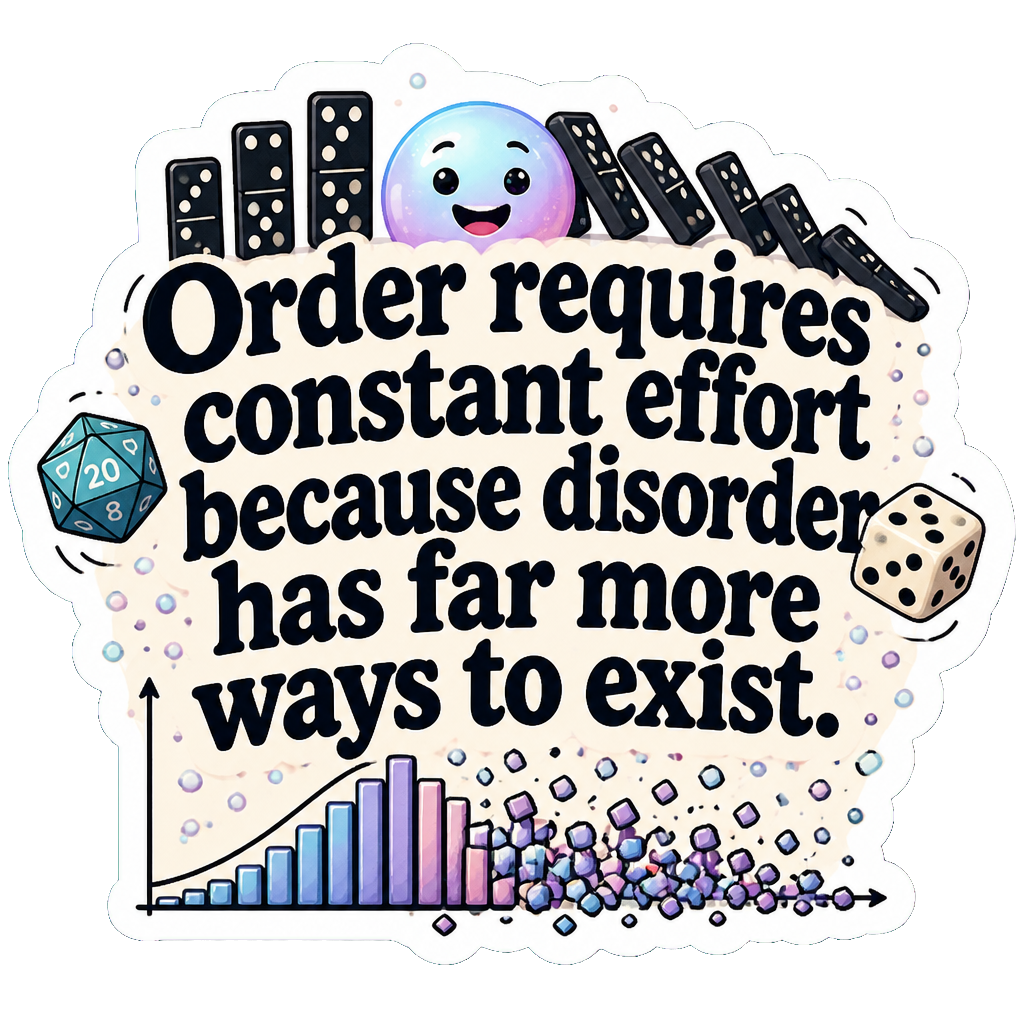
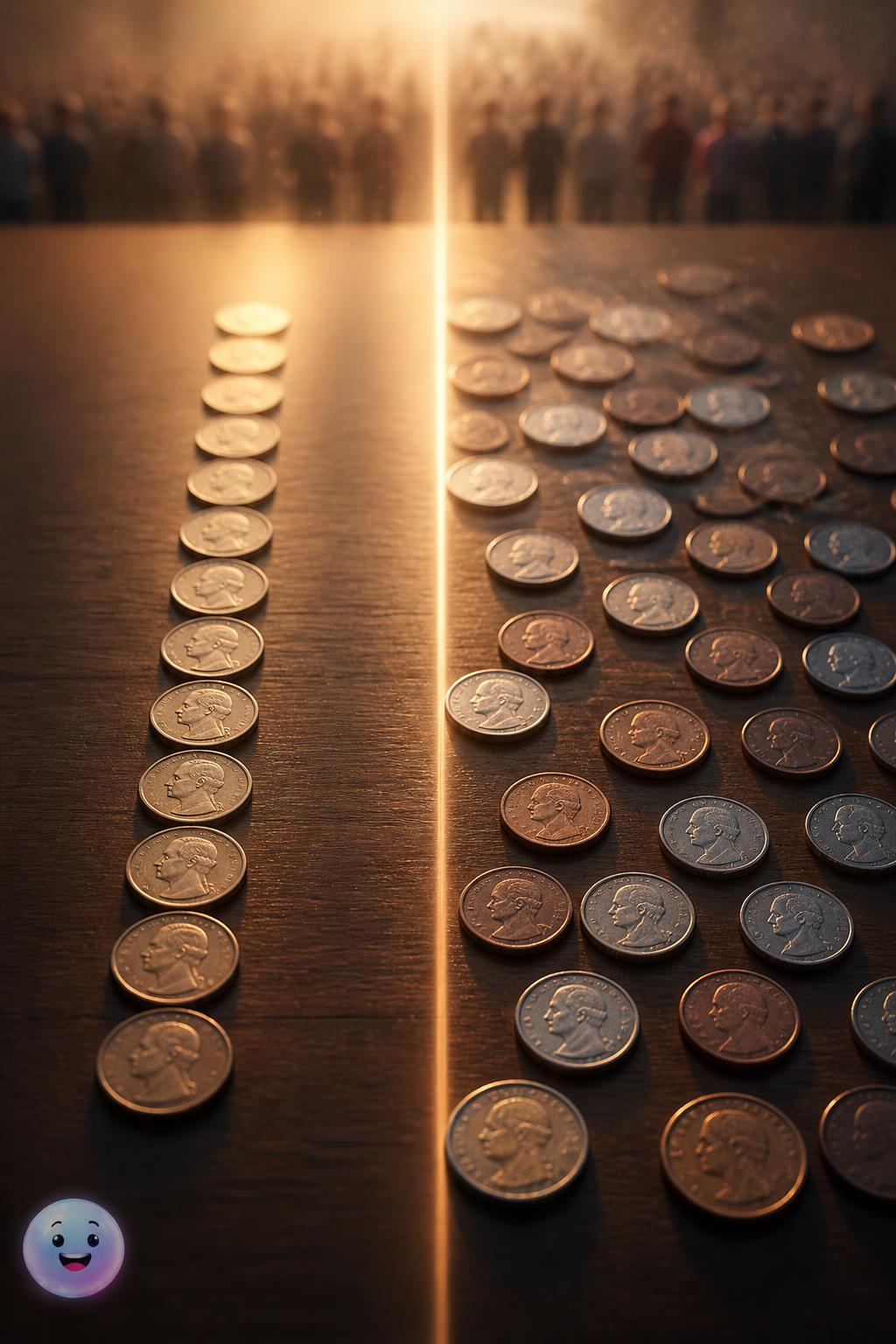
mankai Entropy explains why nature naturally drifts toward macrostates with the most possible microstates
If you toss 10 coins, how many unique microscopic arrangements (microstates) result in the macrostate of 'all heads'?
Why does nature naturally drift toward macrostates with high numbers of microstates?
Boltzmann's tombstone: Ludwig Boltzmann never actually wrote his famous equation S = k log W in that exact form; Max Planck first wrote it in 1900.
In Ludwig Boltzmann's famous tombstone equation S = k log W, what does the variable 'W' represent?
Where is Ludwig Boltzmann's tombstone, which features his famous entropy equation, located?
Why does a shuffled deck of cards not spontaneously return to its original sorted order?