Flask Web App Tutorial: Python, SQLite3, and HTML
Armin Ronacher released Flask on April 1, 2010. Despite its humorous origins, global companies like Netflix, Airbnb, and Reddit now use Python-based web frameworks to handle millions of requests every day. This micro-framework lets developers build functional web servers with fewer than ten lines of code.
The blueprints of the web: Flask and the architecture of code
The digital filing cabinet: SQLite and structured thinking
Connecting the wires: Flask meets SQLite
Showcasing your superpower: Building a portfolio that shines
cixerona Flask route decorators direct modern web traffic by intercepting HTTP requests first introduced by Tim Berners-Lee
cixerona The Jinja2 template engine uses double curly braces to insert dynamic data into static web pages
cixerona Armin Ronacher released the Flask framework in 2010, which now helps run massive websites like Netflix
cixerona Flask matches a typed web address to a specific Python function in milliseconds without using separate physical files
cixerona Flask Web Framework Architecture
Just a joke, just a joke, Now Flask runs the web today!

cixerona Drag Flask and database components to master the blueprints of professional web architecture.
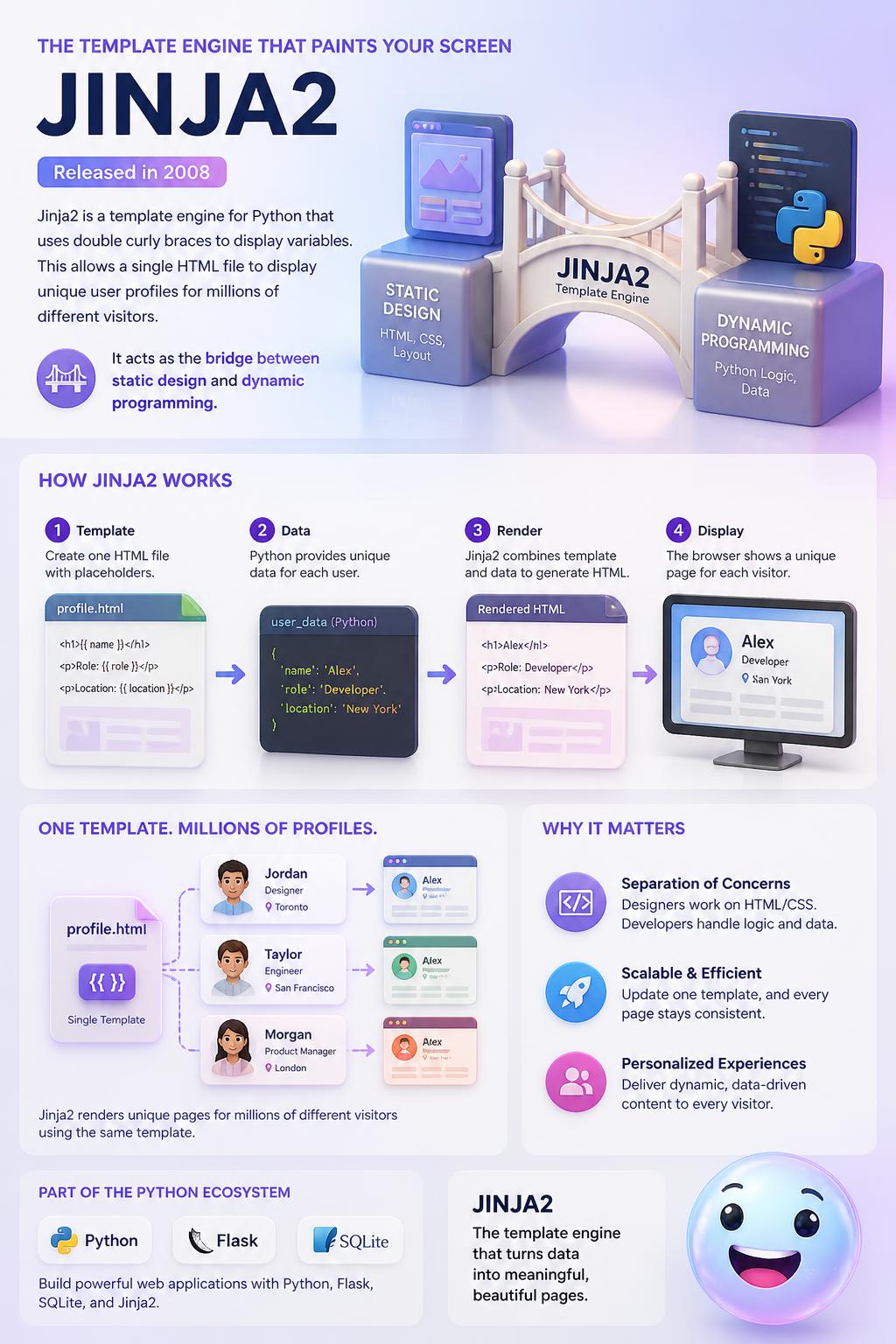
cixerona Released in 2008, this Python template engine allows a single HTML file to serve millions of unique visitor
Flask's origin: Flask was created in 2010 as an April Fools' prank by combining two separate libraries, but it became a massive success.

cixerona Glowing data streams flow between glass and chrome server blocks in isometric 3D.
A detailed plan or program of action. In June 2011, Flask introduced blueprints to help developers structure modular Python web applications.
What year was the Flask web framework originally released as an April Fools' joke?