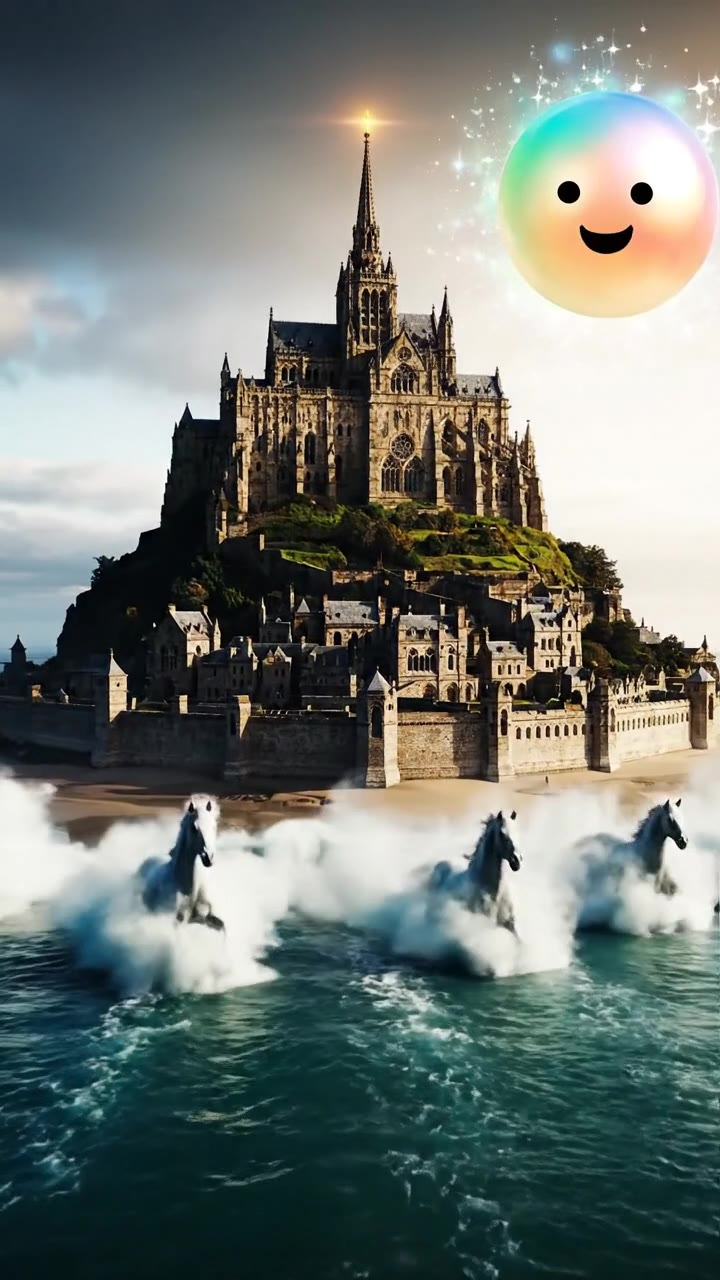
Mont Saint-Michel Tides: Galloping Horses of the Sea
Because of the flat, shallow sea floor, the tide rushes in at speeds of up to 6.1 kilometers per hour. Local lore famously describes the incoming water as moving "at the speed of a galloping horse," making the bay extremely dangerous.
A dream built on sand and stone
Engineering a masterpiece in the sky
The fortress that never fell
The wildest tides in Europe

sonia In 2015, a new bridge replaced a road, saving Mont Saint-Michel from joining the mainland.
sonia Because walkers can rapidly sink in Mont Saint-Michel's wet tangue, the law requires official safety guides.
sonia Local lore compares Mount Saint Michel's dangerous tides to the speed of a galloping horse.
sonia Wildest Tides in Europe
See the ocean run out for miles! (Run out for miles!) Then rush right back to make an island! (Make an island!)
sonia Meet the modern guardians of Mont Saint-Michel. Watch to discover how they preserve and protect the heritage of this historic French tidal island.
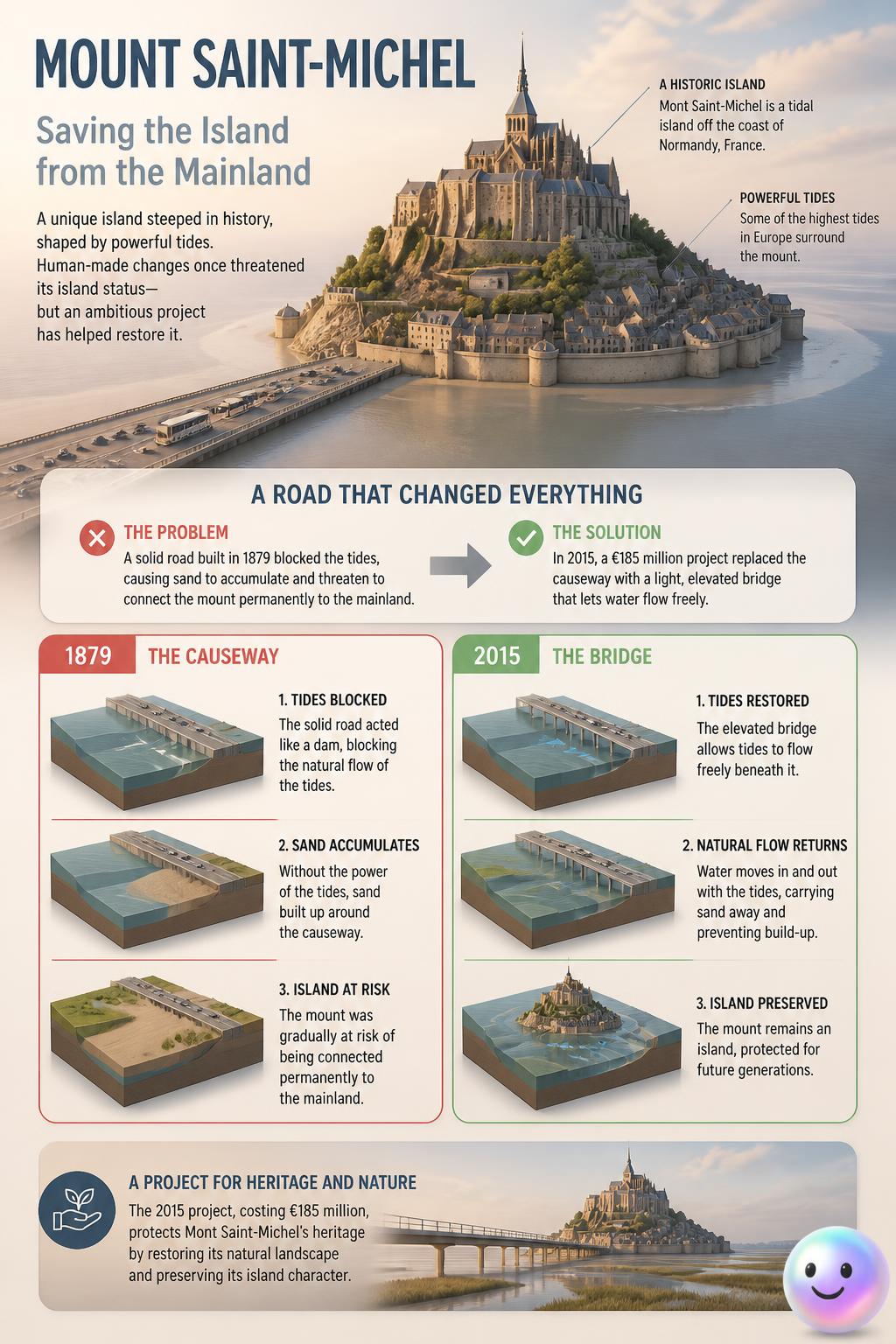
sonia A massive 21st-century engineering project successfully restored the mount's island status by removing silt buildup.
The sheep salt: Sheep grazing in the salty marshes around the mount eat grass that naturally seasons their meat, a local delicacy.
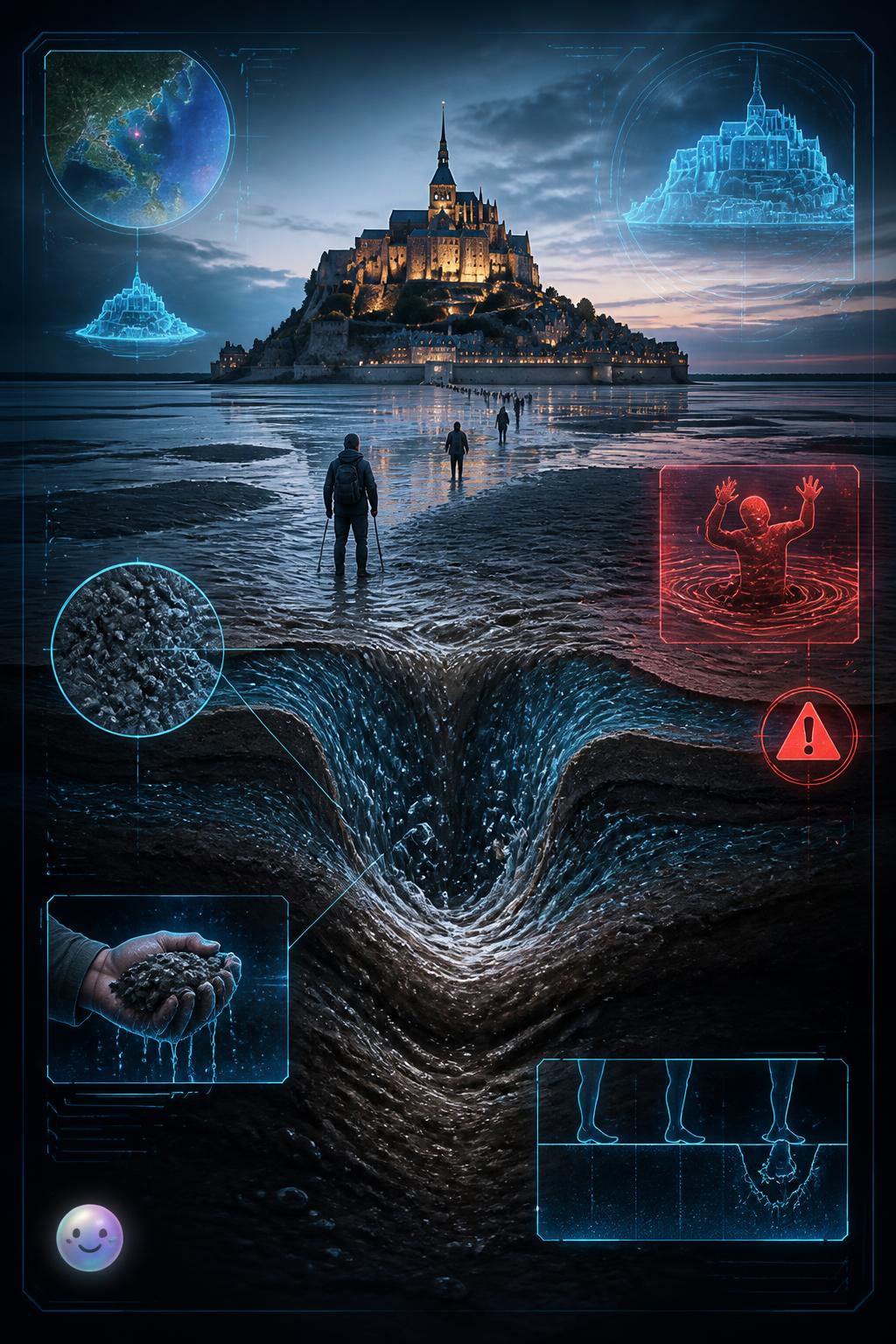
sonia The wet sands surrounding the mount behave like quicksand, trapping unwary visitors who wander without a guide.
The regular rise and fall of the ocean's surface caused by the gravitational pull of the moon and sun. At Normandy's famous rocky abbey, water levels swing up to fifteen meters between high and low phases.
What is the local French name for the dangerous, fine wet sand found in the bay of Mont Saint-Michel?
Which river's natural flow was modified to help flush silt away from Mont Saint-Michel?
According to local lore, the incoming tide at Mont Saint-Michel moves as fast as what?
Which monastic community has run the daily religious services at the Mont Saint-Michel abbey since 2001?