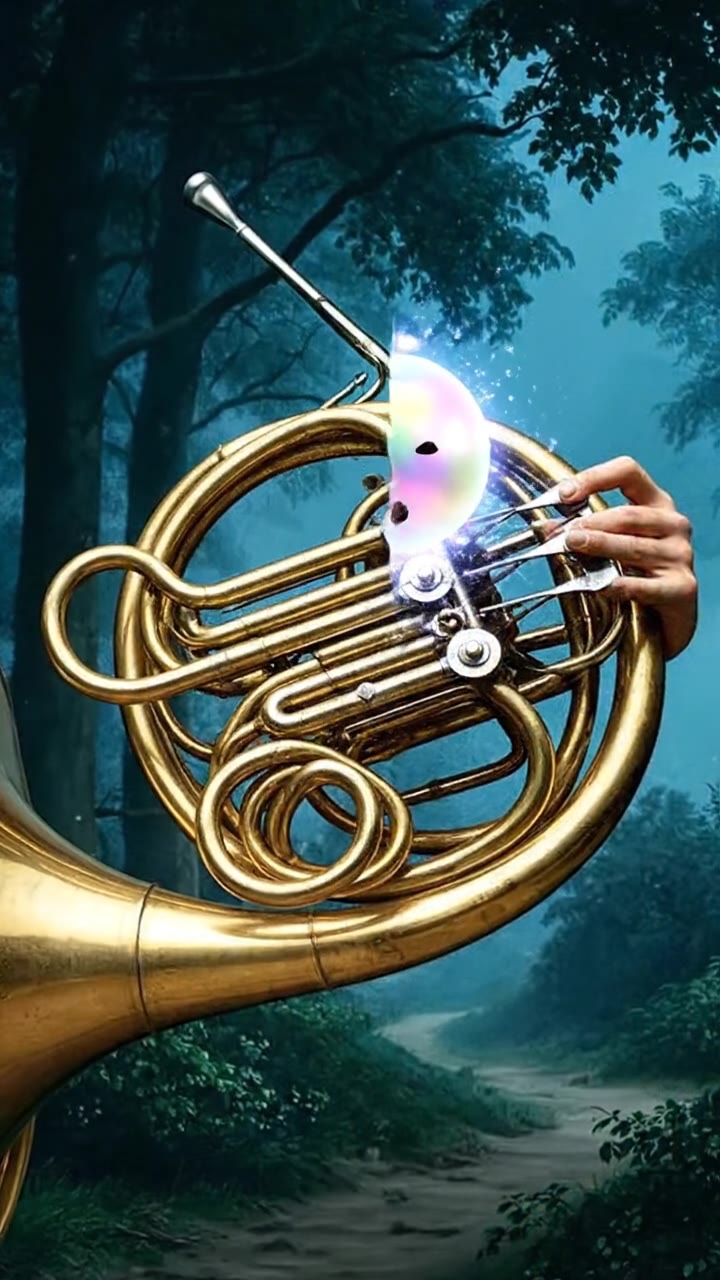
Hunting Horn Origins and French Horn History
In 16th-century Europe, hunters blew curved animal horns or basic metal loops to signal locations. These early instruments had no valves, meaning players could only produce a few natural notes by changing their lip tension.
From the forest to the concert hall
Physics of the golden maze
The soul of the symphony
Soundtracks and modern magic
maestro Seventeenth-century British musicians named the circular hunting horn after King Louis XIV's French court. German instrument makers later added the modern valves and tuning slides.
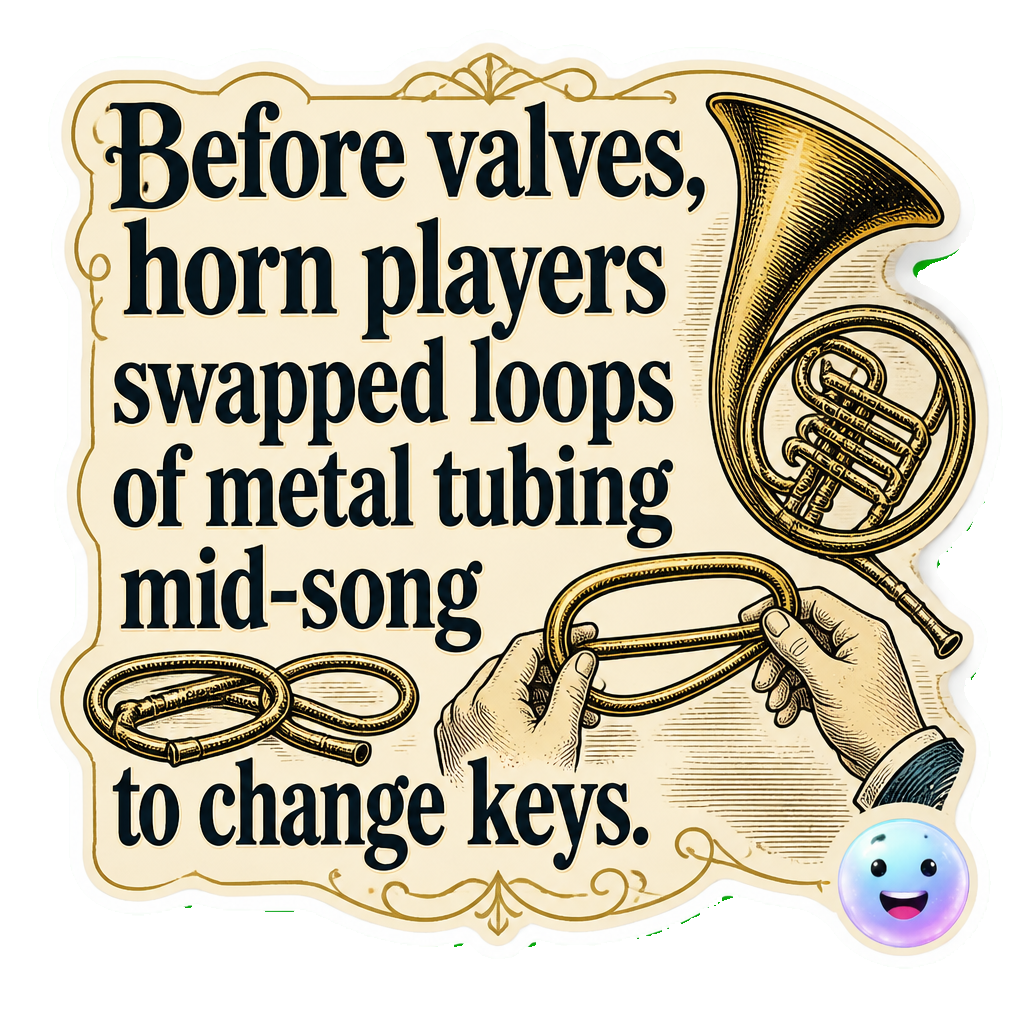
maestro Before 1818, brass players manually swapped metal tubes called crooks to change keys. Rotary valves instantly rerouted the air to let musicians play every note smoothly.
maestro Adding a thumb valve allowed players to switch between F and B-flat pitches. This breakthrough fixed notorious missed notes and remains the global orchestral standard.
maestro Sixteenth-century European hunters signaled each other using valveless animal horns and metal loops. Musicians changed their lip tension to produce different notes on these basic instruments.

maestro Trace the horn's path from the forest to discover its role in the symphony orchestra.
maestro The French Horn's Journey
From the deep green forest to the symphony hall! (Oh, we shine so bright!)
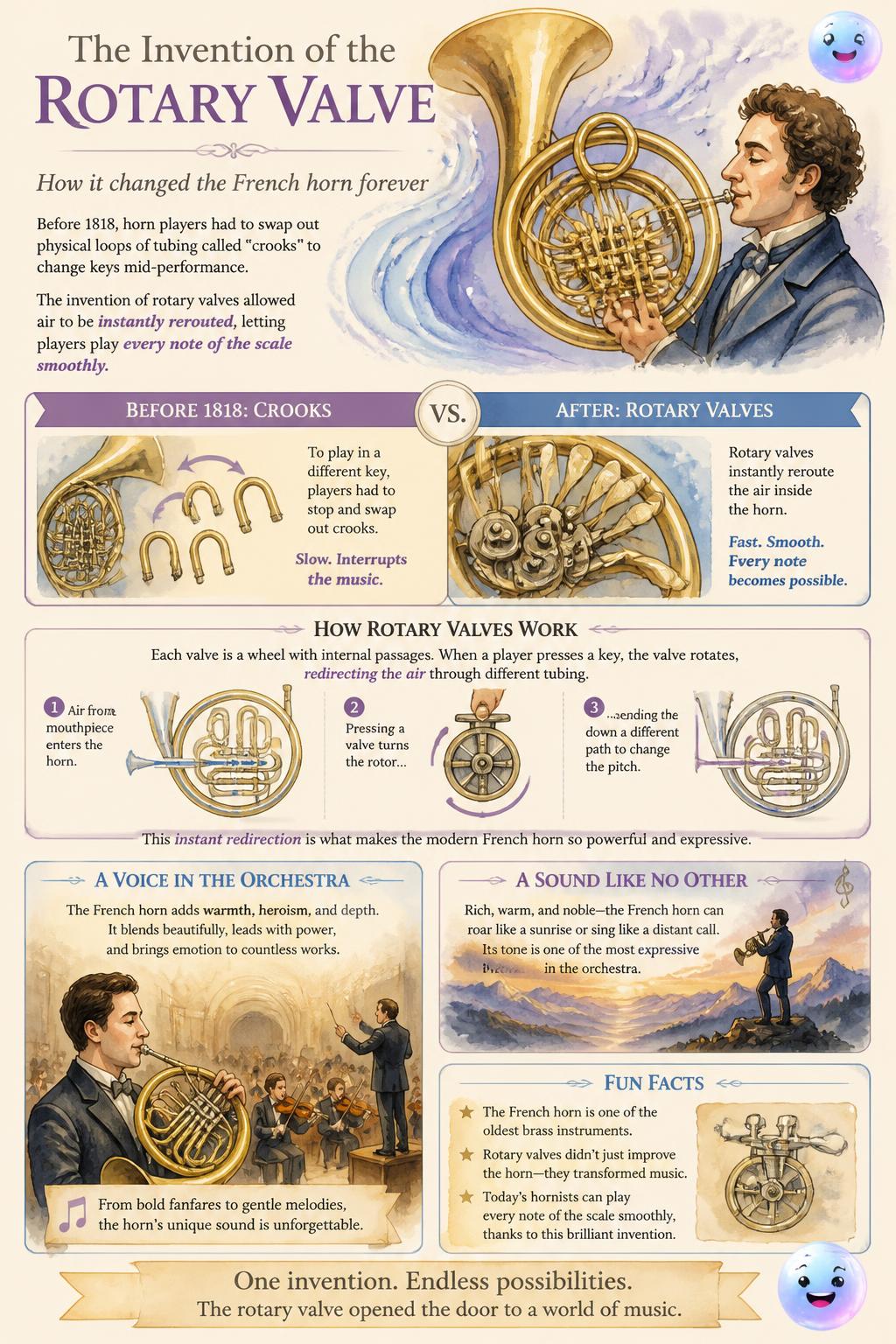
maestro Color-coded arrows trace air flowing through the brass loops of a rotary valve.
Hunting horn signals: Hunters memorized up to thirty distinct horn calls to communicate complex tactical messages across miles of dense forest without saying a single word.
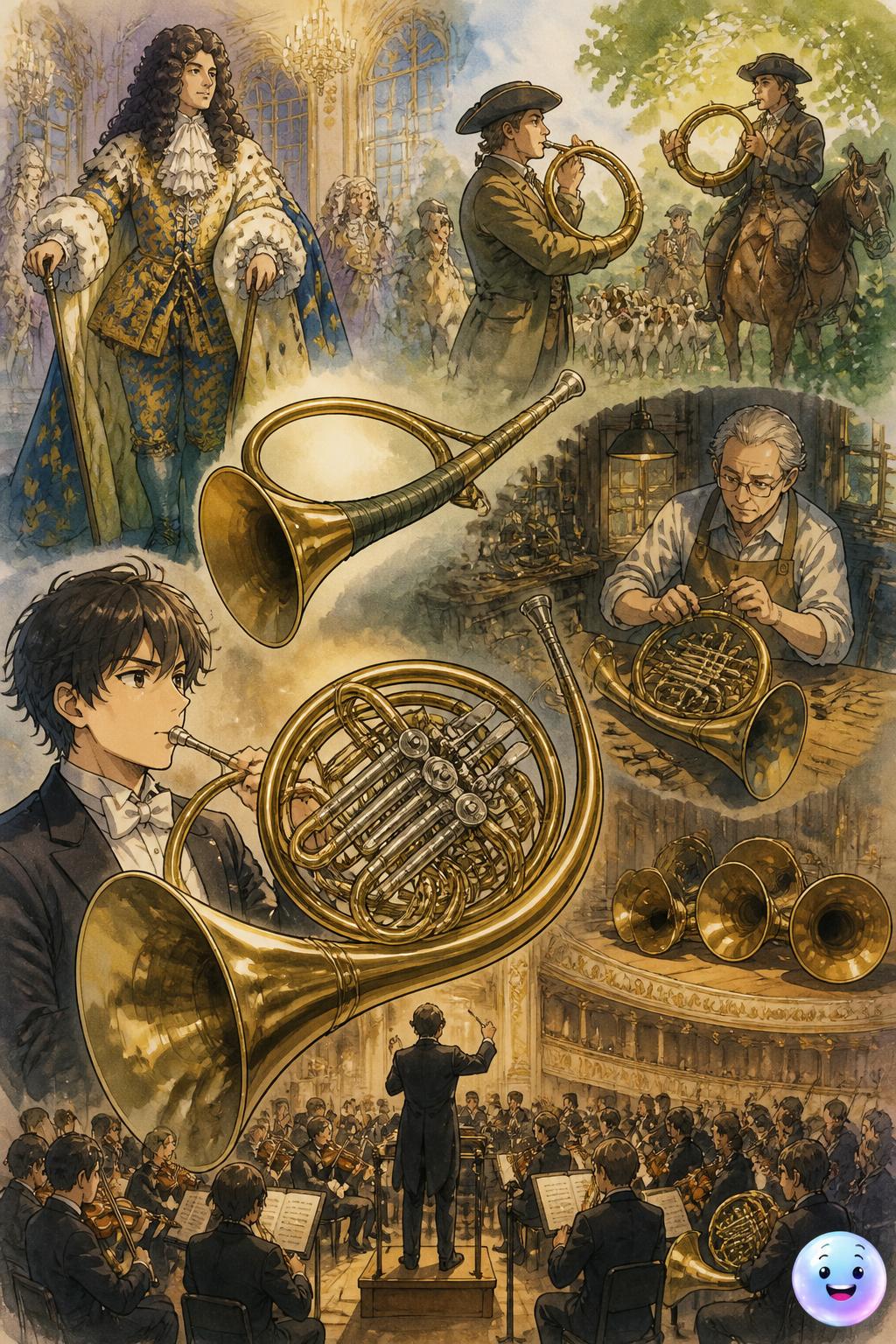
A brass instrument traditionally used to sound signals and coordinate activities during a hunt. In 1664, Jean-Baptiste Lully first introduced this rustic instrument into an orchestral performance in Paris.