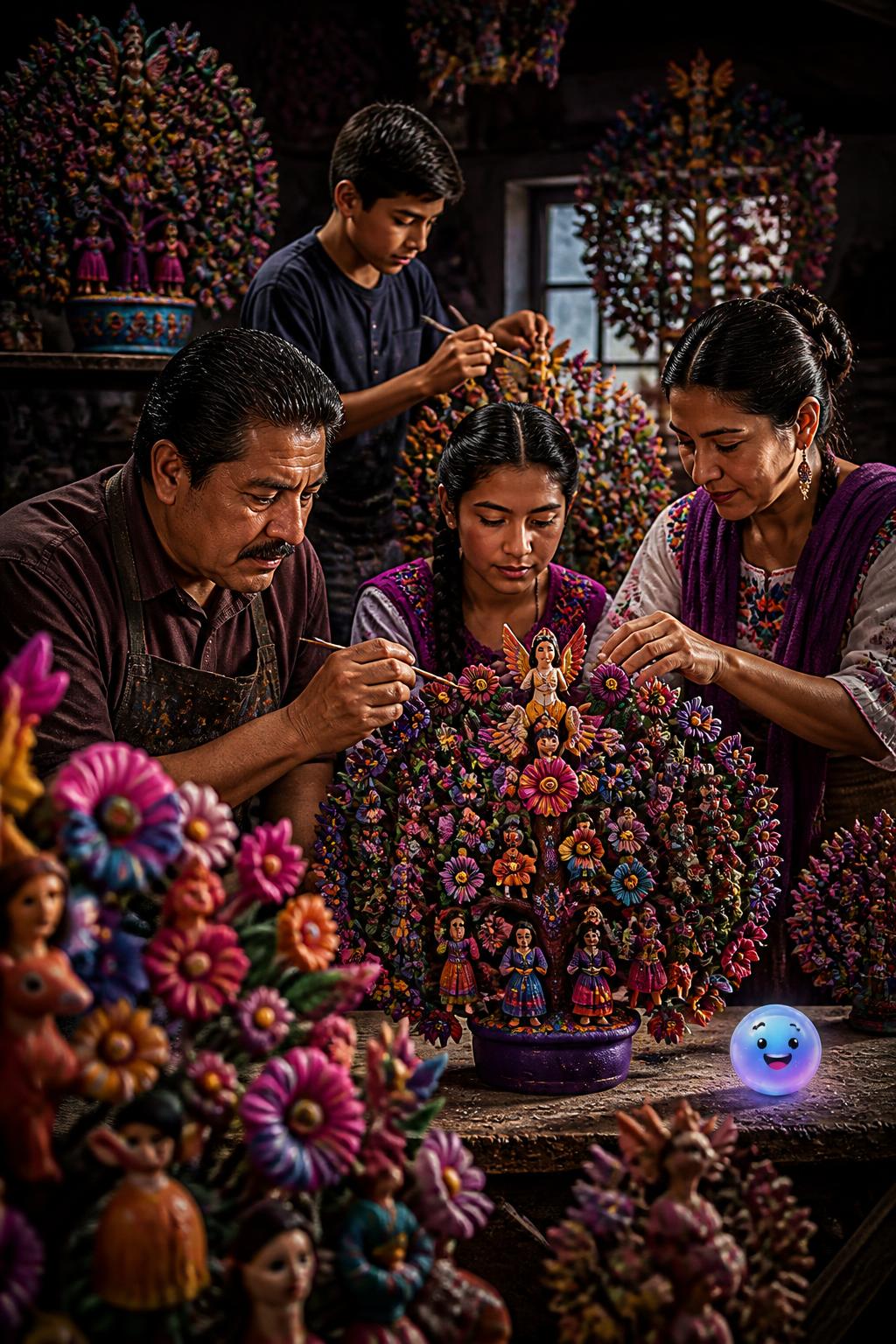
Soteno Family and Mexican Cartonería Art
Soteno family artisans pose with a vibrant, detailed paper-mâché Tree of Life sculpture.
The humble origins of paper and paste
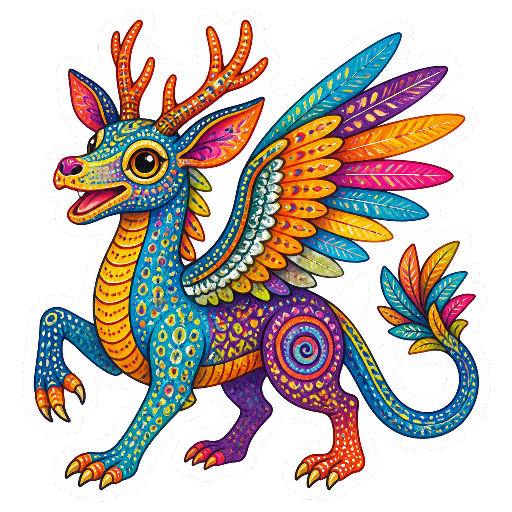
Pedro Linares and the birth of the alebrije
Skeletons of celebration and Day of the Dead
Regional masters and the modern global legacy

choko Artisans spend months handcrafting monumental sculptures that parade down Paseo de la Reforma in a massive celebration.
choko Metepec artists adapted clay Tree of Life designs into paper-mâché to build giant museum sculptures.
choko Affordable cardboard toys from Guanajuato allowed working-class families to buy beautiful playthings for their children
choko Mexican Cartonería Masters
Dreaming alebrijes! Dreaming alebrijes! A master's dream goes round the world!
choko Artisans use natural flour paste to promote biodegradable paper crafts as sustainable alternatives to cheap plastic toys
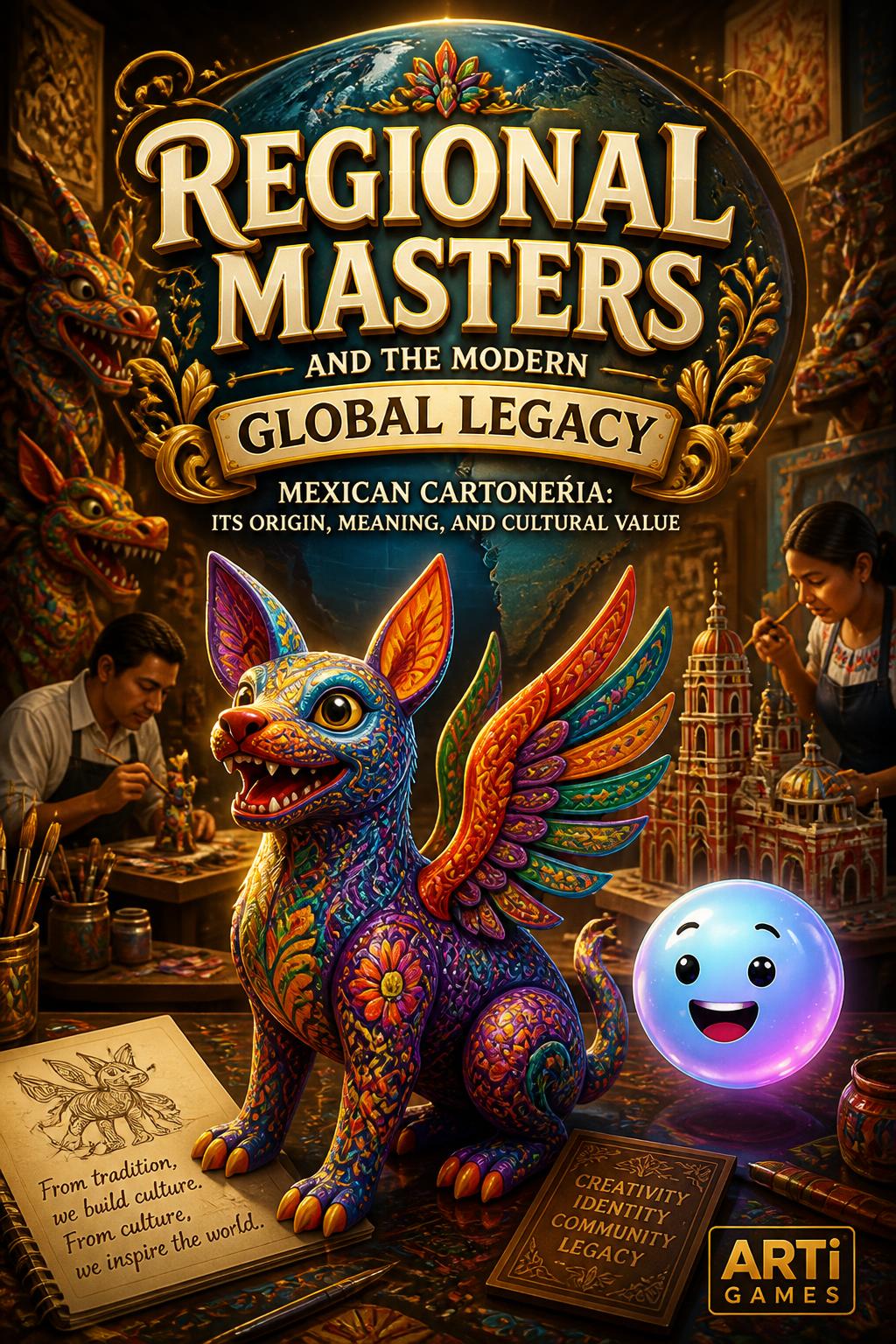
choko Match modern global art to regional masters to discover the legacy of Mexican cartonería.

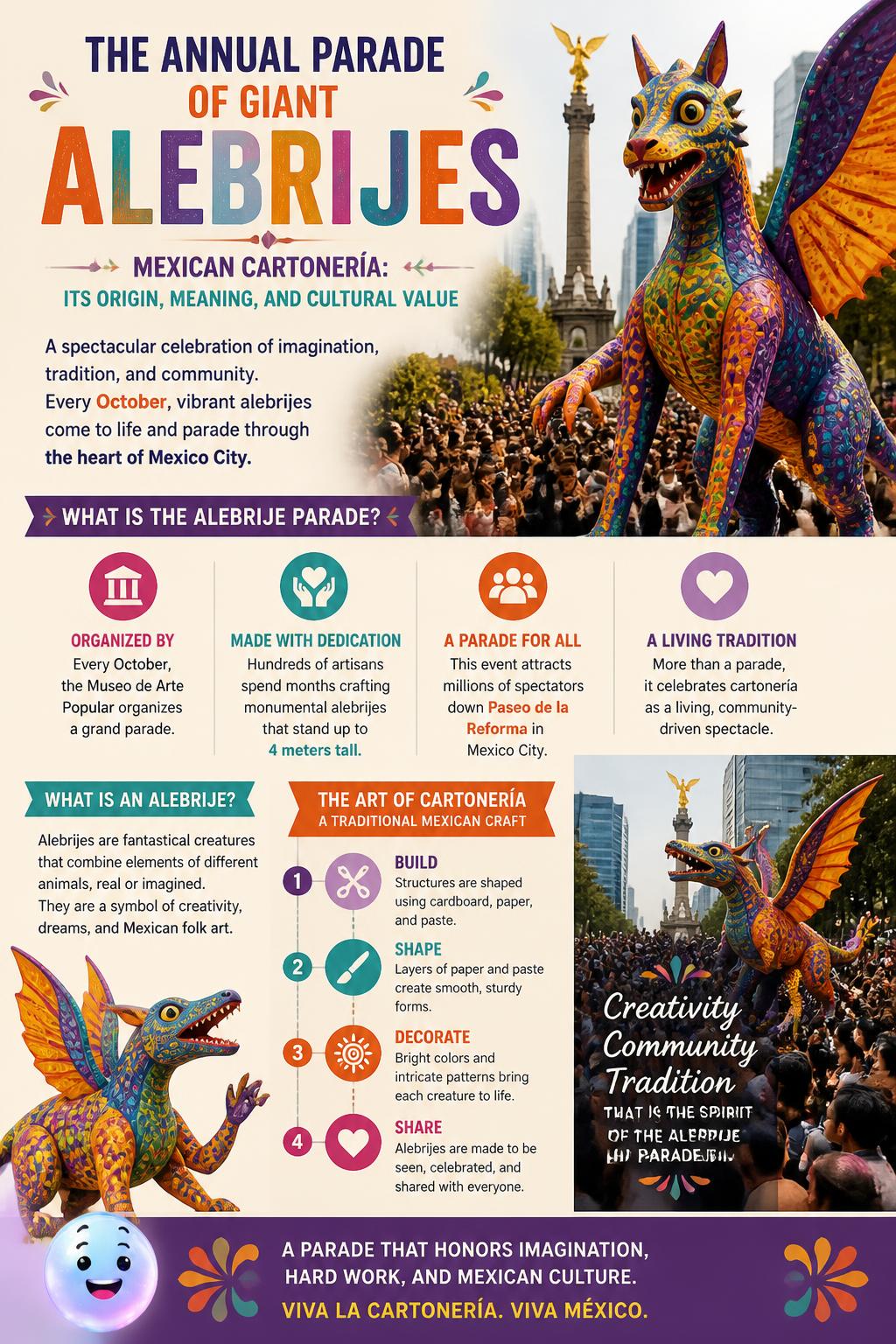
choko The Museo de Arte Popular parade on Paseo de la Reforma celebrates cartonería as a living spectacle crafted
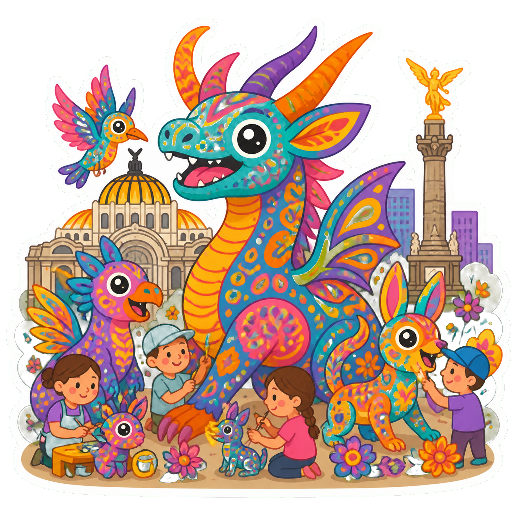
Giant monsters: The monumental cartonería alebrijes built for Mexico City's annual parade can stand up to 13 feet tall and take entire neighborhoods months to construct.
choko Soteno family artisans pose with a vibrant, detailed paper-mâché Tree of Life sculpture.
A brightly colored Mexican folk art sculpture of a fantastical creature. Pedro Linares of Mexico City created these sculptures in 1936, sparking a global art movement.
On which famous Mexico City avenue do the giant monumental alebrijes parade every October?
Which museum in Mexico City organizes the famous annual parade of giant cartonería alebrijes?
What traditional, highly intricate clay sculpture style did the Soteno family of Metepec adapt into cartonería?
Which city in the state of Guanajuato is historically recognized as the capital of Mexican cartonería toy-making?
What is the main economic challenge facing traditional cartonería artisans in the 21st century?
What is the name of the traditional, brightly painted cardboard doll horse made in Celaya?