
BETA
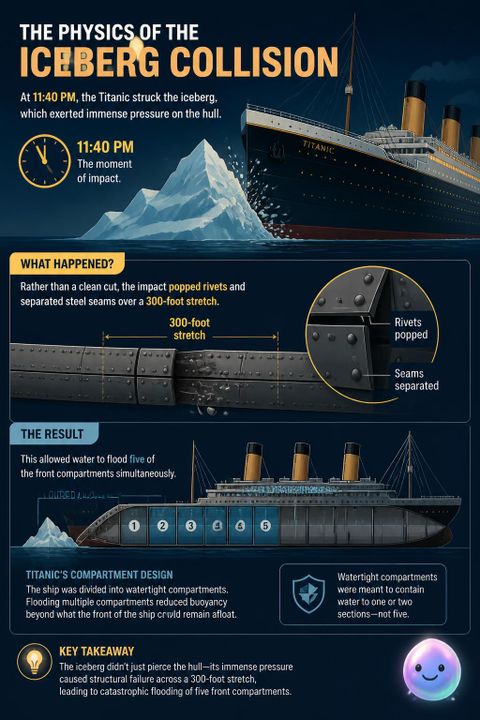
The iceberg did not slice the ship open, but buckled the steel plates along the bow.
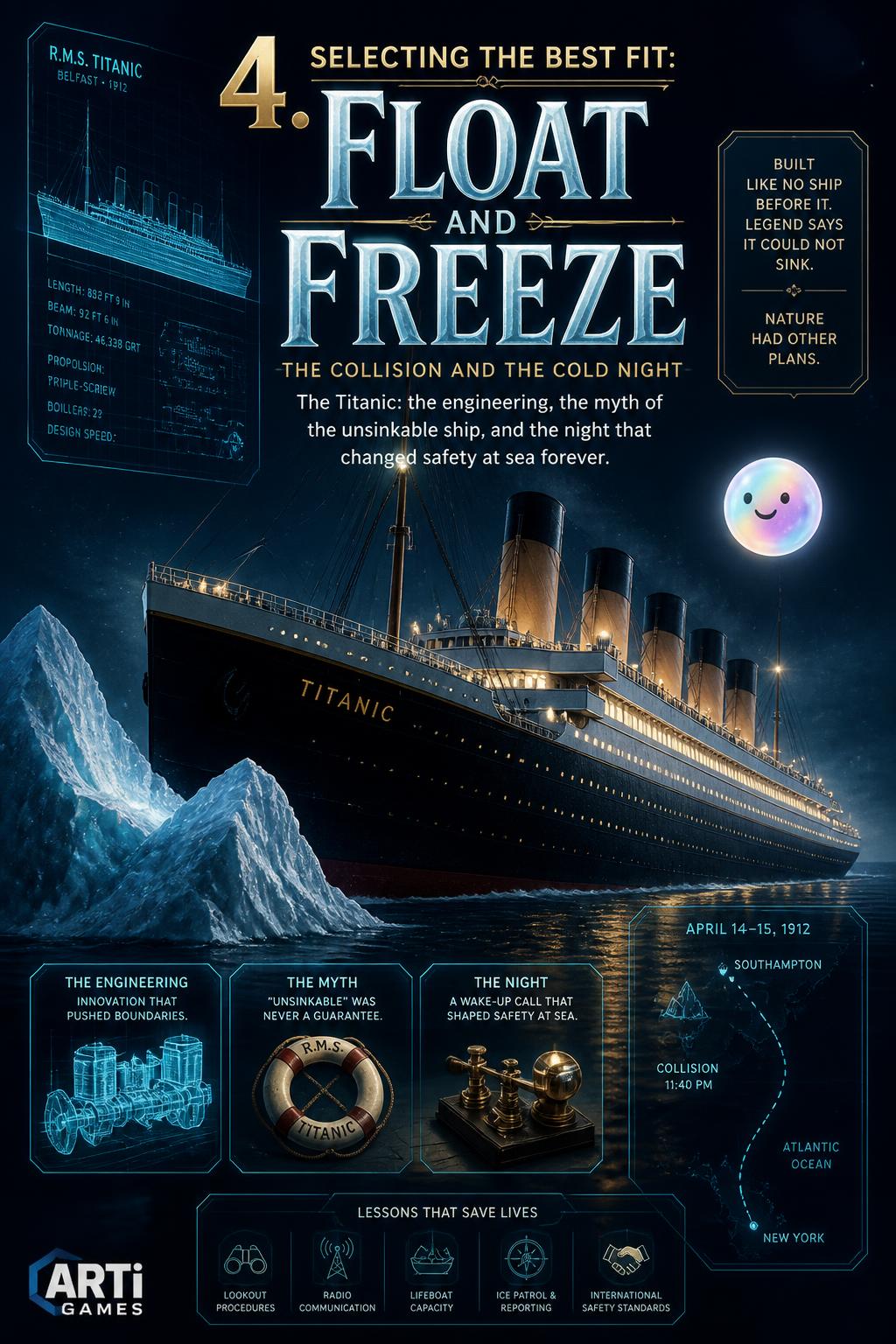
artiteacher Test your Titanic survival and engineering knowledge. Choose the best fit between float and freeze in this interactive historical game.
artiteacher Discover the story of the Titanic's missing binocular key and how this small oversight affected the lookouts on the night of the disaster.
artiteacher Watch how the Titanic received and ignored critical ice warnings from neighboring ships on the night of its tragic collision.
artiteacher Discover the tragic math and engineering regulations behind the Titanic's lifeboat shortage and how it changed maritime safety forever.
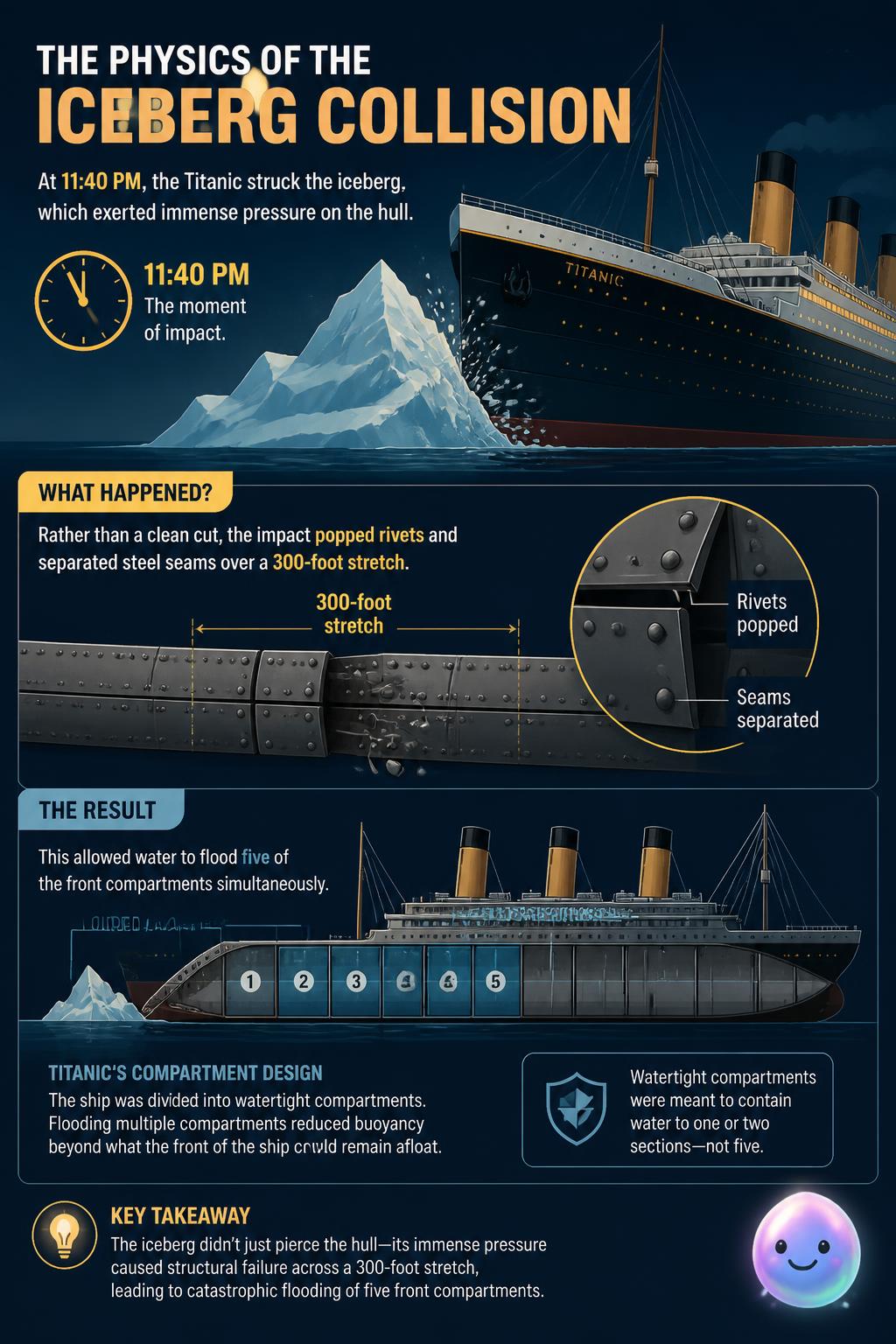
artiteacher The iceberg did not slice the ship open, but buckled the steel plates along the bow.
Iceberg's ancient origin: The iceberg that struck the Titanic likely broke off from Greenland about three thousand years before the collision.
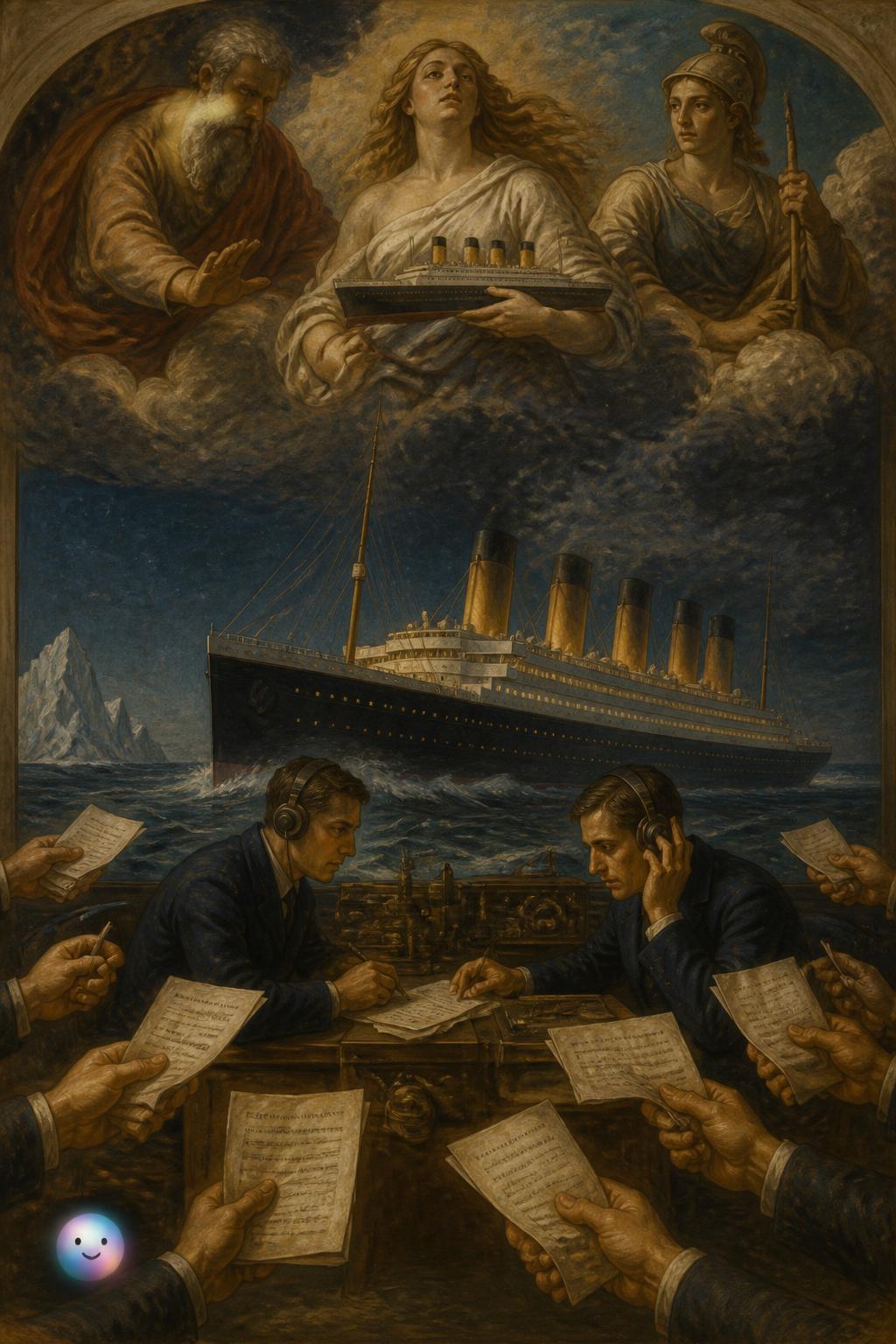
artiteacher The Titanic received multiple wireless iceberg warnings from other vessels on the day of the collision.