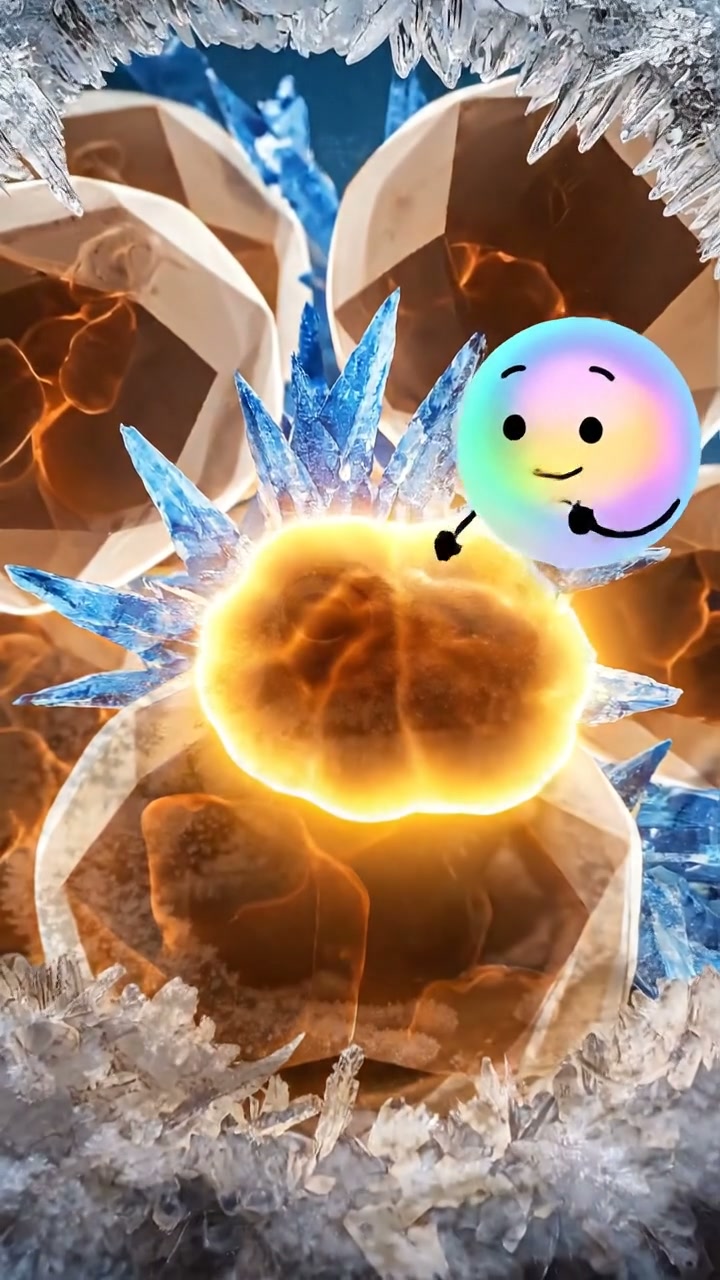
The role of urea
In autumn, wood frogs stop urinating to retain urea, a nitrogenous waste product. This high concentration of urea acts alongside glucose as a metabolic depressant, protecting cell structure and conserving energy during months of suspended animation.
Chapter 1
The science of freezing solid
Chapter 2
Surviving the extreme northern wilderness
Chapter 3
The great spring thaw
Chapter 4
Wood frogs and the future of medicine
Ch 1 · The science of freezing solid
torito Wood Frog Freezing Survival
When winter's chill begins to creep, Wood frogs freeze solid while they sleep!
torito In autumn, wood frogs stop urinating to retain urea, a nitrogenous waste product.

torito Wood frogs accumulate high levels of urea to help protect their cells during freezing.
Fun Fact
Frog antifreeze: Wood frogs can survive with up to 65% of their body water completely frozen solid.

Glossary
cryoprotectant (noun)
A substance that protects biological tissue from damage during freezing. During winter hibernation, the wood frog floods its organs with glucose to prevent ice from destroying cells.
A substance that protects biological tissue from damage during freezing. During winter hibernation, the wood frog floods its organs with glucose to prevent ice from destroying cells.

torito Upon detecting ice on its skin, the frog's liver rapidly converts stored glycogen into glucose.
torito When temperatures drop below 0 degrees Celsius, the wood frog stops breathing and its heart rate drops to zero.
torito Within hours of freezing, the frog's heart slows and eventually stops completely.
Quiz
What chemical, normally excreted as waste, does the wood frog retain to help survive freezing?