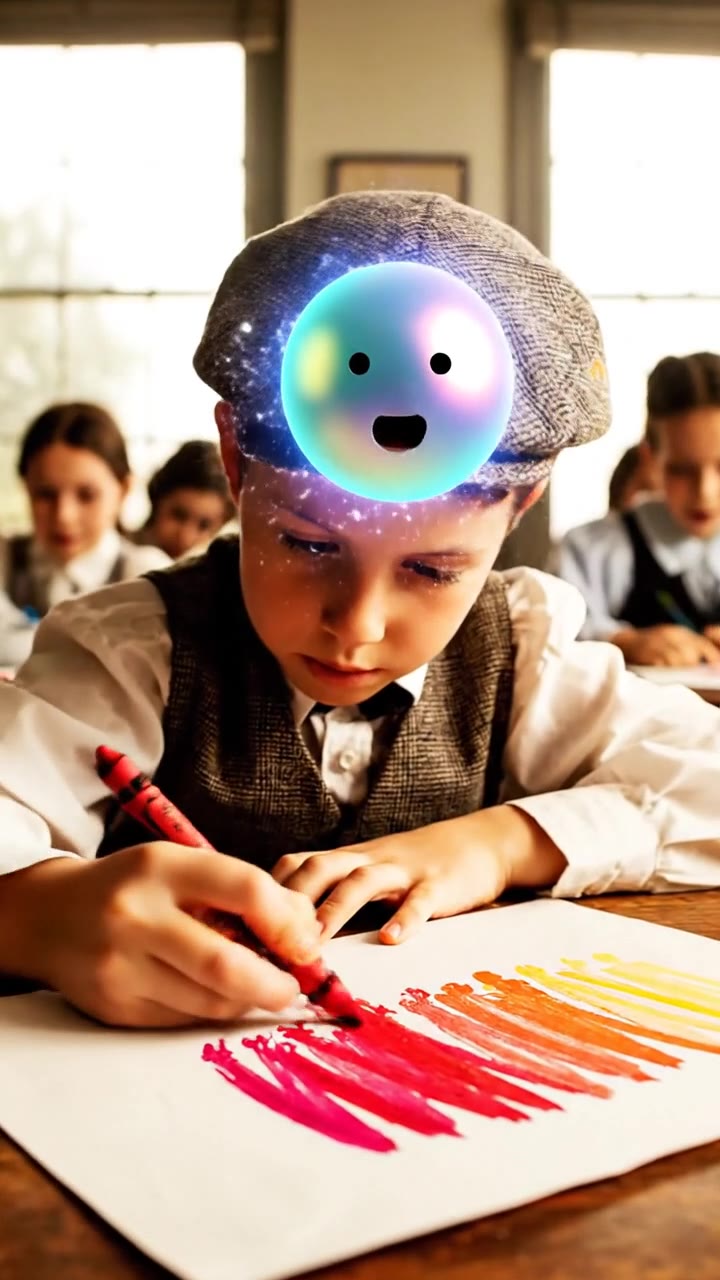
The schoolroom color revolution
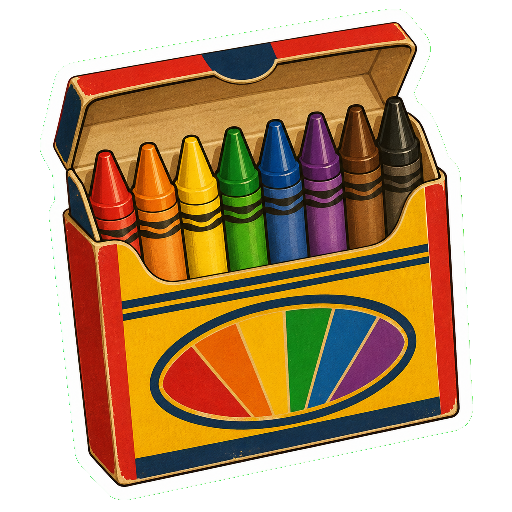
In 1903, Binney & Smith introduced the first box of eight Crayola crayons for just five cents. This affordable product allowed schools to shift from rigid rote learning to creative visual expression, democratizing art education for children of all backgrounds.
From petroleum to paste
Nature's ancient paintbox
The science of synthetic shades
How crayons conquered the classroom

misslily Mix natural pigments into hot wax to discover how crayons conquered the classroom.

misslily Coloring inside the lines builds critical developmental skills in young minds.
Crayola name: Alice Binney, a schoolteacher and wife of the founder, invented the name 'Crayola' by combining 'craie' (chalk) with 'ola' (oleaginous or oily).
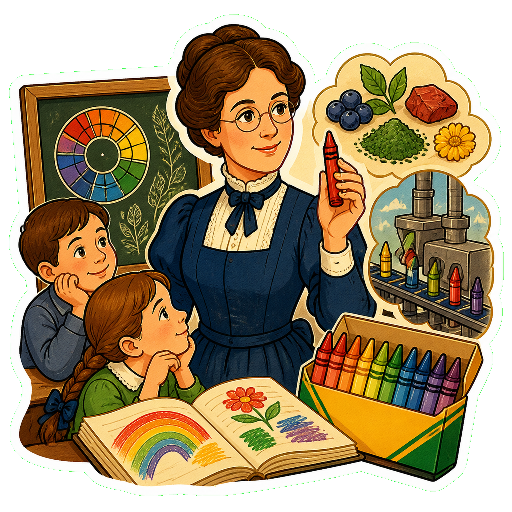

misslily The introduction of cheap, safe crayons transformed early childhood education.
A stick of colored wax, charcoal, or other material used for writing or drawing. In 1903, Binney & Smith launched their famous eight-color box of non-toxic wax crayons for schools.
In what year was the first commercial box of eight Crayola crayons sold to the public?
What industrial product did Binney & Smith manufacture before they started making school crayons?
Which two cousins founded the company Binney & Smith, the creators of Crayola crayons?
Why did the manufacturers of Crayola crayons rename the color 'Flesh' to 'Peach' in 1962?