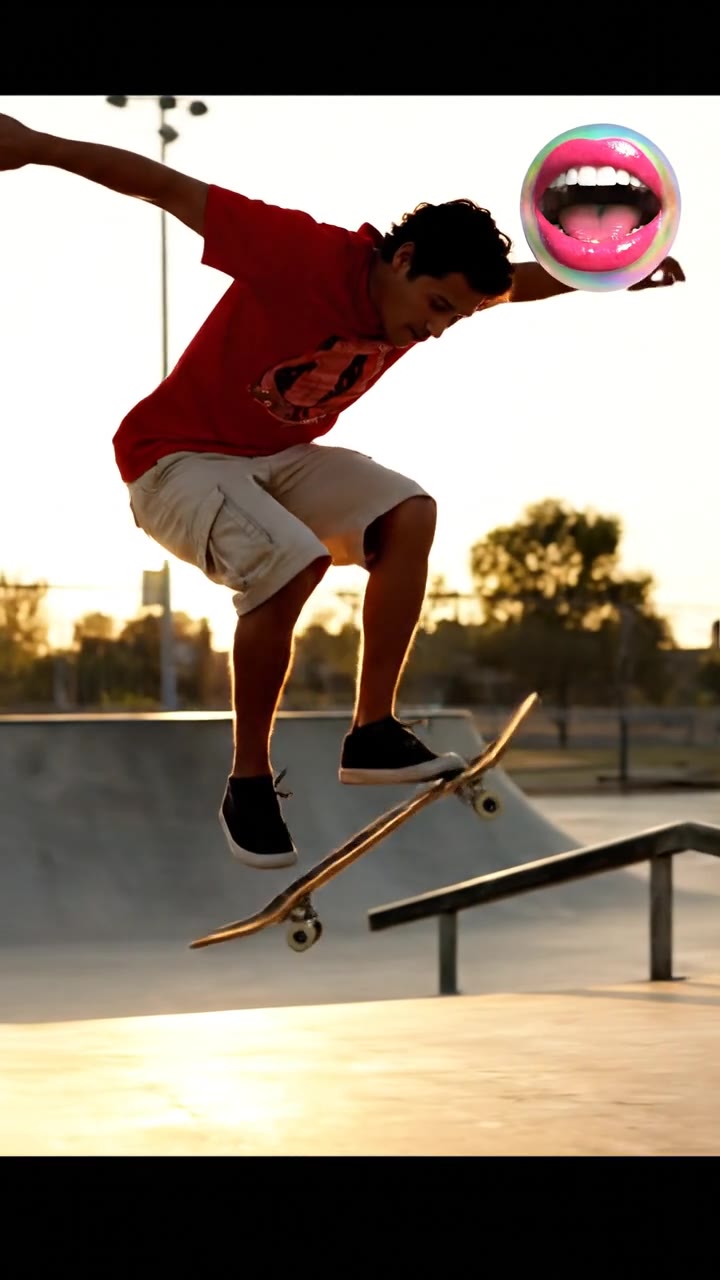
The secret of the tail pop
In 1978, Alan 'Ollie' Gelfand invented the hands-free aerial in pools, which Rodney Mullen adapted to flat ground in 1982. When a skater stomps the tail, it hits the ground with up to 500 pounds of force. The ground pushes back with equal force, launching the board upward.
The ollie and the laws of motion
Energy and momentum on vert ramps
Street geometry and balance
The materials science of skateboards

play_review Discover how female K-pop groups are driving the genre's global boom in this video exploring their rise to international stardom.


nic Watch how skateboarders defy gravity. Learn the physics and science behind skateboard tricks and flight in this educational video.

Ollie origin: The hands-free aerial jump was invented by Alan Gelfand in 1978 in a swimming pool.

An influence that can change the speed or direction of an object's movement. In 1982, Rodney Mullen applied downward pressure to his board's tail to launch the first flatground jump.
What type of friction is generated when a skateboarder slides their shoe forward against the grip tape during an ollie?
About how long does a skateboarder remain airborne during a standard 2-foot-high ollie?
What mathematical shape does a skateboarder's path follow through the air during a jump?