
The year a machine took the crown
In 1982, Time bypassed humans entirely to name the personal computer as its 'Machine of the Year.'
When Time broke its own rules
Global icons who shaped the world
When nature and the planet took center stage
The controversial nature of influence

schopenhauer In 2006, Time magazine used reflective Mylar so readers saw themselves as the Person of the Year. This honored millions of anonymous people building YouTube, Wikipedia, and blogs.
schopenhauer Editors broke tradition in 1982 by naming a machine instead of a person. This historic issue analyzed how microchips revolutionized homes, offices, and global communication.
schopenhauer TIME's Machine of the Year
No human! No human! The machine took the crown!
schopenhauer In January 1928, Time editors realized they missed Charles Lindbergh's historic flight. They quickly created the Man of the Year cover to fix their mistake, starting a massive tradition.
schopenhauer Her relationship with King Edward VIII triggered a British constitutional crisis in 1936. This royal disruption led the magazine to name her its first sole Woman of the Year.

schopenhauer Sort history's strangest years to discover when time broke its own rules.

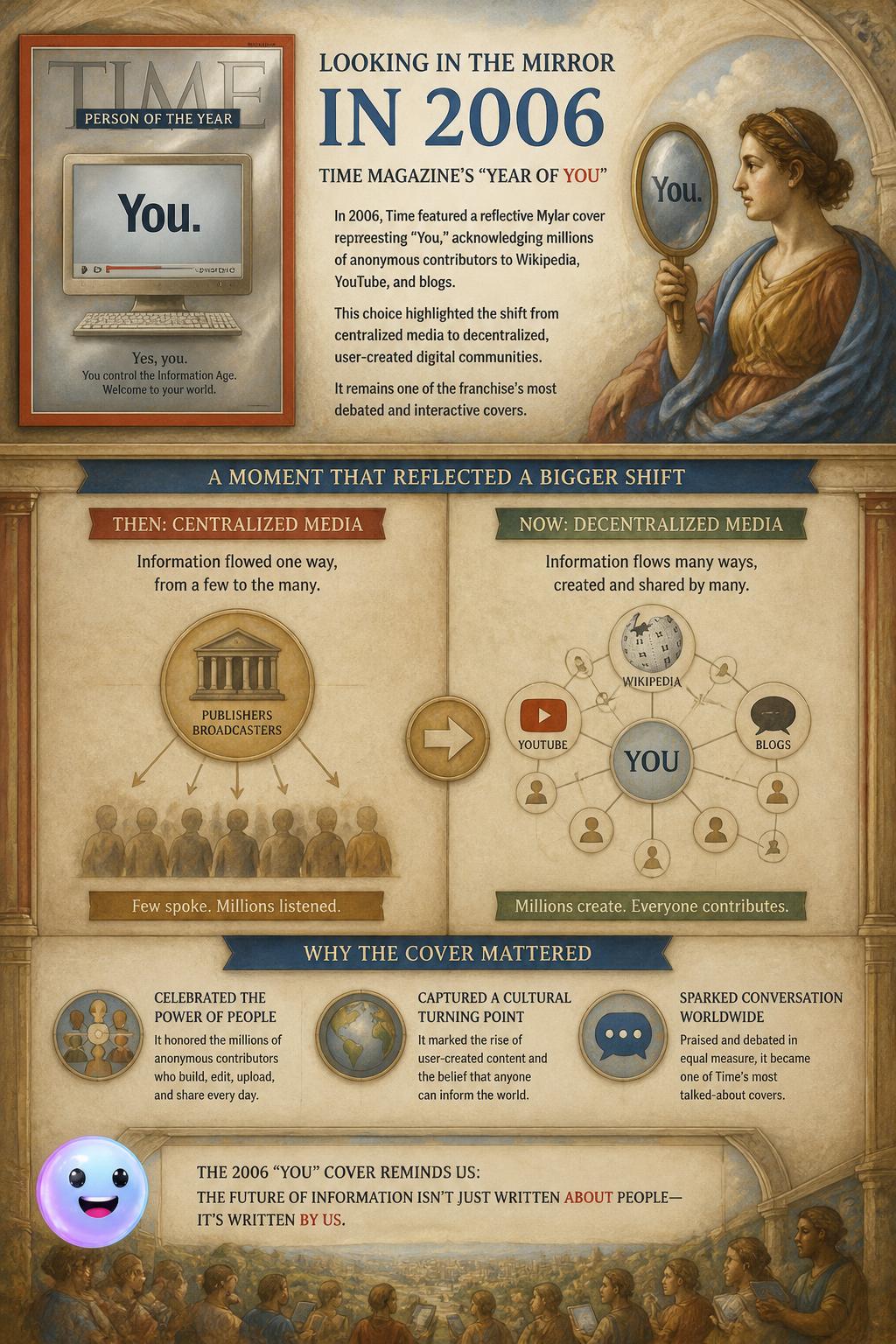
schopenhauer Time named 'You' as the Person of the Year in 2006 to celebrate the explosion of user-generated internet content.
First cover: Charles Lindbergh was named the first Man of the Year at age twenty-five in 1927.
schopenhauer In 1982, Time bypassed humans entirely to name the personal computer as its 'Machine of the Year.'
An electronic device for storing and processing data, typically in binary form, according to instructions given to it in a variable program. In 1982, the weekly newsmagazine selected this device as its first non-human recipient of its annual title.
Why did Time editors retroactively create the 'Man of the Year' title for Charles Lindbergh?
Which British royal figure abdicated the throne in 1936 to marry Wallis Simpson?
In what year did Time officially change the award's name to the gender-neutral 'Person of the Year'?