water key
water key: (noun) A small valve on a brass instrument used to drain accumulated condensation from the tubing.
How a trumpet turns spit and air into music
A brief history of the silver scream
Commanding the symphony from the back row
How jazz broke the trumpet's classical mold
maestro Trumpet players alter their lip tension and air speed to jump between harmonic notes without pressing valves. This acoustic science allows a standard B-flat trumpet to span over three octaves.
maestro Trumpet players vibrate their lips up to one thousand times per second inside the mouthpiece. This rapid buzzing acts as a valve, sending sound waves down the brass instrument.

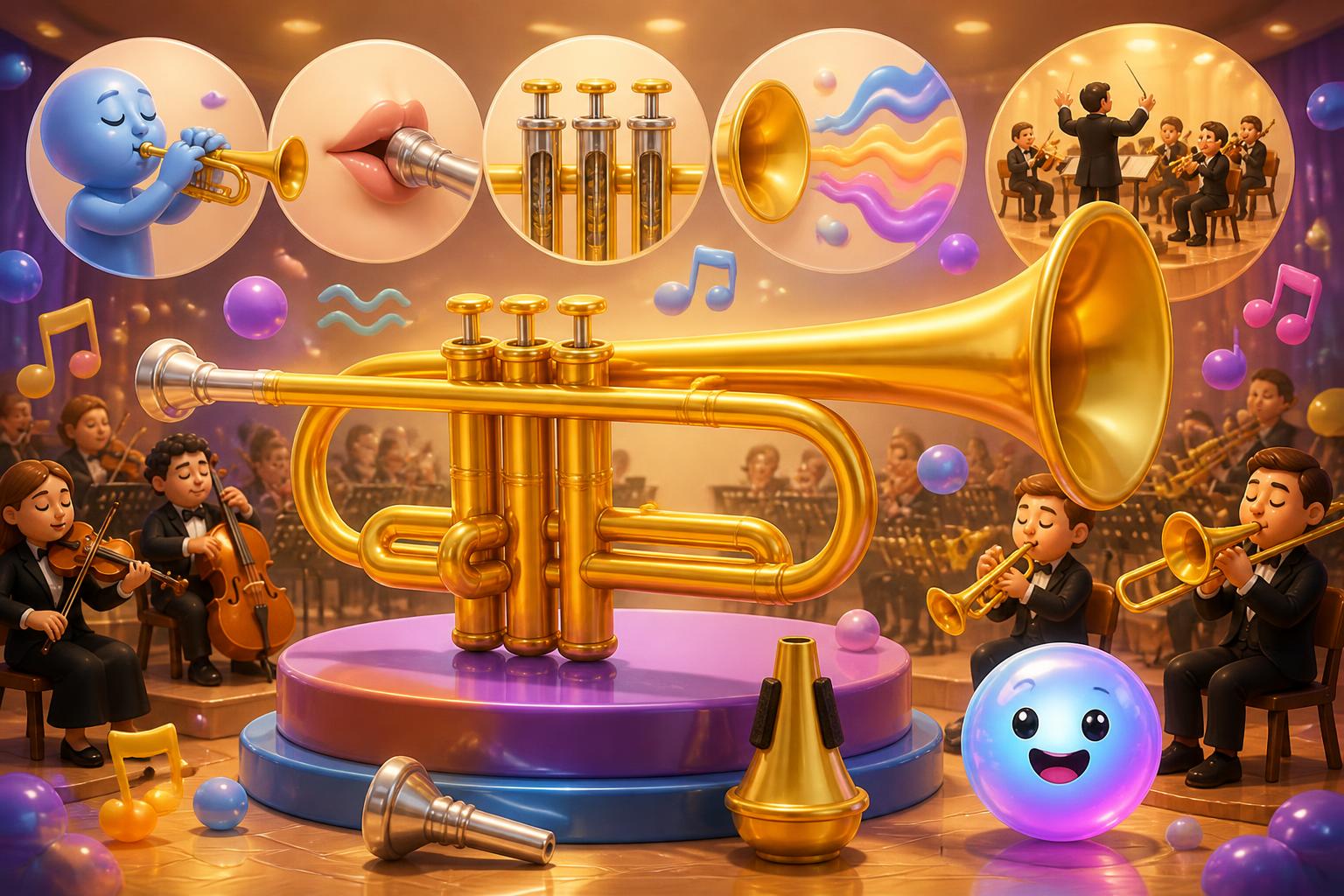
maestro Assemble the trumpet's brass parts to discover how it creates its powerful symphonic sound.
maestro How a Trumpet Works
Just buzz your lips to send the pressure wave along, The shining brass will shape the air into a song.
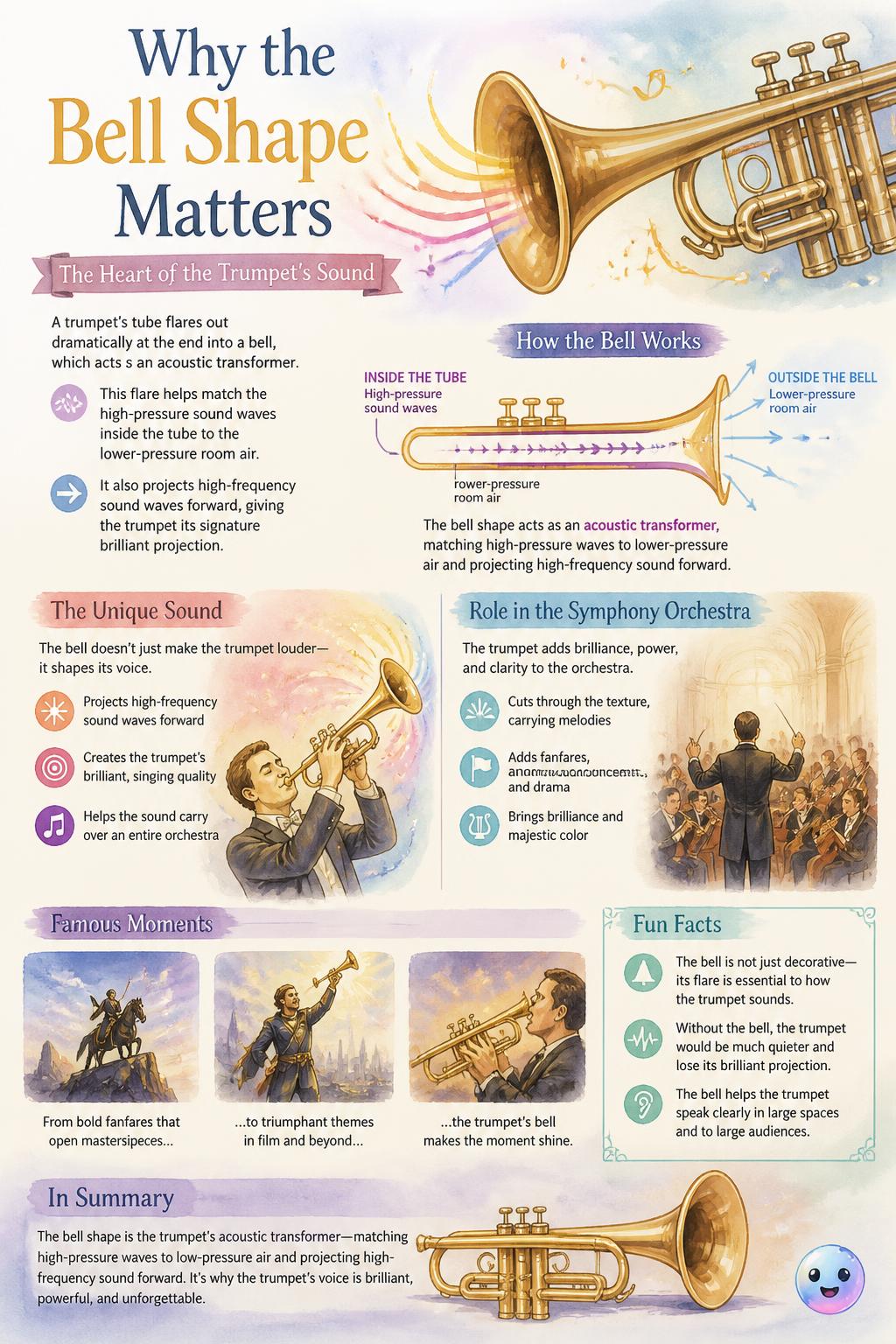
maestro High-pressure sound waves inside the trumpet tube escape through the wide, flared bell.
Valveless bugles: Before valves were invented in 1814, military buglers could only play notes from a single natural harmonic scale.
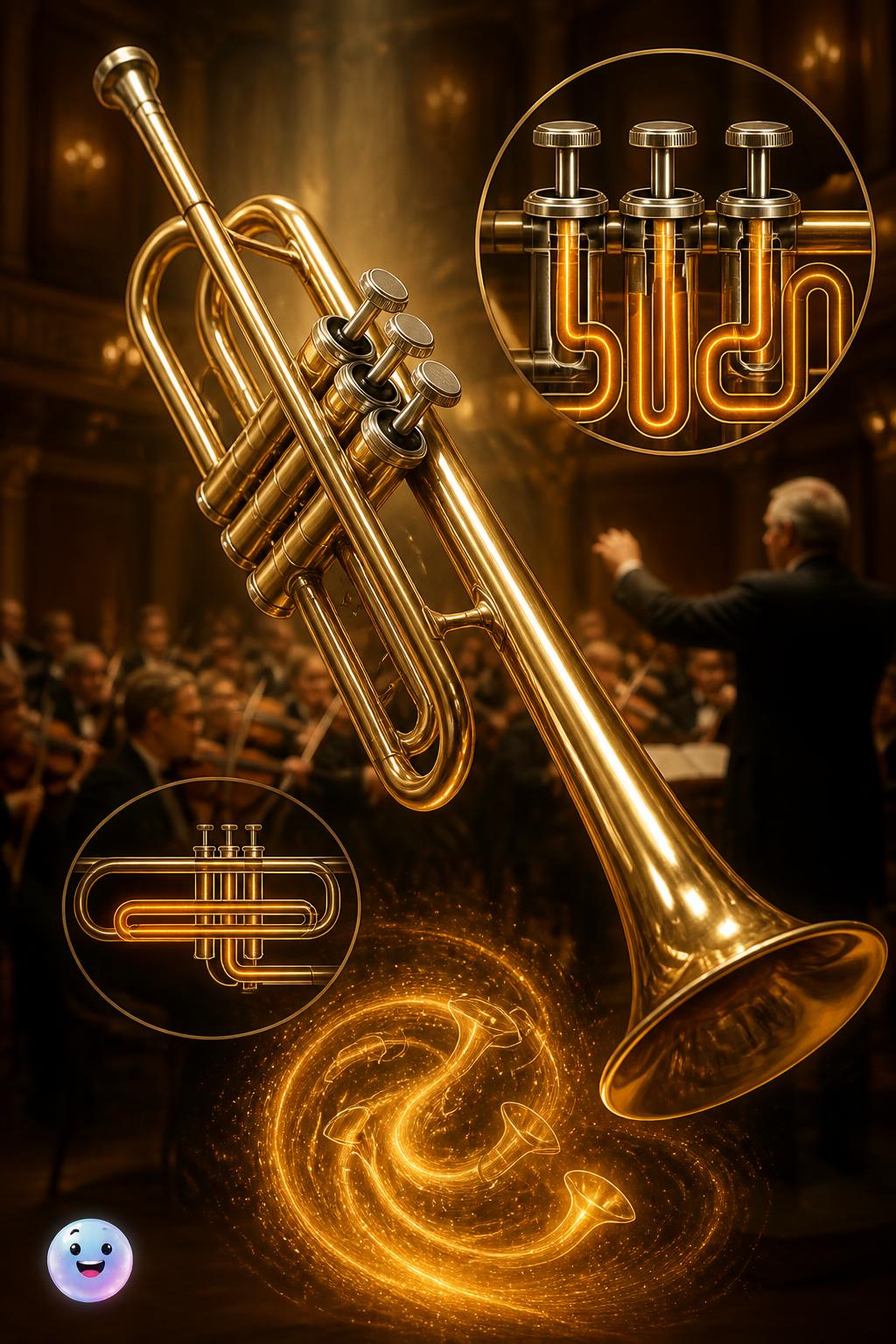
maestro Warm cinematic light illuminates the three polished piston valves of a brass trumpet.
A small valve on a brass instrument used to drain accumulated condensation from the tubing. In 1971, Raymond Amado patented a button-controlled version of this valve used on modern trumpets.
What is the name of the physics phenomenon that allows a trumpet player to play different notes with the same valve combination?
What happens to the pitch of a trumpet when a player tightens their lips and blows faster?
In what year was the piston valve system invented, allowing trumpets to play all chromatic notes?