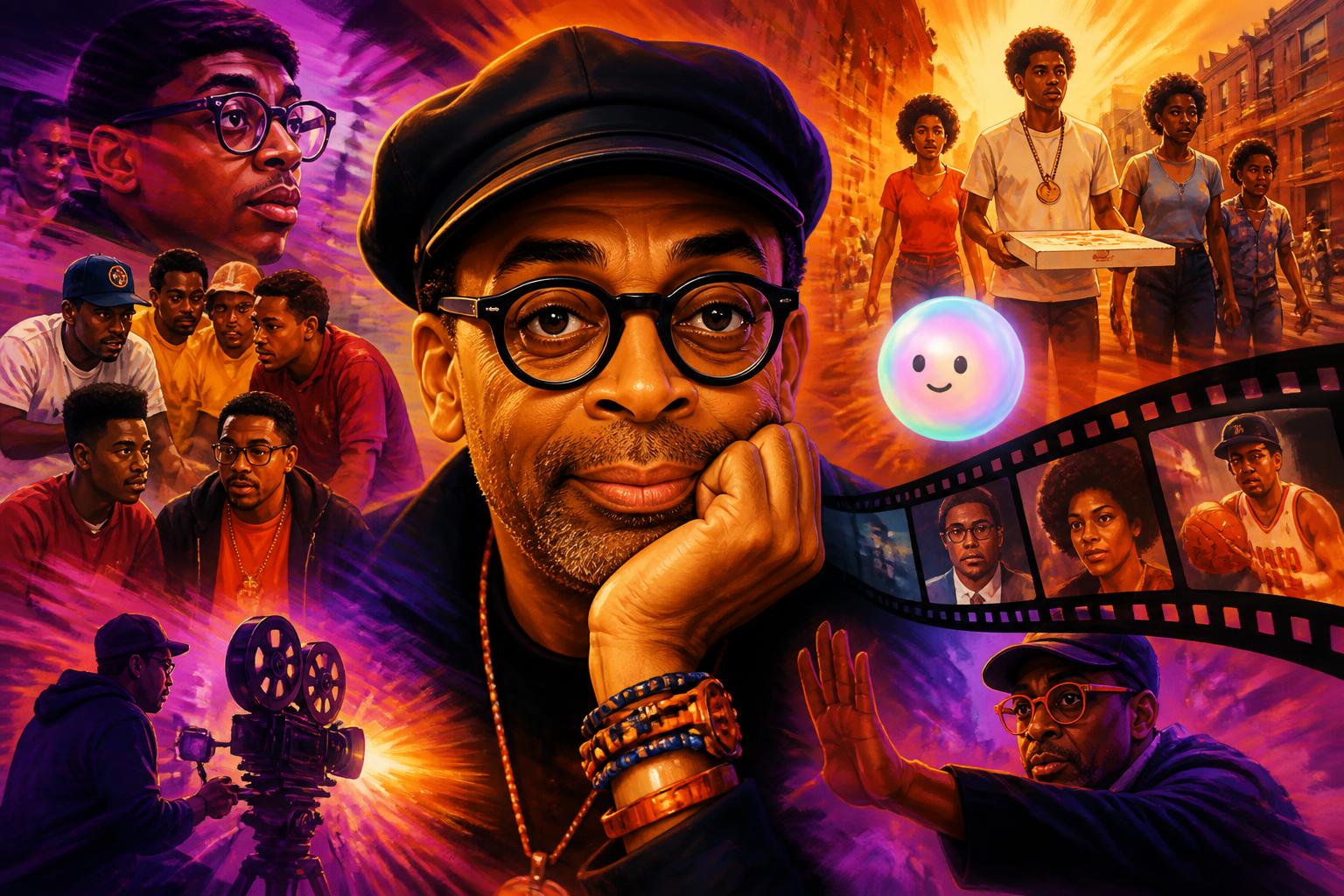
What is Spike Lee's signature camera technique?
Test your movie trivia knowledge with this quiz about Spike Lee's signature camera technique where the actor and camera are on moving platforms.
Brooklyn as a cinematic canvas
Biographies and history on screen
The mechanics of a Spike Lee joint
Cultural legacy and teaching
schopenhauer Ernest Dickerson used red and yellow filters to make Spike Lee's Do the Right Thing feel suffocating.
schopenhauer The Double Dolly Shot
Lock the frame, roll the track, float right through the street!
schopenhauer Spike Lee branded his movies as joints starting with his first film to emphasize community collaboration.
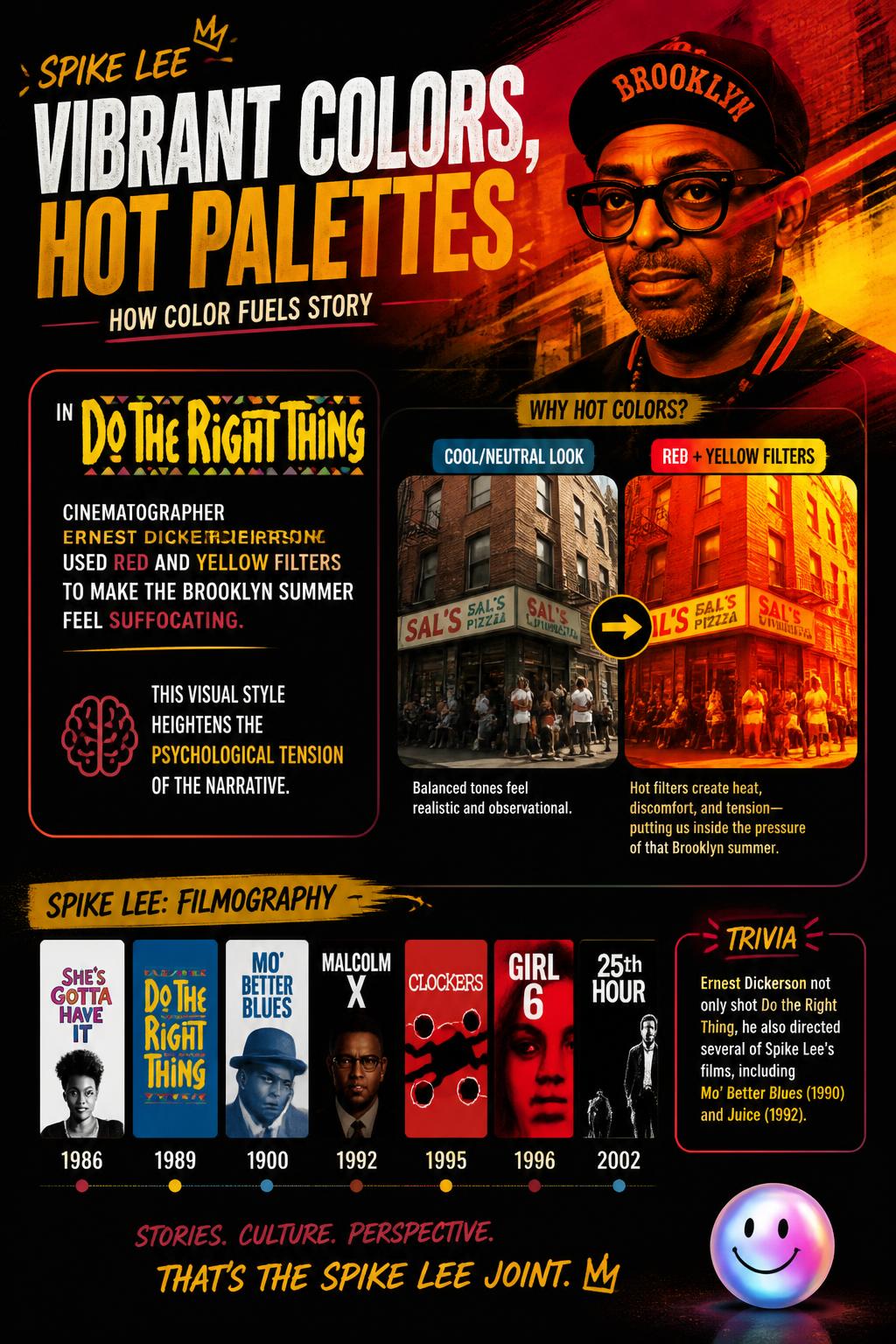
schopenhauer Lee uses saturated colors and warm lighting to convey intense heat, mood, and emotion.
Double dolly origin: Spike Lee first experimented with the double dolly shot in his NYU student film 'Joe's Bed-Stuy Barbershop: We Cut Heads'.
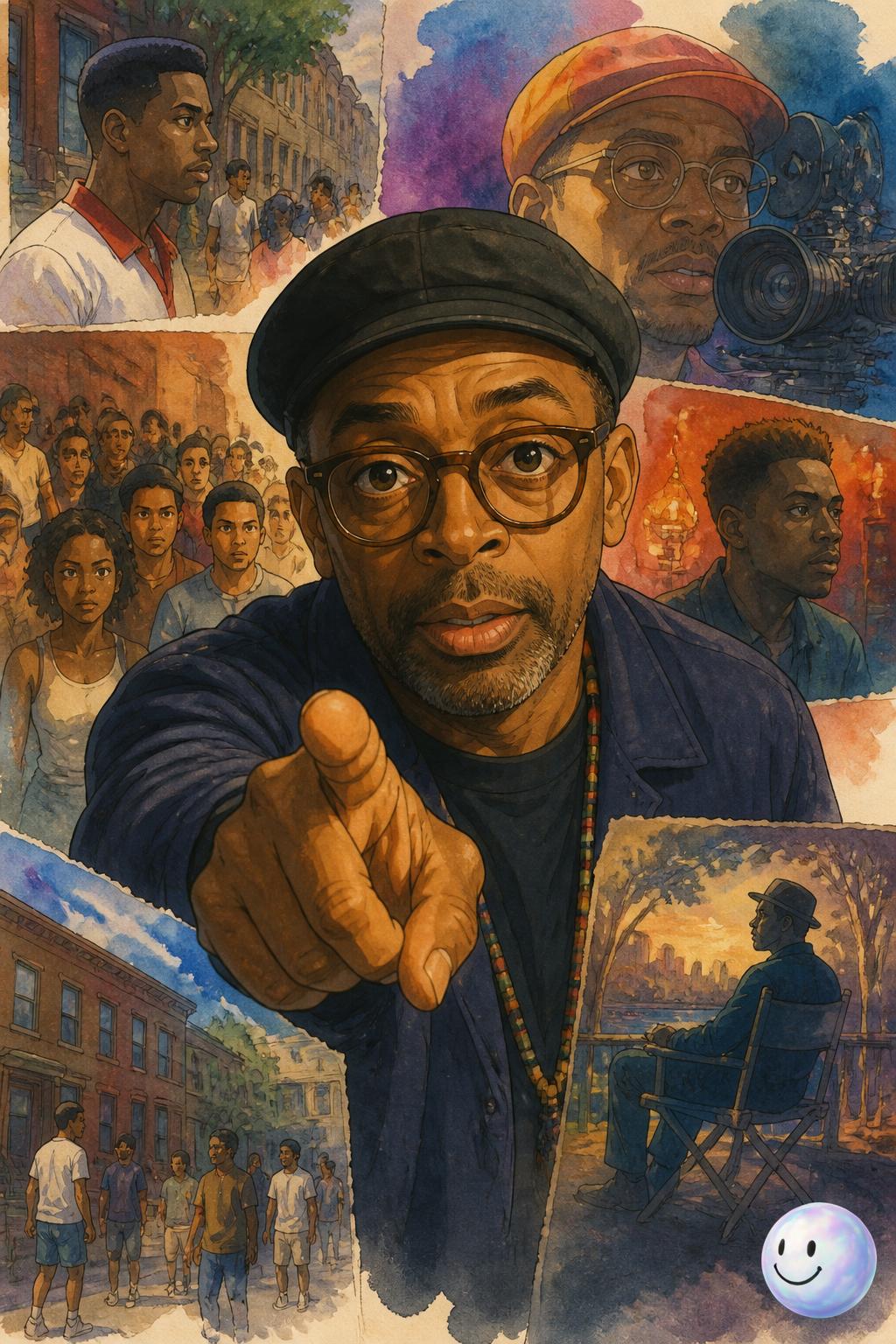
schopenhauer Lee frequently breaks the fourth wall, having characters speak directly to the audience.
A wheeled platform used in filmmaking to move a camera smoothly along a track. Lee famously placed both his camera and actors on these platforms to create a floating effect.
What color palette was heavily used in 'Do the Right Thing' to visually represent the extreme summer heat?
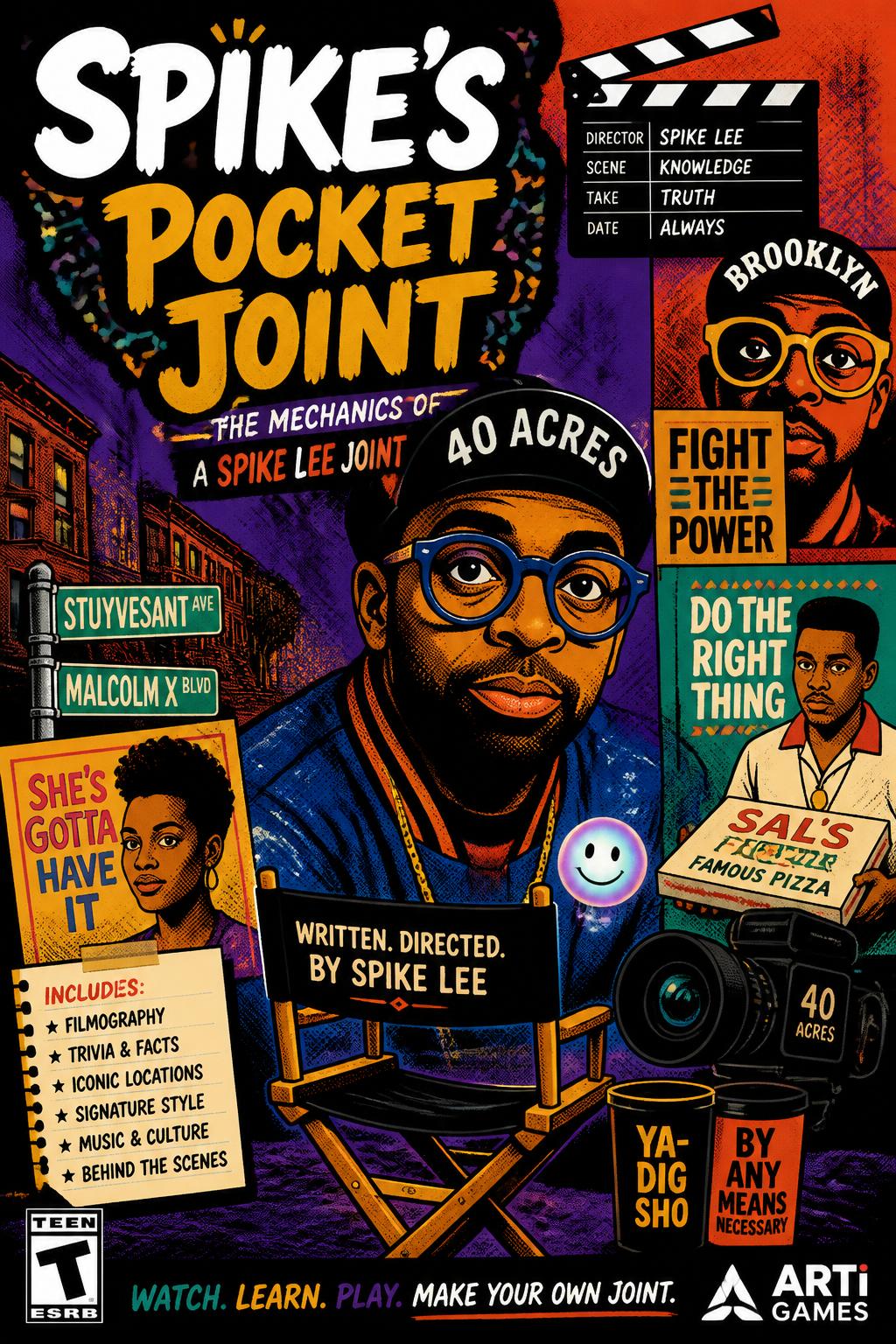
schopenhauer Match trivia to Spike Lee's films to discover his legendary cinematic history.
schopenhauer Discover the history, trivia, and filmography behind Spike Lee's signature floating double dolly shot in this educational video guide.
What student film, which won a Student Academy Award, was Spike Lee's master's thesis at NYU?
schopenhauer Explore Spike Lee's signature use of the direct address to the camera. Discover key films in his filmography and trivia behind this camera technique.
Which of Spike Lee's films features a double dolly shot of Denzel Washington gliding down a street?
What is the name of Spike Lee's signature camera technique where the actor and camera are both on moving platforms?
Which cinematographer collaborated with Spike Lee on his early visually distinct films like 'Do the Right Thing'?
Which famous montage in 'Do the Right Thing' showcases characters speaking directly to the camera to express prejudice?