

What powered Alexander Calder's first kinetic sculptures?

What powered Alexander Calder's first kinetic sculptures?

Before Alexander Calder used wind to move his famous mobiles, how did his first kinetic sculptures operate? Test your modern art history knowledge.

Chapter 1

The toy circus that started it all

Chapter 2

Inventing the mobile

Chapter 3

Standing tall with stabiles

Chapter 4

The physics of perfect balance

Ch 2 · Inventing the mobile
choko
Glossary
Colores primarios (sustantivo)
Tonos puros (rojo, amarillo, azul) con los que Calder pintaba las placas de sus móviles. El rojo era su favorito; estos colores actúan como un faro que guía el ojo a través del movimiento.
Hide sticker

Aug 20

choko

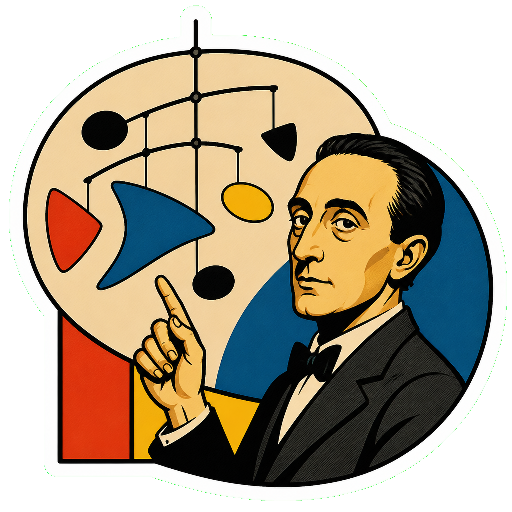
choko Explore how artist Alexander Calder used abstract shapes to make art move in this educational video.

Aug 6

choko

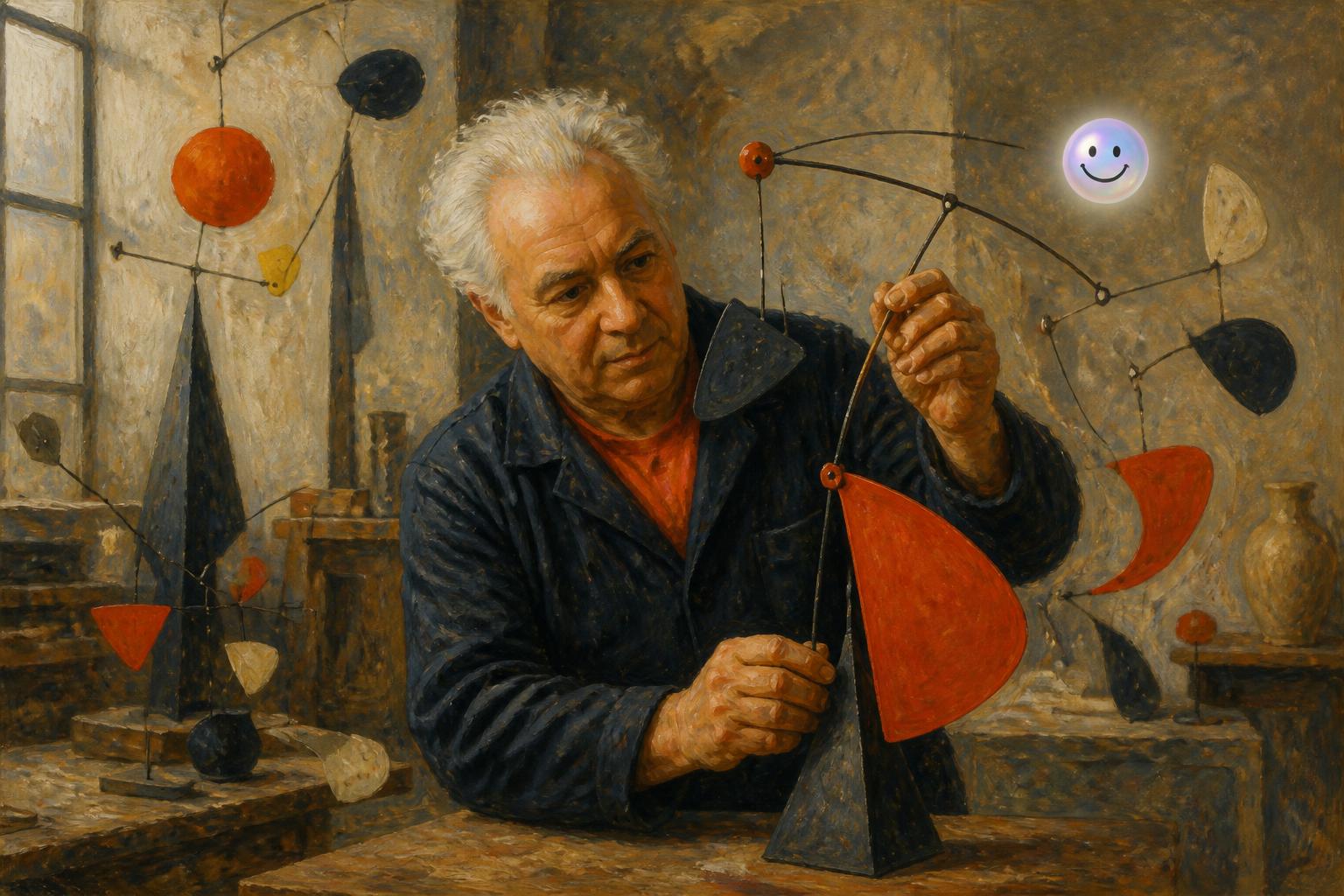
choko Discover the pivotal studio visit that transformed Alexander Calder's career and inspired him to make his art move.

Aug 6

choko
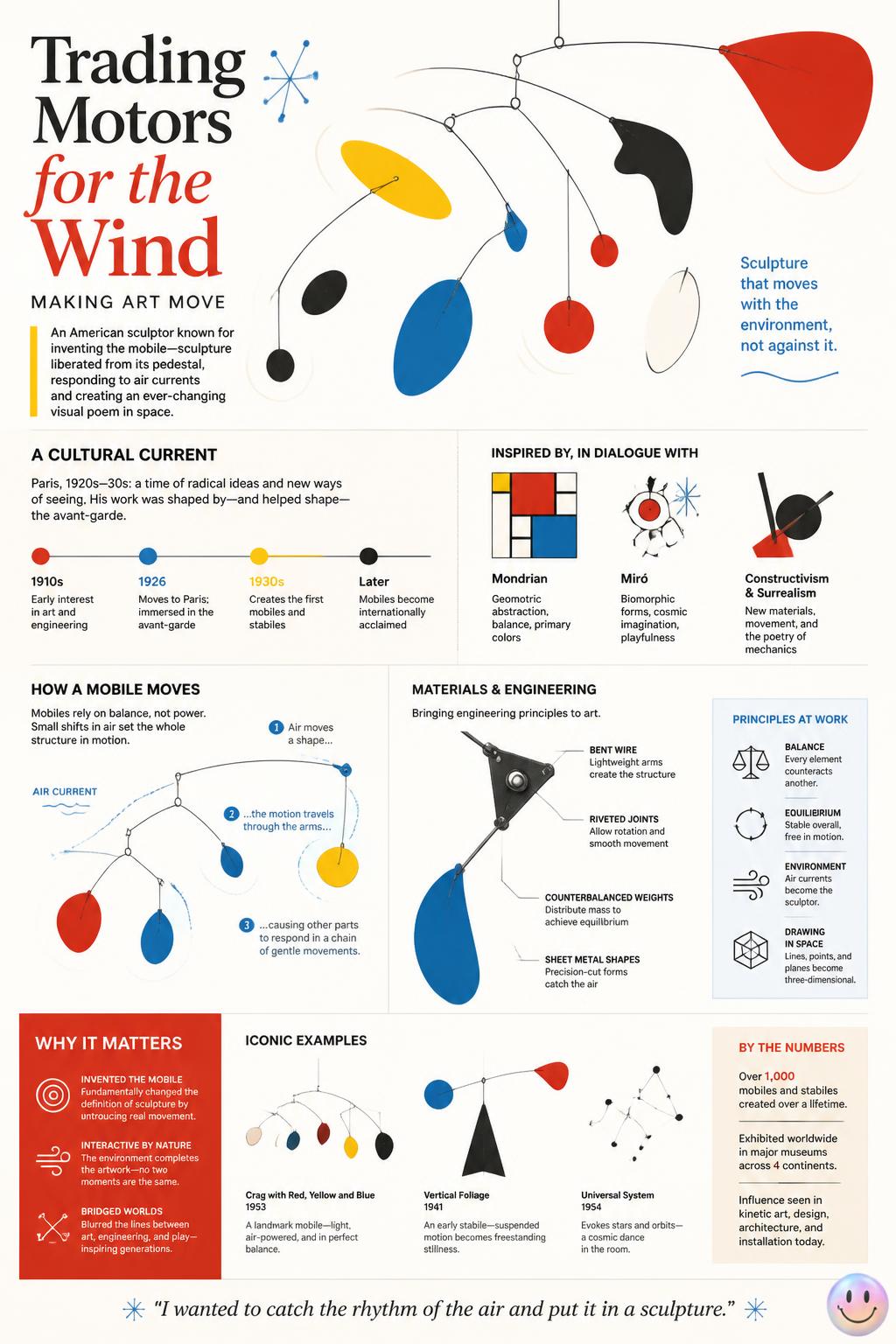
Trading motors for the wind

choko See how Alexander Calder moved from motorized sculptures to wind-powered kinetic art in this educational infographic.

Aug 6

choko
Fun Fact

Naming the mobile: The word "mobile" was suggested by artist Marcel Duchamp in 1931 because the French word double-means both "motion" and "motive."

Hide sticker

Aug 6

choko
Naming the mobile

choko Discover how Alexander Calder's moving art came to be called a mobile in this educational image from the Making Art Move series.

Aug 6

choko
Glossary
mobile (noun)
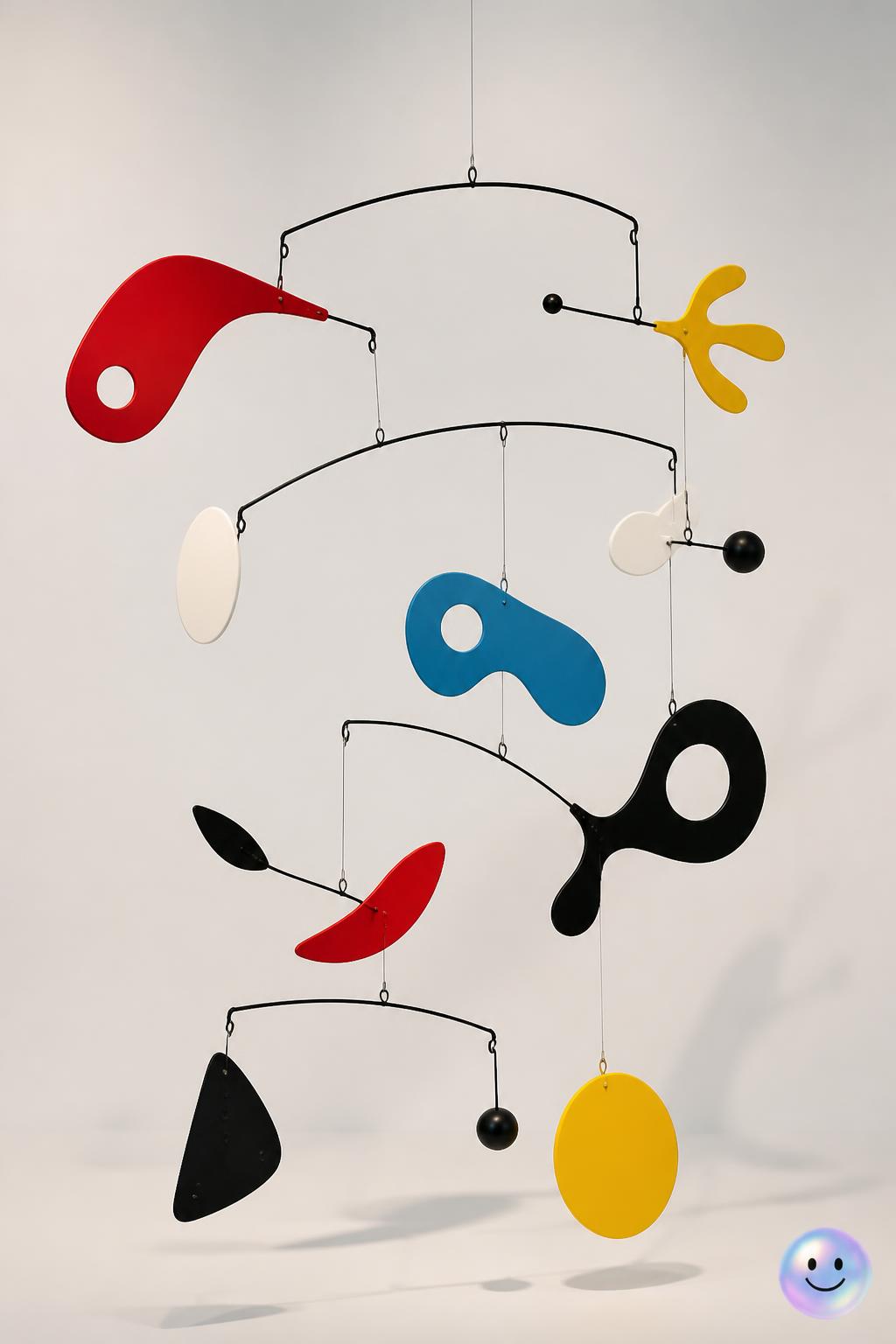
A type of kinetic sculpture with delicately balanced parts that move in response to air currents. Alexander Calder began creating these pieces in 1931, utilizing his background as a mechanical engineer.

Aug 6

choko
Quiz

In what year did Alexander Calder exhibit his first wind-driven, non-motorized hanging mobiles?

Aug 6

choko
Gossip

Should art move or stay completely still?

Aug 6

choko
Dancing Shapes
BETA

choko Play the Dancing Shapes game to explore kinetic sculptures. Balance shapes and colors to create your own moving art inspired by Alexander Calder.

Aug 6

choko

choko Discover how Alexander Calder moved from motorized kinetic sculptures to wind-powered mobiles to create dynamic, floating art.

Aug 6

choko
Quiz

Who coined the term "mobile" to describe Alexander Calder's moving wire and metal sculptures?

Aug 6

choko

choko Learn how Alexander Calder's kinetic sculptures got the name 'mobiles' and explore the origins of this revolutionary modern art form.

Aug 6

choko
Quiz

Which famous abstract painter's studio did Alexander Calder visit in 1930, inspiring him to create abstract art?

Aug 6

choko
Quiz

What primary colors did Alexander Calder use most frequently to paint the flat metal plates of his mobiles?

Aug 6

choko
Quiz

What powered Alexander Calder's very first kinetic sculptures before he switched to natural air currents?

Aug 6

choko
Quiz

What shape did the flat metal pieces of Alexander Calder's mobiles often resemble?

Aug 6

choko
Quiz

What did artist Jean Arp call Alexander Calder's non-moving, stationary abstract sculptures to contrast with "mobiles"?

Aug 6

choko
Quiz

What natural phenomenon did Alexander Calder rely on to make his mature hanging sculptures move?

Aug 6