
What term describes the healing process of sharing mutual struggles
What term describes the healing process of sharing mutual struggles and expressing vulnerability with safe, supportive listeners?
The architecture of meaning-making
The five paths of post-traumatic growth
Global traditions of transforming grief
The practical tools of adaptation

gus Trauma survivors build deeper relationships by using compassionate disclosure to share their mutual struggles
gus The third domain of post-traumatic growth shows survivors they can handle future life challenges
gus A 2004 study proves that major life crises push survivors to pursue previously impossible career goals

gus Sort tangled thoughts to discover how finding purpose helps us heal and grow after loss.
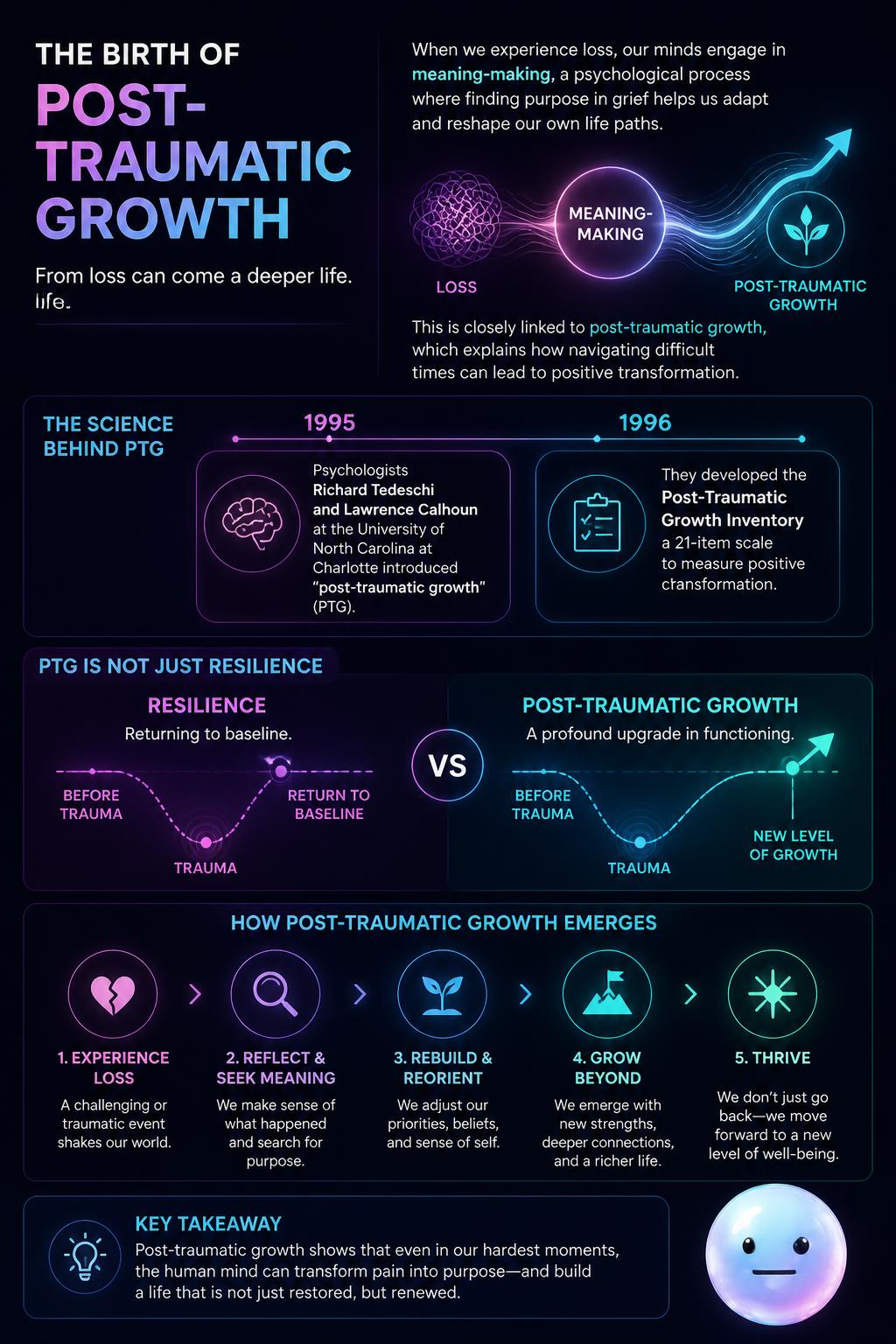
gus Psychologists Richard Tedeschi and Lawrence Calhoun coined the term post-traumatic growth to describe positive changes that can emerge from suffering.
How does post-traumatic growth differ fundamentally from the psychological concept of resilience?
Which university was the research home of Richard Tedeschi and Lawrence Calhoun when they developed the concept of post-traumatic growth?

Which domain of post-traumatic growth describes an increased comfort with vulnerability and a surge in empathy for others?
What term describes the healing process of sharing mutual struggles and expressing vulnerability with safe, supportive listeners?
Growth estimates: Researchers estimate that between one-half and two-thirds of all trauma survivors experience some form of post-traumatic growth over time.
Which domain of post-traumatic growth involves reorganizing life priorities and pursuing entirely new career or creative paths?
According to research by Tedeschi and Calhoun, what often prompts individuals to identify 'new possibilities' after a crisis?
Positive psychological change experienced as a result of struggling with highly challenging life crises. Psychologists Richard Tedeschi and Lawrence Calhoun developed the framework detailing five distinct areas of this development.
What psychological paradox do survivors often experience in the 'personal strength' domain of post-traumatic growth?
Which shift in self-concept is central to developing the 'personal strength' domain after a major life crisis?