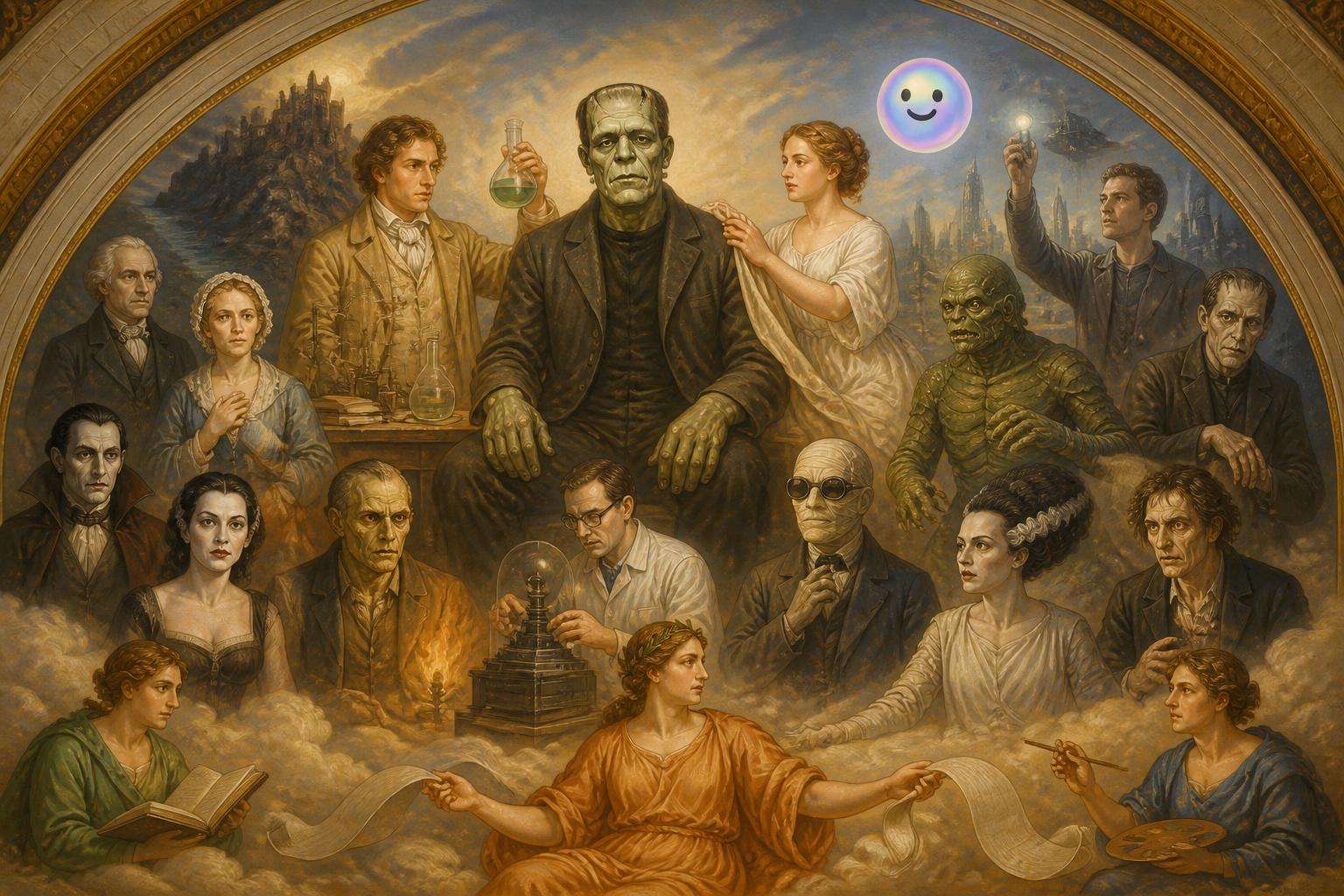
Who Inspired the Bride of Frankenstein's Hairstyle?
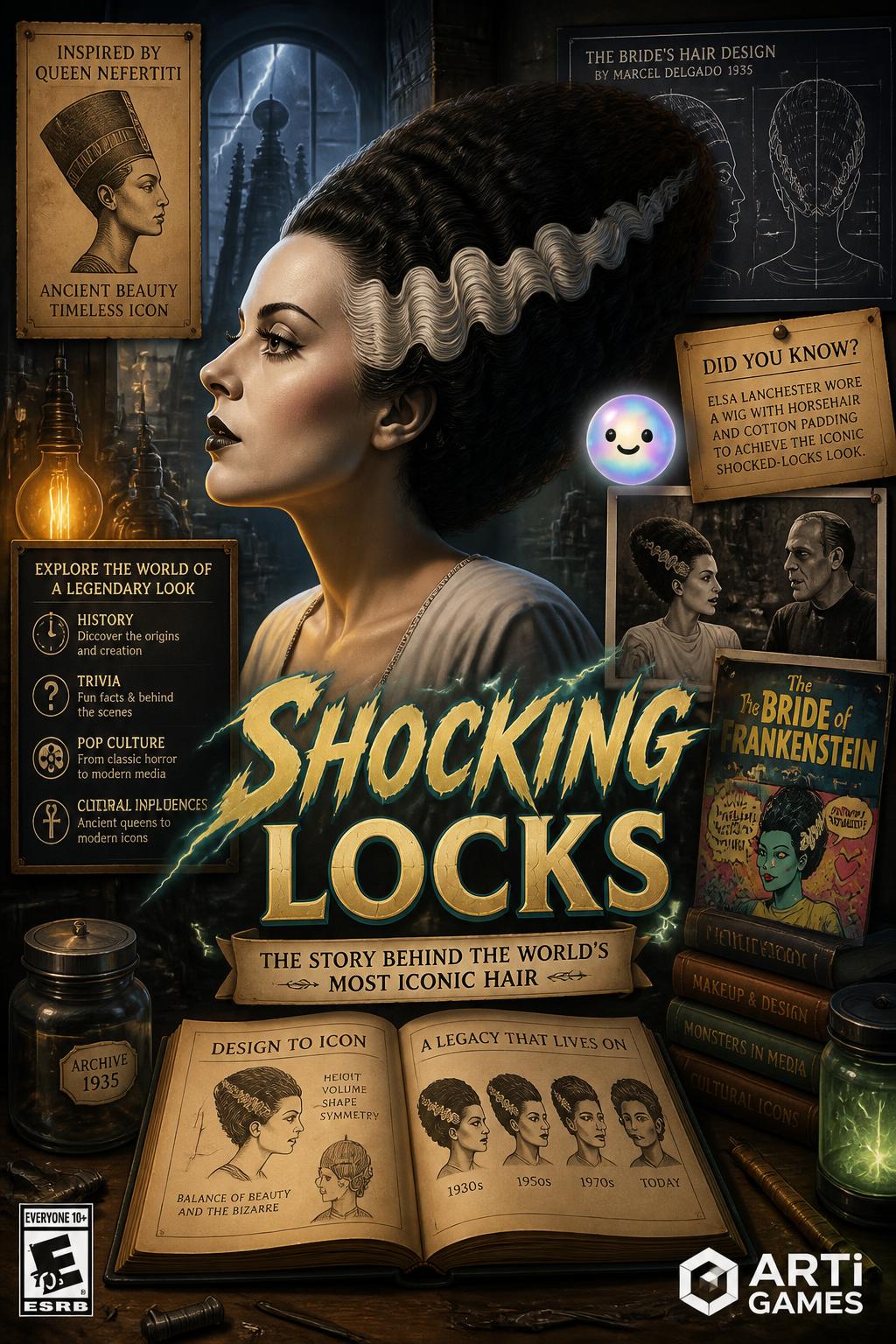
Test your movie trivia: which ancient historical figure inspired the iconic hairstyle of the Bride of Frankenstein in the 1935 classic film?
The stormy birth of a monster
Shifting shapes on the silver screen
Frankenstein goes global
The modern monster's metaphors
schopenhauer The 1931 movie turned Mary Shelley's intelligent, French-speaking monster into a non-verbal, grunting beast.
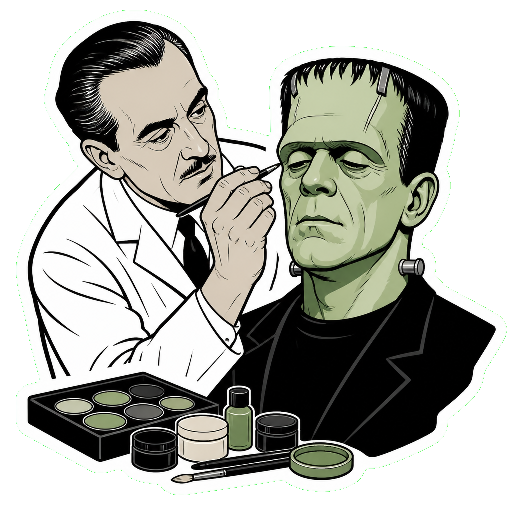
schopenhauer Jack Pierce’s 1931 makeup for Boris Karloff permanently replaced Mary Shelley’s handsome giant in public memory.
schopenhauer Edison Studios released a silent Frankenstein film in 1910, which people rediscovered in 1975.
schopenhauer Classic Screen Shapeshifting
Slide the color filter over the lens, watch the monster rise in black and white!
schopenhauer Discover the history and trivia behind Frankenstein's bolt in the neck myth. Explore how this iconic monster look influenced pop culture and media.
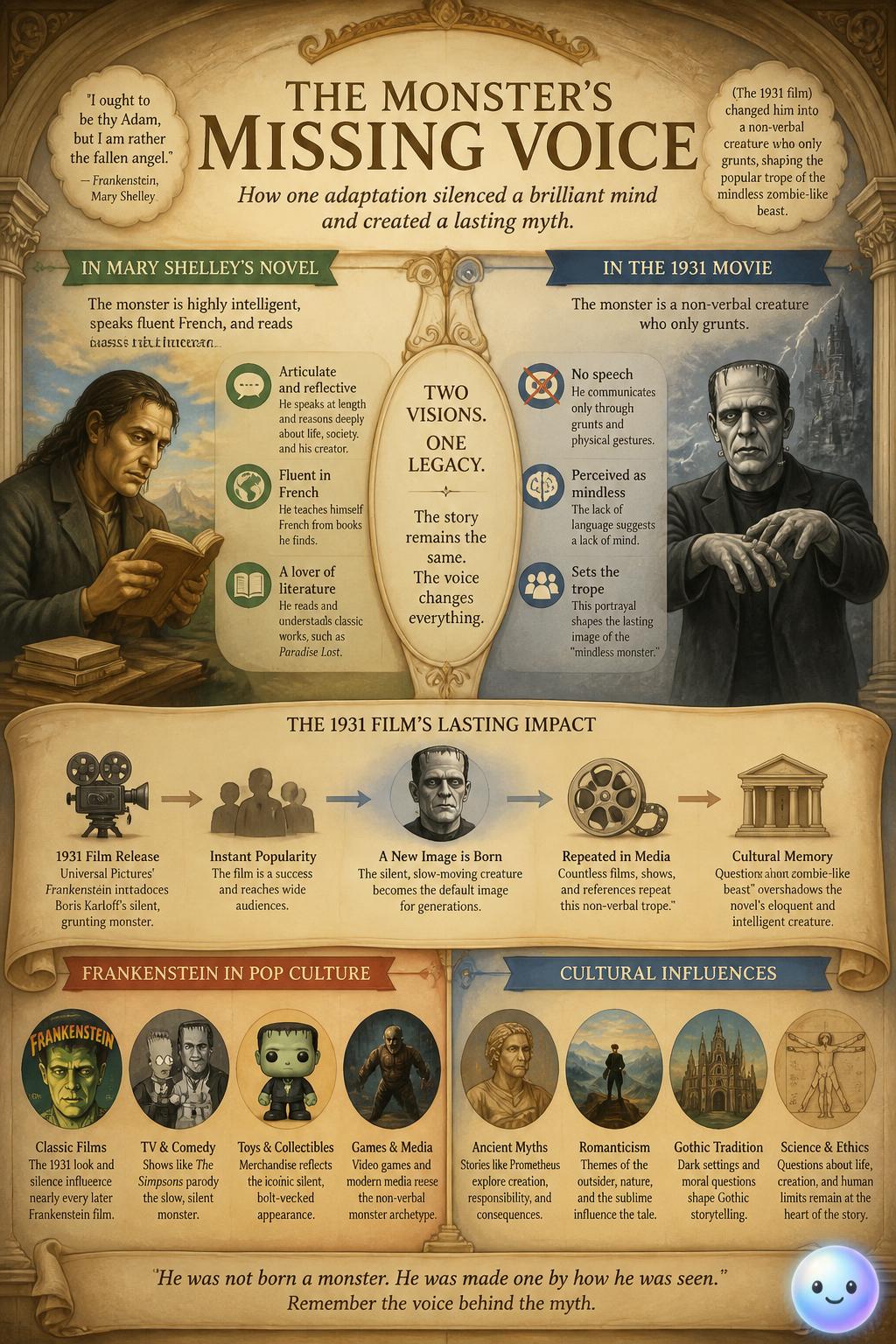
schopenhauer The 1931 movie stripped the monster of his eloquence, turning him into a mute brute.
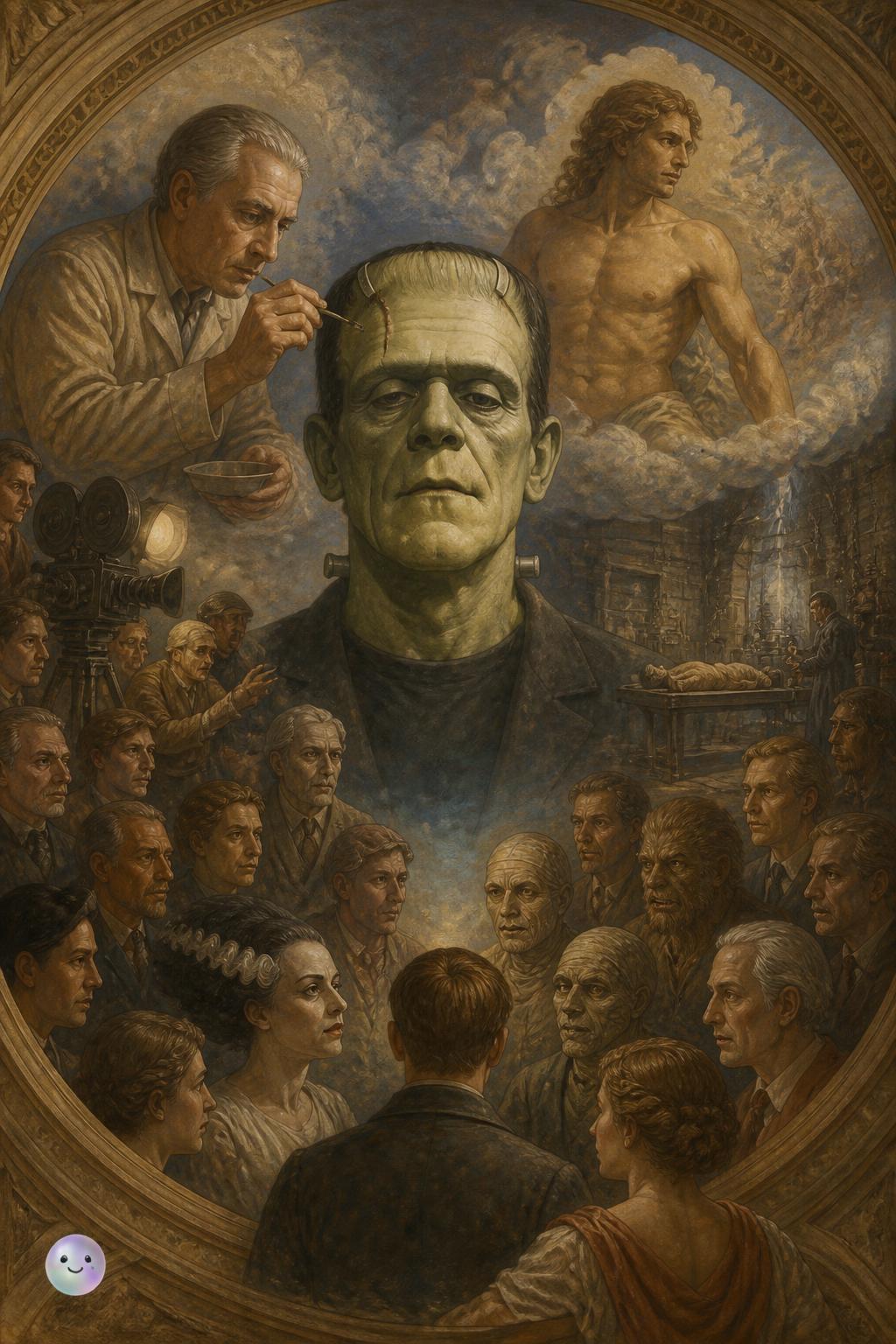
schopenhauer Makeup artist Jack Pierce created the iconic flat-headed look for Boris Karloff in 1931.
Cosmetics applied to the face or body to alter or enhance a person's appearance. Jack Pierce designed the iconic flat-topped makeup for Boris Karloff’s legendary 1931 performance as the monster.
schopenhauer Match these shocking hairstyles to discover how Frankenstein's legacy shaped modern pop culture.
Who was the makeup artist responsible for creating the iconic flat-headed look of the 1931 monster?
What is the name of the hunchbacked assistant in the 1931 film, often mistakenly called Igor?
What color was Boris Karloff's makeup painted to look ghostly on black-and-white film?
Who directed the iconic 1931 Universal Pictures film adaptation of Frankenstein?
In what year did Thomas Edison's studio produce the first-ever silent film adaptation of Frankenstein?
Which ancient historical figure inspired the hairstyle of the Bride of Frankenstein in the 1935 film?
How does the monster's speech in the 1818 novel differ from his speech in the 1931 film?