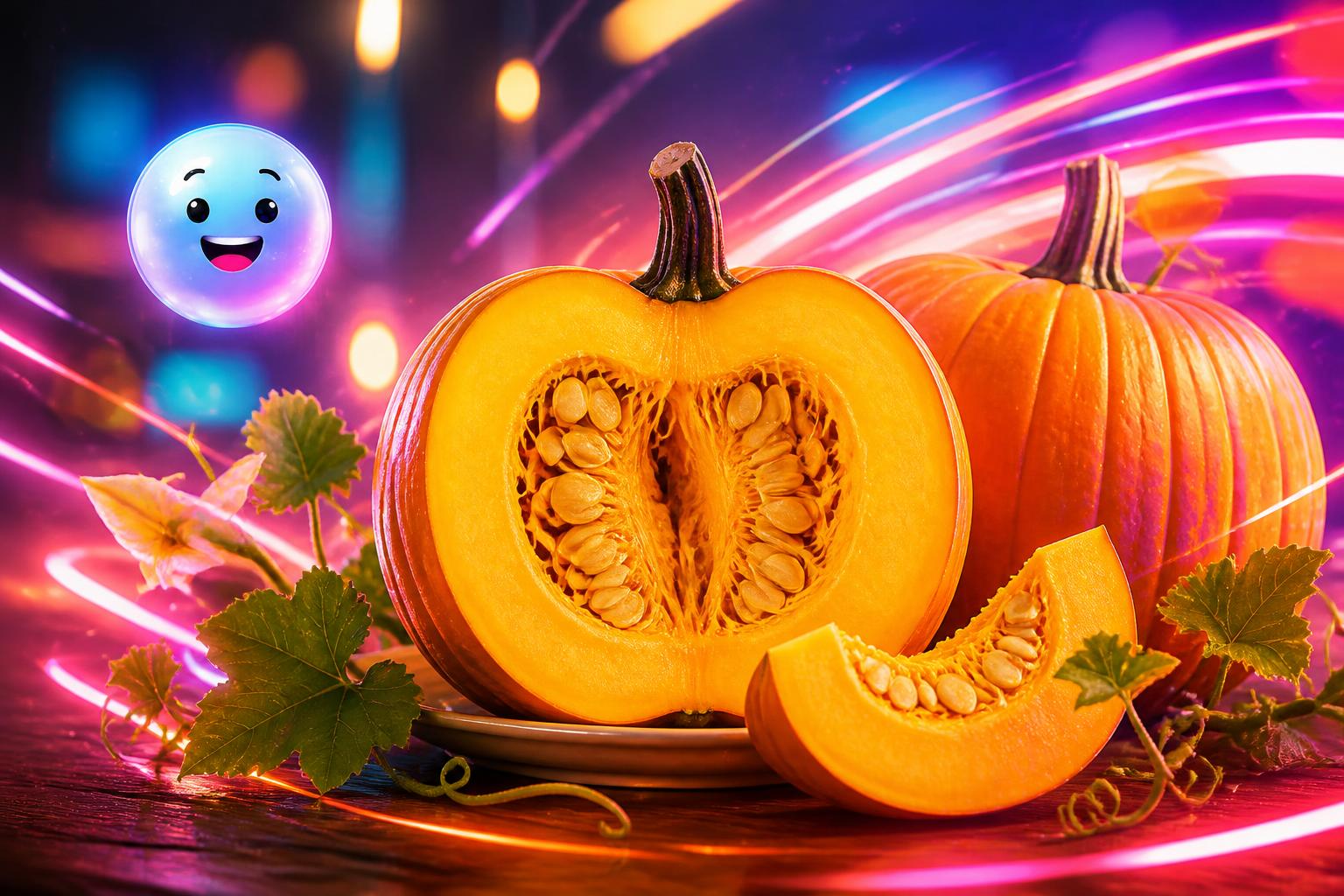
Which part of the pumpkin flower eventually swells and matures into
Which part of the pumpkin flower eventually swells and matures into the pumpkin fruit?
The botanical breakthrough
The 10,000-year-old traveler
Global plates and culinary shape shifters

play_review Female pumpkin flowers possess a tiny inferior ovary that swells into a mature pumpkin after pollination by bees.
play_review Botanists classify the pumpkin as a giant pepo berry because of its thick protective outer rind.
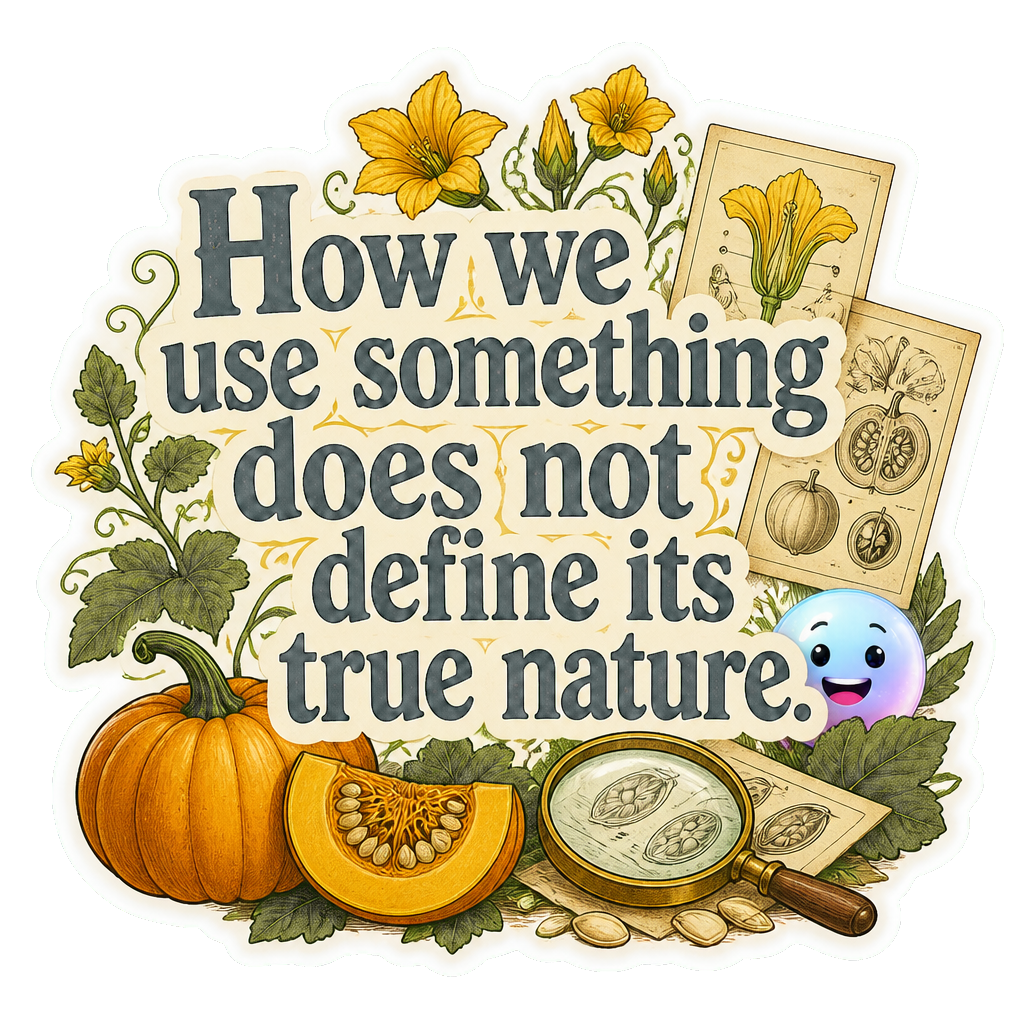
play_review Botanists classify pumpkins as fruits because these plants develop from flowers and contain seeds.
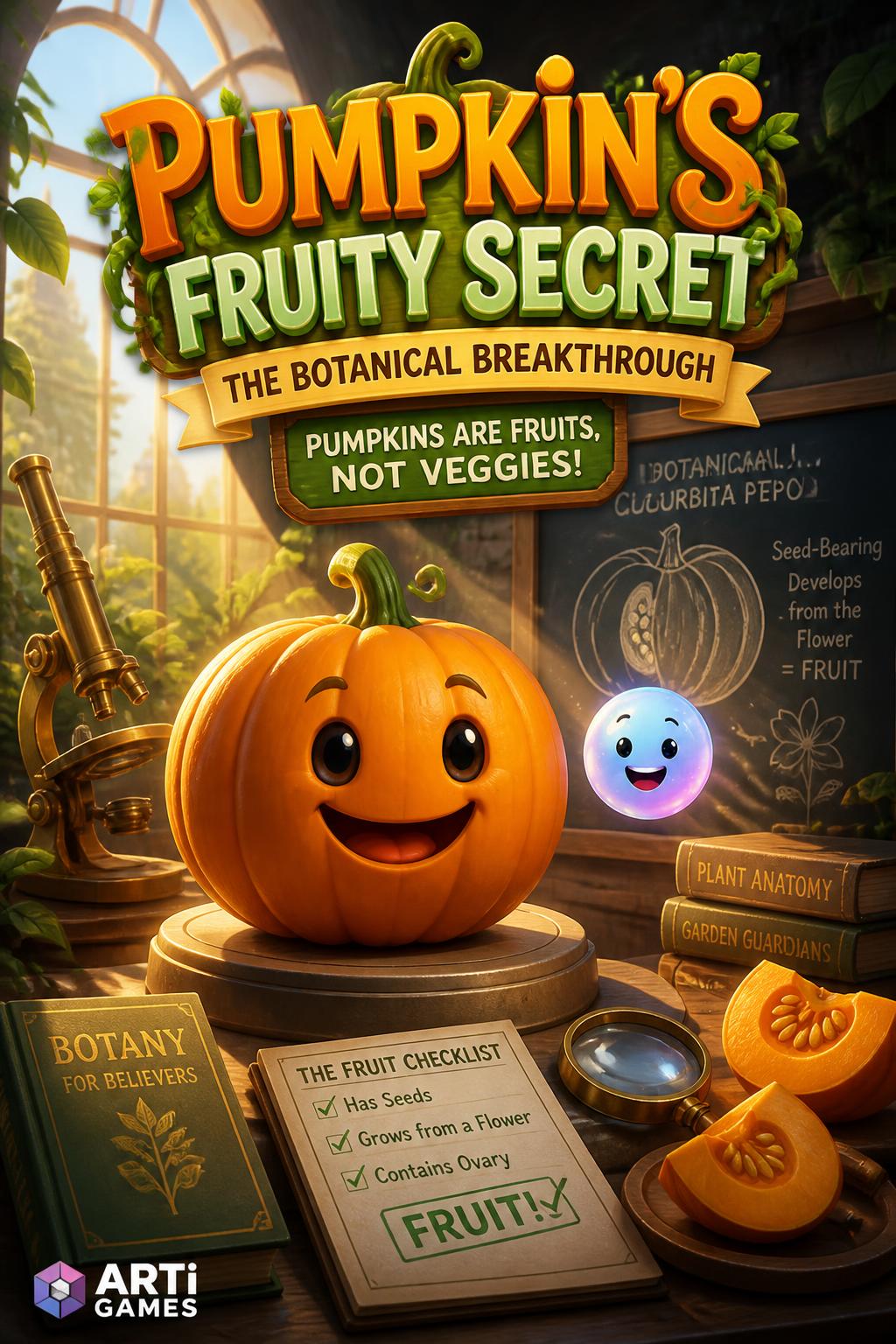
play_review Sort botanical traits to discover why pumpkins are actually fruits instead of vegetables.
play_review The Cucurbitaceae family contains over nine hundred distinct species that all share matching yellow flowers and vine structures.
play_review The Botanical Breakthrough
Out of a bloom / holding the seeds / a giant berry!
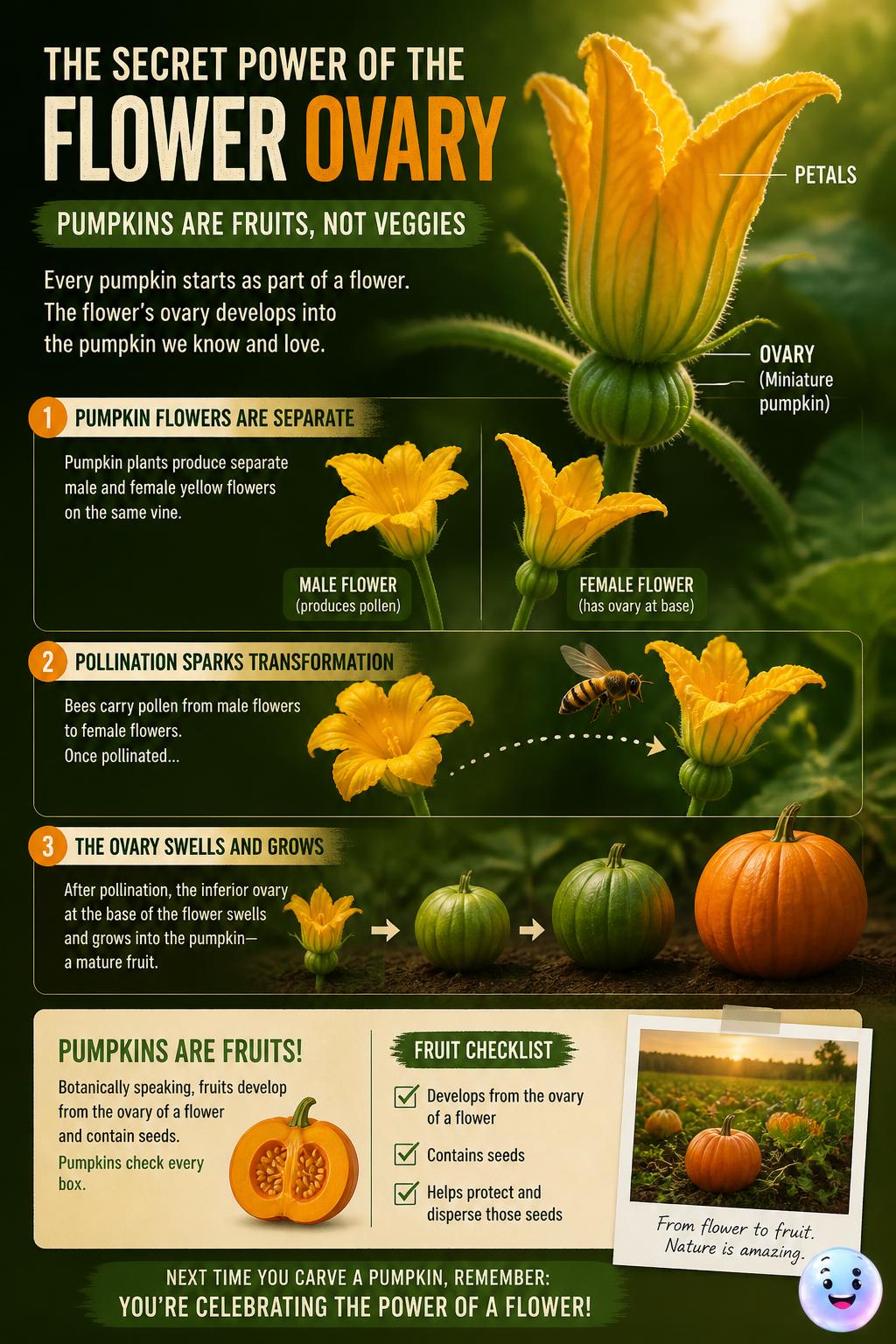
play_review Pumpkin vines produce separate male and female flowers, where bees pollinate the female's miniature green pumpkin ovary to
Giant pepo berries: Pumpkins are botanically classified as pepos, which means every single pumpkin is actually a giant berry with a tough outer rind.
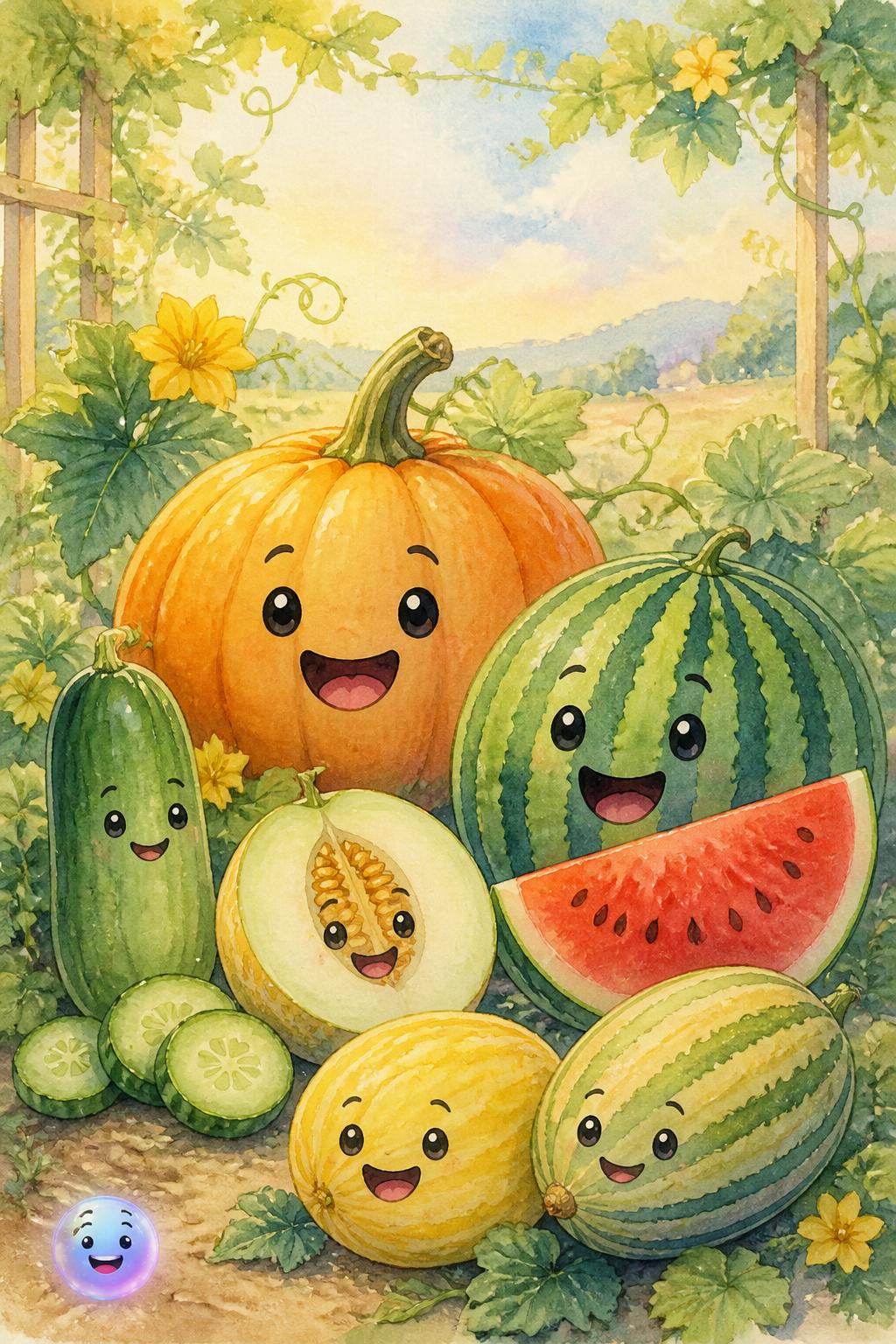
play_review Soft watercolor drawings show a pumpkin, watermelon, and cucumber gathered as a family.
The seed-bearing structure that develops from the ovary of a flowering plant. In 2019, Texas horticulturist Joe Masabni clarified that the pumpkin is scientifically classified as a fruit.
What botanical feature officially classifies a pumpkin as a fruit rather than a vegetable?
What is the scientific term for the specialized type of berry that pumpkins are classified as?
Which of these everyday kitchen items is botanically in the same family (Cucurbitaceae) as the pumpkin?
What botanical term describes the edible parts of plants like roots, stems, and leaves?
Which part of the pumpkin flower eventually swells and matures into the pumpkin fruit?