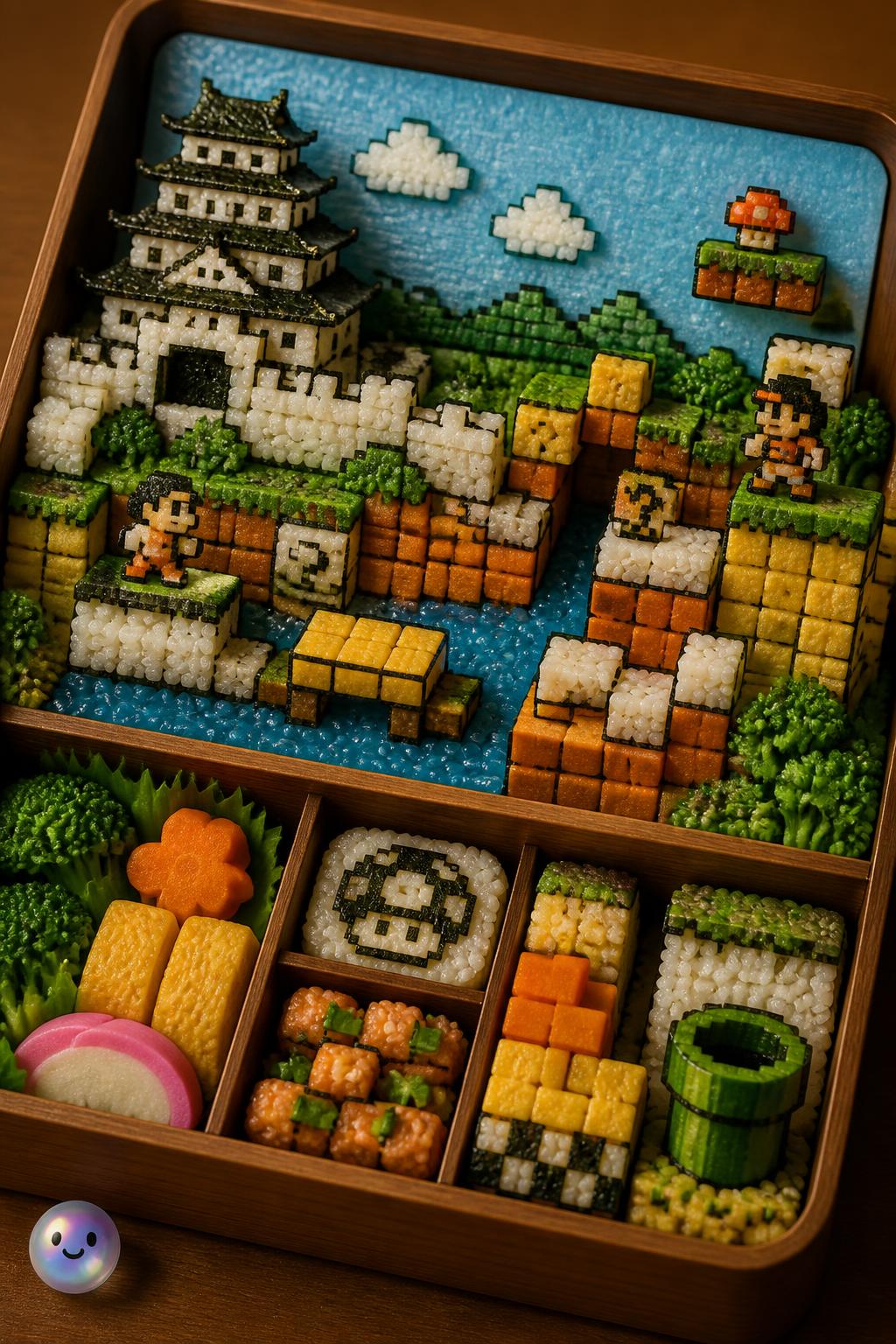
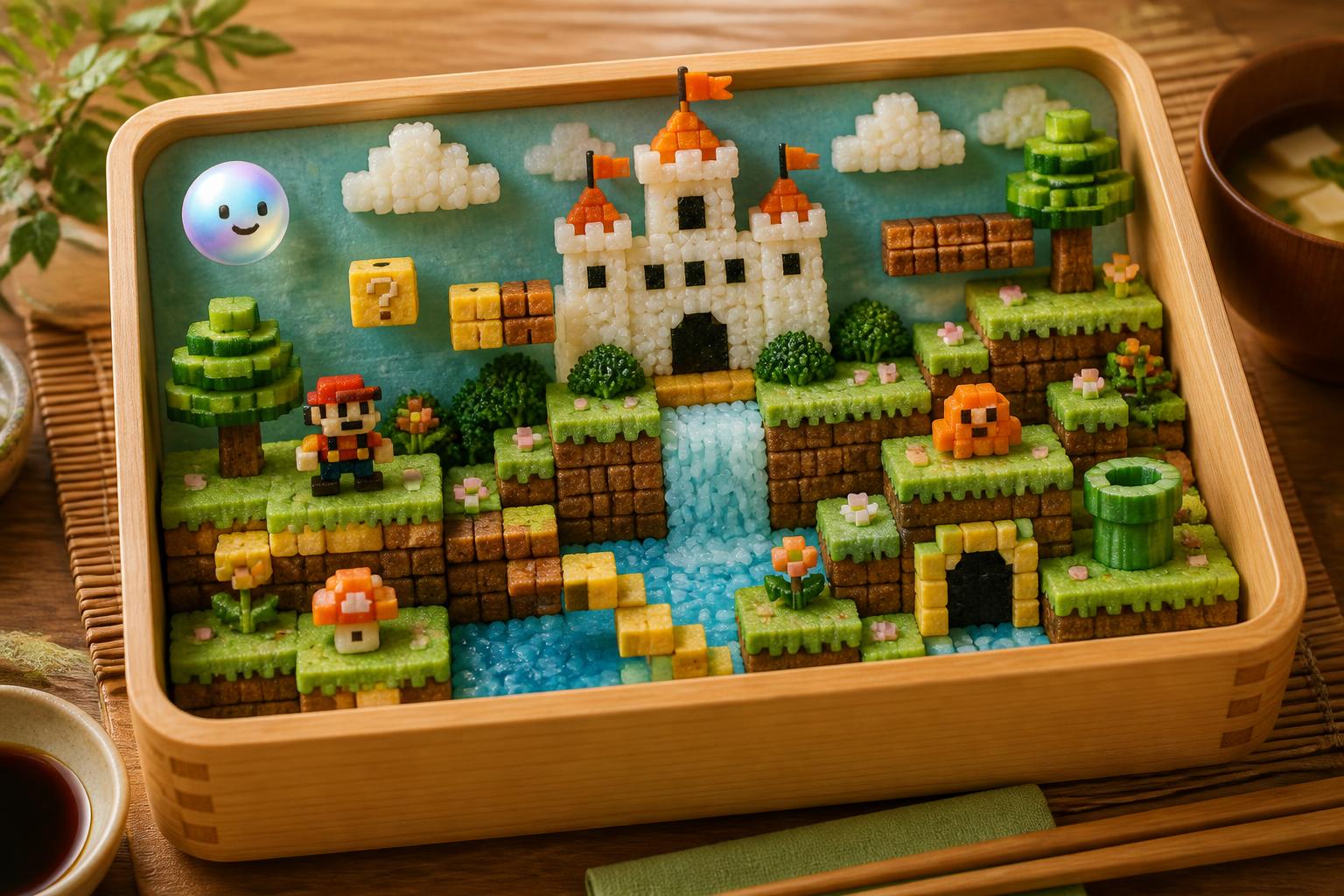
Which retro game level would you find most delicious as a bento?
Chapter 1

The grid and the grain

Chapter 2

Hardware color palettes and edible dyes

Chapter 3

Layering depth from parallax scrolling to bento levels

Chapter 4

Sprite collision and structural food engineering

YOUR GOAL

Master of Building 8-bit worlds with rice and seaweed

Ch 1 · The grid and the grain
choko
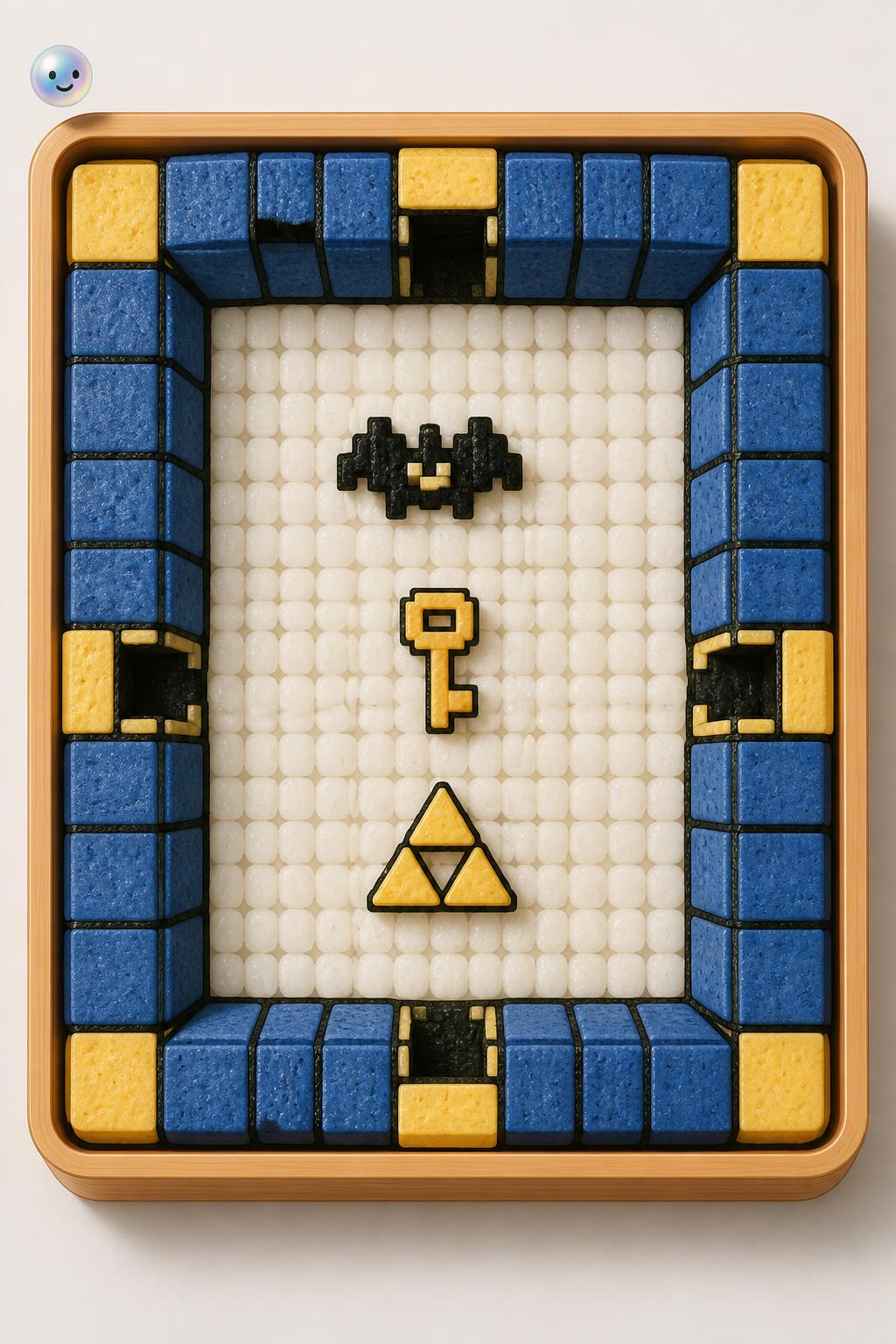
Cut seaweed and rice grains perfectly recreate the rigid grid architecture of classic Zelda dungeons.

choko Dark seaweed strips partition white rice to form a classic Zelda dungeon layout.

2d ago

choko

choko The Grid and the Grain

Aligning every rice grain to the grid, retro pixels turn to lunch.
Sep 12

choko

choko Resolution limits and ingredient size

Sep 12

choko
NES creators shaped massive game worlds from a tiny grid of just 256x240 pixels.

choko Tiny seaweed cutouts on a bento grid represent classic Famicom pixels.

2d ago

choko
The modular tilemap technique

choko Game engines use repeating tile blocks to build massive worlds without overloading limited system memory.
Sep 12

choko
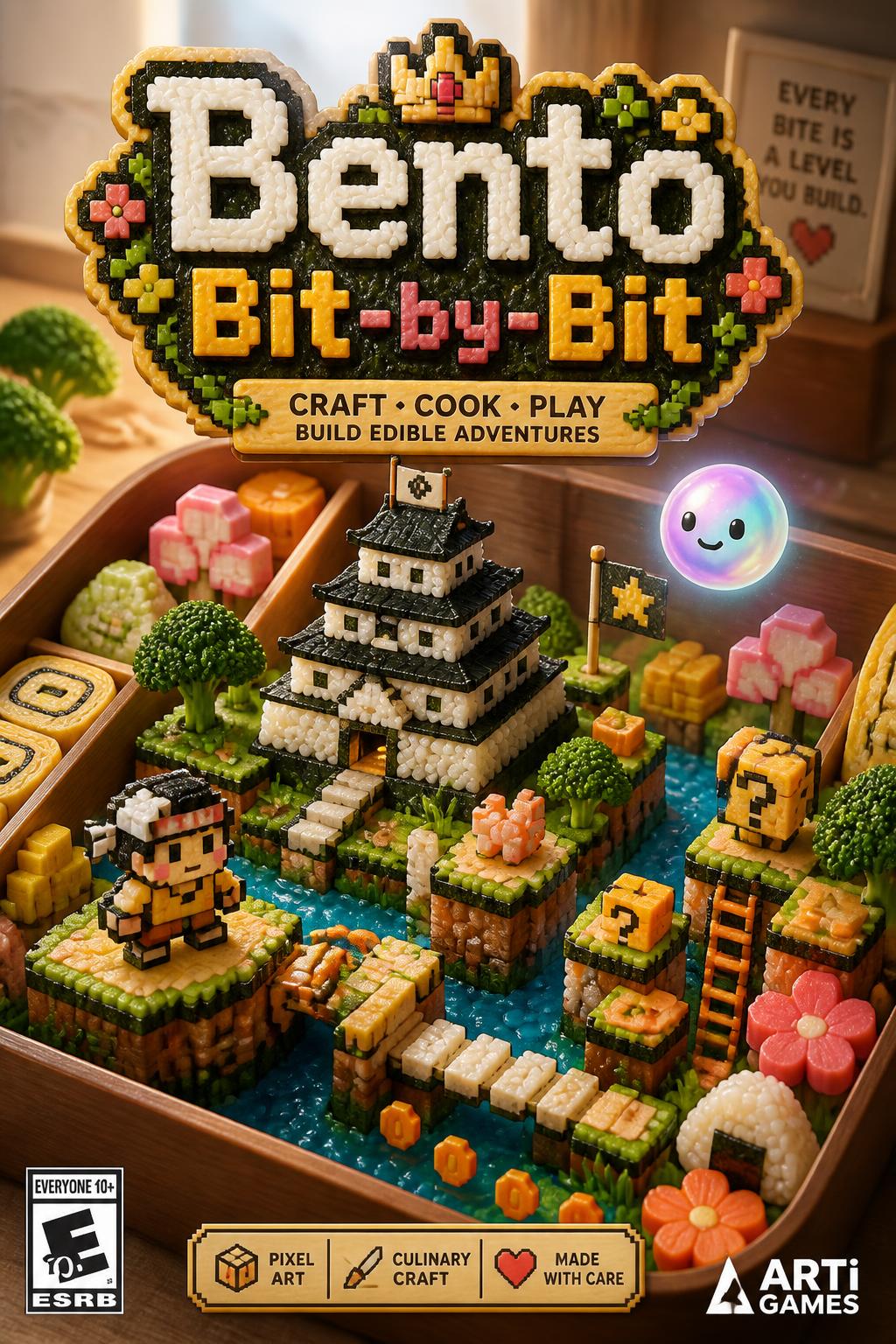
Bento Bit-by-Bit
BETA

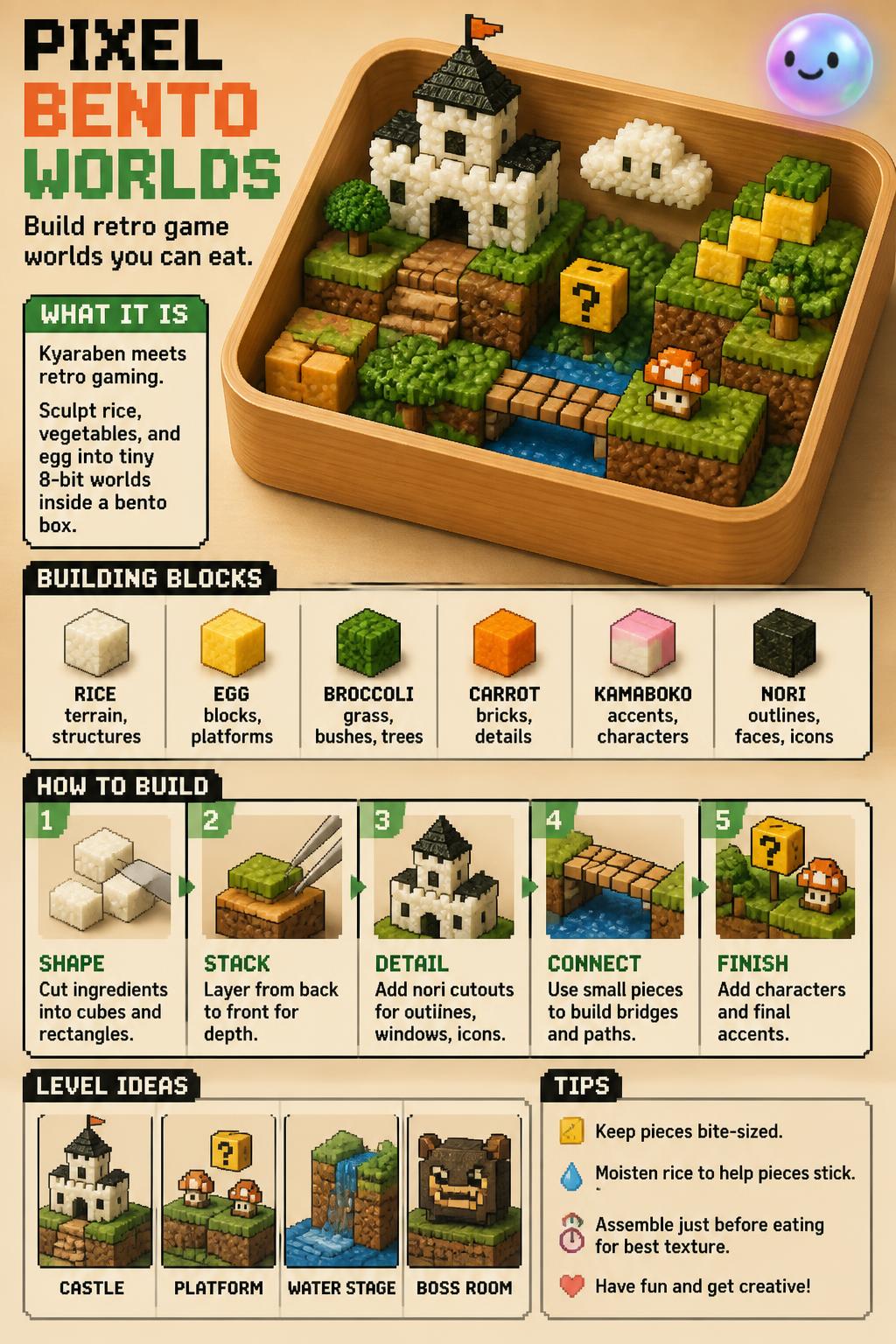
choko Assemble each bento dish to learn how retro video games designed their pixel art.

Sep 12

choko
Fun Fact

Pixel rice: A single grain of Japanese short-grain rice is roughly the same aspect ratio as a classic non-square pixel on an old CRT television screen.

Hide sticker

Sep 12

choko
Glossary
pixel (noun)
A minute area of illumination on a display screen, one of many from which an image is composed. Japanese culinary artists align individual rice grains to replicate these digital building blocks in themed lunchboxes.

Sep 12

choko
Gossip

Which retro game level would you find most delicious as a bento?

Sep 12

choko
Quiz

What resolution limit did the 1983 Famicom/NES console impose on game screens?

Sep 12

choko

choko The modular tilemap technique

Sep 12

choko
Quiz

Which seaweed variety is most commonly used by bento artists to create clean pixel outlines?

Sep 12

choko

choko Mapping the pixel grid

Sep 12

choko
Quiz

Why was Mario originally designed with a mustache and a hat in 1981?

Sep 12

choko

choko Sprite sheets and food cutters

Sep 12

choko
Quiz

How did early game developers save memory when building large game levels?

Sep 12

choko
Quiz

What was the primary purpose of a sprite sheet in classic game development?

Sep 12

choko
Quiz

What Japanese term refers to the art of styling food to look like cute characters?

Sep 12

choko
Quiz

Which tool do bento artists use to punch out highly precise, tiny facial features?

Sep 12

choko
Quiz

What type of Japanese rice is ideal for shaping bento pixels due to its stickiness?

Sep 12