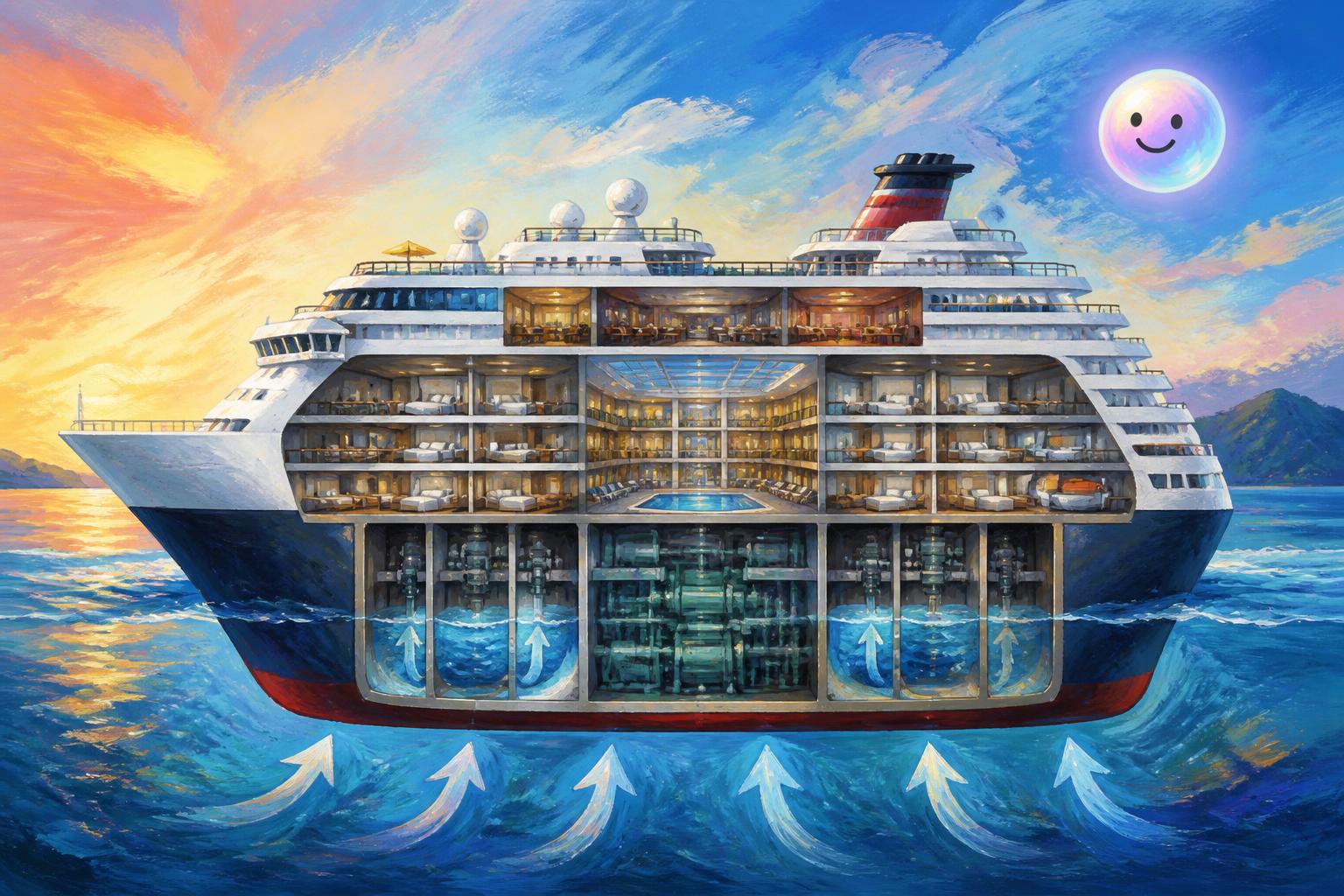
Why do cruise ships look top-heavy but rarely tip over in
Why do cruise ships look top-heavy but rarely tip over in the ocean?
Chapter 1
The magic of buoyancy
Chapter 2
Staying upright and steady
Chapter 3
Powering a floating city
Chapter 4
Where giant ships are born
Ch 2 · Staying upright and steady

futura Cruise Ship Stability
Heavy engines, ballast tanks, down so deep, A low center of gravity the big ships keep!
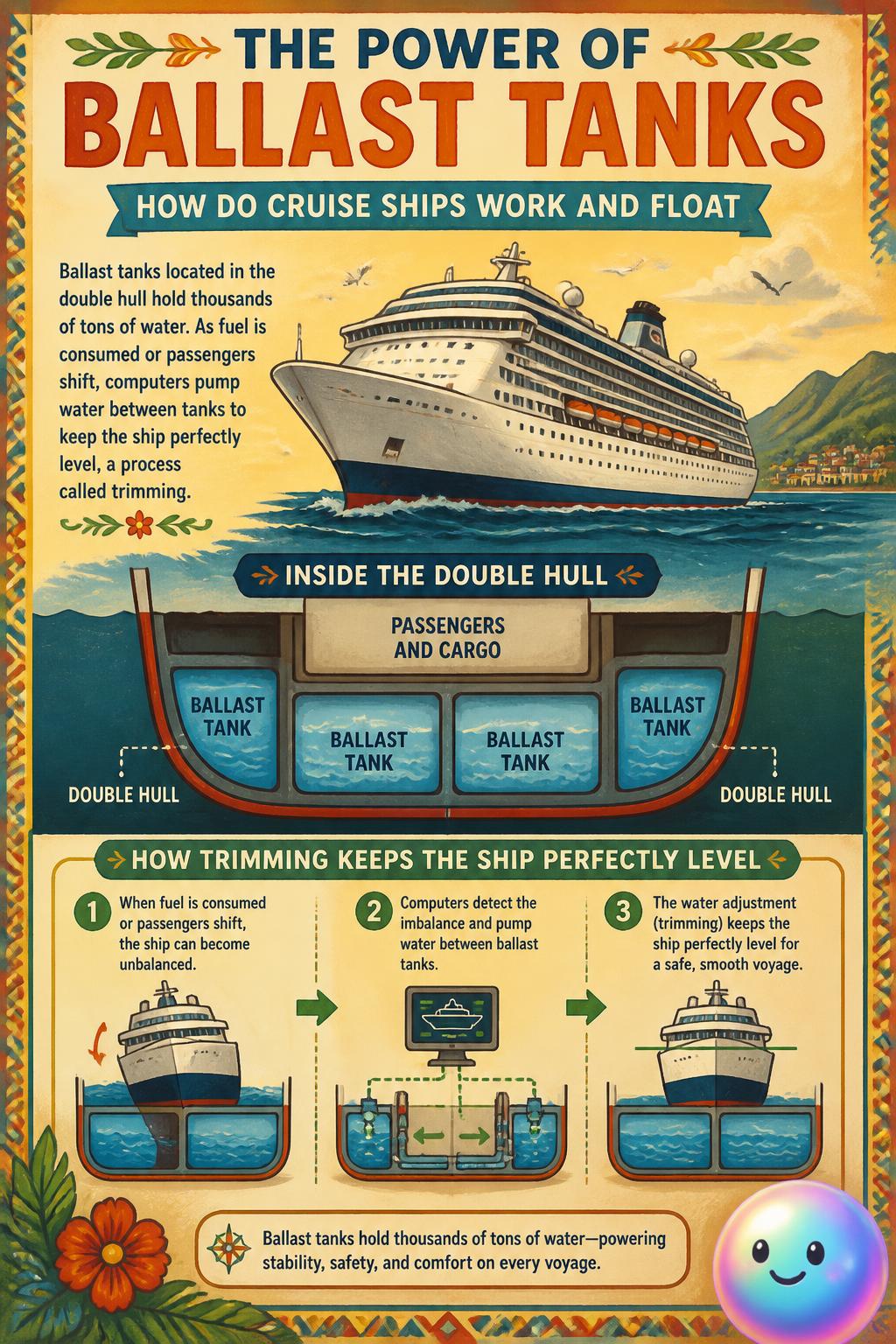
futura Ships pump seawater into internal tanks to adjust weight, balance, and stability.
Fun Fact
Fin stabilizers: Ship stabilizer fins act exactly like airplane wings underwater, generating lift to keep the vessel from tilting.
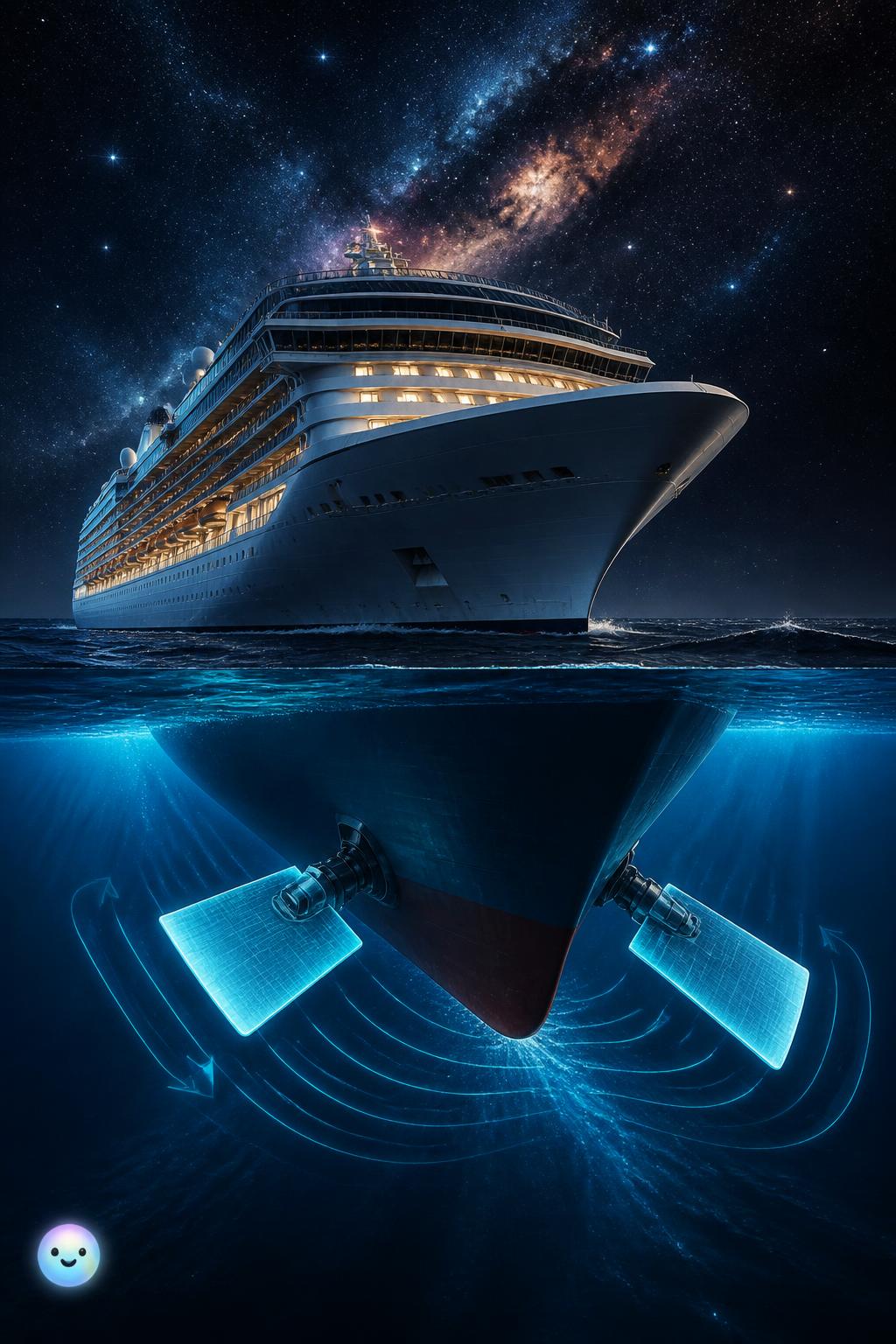
futura Computer-controlled wings fold out from the hull to reduce the ship's rolling motion.
Glossary
ballast (noun)
Heavy material, such as water, placed low in a vessel to improve its stability. The Symphony of the Seas uses lower ballast tanks to balance its eighteen decks of passengers.
Heavy material, such as water, placed low in a vessel to improve its stability. The Symphony of the Seas uses lower ballast tanks to balance its eighteen decks of passengers.
Quiz
What are the wing-like structures that extend underwater from a cruise ship's sides to reduce rolling?
BETA
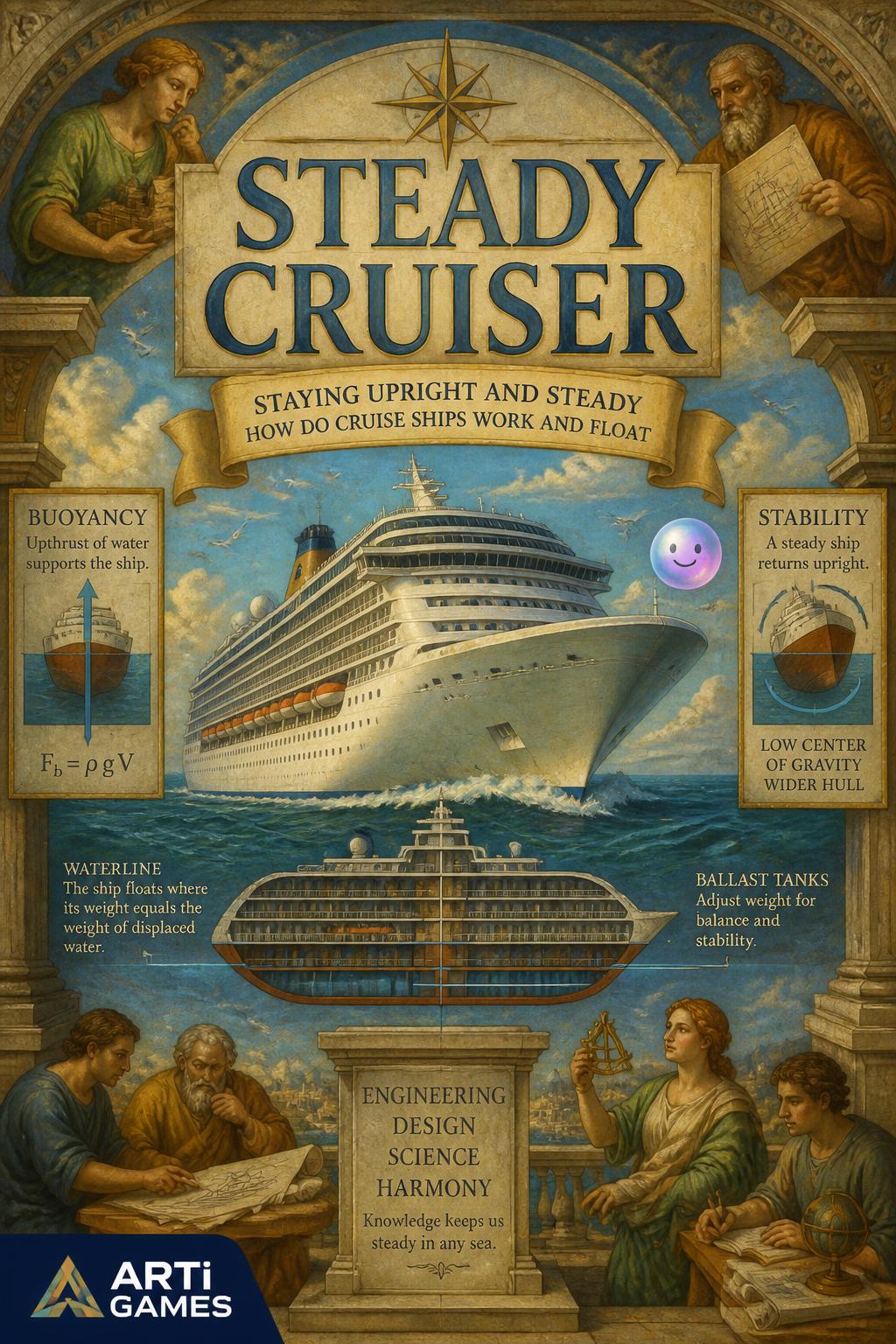
futura Distribute the ship's weight to learn how massive cruise ships stay stable and upright.
futura Watch how massive cruise ships stay upright. Learn the physics behind their low center of gravity and how it keeps them floating safely.
futura Watch how active stabilizer fins keep massive cruise ships stable and prevent rolling in rough seas. Learn the science behind cruise ship stability.
Quiz
What safety feature, mandated after the Titanic disaster, provides an inner steel wall to prevent flooding?
futura Discover how ballast tanks control buoyancy and stability to keep massive cruise ships floating safely in this educational video.
Quiz
What do cruise ships use to adjust their balance and weight as fuel is consumed during a voyage?