
Writing cure: Dr. Pennebaker's research found that people
Writing cure: Dr. Pennebaker's research found that people who benefit most from writing tend to change the pronouns they use, shifting from 'I' to 'we' or
The architecture of meaning-making
The five paths of post-traumatic growth
Global traditions of transforming grief
The practical tools of adaptation

gus Writing about deep personal trauma reduces doctor visits by 50% by changing how the brain processes pain.

gus Peer Grief Support
We share the heavy things we try to hide, And find a way to grow on the other side.
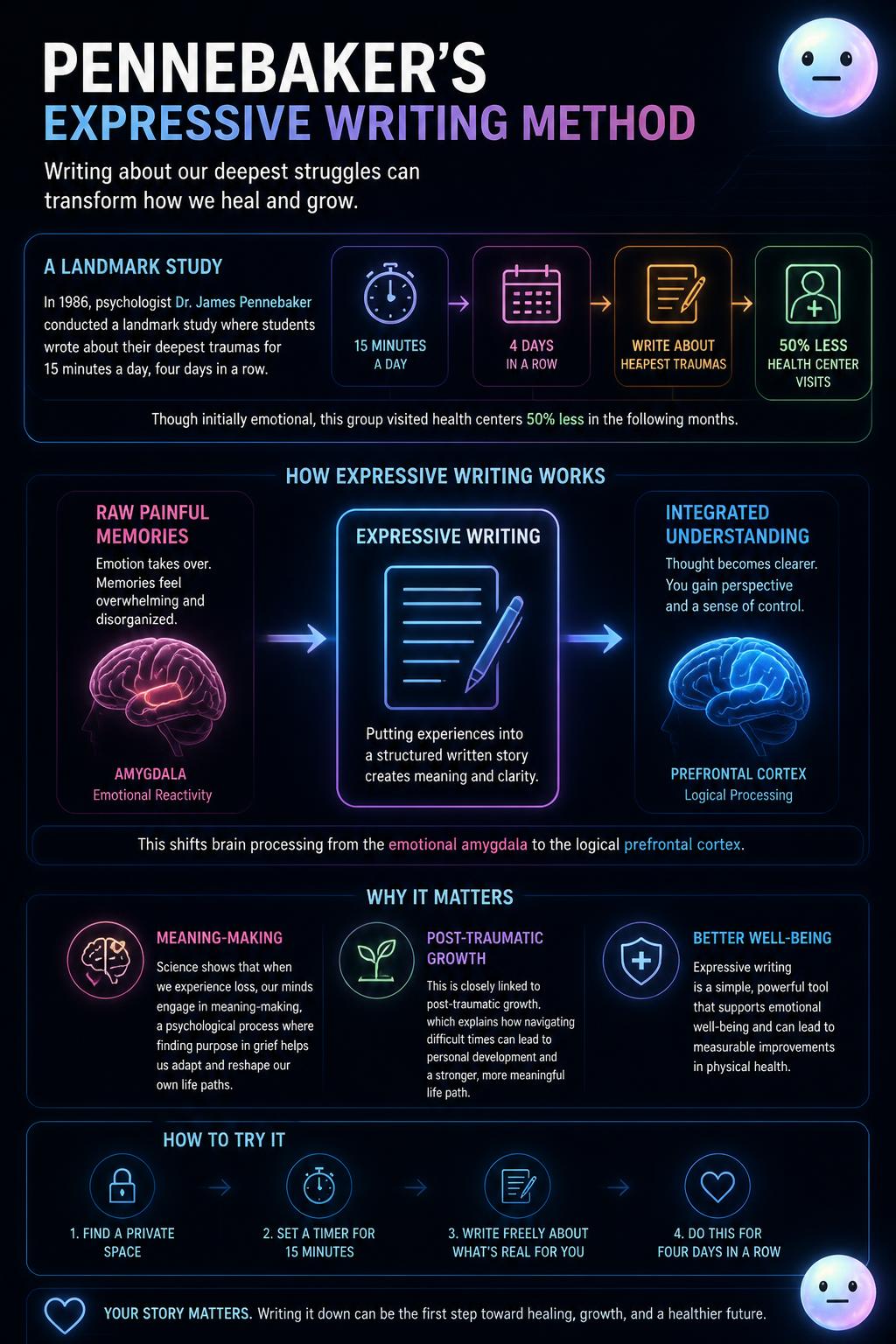
gus In 1986, Dr. James Pennebaker showed that students writing about trauma fifteen minutes a day reduced health center visits by fifty percent.
What is the recommended daily duration of Dr. James Pennebaker's expressive writing exercise to achieve maximum psychological benefit?
In Dr. Pennebaker's landmark 1986 study, how did the trauma-writing group's health center visits compare to the control group's visits?


gus Creating tribute projects helps survivors maintain a lasting connection to the deceased.
Which of the following is a common real-world example of a therapeutic 'legacy project' created by a survivor?
What is the primary psychological purpose of creating a 'legacy project' after experiencing a significant loss?
Writing cure: Dr. Pennebaker's research found that people who benefit most from writing tend to change the pronouns they use, shifting from 'I' to 'we' or 'they' over the four days.
Who were the two pioneering therapists who developed the framework of narrative therapy in the 1980s?
How does narrative therapy encourage people to view a major life crisis or painful loss?
What does the shared environment of a peer support group help to dramatically reduce for individuals navigating grief?