Chapter 1
The magic of La Calabiuza
Chapter 2
Day of the Dead the Salvadoran way
Chapter 3
The legendary spirits of El Salvador
Ch 3 · The legendary spirits of El Salvador
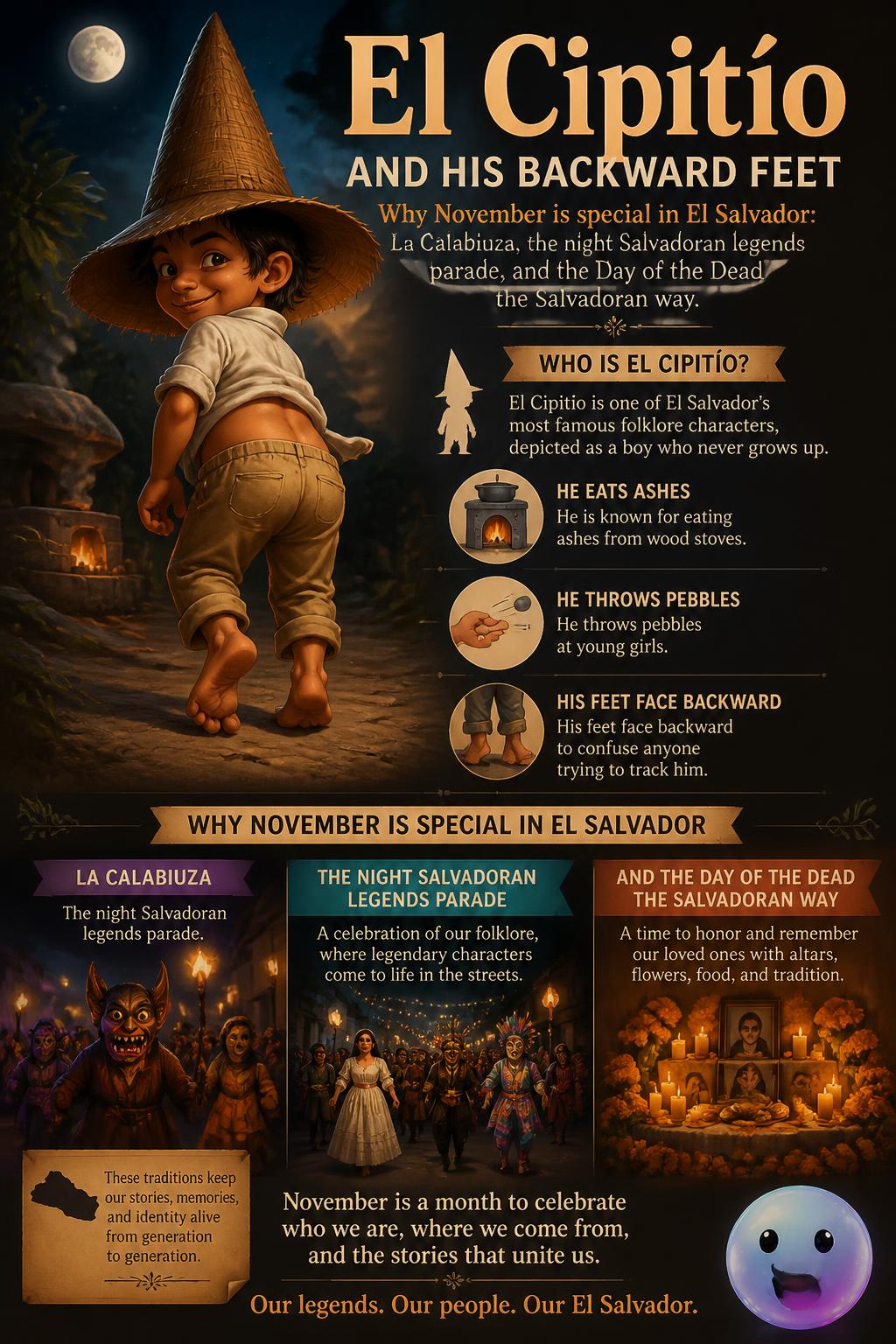
maryluz The eternal boy wears a giant pointed hat, has a large belly, eats wood stove ashes, and throws pebbles at young girls.
Quiz
What unusual food is the mischievous Salvadoran spirit El Cipitío said to love eating?
Fun Fact
Cipitío's name: The name 'Cipitío' comes from the Nahuatl word 'Cipit,' which means child, perfectly fitting this eternally young, mischievous boy.
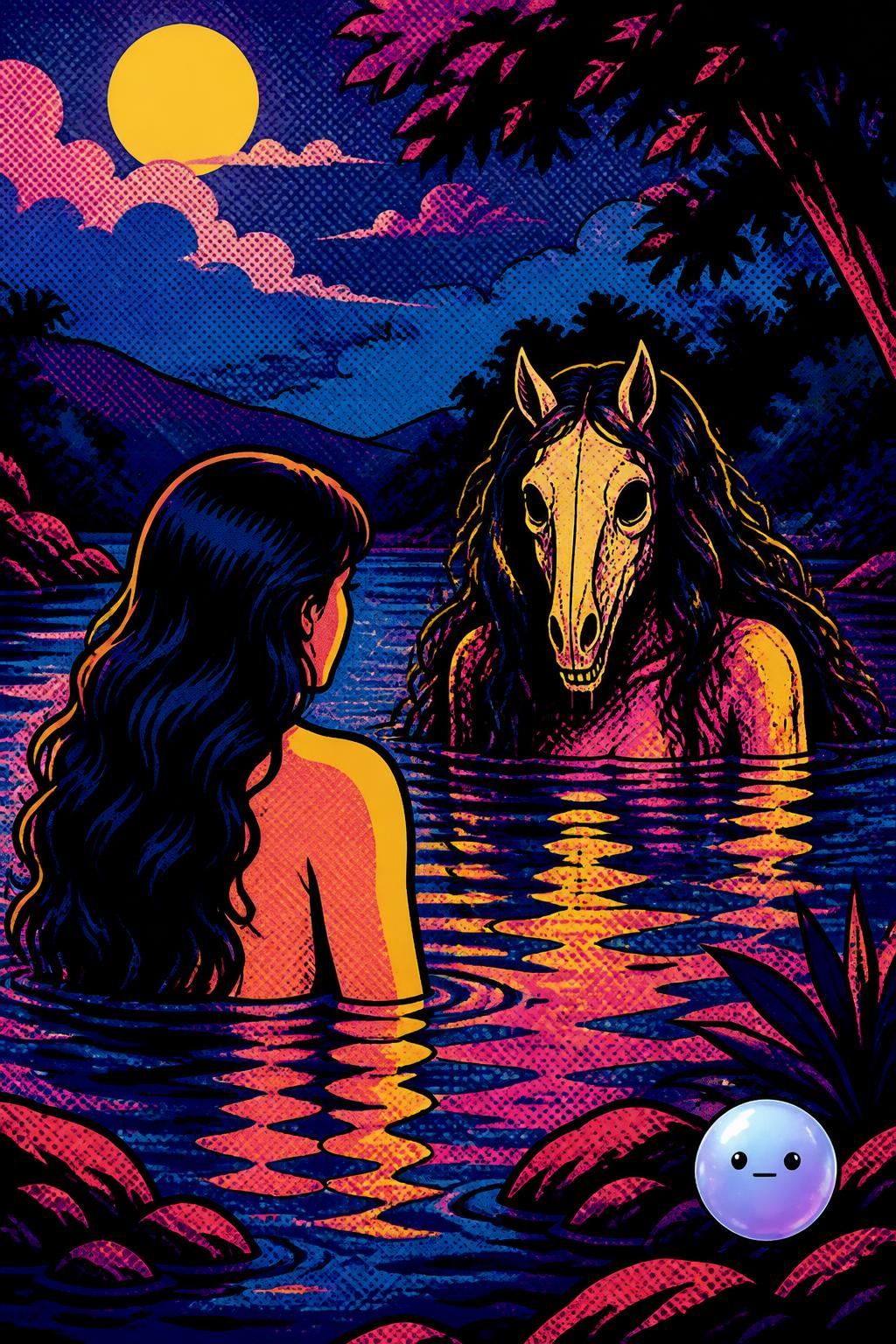
maryluz Salvadorans bring the legendary La Siguanaba to life during November's La Calabiuza festival.
Quiz
What animal's face is La Siguanaba often said to possess when she reveals her true form?
Glossary
spirit (noun)
A supernatural being, such as a ghost or specter. In Tonacatepeque, residents portray these entities during the annual Calabiuza festival held every November 1.
A supernatural being, such as a ghost or specter. In Tonacatepeque, residents portray these entities during the annual Calabiuza festival held every November 1.
Quiz
What color is the malevolent, red-eyed Cadejo that seeks to harm late-night travelers?
Quiz
In Salvadoran folklore, what does the white Cadejo do for people walking late at night?
Quiz
During which historical era did the legend of El Padre sin Cabeza originate in El Salvador?