The mineral in chalk, seashells, and microscopic fossils. Smithsonian scientists read these tiny fossil shells like ancient thermometers to study prehistoric climate. They are literally time capsules from deep time.
The architecture of deep time
Surviving the great dyings
Ancient climates and changing worlds
The library of 148 million secrets
The mineral in chalk, seashells, and microscopic fossils. Smithsonian scientists read these tiny fossil shells like ancient thermometers to study prehistoric climate. They are literally time capsules from deep time.


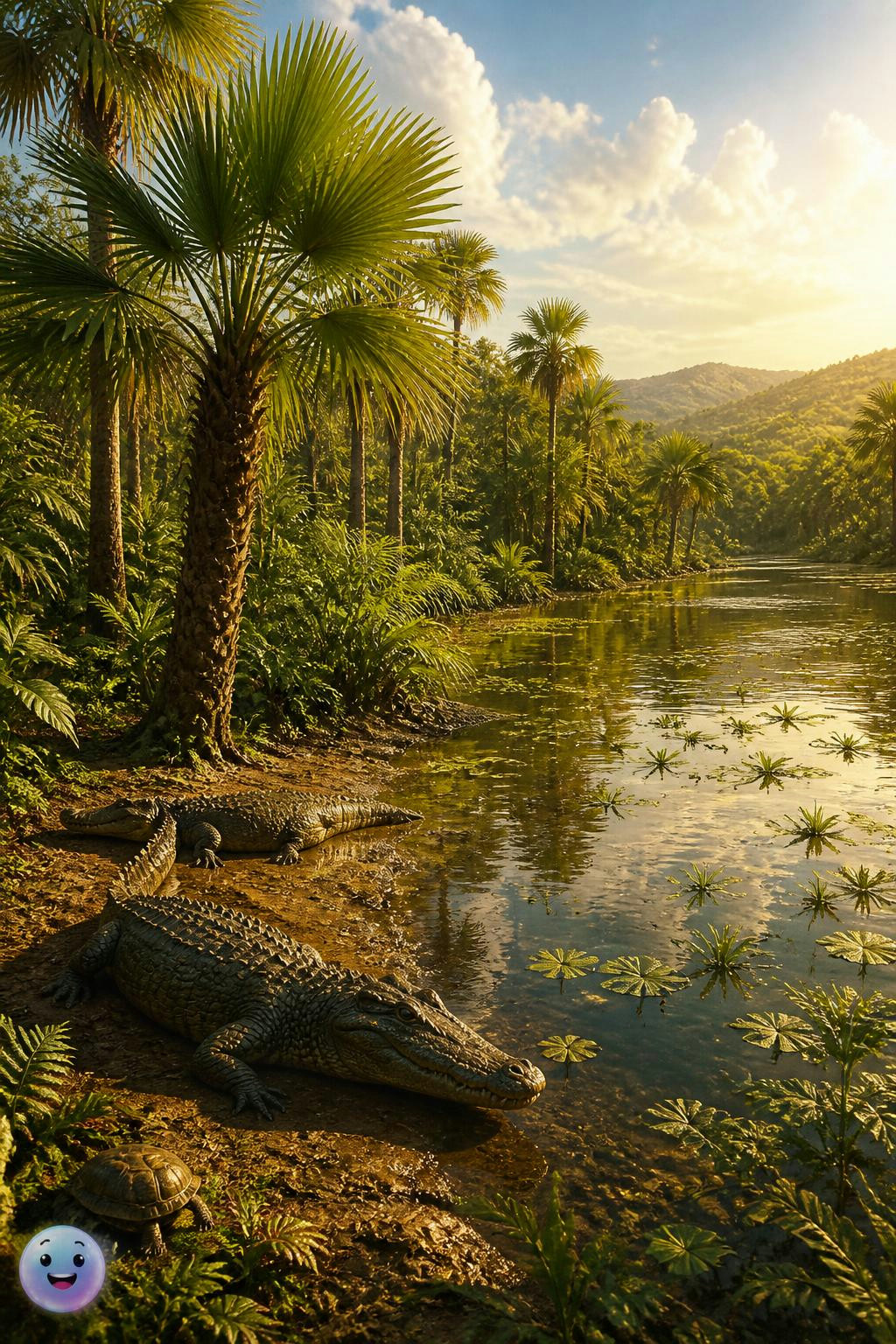
streetspirit Towering fan palms and early crocodilians frame a calm Arctic freshwater lake.
streetspirit Smithsonian researchers study 50-million-year-old alligator and palm fossils collected from northern Canada. These Eocene specimens prove the high Arctic once enjoyed a lush, subtropical climate.
What microscopic leaf structures do paleobotanists count to estimate ancient atmospheric carbon dioxide levels?
In what substance are the shells of foraminifera made, which preserves ancient chemical clues?

streetspirit Sort fossil clues to discover how Earth survived extreme climate shifts before humans existed.
streetspirit Smithsonian scientists analyze oxygen isotopes in tiny foraminifera shells. This chemical record reconstructs global ocean temperatures from 100 million years ago.

streetspirit Foraminifera fossils reveal millions of years of ocean temperature shifts.
Fossils of which plants found on Ellesmere Island prove the Arctic was once subtropical?
What microscopic, single-celled organisms with shells are used by scientists to measure ancient ocean temperatures?
streetspirit Ancient Climates and Changing Worlds
In the cold of Alaska, they found a fossil palm / Long before we were here, the frozen north was warm
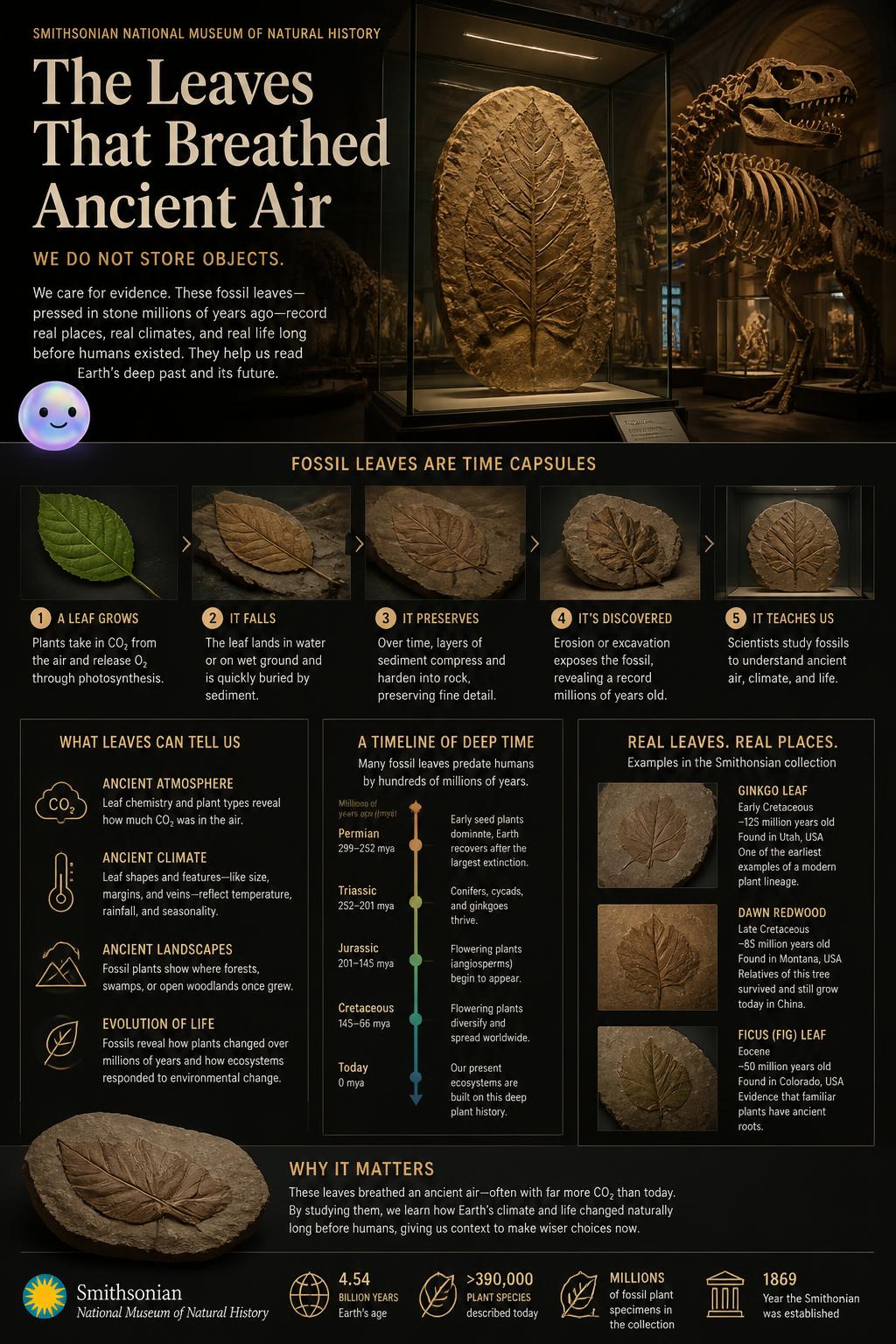
streetspirit Scientists count microscopic breathing pores called stomata under microscopes. This technique calculates carbon dioxide levels from millions of years ago, showing how plants survived greenhouse climates.

streetspirit Fossilized leaves reveal historic carbon dioxide levels through their microscopic pores.
From which regions does the Smithsonian's woolly mammoth collection primarily originate?
During which epoch, starting 56 million years ago, did the Arctic experience a warm, ice-free climate?
Giant penguins: Fossil records at the Smithsonian show that 37 million years ago, giant penguins grew up to six feet tall.

streetspirit Smithsonian fossil collections from Siberia and Alaska preserve woolly mammoth remains up to 100,000 years old. These specimens reveal how thick fur and flat teeth conquered the cold.
How do plants respond to higher levels of carbon dioxide in the atmosphere over generations?
What physical adaptation helped woolly mammoths survive the extreme cold of the Pleistocene ice ages?
The scientific study of the climates of past geological periods. Smithsonian curator Scott Wing studied fossilized leaves in Wyoming to reconstruct global warming fifty-six million years ago.