The magic of light and chemistry
Cameras for the masses
Mastering light, time, and focus
The camera as a witness
The digital revolution
schott Working for the National Child Labor Committee, Hine sneaked into US coal mines and cotton mills between 1908 and 1924.
What type of camera did Ansel Adams primarily use to capture his highly detailed landscape photographs in the mid-1900s?
Which photographer took the famous 1936 'Migrant Mother' portrait during the Great Depression?

schott Photographer Dorothea Lange captured 'Migrant Mother' in California in March 1936.
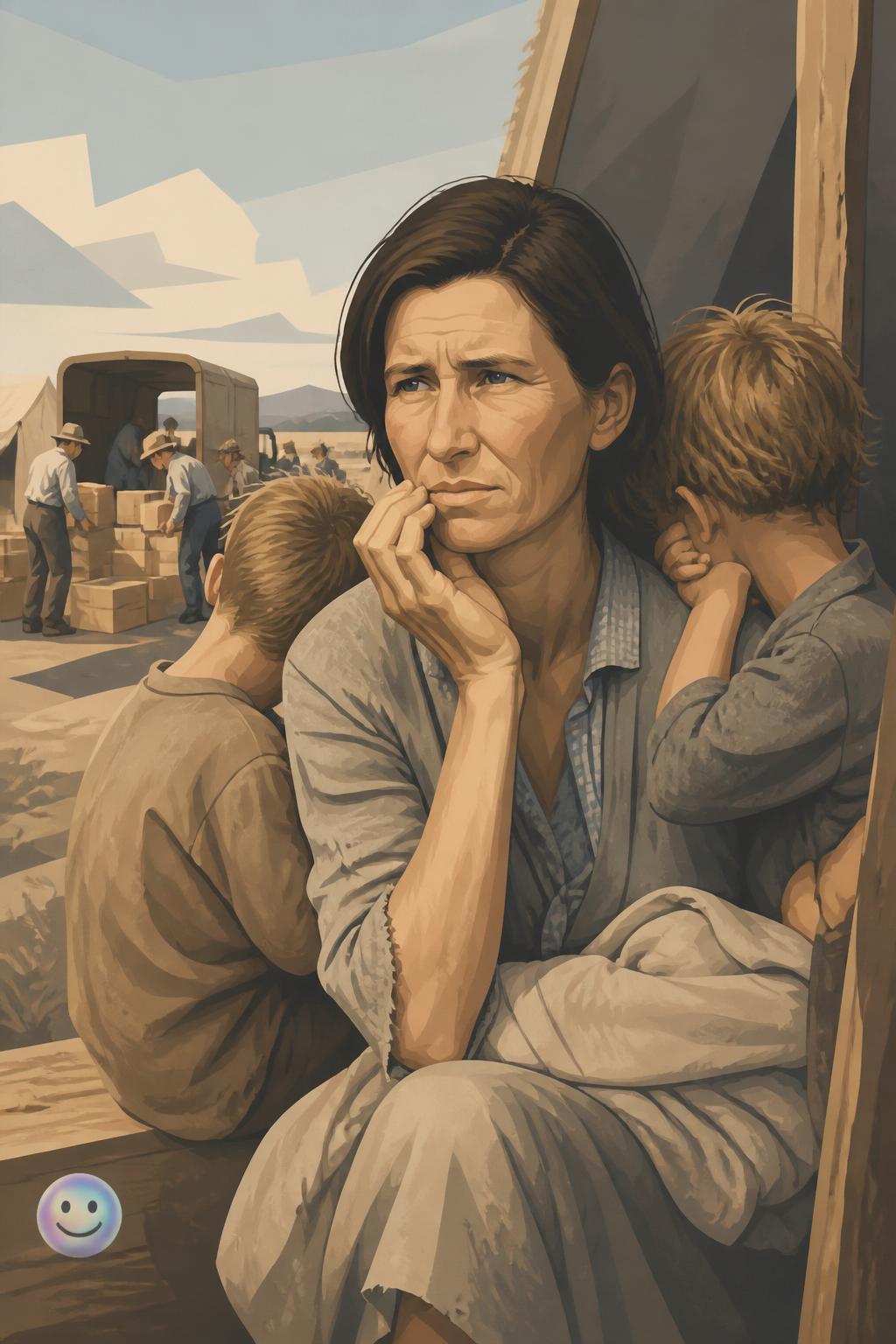
schott A single, powerful portrait of a struggling mother in 1936 became the defining image of American economic hardship.
What term did Henri Cartier-Bresson use to describe capturing the perfect, fleeting split-second in street photography?
What was the immediate real-world result of Dorothea Lange's 'Migrant Mother' photo being published in 1936?
schott First Photo with People
Early Paris street, quite a sight! (Oh-oh, but no one's there!) Except two men still standing still. (Yeah! In Daguerre's long exposure thrill!)
schott Henri Cartier-Bresson, Robert Capa, David Seymour, and George Rodger founded Magnum Photos in New York and Paris.
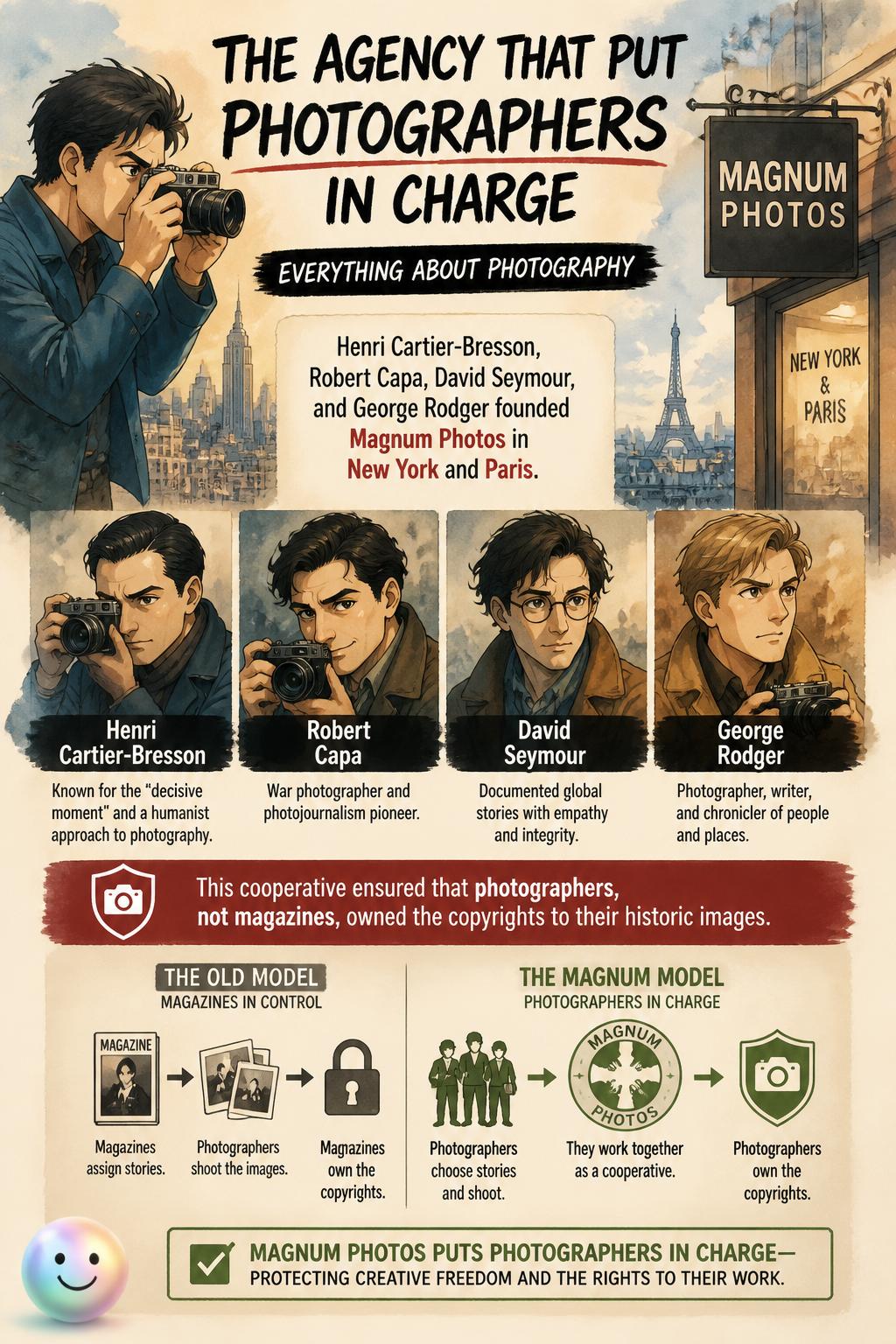
schott In 1947, four pioneering photographers formed a cooperative to protect their creative rights and tell global stories.
Which famous photographic cooperative was founded in 1947 by Henri Cartier-Bresson and Robert Capa?
The decisive moment: Photographer Henri Cartier-Bresson coined 'the decisive moment' to describe capturing a fleeting, perfect second when visual elements align.
schott Ansel Adams used a heavy large-format camera to shoot dramatic black-and-white images of Yosemite.
In which decade did Lewis Hine photograph child laborers to help spark protective labor laws in the United States?
Whose dramatic black-and-white landscape photos of Yosemite helped secure national park status for Kings Canyon in 1938?
The practice of collecting and presenting news through photographs in magazines and newspapers. In March 1936, Dorothea Lange used this practice to record the plight of California's migrant workers.