
Chapter 1
The stubborn rebel of Aix-en-Provence
Chapter 2
Painting with geometry and apples
Chapter 3
The obsession with Mont Sainte-Victoire
Chapter 4
The father of us all
Ch 2 · Painting with geometry and apples
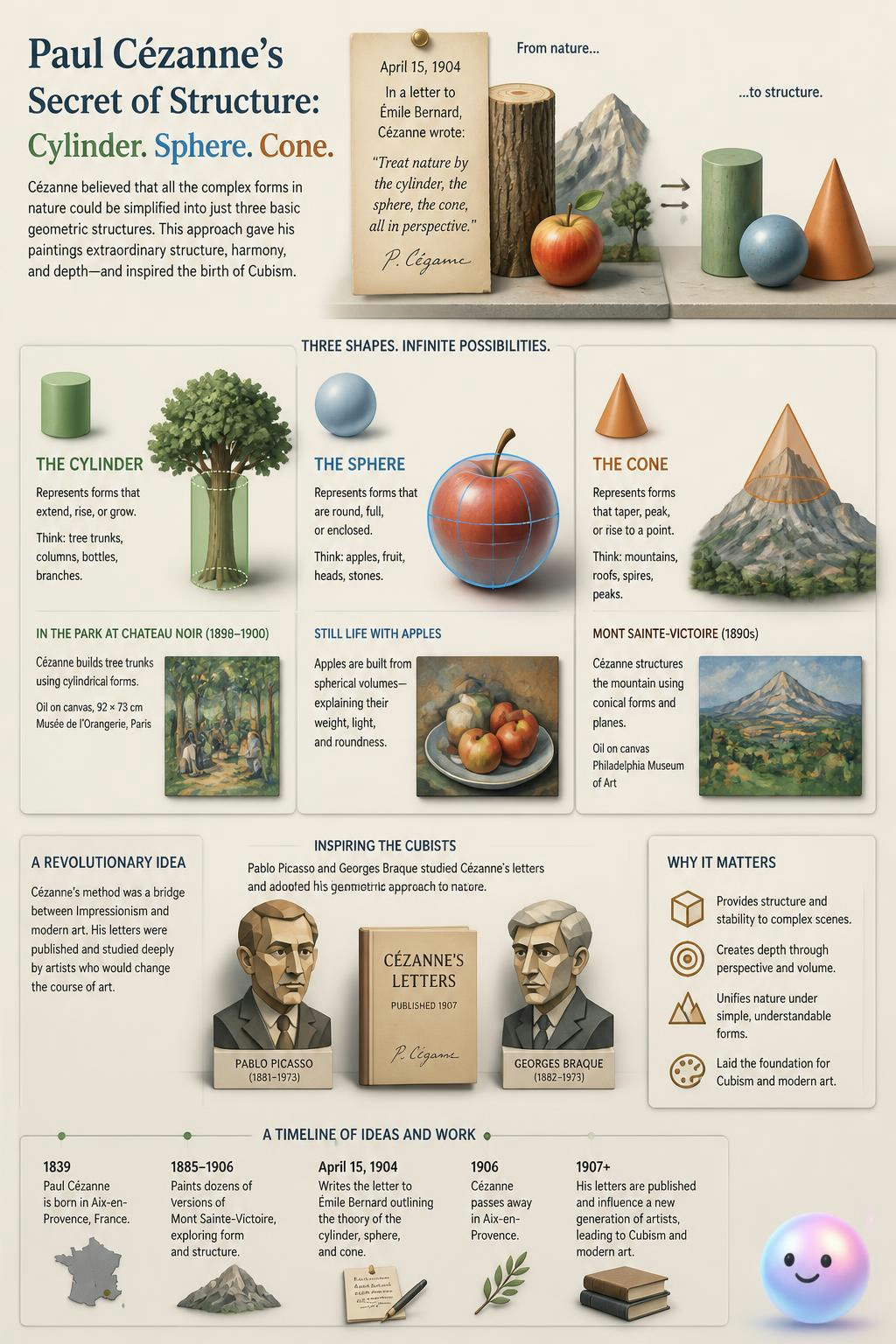
streetspirit A cylinder, sphere, and cone shape a sturdy tree trunk and round apple
streetspirit Cézanne structured his paintings using solid geometric shapes like spheres, cones, and cylinders rather than flat outlines.
Quiz
What famous 1893 Paul Cézanne painting features a tilted table and a basket of fruit?
Quiz
Which three geometric shapes did Paul Cézanne say could represent all forms in nature?
BETA
streetspirit Sort apples and spheres to learn how Cézanne saw nature through basic geometric shapes.
streetspirit Paul Cézanne painted so slowly that he used artificial fruit because real apples rotted before he finished.
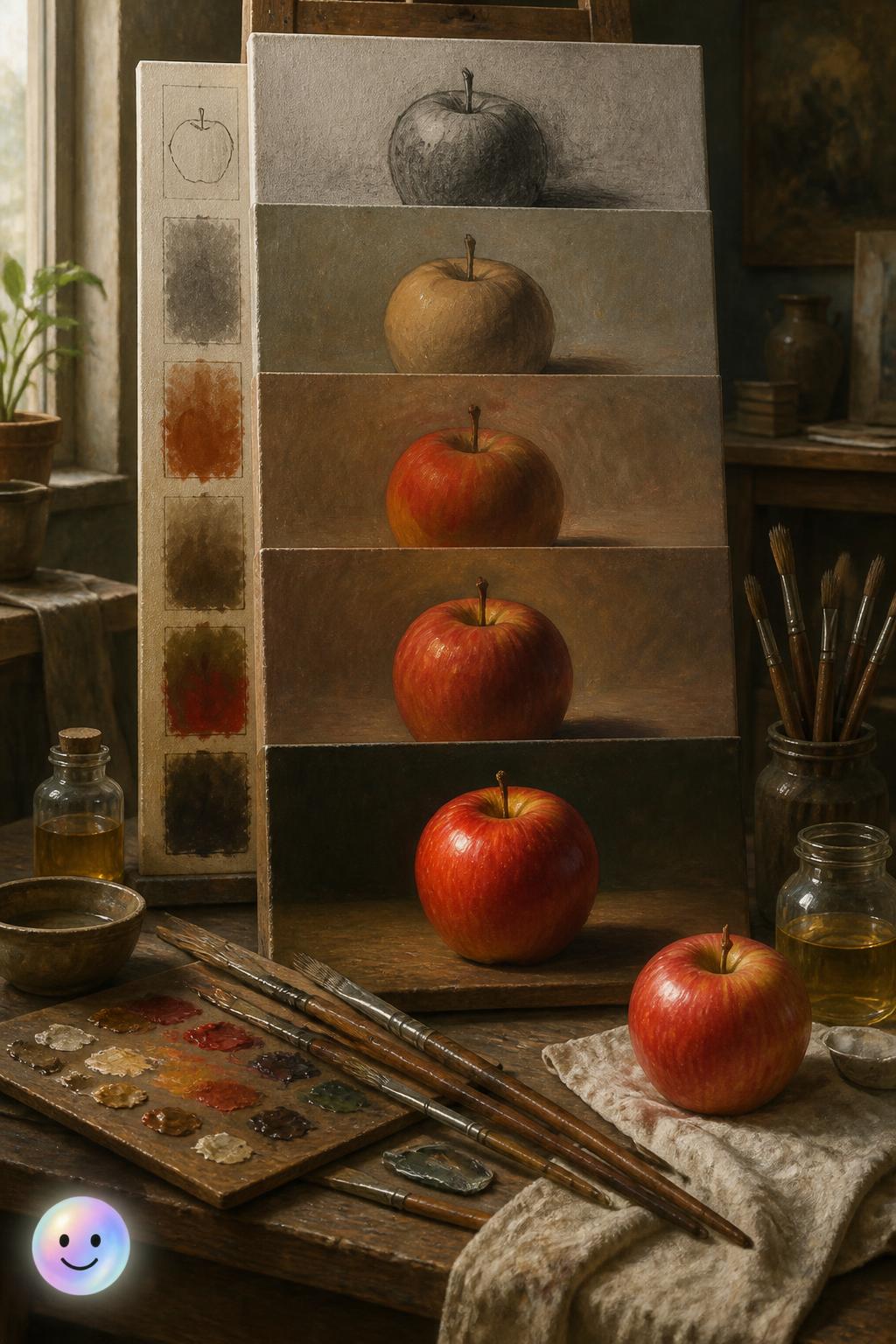
streetspirit Cézanne painted still lifes of fruit so slowly that they often rotted before he finished.
Quiz
In Cézanne's still lifes, what did he often place under plates or fruit to tilt them?
streetspirit Painting with Geometry and Apples
Find the sphere in every apple you hold, With cones and cylinders of crimson and gold.
streetspirit Paul Cézanne painted objects from different angles to mimic how human eyes actually scan a room.
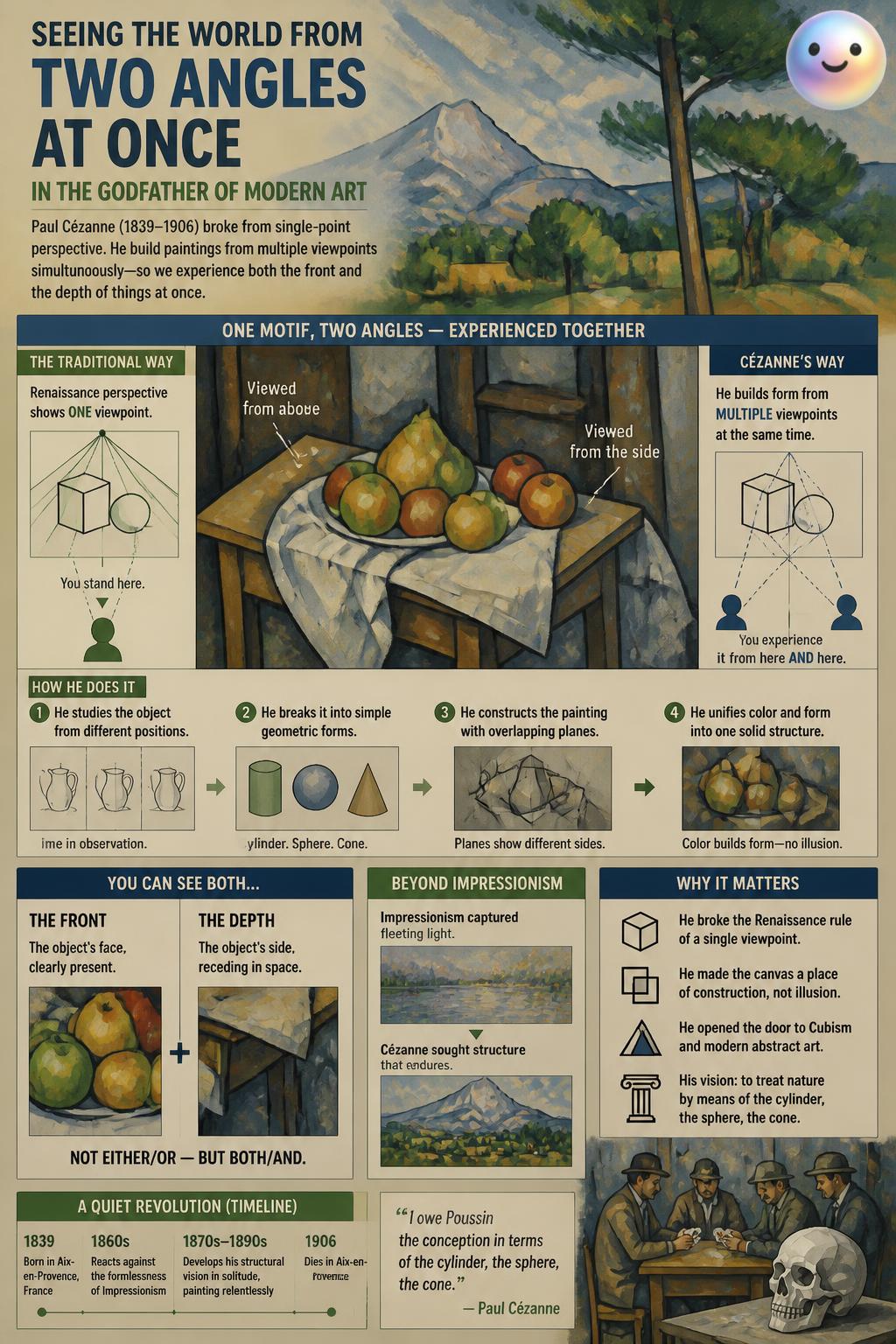
streetspirit Cézanne abandoned traditional perspective to show objects from multiple viewpoints simultaneously.
Quiz
Why did Paul Cézanne often use artificial or wax fruit for his still-life paintings?
Quiz
How did Paul Cézanne's use of perspective differ from traditional Renaissance perspective?
Fun Fact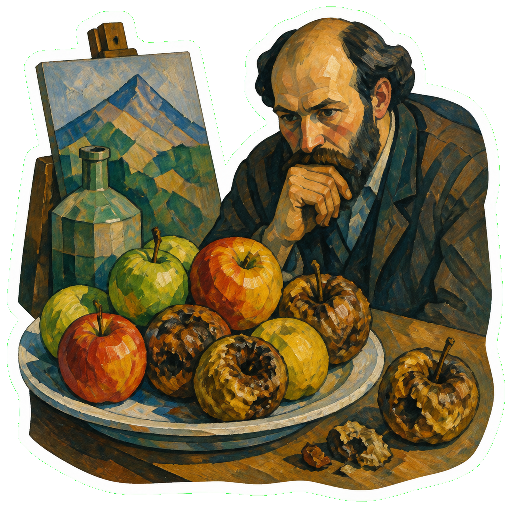
The rotting fruit: Paul Cézanne's still-life models often rotted, forcing him to switch to realistic wax fruits to finish his slow, painstaking paintings.
streetspirit Cézanne built three-dimensional space by placing warm colors forward and cool colors back with blocky strokes.
Quiz
Which color temperature did Paul Cézanne use to make objects appear closer to the viewer?
Glossary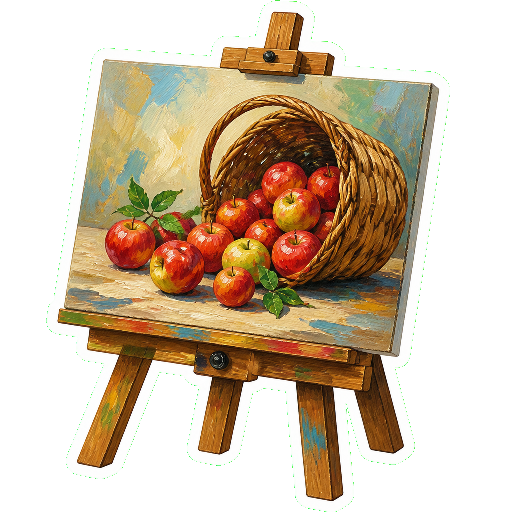
still life (noun)
A painting or other work of art depicting an arrangement of inanimate objects. Paul Cézanne revolutionized the genre in 1893 with his masterpiece featuring a tilted basket of fruit.
A painting or other work of art depicting an arrangement of inanimate objects. Paul Cézanne revolutionized the genre in 1893 with his masterpiece featuring a tilted basket of fruit.